Adaptive Heritage Practice Lab (AHPL)
Research overview
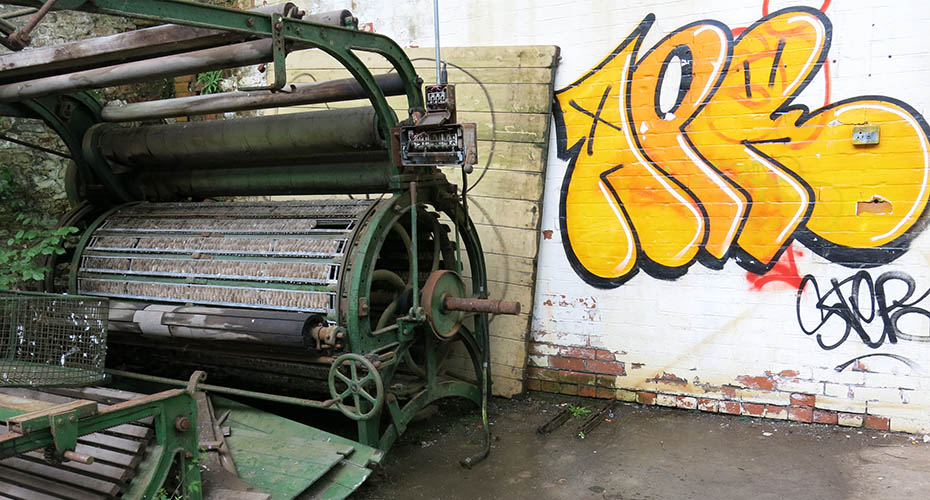
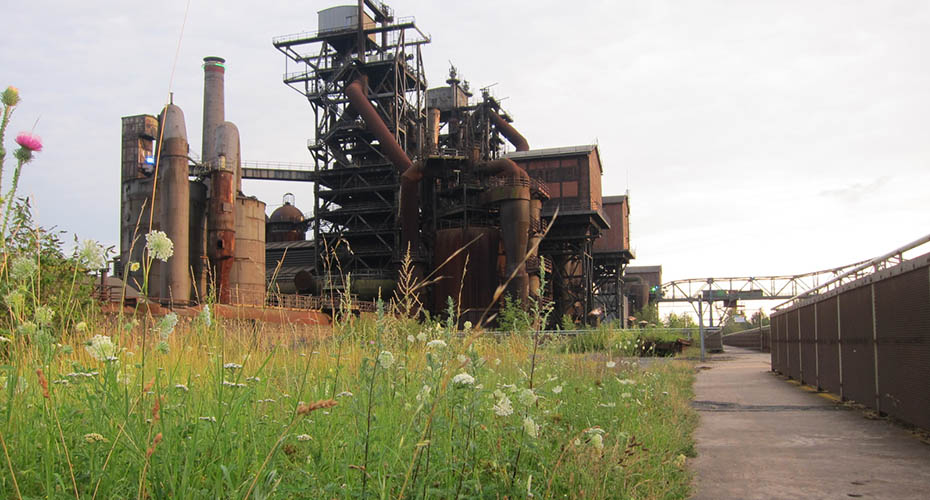
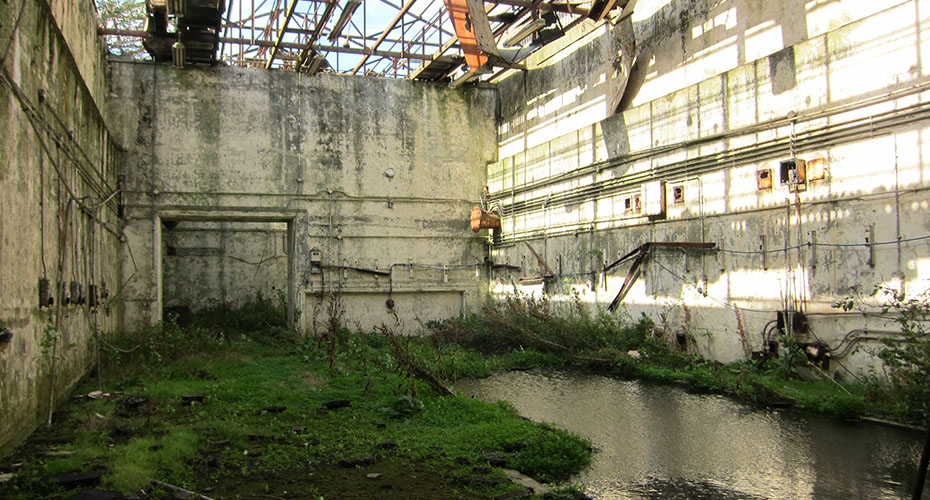
The Adaptive Heritage Practice Lab (AHPL) is a community of researchers and practitioners united by a shared interest in how we can care for places and things that are coming apart—and coming together again—in unpredictable ways. While most heritage practice seeks to maintain stability in historic environments (as a condition of their designation), adaptive heritage explicitly focuses on working with trajectories of transformation (Perry and Gordon 2021).
The work of AHPL arises from the recognition that the heritage sector is facing a future of accelerating change and radical uncertainty. As we move forward, some heritage places will find themselves entering the ‘back loop’ of the adaptive cycle, shifting from a state of relative stability to one of apparent collapse (Holling 1986, Wakefield 2020). This predicament prompts a range of different responses. In some cases, it may be possible to secure the resilience of the existing system or structure through incremental adaptation or adaptive reuse. Another possible response, however, is to relinquish some control over what happens next, and to try to facilitate the emergence of something else—a weave of the old and the new, and the ecological and cultural. An interest in these emergent processes orients AHPL’s work.
Research focus
AHPL’s focus is on places where transformation is already underway, and where people are developing the skills to work with dynamic change rather than resist it. In all of the places we are interested in there is a sensibility of what Andrew Pickering has described as acting with: “paying attention to the tendencies of the world, incorporating them into our ways of going on, and turning our own activities into them” (Pickering 2025). In many of the places we engage with, the accommodation of change also creates opportunities for cultural (re)connection, by giving agency to communities who have previously been kept at the margins of heritage practice.
AHPL is committed to working with places where this kind of alternative approach has moved past discussion and debate and is already being tested and developed, even in provisional and partial ways. We are directly involved in several collaborative case studies and we signpost aligned work on our Changing Places Storymap. In addition to highlighting examples of adaptive release (and other similar approaches), the storymap flags places where accelerated climate- and ecological-breakdown is interpreted not as a passive inevitability but as the actively-produced dark heritage of industrial capitalism. Our work is global in scope and local in context, foregrounding both diverse and contested understandings of ‘heritage’ and radically uneven experiences of environmental change, historically and in the present.
Outreach and impact
Our documentation of and support for practice-led experimental management also highlights sticking points in current legislation and policy. Although many organisational strategies and adaptation plans now recognise the need to proactively manage change to historic and natural environments, and to prepare for loss when necessary, the regulations applied on the ground do not always offer the flexibility required to translate theory into practice.
Our aim is to provide an imaginative and applied evidence base that will help establish adaptive heritage as a viable management option. We work closely with a range of national and international partners, trialling new approaches in specific sites and contexts and developing new conceptual and legal frameworks to facilitate transformative change. We see adaptive heritage as a supplement to existing modes of protection and conservation, rather than a replacement. At the Lab’s heart is a belief that the heritage sector needs new ways of navigating the future we are inheriting. Holding what we have more lightly, and sharing it with other communities and ecologies, may offer one path through.
“Heritage protection focuses on securing a stable future for the sites and landscapes that connect us to our past. But those precious places achieved their present condition through processes of change and evolution. Adaptive heritage offers hope in an unstable world, by working to sustain value and connection as places and landscapes evolve.”
Professor Jim Perry, University of Minnesota
AHPL Exeter collective
- Dr Jon Bennie (ecology, biogeography)
- Dr Semih Celik (environmental history, museum studies)
- Professor Caitlin DeSilvey (ecocultural geography, critical heritage studies)
- Dr Tiago de Melo Cartaxo (environmental law, adaptive legal mechanisms)
- Dr Martina Egedusevic (nature-based solutions, climate adaptation)
- Dr Camille Mathieu (visual culture studies, landscape history)
- Dr Robert Sherman (digital narrative design, interactive experiences)
AHPL community
Membership of the AHPL community is open to anyone (artists, architects, ecologists, natural and cultural heritage practitioners) who has a place to add to the Storymap. Please contact c.o.desilvey@exeter.ac.uk if you would like to contribute. We’ve been trying to pull in links to relevant projects, so you may find your work has already been mapped (in which case, edits welcome!).
Support
AHPL’s development has been supported by a Policy Support Fund grant to the Environment and Sustainability Institute from Research England. AHPL researchers are currently involved in projects receiving funding from a range of sources, including Natural England and the Environmental Protection Agency (Ireland). The UKRI-funded Landscape Futures and the Challenge of Change project (2020-2022) acted as a catalyst for AHPL’s formation and current work.
- Alexandre Monnin (Scientific Leader of Ecological Redirection and Strong Sustainability, Centrale Méditerranée)
- Jim Perry (HT Morse Distinguished Professor, University of Minnesota)
- Thora Petursdottir (Professor of Archaeology, University of Oslo)
- Ingrid Samuel (Placemaking and Heritage Director, National Trust)
- Matt Thompson (Conservation, Curatorial and Learning Director, English Heritage)
- Heather Viles (Professor of Biogeomorphology and Heritage Conservation & Director of the Oxford Resilient Buildings and Landscapes, University of Oxford)
- Emma Waterton (Leverhulme International Professor & Director of the Heritage for Global Challenges Research Centre, University of York)

"The best arguments in the world won't change a person's mind.
The only thing that can do that is a good story."
- Richard Powers, The Overstory
AHPL maintains the Changing Places Storymap as a living archive of experimental practice. All of the places on the map are recognised as having some connection to the past that is worth sustaining, but in these stories you will find intentional – if often tentative – examples of a willingness to decentre memory work to allow for the emergence of other ecocultural capacities. The stories here are small ones; they are also not, for the most part, smooth and settled. They are provisional and clunky, full of cracks and contradictions, providing a glimpse of how the preservation paradigm is slowly shifting – brick by bat, tree by truss. Our selection of cases has been structured by a few guiding questions: What is being released, or relinquished? How are people working with change to find meaning and value, while staying connected to the past? What new ecocultures are emerging through this process? If the place has settled into a new phase, how did this transformation come about? We have seeded the storymap with places we are aware of and contributions from our collaborators. If you would like to contribute a story please send a short narrative (no more than 250 words) and a few relevant links and images to c.o.desilvey@exeter.ac.uk.
Press release: Carefully managing change in historical environments can benefit communities and nature. (2025)
Bennie, J (2025) "Shifting grounds: rethinking conservation in an age of rapid climate change”, ESI Challenge of the Month (talk includes discussion of AHPL's project with Natural England's Protected Sites Strategies programme).
DeSilvey and Waterton (2025), Adaptive Heritage: Back Loop Practice, Heritage for Global Challenges podcast interview, available on Spotify and Soundcloud.
DeSilvey and Ruhlig (2025) The Building Tells Us What It Needs, e-flux Architecture. May 2025.
DeSilvey (2024) Heritage Lost and Found: Cruel Optimism and Climate Futures, in Unruly Heritage, Bloomsbury Academic: 75-90.
DeSilvey C, Fredheim H, Blundell A, Harrison R (2022) Identifying Opportunities for Integrated Adaptive Management of Heritage Change and Transformation in England: A Review of Relevant Policy and Current Practice, Historic England Research Report 18/22.
Sefryn Penrose, Nadia Bartolini (2022) Adaptive Release: Guidance Framework for Sites Affected by Coastal Erosion and Flood Management, Historic England Research Report 85/22.
DeSilvey C, Fredheim H, Fluck H, Hails R, Harrison R, Samuel I, Blundell A (2021). When Loss is More: from Managed Decline to Adaptive Release. Historic Environment: Policy and Practice, 12, 3-4: 418-433.
Perry J, Gordon I (2021) Adaptive Heritage: Is This Creative Thinking or Abandoning Our Values? Climate 9(8): 128.
DeSilvey, C. (2020). Ruderal Heritage. Deterritorializing the Future: Heritage in, of and after the Anthropocene, 289.