

175 years in the making
A history of philanthropy at the University of Exeter.
Philanthropy has helped shape Exeter. From the visionaries who laid the foundations of our earliest institutions to those who funded buildings, scholarships and opportunities for generations of students, acts of generosity are woven into our story.
Their impact can still be seen across our campuses today. In the places we learn, the discoveries we make and the opportunities we create. As we look to the future, that same spirit of ambition and generosity continues to inspire what comes next, building on a legacy 175 years in the making.
Where it all began...
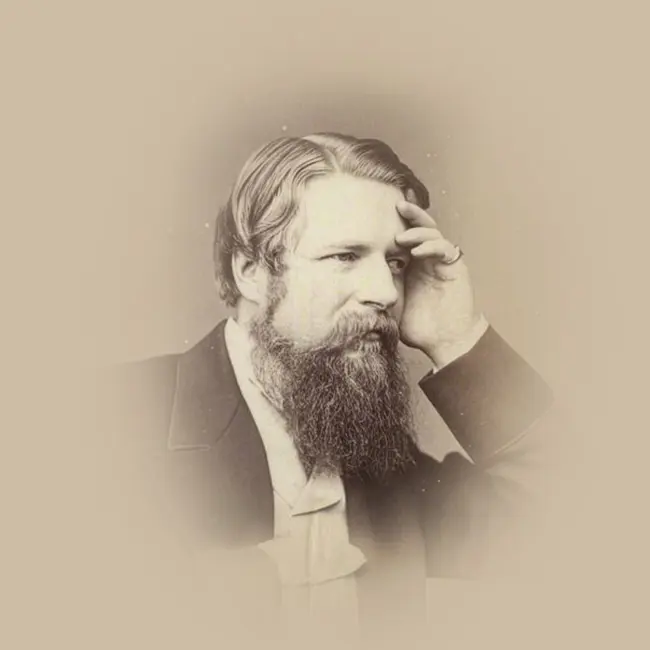
The University traces its roots to 1855, with the establishment of the School of Art by Sir Stafford Northcote, who was inspired by the Great Exhibition of 1851. A School of Science followed in 1863. In 1868, both Schools relocated to the Royal Albert Memorial Museum in a building funded by public subscription.
Foundations across Devon and Cornwall
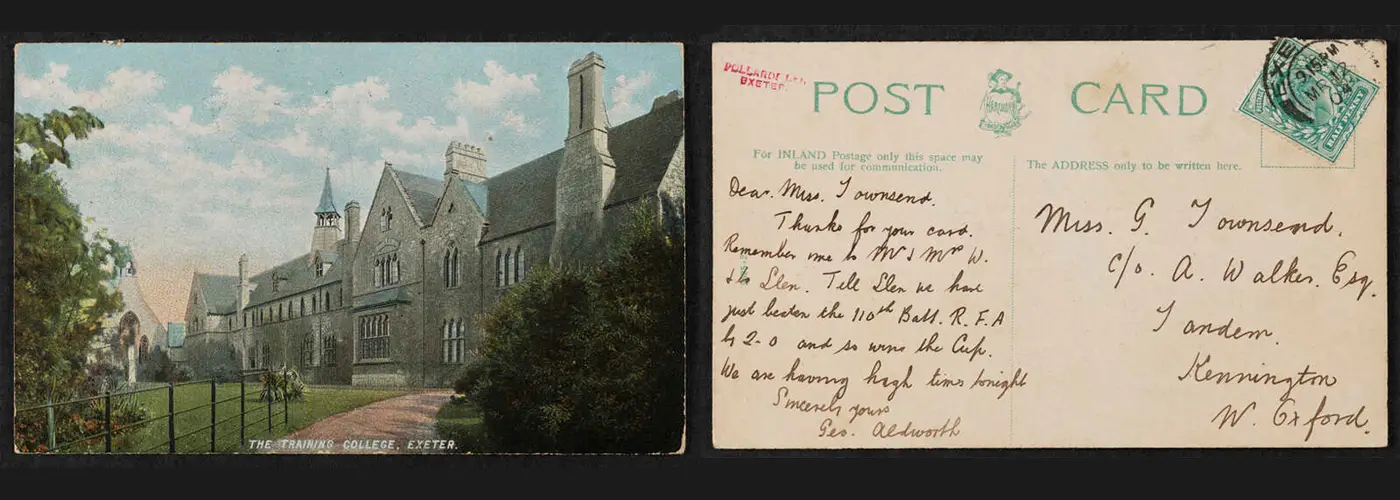
Two other institutions, incorporated into the University in the 20th century, were also founded in the Victorian era – St Luke’s in 1839 and the Camborne School of Mines in 1888. (CSM’s antecedent benefited from a major bequest by George Basset, the great mine entrepreneur, to build a laboratory in Camborne.)
A woman with a vision
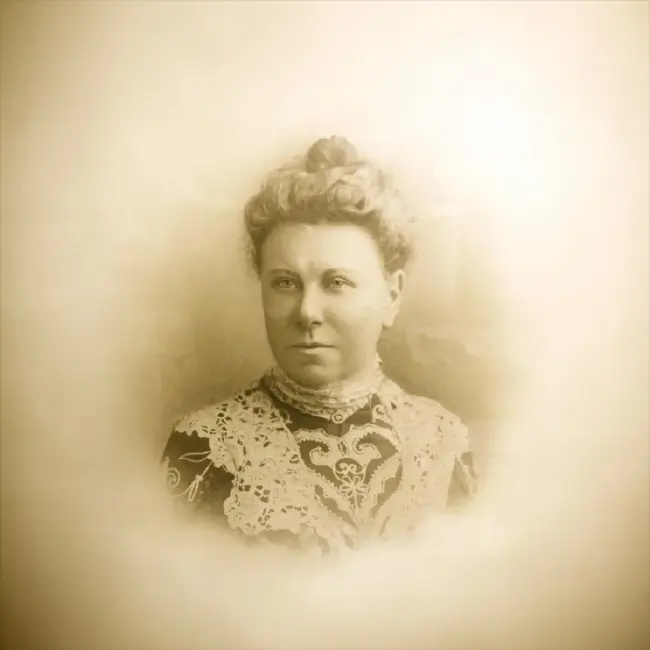
In 1888, Miss Jessie Montgomery became joint secretary to Exeter’s University Extension Centre on its affiliation to Cambridge University and, subsequently, convenor of the Ladies’ Students’ Association. She instigated the establishment of the Royal Albert Memorial College and she promoted Exeter’s aspirations towards full university status by galvanising philanthropic activities towards this endeavour.
The interwar years, under the leadership of Principal Hector Hetherington (1920-1925) and John Murray (1926-1951), witnessed an expansion of philanthropic activity for the retitled University College of the South West, which laid the path for Exeter to receive its Royal Charter in 1955.
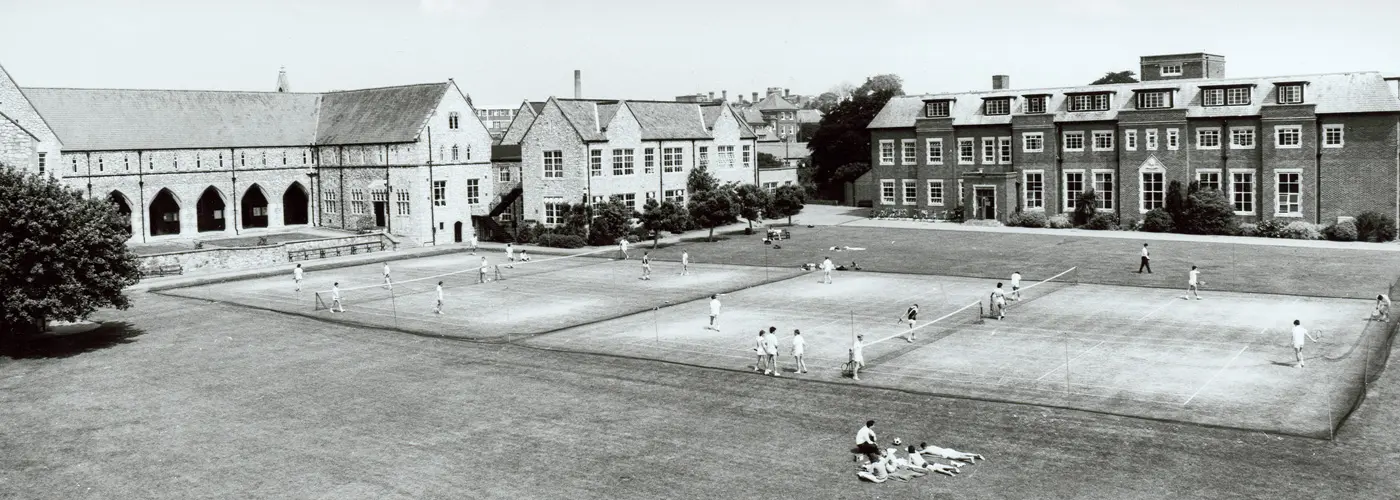
Image below: St Luke’s was incorporated into the School of Education in 1978.
A new home at Streatham
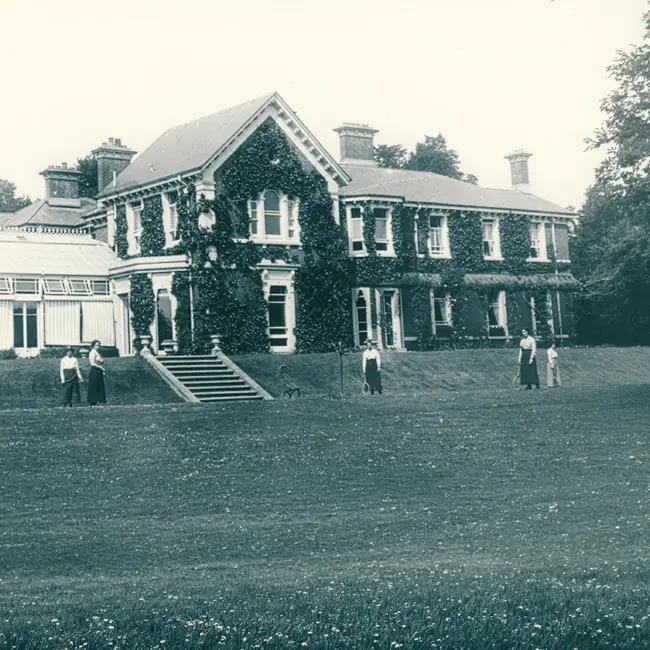
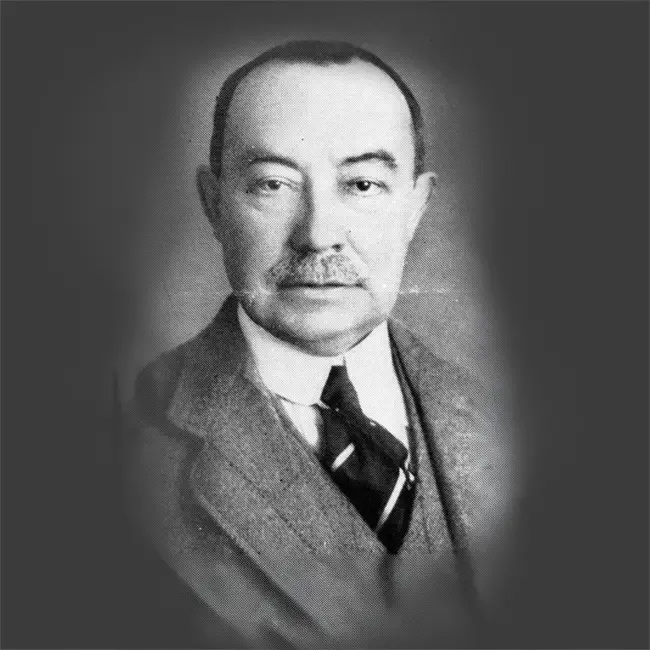
One great philanthropist was William Reed, a mill owner born in Bodmin to Devonian parents, whose generosity began a relationship that spanned generations of his family. Reed was Alderman of Exeter and, in 1906, held the title of Mayor as well as being the proprietor of the Express and Echo and the Western Times.
In 1922, he presented Streatham Hall and grounds to the University College as a gift. It was renamed Reed Hall in his honour in 1925 and used as a hall of residence for men.
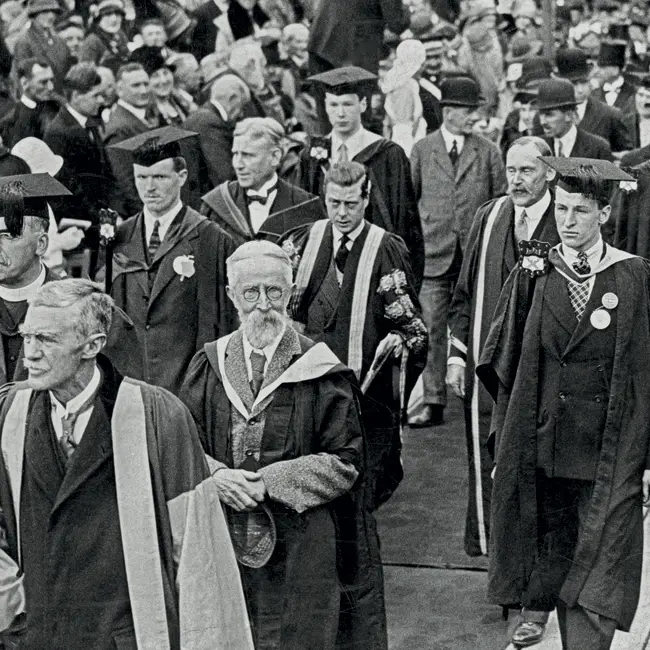
Laying the foundations
HRH the Prince of Wales, later Edward VIII, lays the foundation stone of the Washington Singer Laboratory, 7 June 1927.
Behind him are John Murray, Principal 1926–51, and Sir Henry Lopes, later Lord Roborough, Deputy President of the University College from 1922–36 and President from 1936–38.
In front are Sir Walter Hamilton Moberly, Principal from 1925-26 and Arthur W.Clayden, Principal 1893-1920.
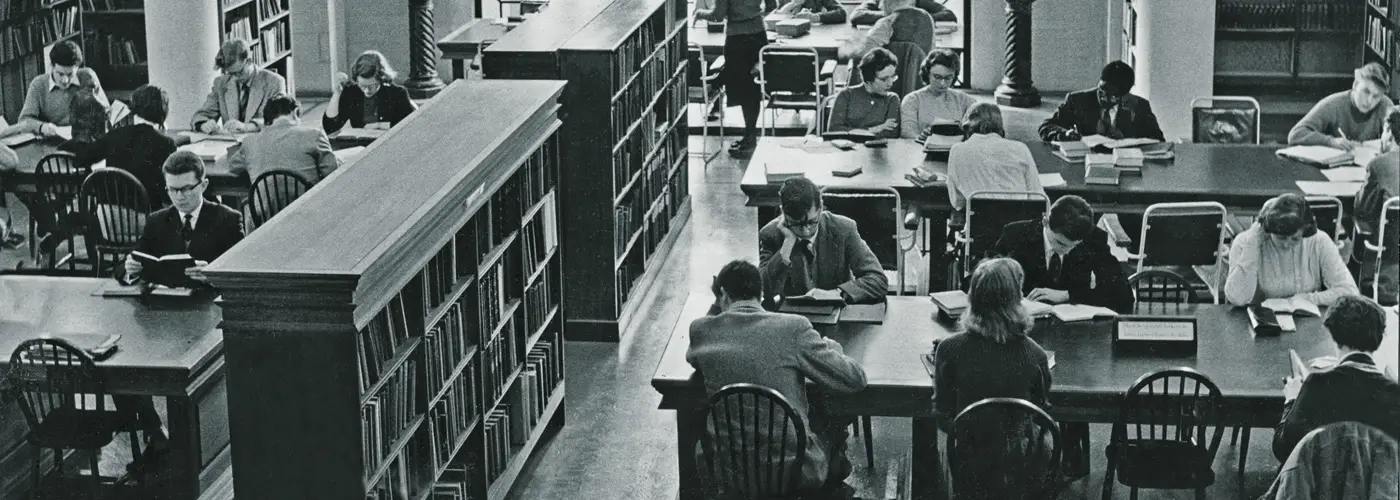
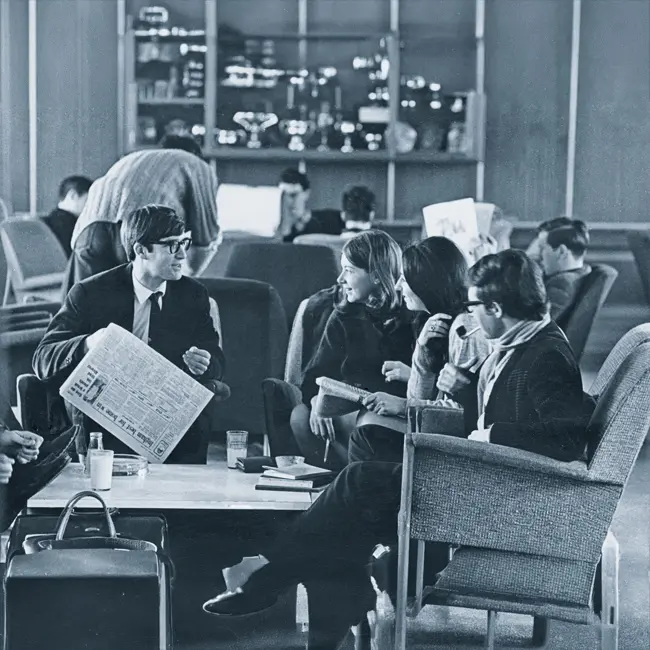
Image below: Students of the 1960s studying in the Roborough Library.
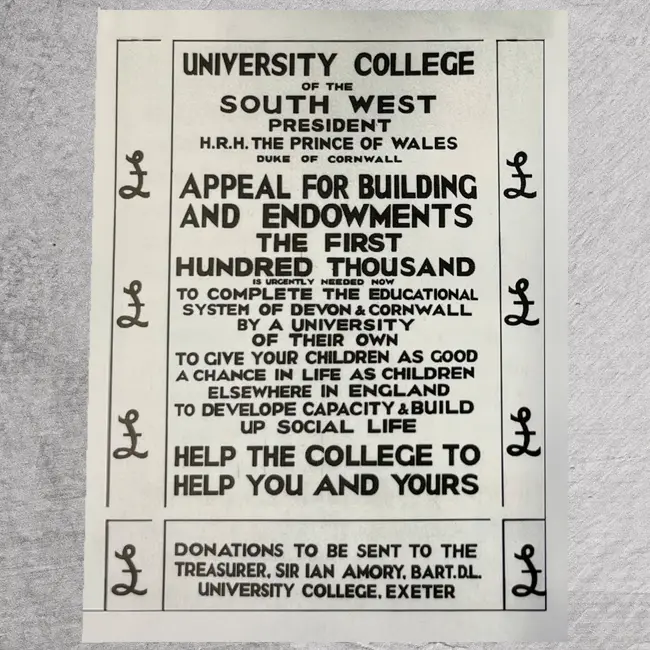
Rallying a region
Traditionally, universities needed to raise their own monies for facilities and endowments.
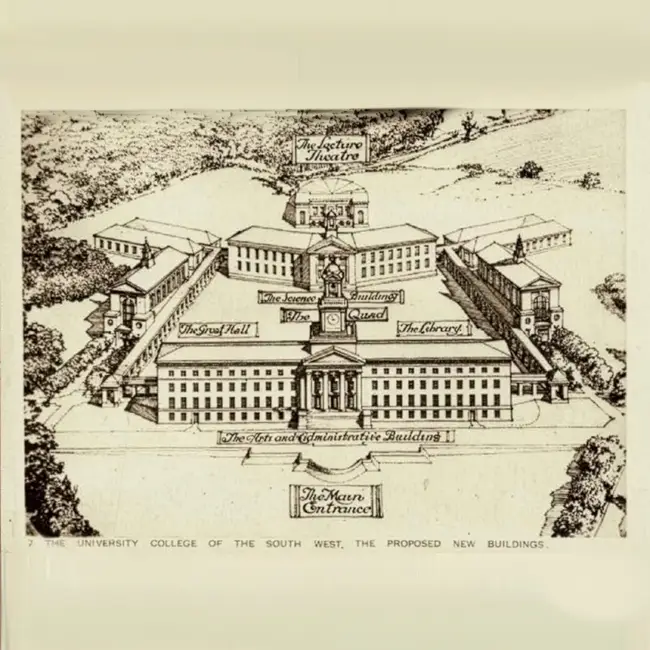
In 1926 the University College announced plans to raise £100,000 for new buildings on the Streatham Campus, targeting donors from across the region. This financial ambition was raised to £300,000 soon after, and to £750,000 by 1928.
Two individuals deserve particular recognition: L. du Garde Peach - author, playwright and lecturer - helped organise the initial campaign efforts. In 1926, he was succeeded by L. M Grayburn, described in a history of the University as a ‘racy Irishman… banker… and best amateur jockey in India’ and who ran the campaign for nine years (unremunerated).
His tireless efforts, combined with the ambition of Principal Murray, led to significant monies being raised.
Building for the future
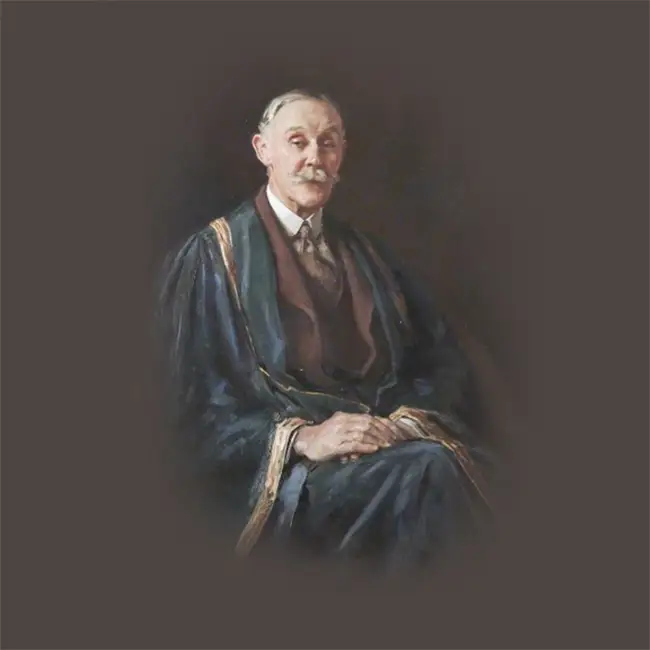
Another who made a great contribution to the University College in the 1920s and 1930s was Sir Henry Lopes, 1st Baron Roborough. Sir Henry was Conservative MP for Grantham, Chair of Devon County Council and Deputy President of the University College. In 1922, when he became Deputy President, he gave a gift of £6,027.
When the University acquired Highlands, a large Victorian Gothic villa, to provide student accommodation, it extended it and renamed it Lopes Hall in recognition of his significant support. In 1936 he went on to become President of the University College when the Prince of Wales became King and continued to give generously throughout his lifetime. Two years later he became Lord Roborough and in 1940 the library was named after him posthumously.
Women supporting women
Plenty of other buildings were named after donors in the interwar years, such as Hope Hall (previously Hartwell House) financed by the legacy of Helen Hope, donated by her friend Consuela de Reyes. Both Miss Hope and Miss de Reyes were keen advocates of education for women. Hope had maintained a centre of education of the arts in Bath and later de Reyes would volunteer to act as a tutor, without pay, for female students at Exeter. When Helen Hope died in 1924 she left a legacy of £4,000 to de Reyes which was offered to the College to finance what became Hope Hall.
In 1939 an annexe to Hope Hall was opened and named after Ida Sebag-Montefiore after she had given £5,000 to rebuild it. She had donated £8,000 previously to the College to endow a Readership in Geography and her death in 1940 was mourned by the Western Morning News that remarked that Exeter had “lost one of its most generous helpers”.
Transforming the campus
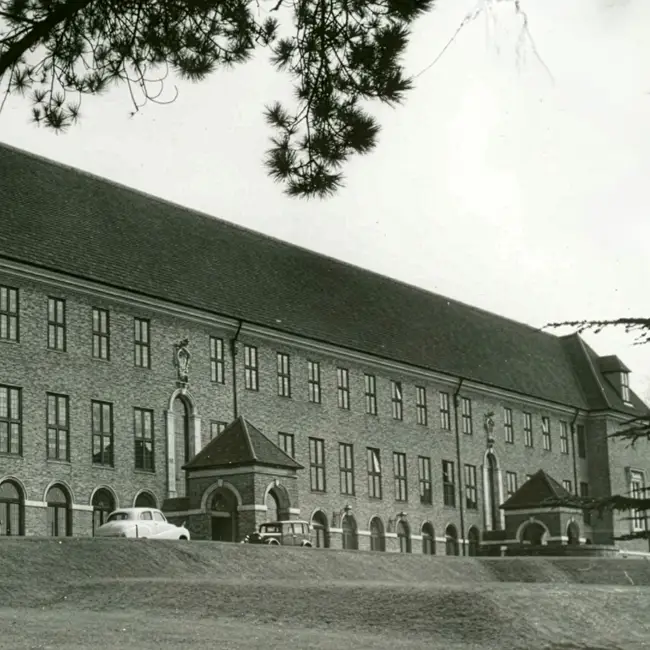
Other buildings named after benefactors include the Washington Singer Laboratories after Mr Washington Singer, son of sewing machine magnate Isaac Singer. Born in New York but raised in Paignton, he gave £25,000 to the College in 1931.
Two years later, Flight Lieutenant Evelyn Mardon gave £25,000 to fund the building of a hall of residence. Both gifts would now be valued at more than £1 million.
Opening doors through education
While some of Exeter’s great philanthropists supported infrastructure development, others helped to finance scholarships. Albert Ballard, who was born in Guernsey but lived in Devon, donated vast sums of money in support of scholarships.
In 1928 he gave a benefaction of £2,000 per annum for 30 years, with preference given to boys from the Ballard Institute, a boys club that he had founded. His generosity continued in 1935 when he funded further scholarships for boys from Teignmouth Grammar School.
Upon Ballard’s death in 1942, he left a final gift of £41,000 (worth over £2 million today) to endow a scholarship scheme for Plymouth boys.
Scholarships with a Devonshire purpose
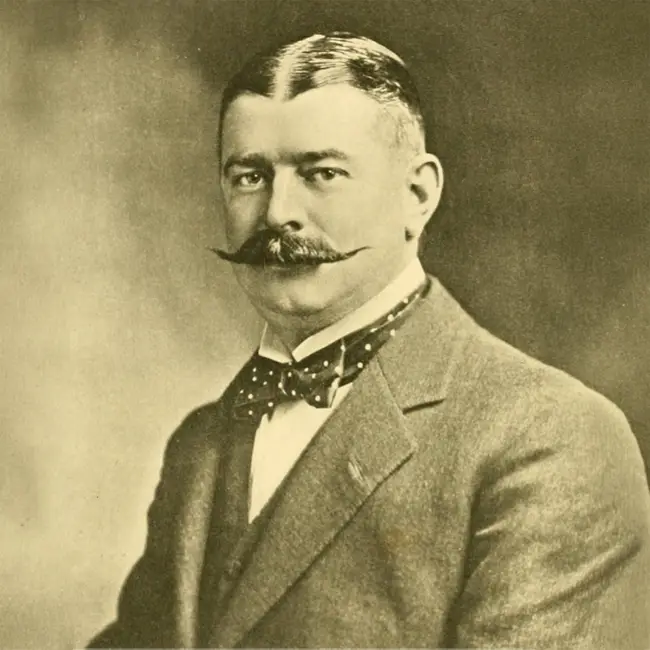
Born in Appledore, North Devon, William Tatem, 1st Baron Glanely, made his fortune as a ship owner before becoming a significant supporter of the College.
In 1918, Glanely was raised to the peerage and went on to donate more than £25,000 to the College – worth more than £1 million today.
His support continued through his will. Following his death in an air raid shelter in Weston-super-Mare in 1942, he bequeathed a further £5,000 to establish scholarships in agriculture, with priority given to fatherless children of Devonshire farmers.
A legacy of learning
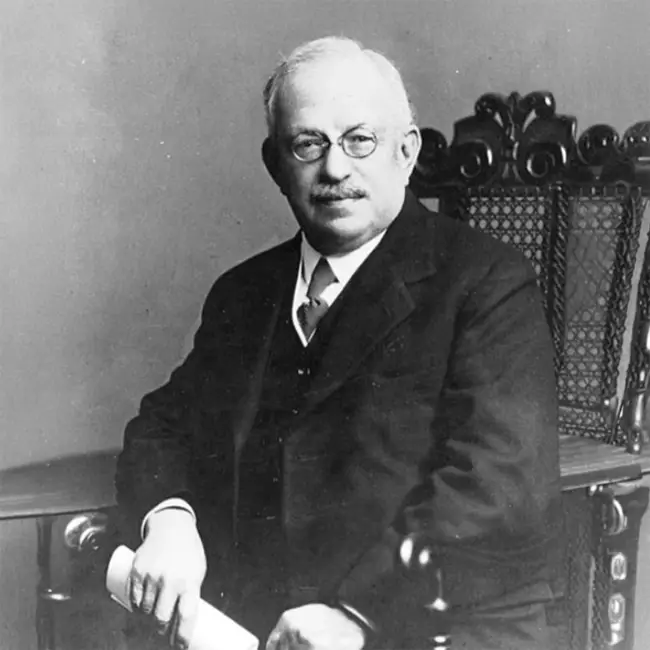
Also born in Appledore, North Devon, William Reardon Smith built his fortune as a ship owner and became a generous benefactor of the College, alongside his wife, Lady Ellen.
In 1926, the couple endowed a chair in the Geography Department at a cost of £7,000. They also donated a further £4,500 to establish three scholarships.
Two were named in honour of their parents, while the third – the Richard Grenville Scholarship – was open to any student from Devon.
This gave their philanthropy a lasting connection to both the University and the county they called home.
A university realised
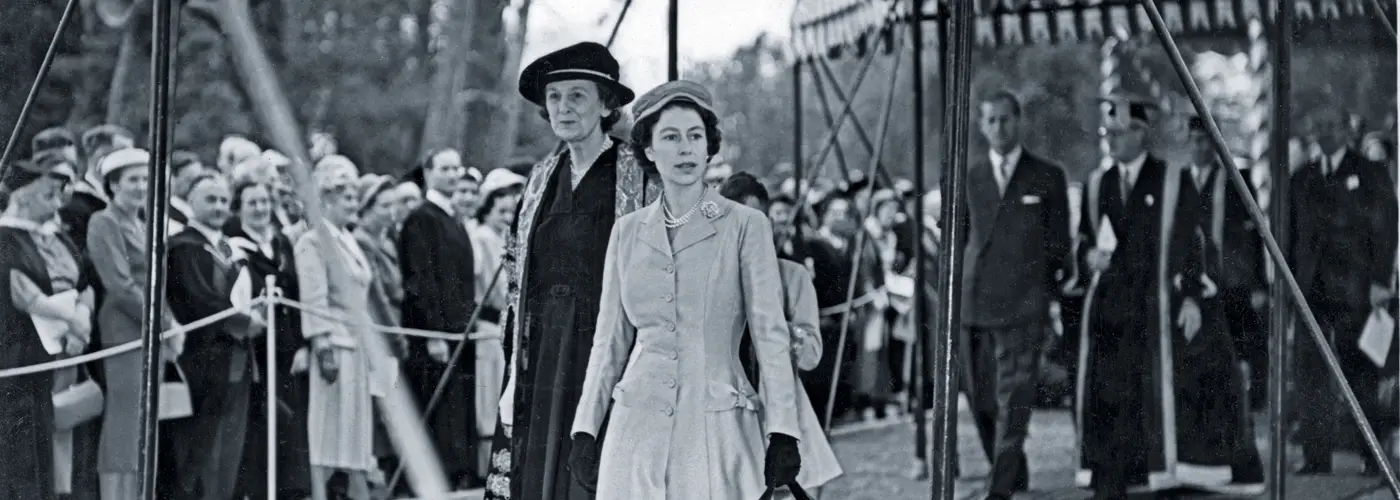
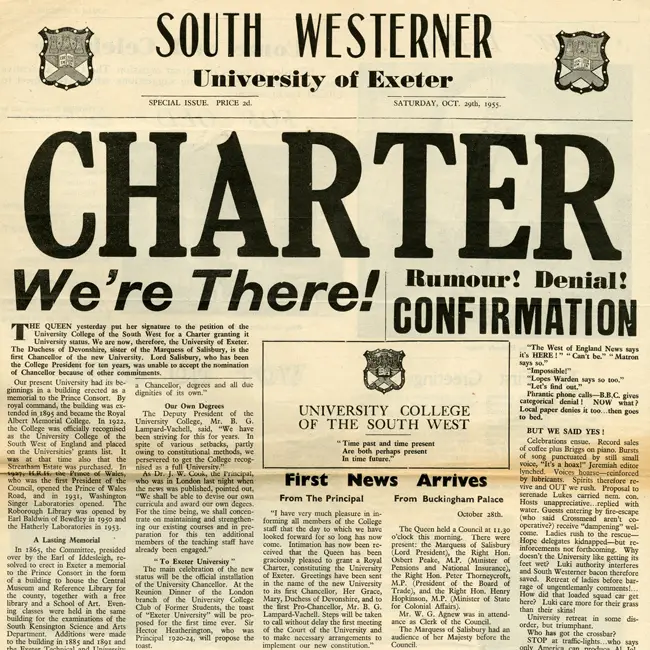
These great philanthropists played an important part in ensuring the infrastructure was in place to allow Exeter to finally achieve University status in 1955 and realise the dream of Sir Stafford Northcote one hundred years previously.
Image above: Her Majesty Queen Elizabeth II arrives to present the new University of Exeter with its Charter and unveil the foundation stone of the Queen’s Building in May 1956. With her is Mary, Dowager-Duchess of Devonshire, Chancellor from 1955 to 1971.
Creating a World-Class University Together
In the modern era, Exeter’s philanthropic ambitions grew alongside those of the University.
The Creating a World-Class University Together campaign brought the University community together behind that ambition. By its conclusion in 2012, the campaign had raised £25 million.
Making the Exceptional Happen
Exeter’s next major philanthropic campaign took that ambition significantly further. By the conclusion of Making the Exceptional Happen in 2020, the University had raised a further £71 million.

175 years on
In 2030, Exeter will mark 175 years since the establishment of the School of Art – the institution from which today’s University traces its origins. The University of Exeter aims to secure £175 million by 2030 in its latest philanthropic campaign – ‘Greener, Healthier, Fairer’.
Today, Exeter stands on the shoulders of those who shared a belief in what the University could become – and whose support helped turn that belief into reality.
The next chapter
What will our generation make possible?
Exeter’s philanthropic story began with ambition.
It grew through individuals and communities willing to invest in an idea: that education could create opportunities, transform lives and build a better future.
Now another generation has the opportunity to shape what comes next.
It is an ambitious new chapter in a story generations in the making. Inspired by the generosity of the past, but focused firmly on the possibilities of the future.
To find out more about our plans for the future, contact us here.
For more information on Exeter’s past philanthropic efforts, contact Special Collections.