

Unlocking the hidden drivers of Lewy body dementia
Alex Crooke, David Thomas, Jeremy Budd, and the Charles Wolfson Foundation
Professor Katie Lunnon
New research supported by philanthropic donors is uncovering the molecular clues that could lead to long-overdue treatments for the second most common form of neurodegenerative dementia.
For the millions of people living with dementia, a diagnosis often brings more questions than answers. But for those with Lewy body dementia, the second most common form of neurodegenerative dementia after Alzheimer's, the uncertainty is even greater.
Often misdiagnosed and poorly understood, Lewy body dementia affects thinking, movement, sleep and behaviour. Yet it remains critically underfunded and under-researched.
A team at the University of Exeter, led by Professor Katie Lunnon, is making significant strides in understanding what drives this devastating condition, thanks in large part to the foresight and generosity of a group of donors, including Alex Crooke, David Thomas, Jeremy Budd, and the Charles Wolfson Foundation.
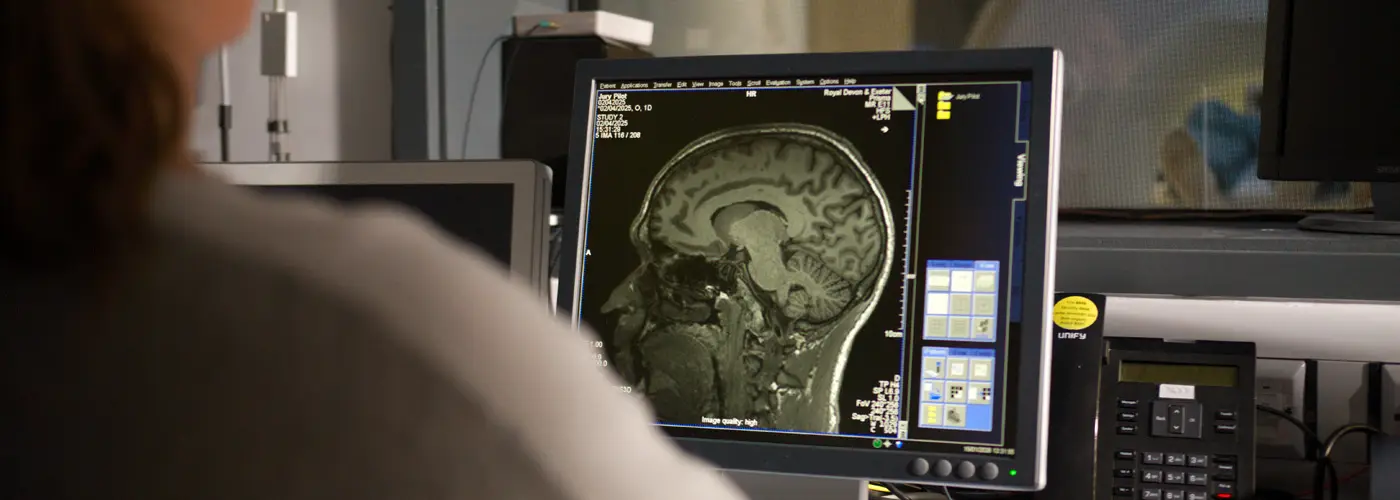
At the heart of this research are microRNAs, tiny molecules that act as regulators of gene expression. By analysing post-mortem human brain tissue, the team is investigating whether these microRNAs are switched on or off in Lewy body dementia, and what that might mean for future treatments.
Working alongside PhD student Grace Thomson, Professor Lunnon and her team analysed 389 brain samples from individuals with Parkinson's disease, Parkinson's disease dementia, dementia with Lewy bodies, and healthy controls.
The results were striking. In the early stages of Lewy body pathology, the team identified changes in three microRNAs. But in severe stages, that number jumped to 19, offering potential new biomarkers for disease progression.
Even more significantly, when the team compared these findings against samples from individuals with severe Alzheimer's pathology, they discovered that six microRNAs were altered in both conditions, but four were uniquely changed in Lewy body dementia.
“These early findings point towards differing mechanisms in how these neurodegenerative diseases develop,” says Professor Lunnon. “That suggests entirely new avenues for targeted treatment.”
In related work supported by the same donors, Professor Lunnon's team has been exploring epigenetic mechanisms, chemical tags added to DNA that can turn genes on and off, influenced by both environment and lifestyle.
A major challenge in this field is when researchers study post-mortem brain tissue, they cannot tell whether the changes they measure are causing disease or are simply a consequence of it.

Now, thanks to a new collaboration with scientists at the University of Cambridge and King's College London, the team has secured access to a unique cohort of brain samples from individuals with Down syndrome, who typically develop Alzheimer's disease early due to an extra copy of a key gene.
By comparing these rare familial cases with sporadic Alzheimer's, the team can use advanced statistical and computational approaches to identify which epigenetic changes are likely to be disease-causing, and which are merely results of the disease process.
“If we can identify which molecular changes are driving Lewy body dementia rather than just accompanying it, we can begin to identify tangible new therapeutic targets,” explains Professor Lunnon. “That's when real hope emerges for patients and families.”
The work that Professor Lunnon and her team are now leading would not have been possible without the support of donors. Their generosity has enabled the team to undertake large-scale epigenomic studies, secure rare brain tissue samples, and ask more sophisticated questions of the data.