

Restoring Scilly’s biodiversity
The Scott-Gatty/Bromley conservation research project
Kristian Metcalfe, Richard Sherley and Alice Trevail
The Isles of Scilly are home to some of the UK's most important marine and coastal habitats. Thanks to the generosity of Exeter alumni and supporters, University of Exeter researchers are advancing two complementary projects that are helping to protect and restore these unique ecosystems.
“Research like this helps us understand how restoring local ecosystems can have far-reaching benefits for marine environments globally, particularly in the face of climate change and biodiversity loss,” says Professor Kristian Metcalfe.
Understanding the role of seagrass in a healthy marine environment
Support from alumna Sue Scott-Gatty (BEng Engineering,1980) is enabling researchers to expand work investigating the health of seagrass meadows around the islands. Seagrass habitats provide a vital nursery for marine life, improve water quality and capture significant amounts of carbon, making them an important ally in the fight against climate change.
Funding from Sue allowed the team to collect and analyse seagrass samples from multiple locations across the archipelago, helping researchers better understand the factors that influence the health and resilience of these valuable underwater ecosystems.
Investigating the link between forage fish and seabird recovery
At the same time, support from Paul (BA Economics & Geography, 1995) and Kate Bromley (BSc Mathematics, 1995) is helping fund PhD research by Sabiya Sheikh, which focuses on forage fish populations and their importance to recovering seabird colonies in the Isles of Scilly.
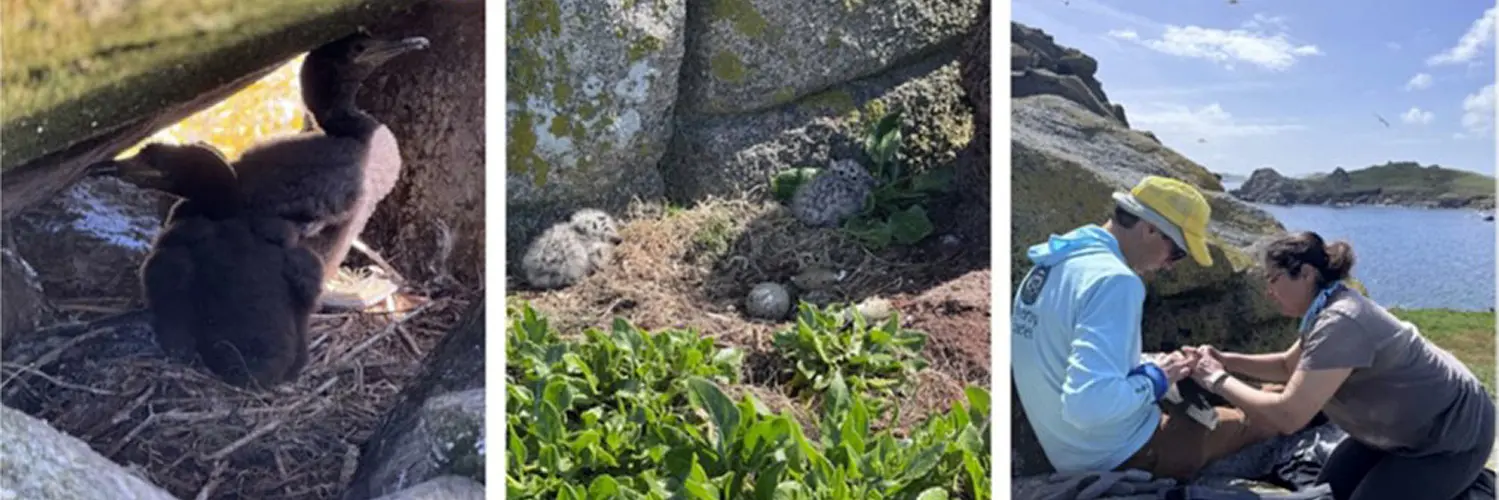
Seabird populations are slowly recovering following successful efforts to eradicate invasive rats from several islands. However, for this recovery to continue, seabirds require healthy populations of small forage fish on which to feed. Sabiya's research is exploring how changes in forage fish availability influence seabird populations and wider ecosystem health, providing important evidence to support future conservation decisions.
Building a healthier future for Scilly's ecosystems
Together, these projects are contributing to a greater understanding of how marine and coastal ecosystem's function and recover. By supporting both seagrass research and seabird ecology, donors are helping University of Exeter researchers generate the evidence needed to protect biodiversity and strengthen ecosystem resilience in the Isles of Scilly for generations to come.
“Our aim is to better understand the relationships that underpin healthy marine ecosystems and use that knowledge to support effective conservation,” says Dr Alice Trevail.
The team's work in the Isles of Scilly would not be possible without the generosity of Sue Scott-Gatty and Paul and Kate Bromley.