
Tackling inequality across the South-West
The South-West Social Mobility Commission, funded by Stephen Dawson
Lee Elliot Major & Ann-Marie Sim
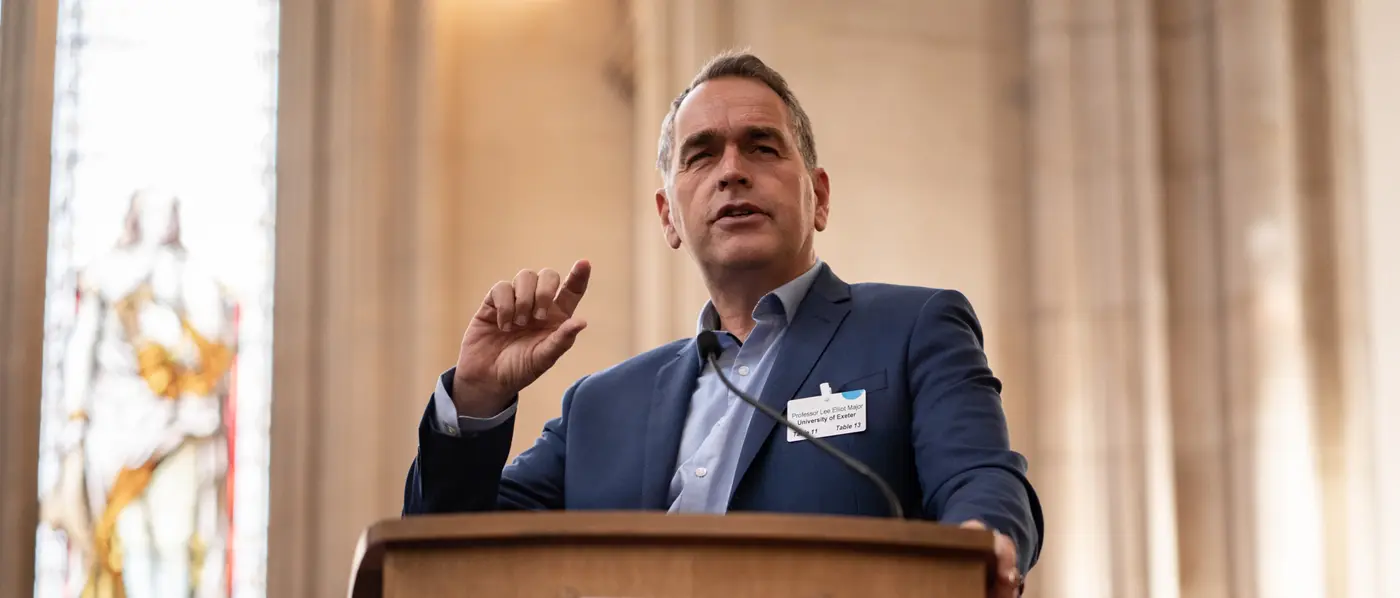
Children and young people from under-resourced backgrounds in the South-West peninsula are growing up with limited access to the networks, guidance and opportunities that help them thrive. As a result, educational outcomes, career prospects and life chances are shaped by geography as much as talent. Led by Professor Lee Elliot Major and Dr Anne-Marie Sim, the South-West Social Mobility Commission is changing this.
At the heart of this work is a simple but powerful question: how can we ensure that where you grow up does not determine how far you go?
The South-West Social Mobility Commission was formed due to the vision and generosity of Stephen Dawson, Chair of the Cobalt Trust, in response to a 2022 University of Exeter report which evidenced that South-West has the worst educational outcomes for disadvantaged young people in the country - only 37% of children from the poorest fifth of households leave primary school with basic reading, writing and maths skills, the lowest proportion in England.

Bringing together educators, employers, researchers and community leaders, the Commission works to understand the specific barriers facing young people in the region, and create practical, evidence-led solutions that can help remove them.
The Commission’s early work focused on building a strong evidence base for change, combining regional data, lived experience and national research to shine a light on inequality in the South-West. This enabled the Commission to influence policy discussions, support targeted interventions and amplify the voices of young people in this region, whose experiences are often overlooked in national debates.

Sustained funding from the Cobalt Trust has enabled the Commission to move beyond analysis to delivery, creating pilot initiatives and partnerships designed to improve access to education, skills and employment. Its interventions have included:
- A high-impact tutoring model led by university students, embedded in curriculum, designed to support pupils with targeted, small‑group academic support that builds confidence, strengthens attainment and improves progression outcomes. The model has demonstrated a 33% improvement in literacy outcomes across the 350+ pupils that have taken part so far.
- An equity scorecard, which is a self-evaluation tool for schools to assess and enhance how they serve students from under-resourced backgrounds. By integrating public data, stakeholder surveys, and self-assessment insights, the scorecard offers a comprehensive view of a school’s efforts to level the educational playing field.
Our progress has been possible because of the generosity and commitment of Stephen, which has provided the Commission with flexible funding that can be utilised according to the highest need and opportunity for impact.
Looking ahead, the Commission will continue to build momentum, deepening its research, strengthening cross-sector collaboration and championing long-term change. Its aim is not only to highlight inequality, but to help dismantle it.
Stephen’s generosity has helped turn a shared concern into a coordinated regional effort, demonstrating how targeted philanthropy can play a catalytic role in improving life chances for young people across the South-West.