
Uncovering lost histories in Ethiopia and Bahrain
The David Higgins PhD studentship and archaeological research programme
Professor Timothy Insoll OBE
Across eastern Ethiopia and the Arabian Gulf, buried beneath centuries of soil and stone, lie the remains of long-lost civilisations. Uncovering these hidden histories is the work of Timothy Insoll, Al Qasimi Professor in African and Islamic Archaeology.
Timothy’s research has been sustained by the long-term support of alumnus and philanthropist David Higgins. Most recently, a gift from David established a PhD Studentship in the University’s Institute of Arab and Islamic Studies alongside funding for multiple excavation seasons across the region.
In Bahrain, David's support has enabled the first PhD research on the later historical archaeology of the country, carried out by his doctoral student, Samantha Dobson. Archaeologists working in Bahrain and throughout the Gulf have traditionally focused on ancient civilisations such as Dilmun, or the Hellenistic and medieval Islamic periods, but have largely neglected the later historical archaeology of the region. David's funding allowed Samantha to address this gap, which examined the archaeology of Muharraq, the main centre of the pearl trade, from the 16th century onwards.
Samantha's completed PhD thesis has filled a substantial gap in our understanding of Bahrain's economic and social history into the pre-modern era, basing its conclusions on material evidence rather than documentary sources alone. David's support allowed her to grow as a researcher and to complete a study that has fundamentally contributed to our understanding of just how crucial Bahrain was in Gulf and Indian Ocean commerce between the 16th and 19th centuries. Her research will also be used to develop new displays in the Bahrain National Museum.
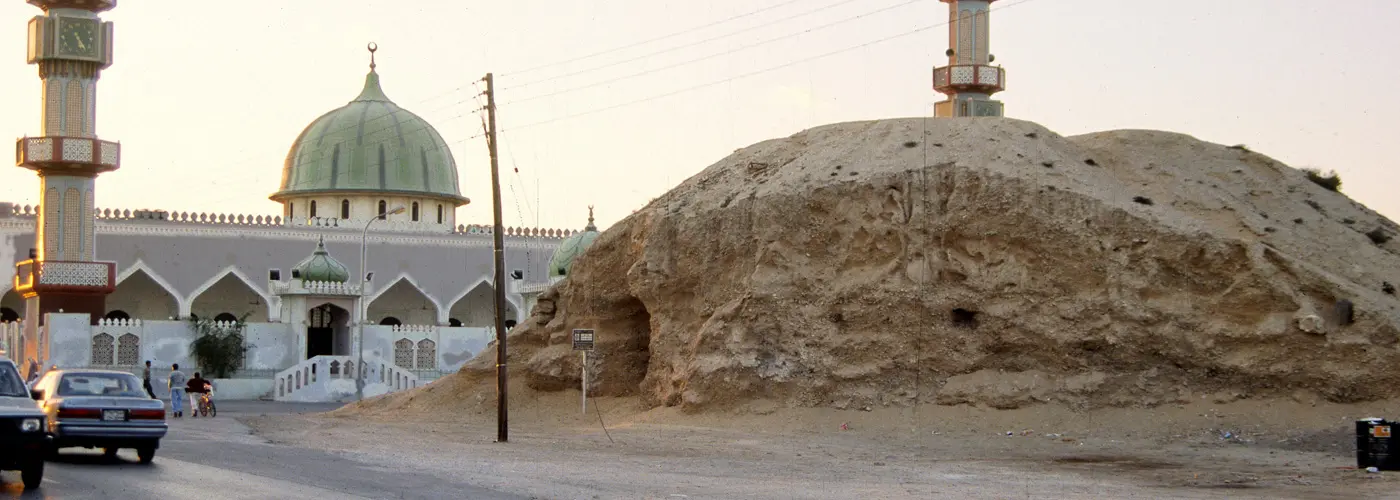
Alongside this work, excavations in Bahrain uncovered one of the earliest Christian buildings in the Arabian Gulf – the first physical evidence of a long-lost Christian community. Radiocarbon dating confirmed the building was occupied between the mid-4th and mid-8th centuries, when it was abandoned after the local population converted to Islam.
The building survived because a later mosque was built on top of it, preserving its stone walls, plaster floors, and domestic details such as small wine glasses – a habit that ended in the Islamic era. Three plaster crosses were recovered, along with graffiti scratched into the plaster featuring early Christian symbols including the Chi-Rho and a fish.
“This is the first physical evidence found of the Nestorian Church in Bahrain,” says Timothy. “It gives a fascinating insight into how people lived, worked and worshipped.”
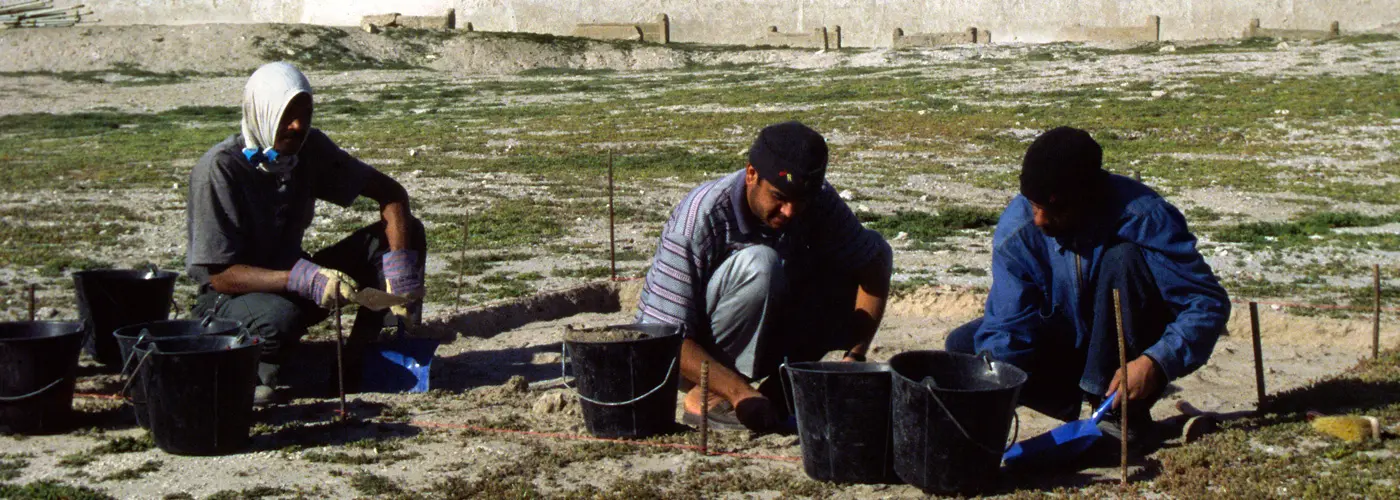
In Ethiopia, David's support has enabled multiple fieldwork seasons at Harlaa, a medieval Islamic trading centre near Dire Dawa. The excavations focused on two well-preserved mosques, revealing sophisticated architecture, stone column bases, and evidence of extensive international trade including Chinese ceramics, Indian carnelian beads, and Iranian fritware. A hoard of silver coins of national importance to Ethiopia was also recovered, containing a Mongol Ilkhanid coin and clipped silver pieces that are still being identified.
The wider impact of this research extends beyond academic discovery. A museum was developed at the Bahrain Christian site, and in Ethiopia, the Harla site museum and heritage trail are now established and managed by the local community.
The work of Timothy’s team continues to unlock new discoveries about the spread of Islam and Christianity across the region, made possible by the generosity of David.