Democratic and Anti-democratic Discourses in 19th-Century Britain
Monday 3rd November 2025, 15:00-17:00 Digital Humanities Seminar 2 (B.02) /Queens
Workshop organised by the Centre for Political Thought with the support of Horizon REDIRECT project
Speakers:
Cesare Cuttica (Paris 8 and Helsinki Collegium for Advanced Studies)
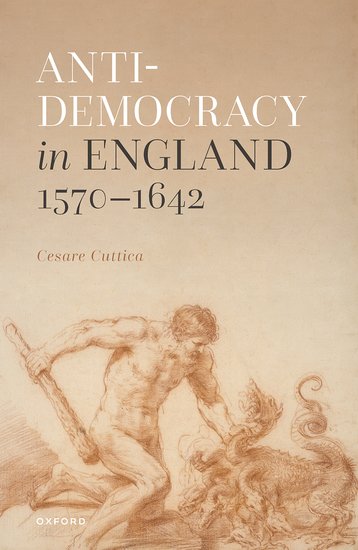
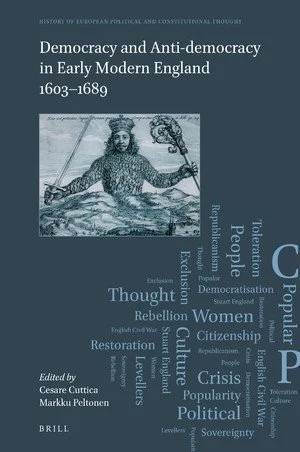
'Anti-Democratic Discourse in 19th Century Britain’
Ross Carroll (Dublin City University)
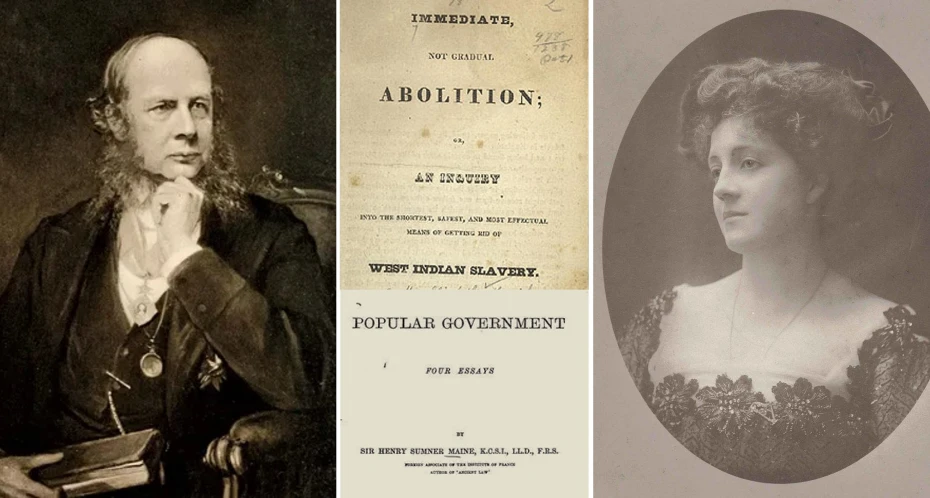
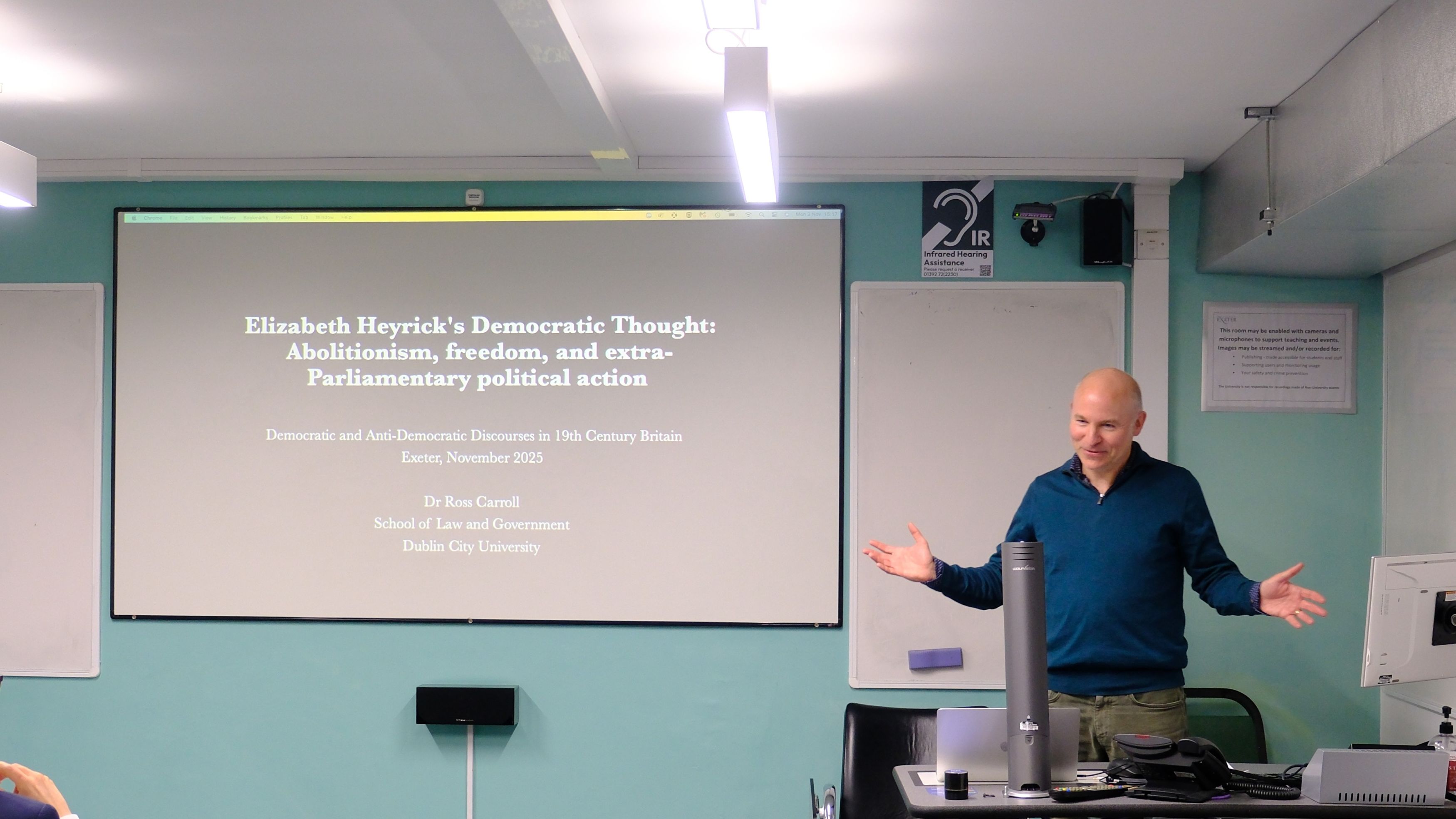
'Elizabeth Heyrick's Democratic Thought: Abolitionism, freedom, and extra-Parliamentary political action'
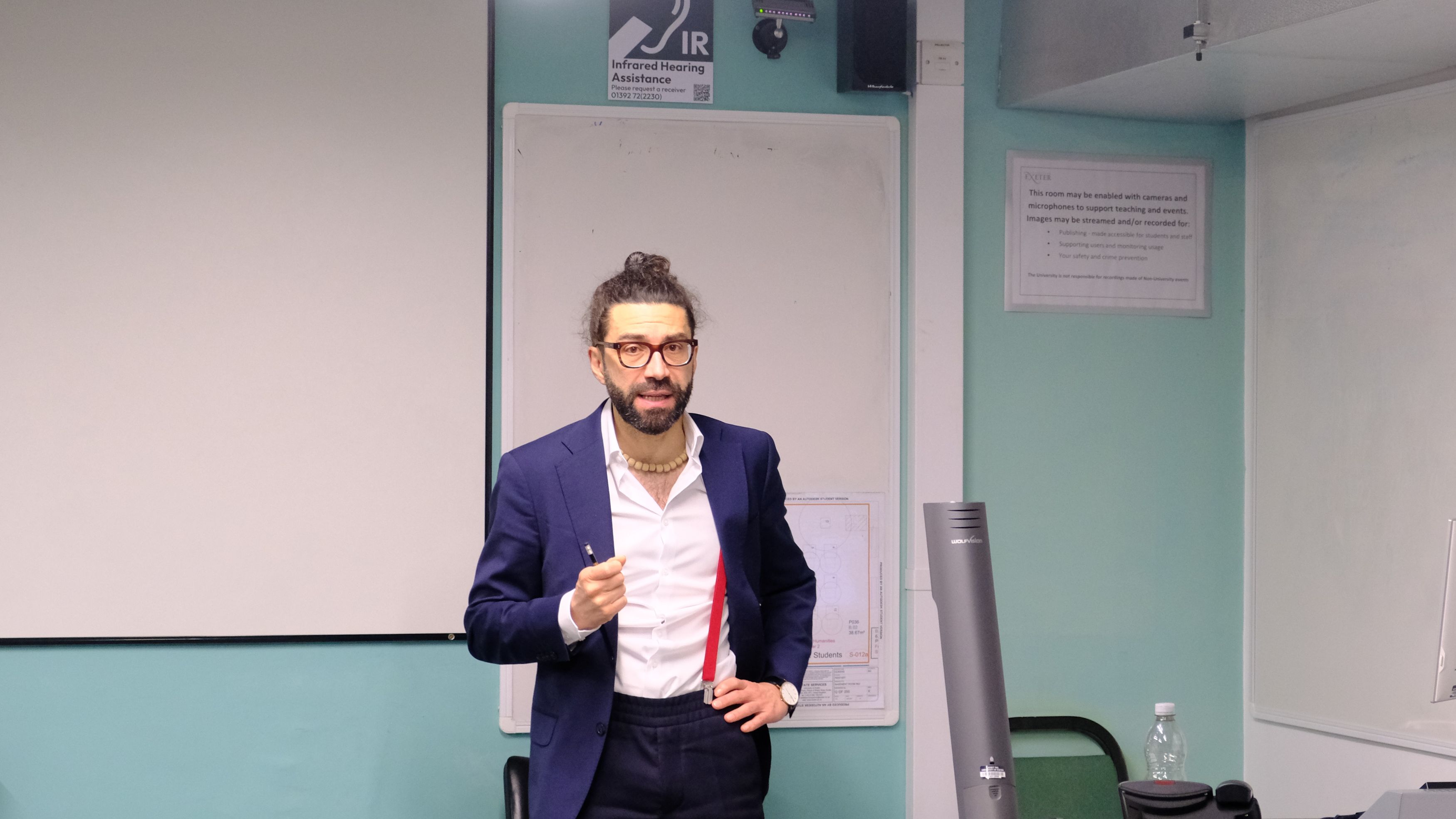
Dr Ross Carroll (Dublin City University) and Dr Cesare Cuttica (Paris 8 and Helsinki Collegium for Advanced Studies) presented their work during a special event, organised by the University of Exeter’s Centre for Political Thought with the support of the Horizon REDIRECT Project, on Democratic and Anti-Democratic Discourses in 19th Century Britain, on Monday 3rd November 2025.
Ross Carroll discussed the democratic impulses to be found in the works of English abolitionist Elizabeth Heyrick (1769-1831). While typically read in a humanitarian or religious context, Heyrick’s work also demonstrates three distinct democratic features. Firstly, Heyrick sought to democratise the abolitionist movement itself, moving away from a male dominated movement led from Westminster, which was happy to embrace a gradual approach to emancipation. Heyrick herself was born in Leicester and lived in the midlands throughout her life. Secondly, Heyrick attempted to mobilize popular power and the importance of coalition building (especially for women still unable to vote, but with a key role in the purchase of domestic goods) by advocating for the boycott of slave-produced goods from the West Indies. Thirdly, Heyrick emphasised the democratic instincts of liberatory movements within the enslaved themselves, specifically regarding the Demerara Uprising of 1823, in what is now Guyana.
Cesare Cuttica presented on the work of British whig, historian and jurist Henry James Sumner Maine (1822-1888). A critic of democracy, Maine’s writings, including some lesser-known texts, are examined with particular attention paid to his belief that democracy poses a threat to culture and science. Maine contrasts the democratic politics of the United States of America, with his belief in their relative scientific and culture poverty relative to Europe. Cuttica contrasts the work of Maine against the work of two prominent American defenders of democracy: poet Walt Whitman and philosopher John Dewey. Maine believes democracy to be irreconcilable with the advancement of cultural and scientific progress, due to the inherent conservatism found in the masses, who were suspicious of change. The relevance of this for contemporary political theorising is clear, as concerns regarding misinformation and polarised and uninformed electorates become increasingly pressing.
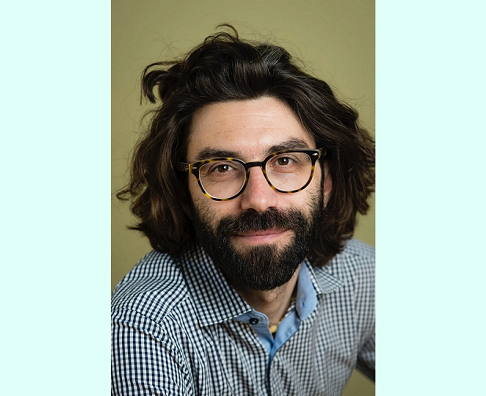

Ross Carroll is a political theorist working on a range of themes, including the politics of humour, the political thought of Edmund Burke, and the history of abolitionism. More recently, he is also interested in multigenerational democracy and how it might be achieved. He has a BA in politics and philosophy from University College Dublin (2003), a Msc in International Relations from the London School of Economics (2004), and a PhD in Political Science from Northwestern University in Illinois (2013). He was a Fulbright scholar in 2005-6 and from 2009 to 2012 he served as Assistant Editor of Political Theory: an International Journal of Political Philosophy.
Before arriving at DCU in 2023 he taught for two years at the College of William and Mary in Virginia and for eight years at the University of Exeter in the UK. His monograph Uncivil Mirth: Ridicule in Enlightenment Britain was published with Princeton University Press in 2021 and won the Morris D. Forkosch prize for the best first book in intellectual history. His second book, Edmund Burke, was published in 2024 as part of Polity's Classic Thinker series.
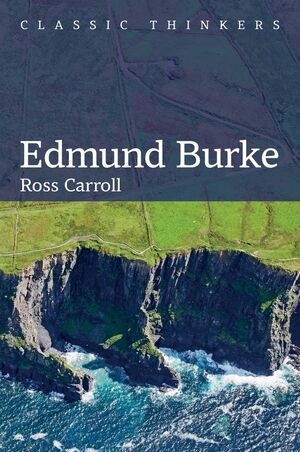
Ross Carroll, Edmund Burke (Polity, 2024)