

The Trouble with Liberal Democracy
The current state of representative democracy and possible alternatives
Workshop organised by Horizon REDIRECT and the Centre for Political Thought
Wednesday 18 March 2026, 14:00-17:00, Digital Humanities Seminar Room One
Chair: Alex Prichard (Exeter)
Introduction: Dario Castiglione (Exeter)
The trouble with Liberal Democracy
14:20 – 15:00: Ruth Kinna (Loughborough)
Rose Pessotta’s anarchist critique of representative government revisited (+ Q/A)
15:00 – 15:40: Stuart White (Oxford)
To win the battle of democracy: republican politics and democratic Marxism (+ Q/A)
Tea/Coffee Break
16:00 –16.40: Clementina Gentile Fusillo (UCL)
Seeing like a representative: the hidden demands of liberal democracy (+ Q/A)
16:40 - 17:00: General discussion
Featured image: Red Wood Walls and Windows by ShebleyCL is licensed under CC BY 2.0
Ruth Kinna
Rose Pessotta’s anarchist critique of representative government revisited
This paper uses the conflict at the Republic Steel Works in 1937, remembered as the Memorial Day Massacre, as an entry point to examine an interwar anarchist critique of representative government. In the hands of Rose Pesotta, a leading figure in the International Ladies Garment Workers Union, it promoted ‘human’ over ‘property’ rights, anchoring their defence in industrial unionism. Framed by anxieties about the rise of fascism, the critique affirmed an older idea of self-government to address the inherent injustices and evident flakiness of republicanism in America. Rather than dismiss the critique as a by-gone expression of reductive class politics, I suggest that this interwar analysis of republican collapse is still playing out in post-war liberal democracy.
Stuart White
To win the battle of democracy: republican politics and democratic Marxism
What is a republican politics? In contemporary academic political theory there is much discussion of republican values and of what an ideal republican polity should look like (Pettit 2012). There is less discussion of how to think about the practice of republican politics in contemporary societies under non-ideal social and political conditions. This paper addresses this topic by bringing republicanism into a dialogue with Marxism and, more specifically, with the perspective I term democratic Marxism (exemplified by some thinkers associated with 1970s/80s ‘Eurocommunism’). I explore links between democratic Marxist ideas about the state and revolution and a way of conceptualising republican politics that I term republican struggle. I draw out affinities between the democratic Marxist conception of revolution as process and one central objective of republican struggle – to defend the democratic elements, and to extend them so as to diminish the oligarchic elements, of the mixed constitution of capitalist democracy. I argue that the two perspectives, while having much in common, nevertheless have differences and distinctive strengths and limitations. The democratic Marxist perspective helpfully highlights the ‘ruptural’ or revolutionary quality implicit in republican politics while the perspective of republican struggle arguably has its own advantages, such as a greater openness to organisational pluralism. This makes it sensible to see them as complementary perspectives.
Clementina Gentile Fusillo
Seeing like a representative: the hidden demands of liberal democracy
This paper offers a rarely seen picture: representative democracy as it appears from the "representative standpoint" (Fusillo 2023), that is, as a system of relationships and related spaces in which representatives engage in the fulfilment of their function. Against the common assumption that the representative–represented relationship is the primary or only analytically relevant relation in democratic representation, we argue that democratic representation rests on a three-fold minimal conceptual structure. Beside the 1) relationship between the representative and the represented, unfolding in “the square”, this also includes two further, equally necessary relationships, that 2) of the representative with other representatives in “the circle”, and that 3) of the representative with themselves in “the self”: each relation and space attending respectively to the partisan, the unifying and the reflective-transformative function or representation. Together, these form the core conceptual architecture without which democratic representation cannot be said to occur. Yet the complexity of contemporary liberal democracy exceeds this core. Historical developments in parliamentary government, party organisation, bureaucratic expansion, and media transformation have layered onto this minimal structure a historically emergent infrastructure of representation. Today’s representative must also navigate structured relations to 4) the state bureaucracy, 5) the political party, 6) the media. The representative system thus appears as an increasingly dense web of justificatory spaces in which representatives are simultaneously agents and subjects of power.
Recasting liberal democracy from this standpoint allows us to reconsider what is “wrong” with it. Rather than locating the democratic deficit solely in a loss of popular control, this analysis suggests that contemporary crises may stem from a mismatch between the escalating structural demands placed on representatives and the normative expectations we continue to impose upon them. Seeing like a representative, in this sense, reveals liberal democracy not simply as failing, but as operating under under-theorised conditions of systemic strain. At the same time, the recursive movement between squares, circles, and the self, reveals an underexploited democratic resource. The experience of representing others cultivates judgement, mediates plurality, and exposes representatives to ongoing ethical formation. “Seeing like a representative” therefore is not only a diagnostic perspective but a civic capacity. Liberal democracy may be failing in part because we have not fully recognised — or institutionalised — what is already structurally right about it. By popularising, multiplying and fostering the experience of representing others, we may have a chance to affect a breakthrough in the quality of our democratic education and, in turn, in our capacity to make democracy work.

Alex Prichard’s research lies at the intersection of International Relations, political theory and anarchist studies. His work focuses on anarchist thought and anarchist constitutional politics in particular, as well as points at intersections and disagreements in anarchist and Marxist philosophies. In addition to this, he is interested in the ethics and phenomenology of war and violence, republican political theory, and co-production methods in political philosophy. He is co-author, with Ruth Kinna (Loughborough), of Constitutionalising Anarchy, forthcoming in the LSE International Studies series, published by Cambridge University Press.

Dario Castiglione’s main areas of research comprise democratic theory and the history of early modern political philosophy. He has written on representation, citizenship and constitutionalism; theories of civil society and social capital; the constitutional nature of the European Union; the Scottish Enlightenment, Hume and Mandeville; and 18th-century theories of the social contract and of their crittiques, and early modern scepticism. His main current research interests are on representation and political legitimacy; and the way in which political and conceptual discourses translates across linguistic and cultural divides.
_30.01.25.jpg)
Ruth Kinna is Professor of Political Theory at Loughborough University. She is a political theorist and historian of ideas with interests in historical and contemporary anarchism, nineteenth and early twentieth-century socialist thought, utopianism and political militancy. She is co-founder and co-convenor (2005-2018) of the Anarchist Studies Network (a specialist group of the Political Studies Association) and with Matthew S. Adams, co-editor of the peer review journal Anarchist Studies.
Her most recent book, co co-authored with Alex Prichard (Exeter), provisionally titled, Constitutionalising Anarchy: Individual Sovereignty, Association, Non-Domination, is forthcoming in the LSE/CUP International Studies Book Series.
She is editor of the Continuum/Bloomsbury Companion to Anarchism (2012/14) and more recently of the Handbook of Radical Politics (Routledge, 2019 with Uri Gordon) and Cultures of Violence (Routledge, 2020 with Gillian Whiteley).
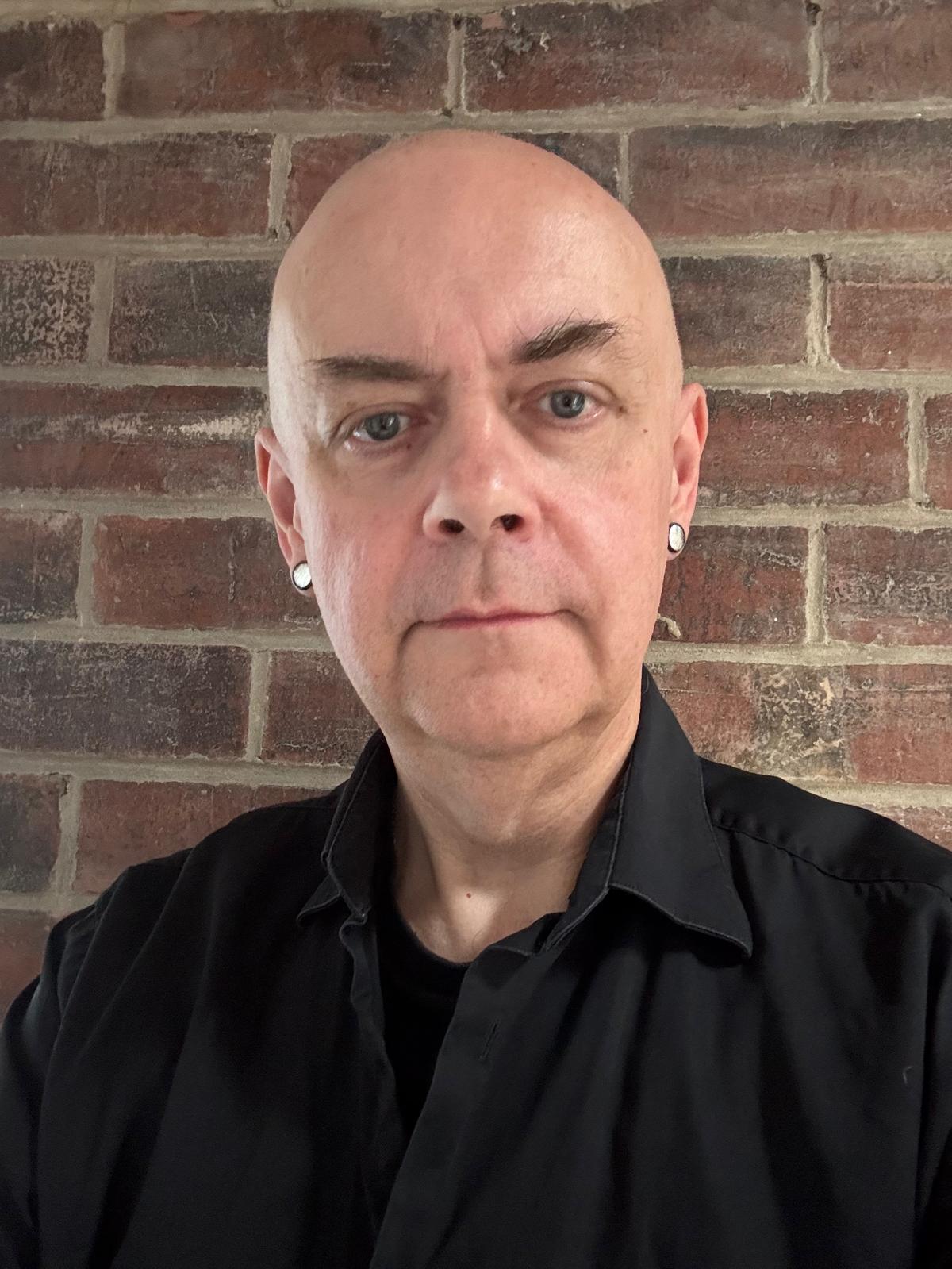
Stuart White is the Nicholas Drake Tutorial Fellow in Politics and Associate Professor of Politics at the University of Oxford. His research focuses on democracy, citizenship and property rights and the question of what rights to resources we should have as members of a democratic community. Recent publications include: (co-ed. with Bruno Leipold and Karma Nabulsi) Radical Republicanism: Recovering the Tradition’s Popular Heritage (2020); With Debra Satz, he recently co-wrote What's Wrong with Inequality? His new book is The Wealth of Freedom: Radical Republican Political Economy (OUP, 2025)

Clementina Gentile Fusillo is British Academy Postdoctoral Research Fellow at University College, London. She received her PhD in Politics and International Relations from the University of Warwick in 2021 with the dissertation titled “On the Virtues of Truth: Generativity and the Demands of Democracy”. She has taught at the University of Sheffield and was a Post-doc Fellow at the Forschungskolleg Humanwissenschaften, Goethe-Universität Frankfurt. Her main areas of research include Political Theory, Normative Analysis, History of Ideas, Truth and Politics, Representation, Hannah Arendt, Aldo Moro.
This week, the REDIRECT project and the Centre for Political Thought welcomed Ruth Kinna (Loughborough), Stuart White (Oxford), and Clementina Gentile Fusillo (UCL), for a special event entitled The Trouble with Liberal Democracy. Perspectives from within and outside of the liberal democratic tradition were explored on what is wrong with liberal democracy as currently formulated and implemented.
Ruth Kinna was the first to present, doing so on the life and thinking of anarchist trade unionist Rose Pesotta (1896-1965). Born to Jewish parents, in modern day Ukraine, Pesotta moved to New York City in 1913, where she became actively involved in the International Ladies' Garment Workers' Union (ILGWU). Pesotta promoted a shop based, bottom-up, democratic form of organisation, by and for women, and deeply rooted in the tapestry of immigrant communities who formed the US textile industry. A vehement anti-communist, Pesotta attempted to minimise the influence of pro-Soviet groups on the ILGWU. Whilst sometimes described as increasingly moderate over the course of her life, Kinna emphasised the enduring radicalness of Pesotta’s thinking. Pesotta retained her belief in transnational labour solidarity as the space for democracy. The problem of (liberal) democracy, for Pesotta, was its racialised, gendered, and classist understanding of the demos.
Stuart White presented on democratic Marxism and its connection to republican thinking. Drawing on the work of Nicos Poulantzas (1936-1979), White advocated for the significance of the four theses of democratic socialism: continuity (a socialist transformation of capitalist society must preserve the core institutions of parliamentary democracy), transformation (we must transform political structures so as to enhance the power of the working class and their allies), revolution as process (revolution should not be understood as an event but as a process assisted by a transformation of the political structure whilst retaining the core institutions of parliamentary democracy), rupture (while the revolution is process-driven, it will still have important points of rupture which distinguishes it from social democratic reform and gives it Marxist character). Real-world examples pointed to include Participatory Budgeting in Brazil and the Wage Earner Funds proposal from Sweden. Republicanism helps us to utilise the idea of the mixed constitution to analyse the competing power of democratic and oligarchic (and sometimes monarchic) decision making structures and also foregrounds the significance of civic virtue for the success of political struggle.
Clementina Gentile Fusillo presented on ‘seeing like a representative’, providing a systemic analysis of democratic representation. Our contemporary crisis of representation has led to an increasing attempt to reconceive of representation not as dyadic and static but as systemic and dynamic. This involves challenging the primacy of the relationship between the representative and those they represent and questioning the idea that the representative is, at all times, the wielder of power. In doing so, space is opened up not just to consider the relationship between the representative and those they represent (termed ‘the square’), but also between different representatives themselves (the circle), and the representative’s relationship with the self. Of significance also is the relationship of the representative to the political party they are a member of, media organisations, and state bureaucracy. All six faces of representation identified also feed into and influence one another. This critical reflection on the power structures faced by representatives allows for a re-evaluation of representative success and failures, creating space for further analysis.
Thank you to all our speakers for their interesting and engaging presentations.