
What we offer
.webp)
The Digital Humanities team offers specialist expertise to advance research and teaching through academic collaboration, training and research seminars, and sector-leading facilities for digital investigation and engagement. Our focus is on inspiring and empowering staff and students to use innovative technologies as digital scholars.
We work closely with researchers within the Faculty of Humanities, Arts and Social Sciences, but we are happy to discuss collaborations with all parts of the University. We are available for external consultancy and commercial partnerships: please contact us for more information.
Academic researchers seeking DH expertise are invited to explore the example scenarios below, and can get further resources and estimates for DH Lab development work or other bookings via our online form. Students seeking support are advised to contact us directly.
Collaboration on Projects and Digital Resources
The Digital Humanities team is available to collaborate on research projects with digital elements. Our involvement varies depending on the needs of the project, but previous projects have included photographing archival collections, partnering with research teams to encode and publish complex literary and historical texts, and creating online platforms to exhibit digitised materials.
The DH Lab can provide advice and quotes for digital development work, which can then be costed by Research Services. We have various frameworks available that can be adapted to the needs of each project, from Wordpress websites and blogs which project teams can edit themselves, to more complex databases and bespoke sites for presenting collections of texts and images online.
Please complete the online form to find resources and optionally request a quote for development of your digital output.
Please review suggested DH resources and ensure there is sufficient room in your budget before requesting a quote, as this work must be properly costed in. PIs are requested to send requests for quotes at least six weeks before bid submission, but are encouraged to consult the form for resources at a much earlier stage. Larger DH-focused bids may benefit from identifying a CI to lead on the digital outputs (depending on the PI’s areas of interest), and/or including whole posts, such as a DH postdoc or intern. We regret that if there is insufficient budget or time before submission to allow for responsible DH development work to be included, we will not be able to support the bid.
"I'm writing a funding bid to create a digital archive of women's suffrage materials - about 200 documents, photographs, and audio recordings. I want to make them searchable and accessible to scholars and the public, but I have no idea how to build something professional that will outlast my project. I keep seeing terms like 'metadata schema' and 'IIIF' but don't understand what they mean."
"I want it to look professional - not just a basic website with PDFs"
"My project traces Cornish miners globally between 1850-1920, and I want an interactive map showing migration patterns and family connections. I have basic location data but hope to crowdsource additional information from genealogists worldwide. I've seen amazing story maps online but have no idea how to build something that could handle public contributions."
"Is this feasible within a three-year project timeline?"
"I have access to a collection of 16th-century merchant letters that have never been published, and I want to create a digital edition with searchable transcriptions alongside high-resolution images. I’ve heard about TEI encoding but it seems quite complex, and I'm not sure if I should attempt manual transcription or explore AI text recognition. I also want to be able to annotate and cross-reference the letters, but I don't know what platform could handle that functionality."
"I want more than just images - I need proper scholarly infrastructure"
"I have 2,000 17th-century sermons and want to use AI to identify patterns in language and themes. I keep reading about large language models and topic modelling, but don't know which approach suits my material, or whether the technology is reliable enough for scholarly arguments. I'm also worried about AI biases on historical texts."
"Can I do this myself or do I need a DH Co-I or postdoc?"
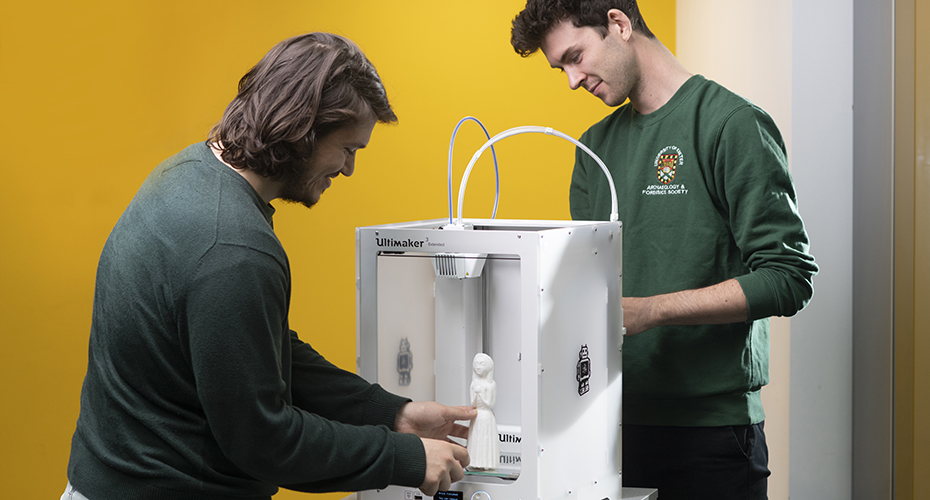
"I'm working with a museum on Roman coins and Celtic metalwork, wanting detailed 3D models for research and public engagement. I've heard about photogrammetry and RTI but I'm not sure which captures fine detail on corroded surfaces best. I'm worried about technical complexity and whether I can realistically manage this alongside other research objectives."
"How much time and expertise does this kind of work actually require?"
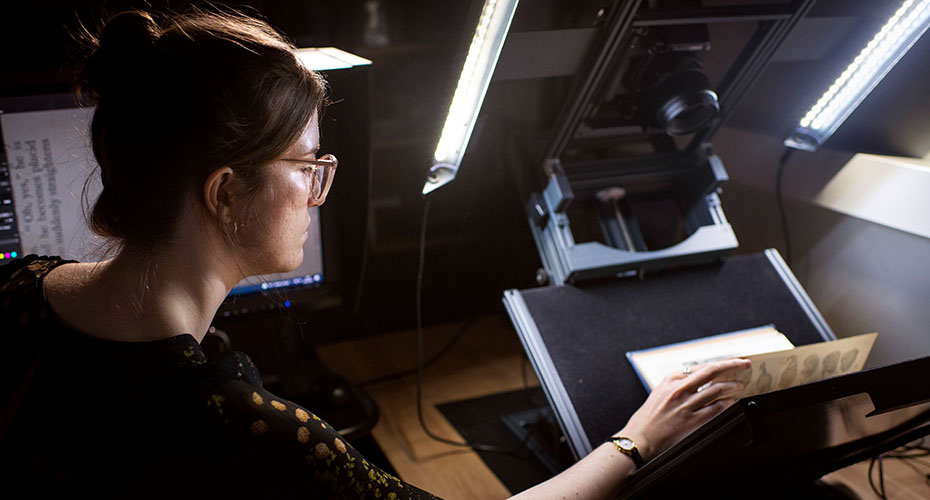
"I'm working with the local record office to digitize about 500 19th-century parish registers and correspondence for my project on rural literacy. The documents are in various conditions - some fragile, different sizes, and the handwriting quality varies enormously. I need high-quality images for analysis but I'm not sure about the technical specifications required, or whether I should be scanning or photographing. The record office is supportive but wants to know about workflow and file management."
"I know I need good images, but what does 'good' actually mean technically?"
"I want to create a podcast series interviewing elderly residents about post-war community life, but I've never done anything like this before. I need to record in people's homes and community centres, so I'm worried about audio quality and background noise. I also have no idea about editing software or how to make it sound professional. My funding includes dissemination costs, but I don't know whether I can loan DH Lab equipment or whether I need training."
"I don't want it to sound like I recorded it on my phone in a café"