GeoRes - Geomaterials: from Waste to Resource
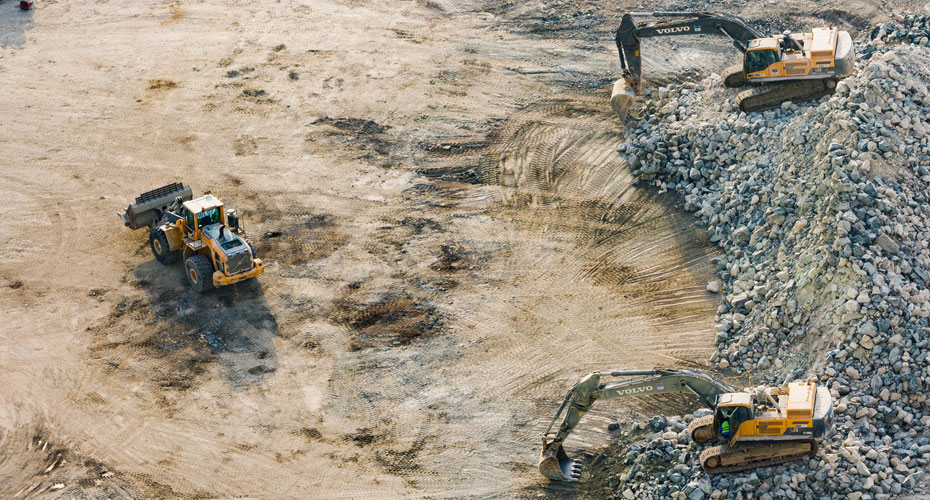
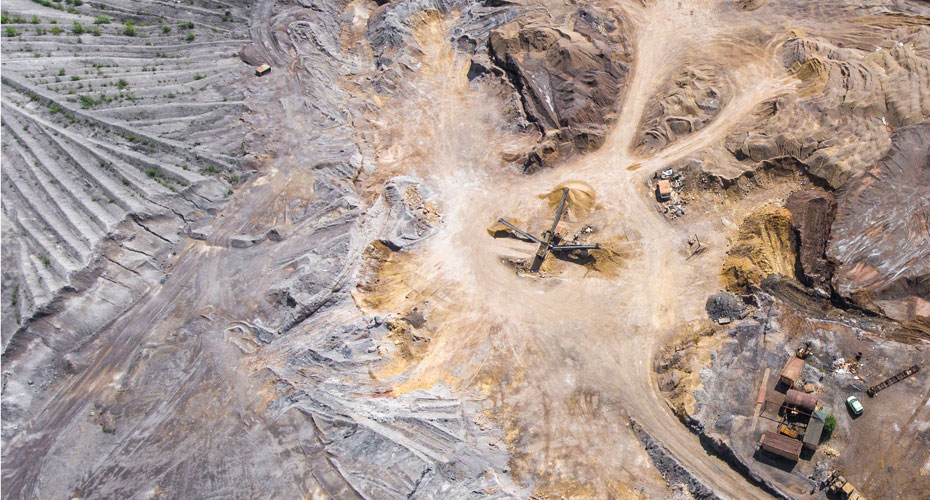
GeoRes aims to develop innovative solutions for the reuse of waste geomaterials generated by construction and mining industries across Europe and worldwide.
GeoRes will develop protocols, software and tools to improve the engineering characteristics of waste geomaterials, and to guarantee the level of performance over the service life of geostructures considering site-specific conditions.
GeoRes is a Marie Skłodowska-Curie Research and Innovation Staff Exchange (RISE) project funded from the H2020 Programme (H2020-MSCA-RISE-2017) of the EC under grant agreement n. 778120. More information on RISE can be found at the official Marie Curie Actions webpage.
Contact
Network Coordinator: Professor Akbar Javadi, University of Exeter, Exeter, UK.
For more information on the GeoRes Project, email A.A.Javadi@exeter.ac.uk
Project overview
GeoRes aims to expand the scope of the involved teams’ research in addressing some of the outstanding challenges in geotechnical and geoenvironmental engineering: developing innovative solutions for the reuse of waste geomaterials generated by construction and mining industries across Europe and worldwide.
Geomaterial waste represents half of the waste volume generated in Europe. Generally, these waste geomaterials exhibit poor engineering characteristics and/or specific mineralogical composition that prevent their direct reuse on construction/mining sites. However, if adequately treated, they could represent a valuable resource for construction projects with significant cost saving and reduction in the environmental footprint, thus contributing to the establishment of a circular economy.
To achieve this, GeoRes will develop protocols to improve the engineering characteristics of waste geomaterials, and to guarantee the level of performance over the service life of geostructures built from waste geomaterials considering site-specific conditions (climate, water table, leaching, weathering, hazardous compounds, etc.). The fundamental concern of the research in the GeoRes network is thus to develop strategies and tools for sustainable reuse of waste geomaterials generated by geoengineering activities, and to determine how to turn a waste geomaterial into a valued durable material, with a positive revenue stream.
GeoRes is a multidisciplinary and intersectoral network of creative and innovative researchers and practising engineers ready to face geotechnical and geoenvironmental engineering challenges which arise in the vanguard of technological innovation. The network is composed of 6 academic and 5 industrial beneficiaries and 6 third country partners.
Academic beneficiaries
- Coordinating Institution: University of Exeter (United Kingdom)
- Université de Lorraine (France)
- Università di Cassino e del Lazio Meridionale (Italy)
- Luleå University of Technology (Sweden)
- Greenland Institute of Natural Resources (Greenland)
- Norwegian Geotechnical Institute (Norway)
Industrial beneficiaries
- Ginger CEBTP (France)
- Ramböll (Sweden)
- Ecoloop (Sweden)
- Horizon Consulting Engineers (HCE) (UK)
- Synopsys (UK)
Third country partners
- École Polytechnique de Montréal (Canada)
- Monash University (Australia)
- Universidad de los Andes (Colombia)
- Universidade Federal do Rio Grande do Sul (Brazil)
- Iran University of Science and Technology (Iran)
- Institute of Rock and Soils Mechanics from the Chinese Academy of Science (China)
Work packages
GeoRes has been designed around three research-based Work Packages (WPs), which lead to effective management of the project and provide clear guidelines oriented to the accomplishment of the research objectives.
WP1 is primarily focused on the durability of the mechanical performance of the upgraded waste-geomaterials as a function of the context, site conditions, climate, etc. The goal of WP1 is to uncover the key mechanisms that control alteration of mechanical properties of upgraded waste-geomaterials in several contexts. For this purpose, we systematically explore the interplay between macroscopic and microscopic scales, and the relationships between site conditions, physio-chemical and hydro-mechanical behaviour within 3 distinct tasks:
- Task 1.1: To exchange knowledge and expertise on the state-of-the art advancements in the impact of climatic conditions on durability of mechanical performance of upgraded waste-geomaterials.
- Task 1.2: To develop original laboratory experimental protocols to assess durability of treated soils from micro to macro scales.
- Task 1.3: To identify key ageing parameters for mechanical behaviour.
WP2 is focused on the durability of transfer performance of upgraded waste-geomaterials when exposed to various environmental conditions e.g. saline, anaerobic, acid environment, extreme climatic conditions, etc. The overall goal of the WP is to determine and quantify the effect of the key mechanisms responsible for ageing and degradation of performances of geostructures. We methodically investigate the effects of different deterioration mechanisms such as sea water exposure of upgraded sediments, weathering, and freeze and thaw cycles on surface paste disposal and desulfurised tailings.
WP2 includes 3 tasks:
- Task 2.1: To exchange knowledge and expertise on the state-of-the art advancements in the impact of environmental conditions (climate, salinity, redox potential, acidity) on the durability of transfer performance of upgraded waste-geomaterials.
- Task 2.2: To analyse impact of the presence of contaminants or deleterious compounds on the long-term transfer properties of upgraded waste geomaterials.
- Task 2.3: To identify key ageing parameters for long term transfer properties
WP3 aims to develop new modelling tools that could be employed in the analysis, design and/or construction stage to predict the long-term behaviour of improved waste geomaterials. This WP contributes to the development of solutions and tools to better understand and predict the behaviour of treated waste geomaterials and hence improve/enhance their use in construction, dredging and mining activities.
WP3 includes 3 tasks:
- Task 3.1: To exchange knowledge and expertise on the state-of-the art developments in constitutive and numerical modelling of upgraded waste geomaterials - sharing knowledge on different modelling approaches and improving existing models.
- Task 3.2: Different (chemical or mechanical) treatments can be applied to a waste geomaterial to reach a design permeability before the material can be used as a cover, or an impermeable barrier.
- Task 3.3: Decision support system for management of excavated waste geomaterials.