
'To produce high quality, tasty and nutritious fruit and vegetables all year round using agroecological principles. To promote environmental and social sustainability, increase biodiversity, reduce food mileage and build soil health. To research and collaborate exploring new and innovative growing methods and techniques.'
The University have purchased two composters which are located at Holland Hall and Lopes Hall and will be used to compost food waste from the catered residences. Once the food waste has passed through the composter, it will mature for two to three months before it is then used on the Kitchen Garden and other areas on campus.
The Kitchen Garden

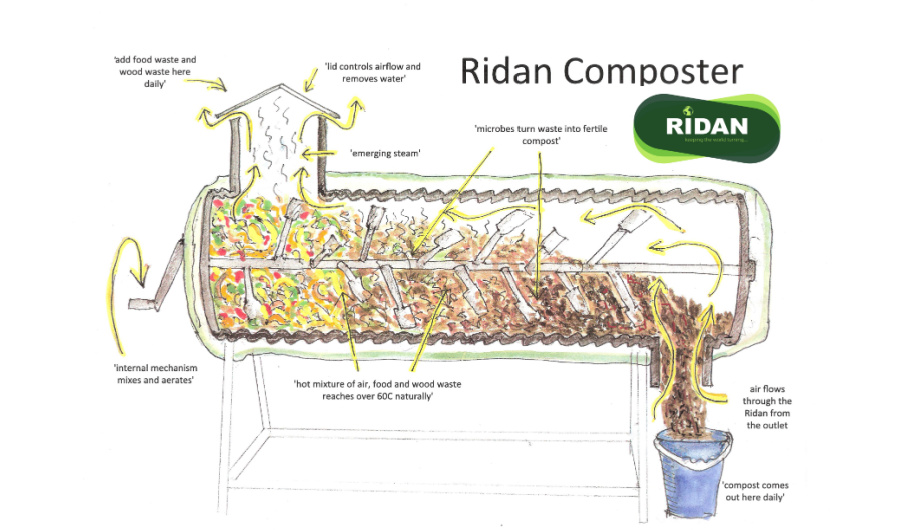
The process of the composter - turning the food waste into compost to be used on at the Kitchen Garden and around campus
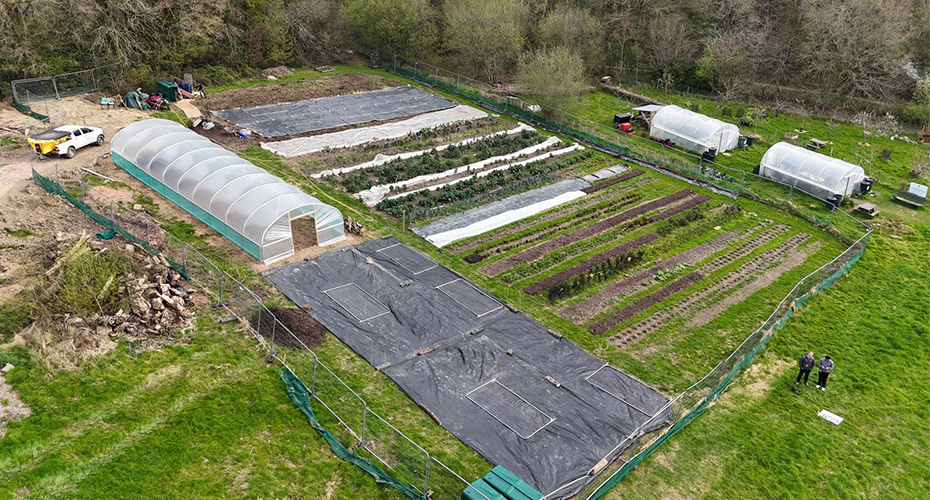
In collaboration with the University Grounds Team, we are proud to be growing our own produce here on the Streatham campus.
The Kitchen Garden supports the necessity to cut greenhouse gas emissions by reducing food travel miles, packaging and by using sustainable farming practices that don’t rely on fossil fuel inputs.
In its first year, The Kitchen Garden produced a variety of seasonal crops that our Chefs used in some of our dinner and banqueting menus, as well as in our salad dishes. In the year 2024-25, more than 2 tonnes of fresh produce were grown by the Kitchen Garden project and used directly in our menus.
The Grounds team have been trialling a range of both heritage and modern varieties, using organic and regenerative growing principles and techniques such as crop rotations, green manures and biological amendments that reduce the reliance on carbon intensive fertilisers.
Agroecology
Agroecology is about how sustainable food and farming systems are designed and managed. It applies ecological and social principles and includes sustainable practices such as organic farming, regenerative agriculture, agroforestry and IPM (integrated pest management).
- Principles include crop rotations where the same crop is not grown in the same place for many years to help manage pest and disease. Restoring soil health through farming is a major contributor to reducing greenhouse gas emissions.
- Green manures are used instead of fertilisers – they are plants such as Fabaceae (or Legumes; think beans, peas, pulses) that naturally replenish and store the nitrogen and other nutrients in the soil between cultivating the crops.
- Techniques such as interplanting, relay cropping and successional sowing all help demonstrate how small, well managed human scale systems can be more productive, resilient and sustainable than larger industrial farming practices.
- Through regular volunteer sessions and collaborations with colleagues across faculties, new and innovative techniques can be trialled and resilient social capital built.
Seasonal Updates
If you are interested in keeping up-to-date with what is being produced in the Kitchen Garden throughout the year, make sure you come back to read our seasonal updates.
Kitchen Garden Seasonal Update February 2026
Kitchen Garden Seasonal Update October 2025
Kitchen Garden Seasonal Update June 2025
Kitchen Garden Seasonal Update February 2025
Get more updates on the Eat & Shop Instagram channel.
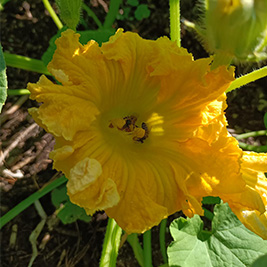
The squash plant flowers are popular with bees.

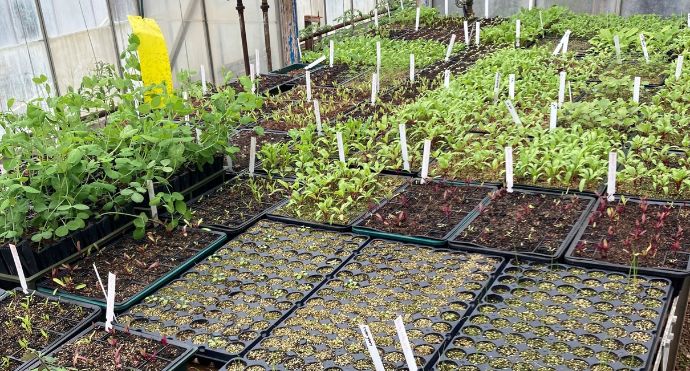
Seeds are being sown weekly so there will be a succession of crops across the year. Many varieties of tomato plants are growing along with basil, parsley, coriander and watercress. The herbs have been switched to a vertical system rather than horizontal.
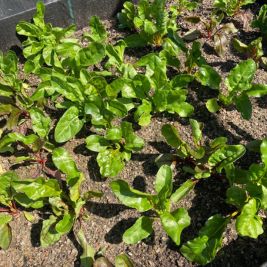
The outdoor beds, which are made from old pallets and re-used plastic, are used for growing plants including radishes, leeks, spinach, shallots, chard, fennel, Chinese cabbage and turnips.