
Armed Forces
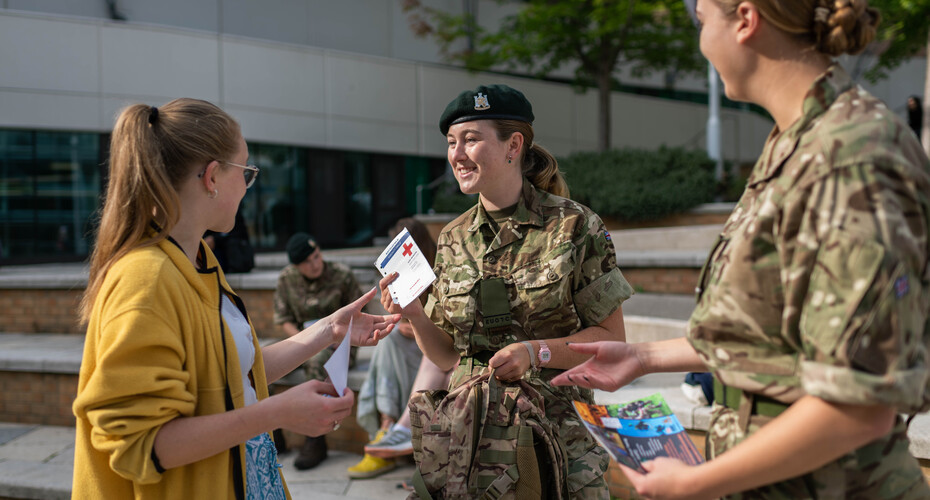
The Ministry of Defence (MOD) is responsible for implementing the defence policy set by the government and is the headquarters of the British Armed Forces. The British Armed Forces include the Royal Navy, the British Army and the Royal Air Force. These military branches offer a variety of roles, from combat and engineering to intelligence, logistics and medicine.
Each branch of the Armed Forces has its own careers/recruitment centres who provide information and advice on career options and entry routes. Read more about typical duties and responsibilities, entry requirements, key skills required and career development opportunities.
- British Army Careers – Discover a wide range of roles from frontline combat to engineering, healthcare, and logistics, plus how to join and progress.
- Royal Air Force Careers – Learn about flying, engineering, logistics, and specialist trades, along with application advice and development opportunities.
- Royal Navy Careers – Explore life at sea and onshore, including technical, warfare, and support roles, with details on training and career paths. Also see Royal Marines | Royal Navy
- Medical Careers Defence Medical Services are made up of uniformed medical and dental personnel from all three services. Also see Gov.uk.
The defence sector also offers graduates a wide range of opportunities, from active military positions involving safeguarding national security, to civilian roles in areas as diverse as cybersecurity, business development, engineering, technology, HR and management. If interested in these roles you may also wish to visit the following sector pages:
- Business Analytics, Strategy & Consulting
- Business Operations and Management
- Charities, NGO’s, Development Work and International Relations
- Engineering & Manufacturing Sector
- Health & Social Care: Medicine & Dentistry Work Area
- IT, Data and Tech: Cyber Security Work Area
- Politics, Government and the Public Sector
Further Research
If you would like to do further research into the defence industry , the following webpages may be useful.
- Armed forces careers – Prospects provides a good overview of the career options available in each of the forces and details information about inclusion and wellbeing
- Defence IT - outlines the main areas of work in this field, and key trends and developments
- UK Defence Outlook 2022 - a guide to the UK defence sector
- Ask a Soldier - Army Life Firsthand Insights & Advice | Army Jobs
- National Careers Service: Careers in the Armed Forces.
Every role is different so there are no definitive lists here. These are meant as a guide and should be considered in addition to fully exploring role requirements outlined in person specification, job description and adverts for each role you consider applying for –
- Adaptability – Coping with change, learning new skills, and adjusting to different tasks or locations.
- Communication – Clear, confident verbal and written skills for briefings, reports, and coordination.
- Cultural Awareness – Respect for diversity and the ability to work with people from varied backgrounds.
- Discipline – Maintaining focus, following procedures, and demonstrating self-control.
- Integrity – Upholding high ethical standards, trustworthiness, and reliability.
- Leadership – Taking responsibility, motivating others, and making decisions under pressure.
- Problem-Solving – Staying calm, thinking quickly, and finding solutions in high-pressure situations.
- Resilience – Physical and mental stamina to perform in demanding conditions.
- Teamwork – Working effectively with others in challenging and varied environments.
- Technical Competence – Depending on the role, skills in engineering, IT, navigation, medical care, or specialist equipment.
In order to develop these skills, remember Career Zone also offers a range of Personal and Professional Development sessions which are available to book on Handshake and run at least once per term. Please also read through the sections about Gaining Experience and Further Study and Professional Development to discover how you can develop your skills through experience and by gaining further knowledge or qualifications.
All experiences ranging from volunteering, active involvement in clubs/societies can help you to build relevant and transferable skills. You may wish to consider involvement in
Volunteering
The following student societies are linked to the respective Armed Forces divisions. Joining one will increase your insight and develop your skills.
- Exeter University Officers’ Training Corps (Army)
- University Royal Naval Unit Devon (Navy)
- Bristol University Air Squadron - RAF Volunteer Reserve unit for students studying at Bristol including UWE, Bath, Exeter and Plymouth Universities.
Other opportunities to develop transferable skills
- Armed Forces Cadet Force Adult Volunteers – Train and mentor cadets, develop instructional skills, and experience military-style activities.
- British Red Cross Volunteering – Take on roles in emergency response, refugee support, and community outreach, building problem-solving and empathy.
- Police Volunteer Cadet Leader (Adult Volunteers) – Support youth cadet programmes and develop leadership, discipline, and organisational skills.
- RNLI Volunteer Crew – Learn teamwork, navigation, and emergency response by supporting lifeboat operations.
- Scouts and Girlguiding Adult Volunteers / Girlguiding Volunteers – Lead activities, develop communication skills, and mentor young people.
- St John Ambulance Volunteering – Gain first aid skills, work under pressure, and build resilience through public event support.
- The Fire Cadets or Fire Service Volunteers – Learn teamwork and problem-solving in community safety and emergency situations.
University of Exeter Employability Schemes
- Exeter Award: The Exeter Award will help you stand out from the crowd and give you the confidence to shout about the experiences you've had at university. Professional development workshops such as ‘Communication and Collaboration Skills’ and ‘Virtual Escape Room’ may be of particular interest.
- The Exeter Leaders Award: Showcases your leadership skills, drawing on your previous experience.
- The Global Leaders Experience is a unique opportunity to develop your intercultural skills as part of a short, outbound mobility experience.
Finding part time work
Reserve Forces offer part-time paid roles in the Army, Royal Navy, and RAF. They combine training, teamwork, and leadership experience. Specialist advice on roles and the recruitment process can be accessed at armed forces careers centres (AFCO). Some may run recruitment drives during Fresher’s Week
Most graduates join the army as an officer, which is a leadership position.
The application process to the armed forces can involve several stages, including:
- health and fitness assessments
- aptitude and psychometric tests
- security checks
- interviews.
Before applying read TARGETjobs: How do I get a graduate job in the armed forces or emergency services?
Initial applications are made online through the following websites:
- Army recruitment. The Army runs a paid 12 month Army Officer Internship for which you apply a year ahead.
- RAF recruitment
- Royal Navy | Graduates
- Defence Technical Undergraduate Scheme (DTUS) – For engineering, science, and technical undergraduates planning a military career.
A sector related internship or placement year could be useful if you are interested in applying for a specialist area, such as engineering or healthcare. Consider also,
- Civil Service Summer Internship Programme
- MI5 internships and Early Careers Network - for people interested in the security services.
For general information about finding graduate and placement opportunities, please visit our Graduate Jobs page.
Some individuals decide to undertake further study to build their skills and knowledge of the sector and /or role. Not all roles or employers will require this, so it is important to research entry requirements and employer preferences before committing to additional training or qualifications. For some jobs, you do not need a lot of qualifications. Wherever you start, you'll have the chance to build a career, get more qualifications and move up through the ranks. Use the sites below to explore the professional development opportunities and ask for more details at your local Armed Forces Careers Office.
- Joint Services Command and Staff College – Higher-level professional military education for officers across all services.
- MOD Learning Credits Scheme – Funding for service personnel to undertake recognised qualifications.
- University Air Squadrons (UAS)
- University Officer Training Corps (UOTC)
Advice
If you are considering postgraduate or doctoral level study before entering your chosen sector, please visit our Postgraduate Study page for more information about choosing further study.
Information and links from professional bodies
If you have studied a related degree, check if your course is accredited by one of the professional bodies. Being a member of a professional body is voluntary; however, it can be valuable for developing networks, continuing your professional development, and generally keeping up to date with what's happening in the sector.
- Chartered Institute of Logistics and Transport (CILT) - Professional body for transport, supply chain, and logistics specialists — core skills in all branches of the military.
- Chartered Institute of Personnel and Development (CIPD) - Supports HR, training, and people management professionals, including those in military administrative roles.
- Chartered Management Institute (CMI) - Supports leadership and management development. Many Armed Forces training programmes lead to CMI-accredited qualifications.
- Institute of Leadership and Management (ILM) - Offers leadership qualifications and professional recognition; military courses often align with ILM standards.
- Institution of Engineering and Technology (IET) - Professional home for engineers, technicians, and IT professionals; works closely with military technical trades.
- Institution of Mechanical Engineers (IMechE)
Recognises and supports engineers, including those trained in military settings. Offers pathways to Chartered Engineer status. - Institution of Royal Engineers (InstRE) - Professional body for military engineers, supporting career development, technical standards, and networking.
- Royal Aeronautical Society (RAeS) -Covers all aspects of aerospace and aviation. Offers accreditation and specialist events for RAF and Navy aviation personnel.
- Royal College of Nursing (RCN) - Supports nurses in the Defence Medical Services and offers CPD, networking, and advocacy.