
Agriculture and Food Security
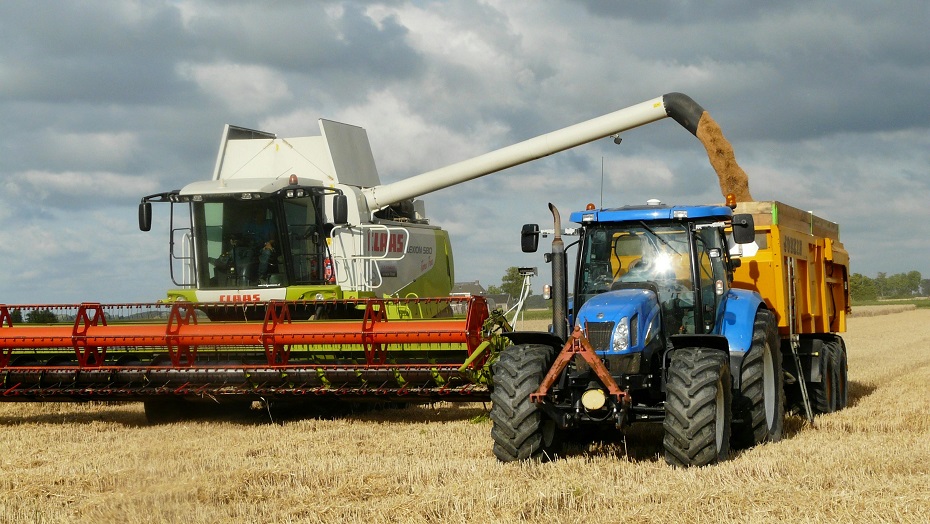
Agriculture and food security are deeply interconnected topics that are central to global development, health and sustainability.
Agriculture is the practice of cultivating soil, growing crops, and raising animals for food, fuel, and other products used to sustain and enhance human life. Key areas for consideration in agriculture are:
- Crop production: growing grains (like wheat, rice, maize), fruits, vegetables and legumes.
- Animal husbandry: raising livestock such as cows, pigs, poultry, and goats for meat, milk, eggs and wool.
- Agrotechnology: use of technology in agriculture, such as precision farming, drones, sensors, and genetically modified organisms (GMOs).
- Sustainable agriculture: practices that maintain soil fertility, use water efficiently, reduce chemical inputs and protect biodiversity.
In the UK, the official definition of food security aligns with the well‑established 1996 World Food Summit formulation: “When all people, at all times, have physical and economic access to sufficient, safe and nutritious food that meets their dietary needs and food preferences for an active and healthy life.” Source: United Kingdom Food Security Report 2024: Introduction, Policy Paper A UK Government food strategy for England, considering the wider UK food system.
The Link Between Agriculture and Food Security
- Primary source of food: agriculture provides the food needed for a secure diet.
- Livelihoods: over 25% of the world’s population depends directly on agriculture for income. This is an estimate from the Food and Agriculture Organisation (FAO) and the World Bank. According to the World Bank, agriculture employs about 26% of the global workforce, although this varies by region (e.g., 50–60% in sub-Saharan Africa).
- Nutrition: diverse agricultural systems contribute to balanced, healthy diets.
- Climate and environment: sustainable farming protects the environment, which is essential for long-term food production.
For a more detailed look at the UK sector and some of the challenges it faces, refer to United Kingdom Food Security Report 2024: Introduction.
Example job roles:
The agriculture and food security sector offers a range of job opportunities, extending far beyond traditional farming roles.
- Agricultural Consultant - see Prospects job profile
- Animal Nutritionist – see Prospects job profile
- Farm Manager – see Prospects job profile
- Field Trials Officer – see Prospects job profile
- Fish Farm Manager – see Prospects job profile
- Land Based Engineer – see Prospects job profile
- Logistics and distribution manager - see Prospects job profile
- Procurement manager - see Prospects job profile
- Soil Scientist - see Prospects job profile
To browse jobs in the agricultural sector, see the National Careers Services website.
Prospects has a useful article which provides an overview of Graduate possibilities in Agriculture, covering an oversight of the sector, how to gain work experience, details of relevant qualifications and links to job roles.
Every employer is different so there are no definitive lists here. These are meant as a guide and should be considered in addition to fully exploring the role requirements outlined in the person specification, job description and advert for each role you consider applying for.
To be successful in a career in agriculture and food security, employers are looking for a combination of technical skills and knowledge as well as more general transferrable softer skills.
- Ability to plan and conduct research
- Critical thinking and problem solving
- Initiative - having the confidence to take initiative and make decisions is important in farming
- Numeracy and IT - helpful for understanding and improving economics in the sector
- Organisational skills
- Project management skills
- Strong communication skills, including influencing and leadership
- Teamwork
- Crop and livestock science
- Farming practice, including use of machinery
- Food production – understanding of supply chains and food systems
- Land use
- Policy and regulatory understanding
- Sustainability and environmental management
To develop these skills, Career Zone also offers a range of Personal and Professional Development sessions which are available to book on Handshake and run at least once per term. Please also read through the sections about Gaining Experience and Further Study and Professional Development to discover how you can develop your skills through experience and by gaining further knowledge or qualifications.
All experiences ranging from volunteering, active involvement in clubs/societies can help you to develop relevant and transferable skills.
Relevant practical work experience will increase your chances of securing a job after graduation. If you don't have the opportunity to complete a placement year as part of your course, look for relevant work in the holidays. Try asking local commercial farms if they have any work or see if you can shadow someone working in farm management.
Agricultural work placements offer a valuable bridge between classroom learning and real-world application. You'll gain hands-on experience, developing practical skills, industry insights, and professional connections that enhance your employability.
Volunteering
You can also search for local voluntary projects involving agricultural or environmental work in your area. Useful resources that provide details of contacts and opportunities for work experience include:
- Farmers Weekly is an ezine.
- National Farmers Union (NFU) is a professional membership organising claiming to be the voice of UK farming and a representative body for its members.
- National Federation of Young Farmers' Clubs is the national leading body for Young Farmers Clubs around the UK. A vibrant and well supported organisation with a large membership.
- Volunteering abroad on agriculture projects on farms, in forests and nature reserves is also an option. For opportunities, see organisations such as Volunteer Abroad and WWOOF.
University of Exeter Employability Schemes
- Exeter Award - The Exeter Award will help you stand out from the crowd and give you the confidence to shout about the experiences you've had at university.
- Green Consultants - an award-winning programme designed to provide students with additional skills and experience required to work in the highly competitive environmental and sustainability sector.
- The Global Leaders Experience - a unique opportunity to develop your intercultural skills as part of a short, outbound mobility experience.
Speculative applications and where to find opportunities
Undertaking relevant work experience will also allow you to develop new skills and gain a valuable insight into the sector. As jobs and opportunities are not always advertised, it can be useful to develop your networking skills and make a speculative application. You may find it useful to read our researching employers page before making a speculative application.
Finding part-time work
Doing part-time work alongside your studies is a great way to build experience whilst earning money at the same time. A part-time role doesn’t always have to be relevant to the sector you’re planning on getting into, as any role you do will have transferrable skills (such as communication, teamwork, working to deadlines etc) which all employers will find valuable. The below list offers some ideas of where to start with your search.
Competition can be strong, especially for entry-level positions. Use the following resources to find advertised vacancies and research employers.
For general information about finding graduate opportunities, please visit our Graduate Jobs page.
Graduate schemes, internships and placements
- ADAS - Science based rural and environmental consultancy. Graduate vacancies and current vacancies
- AgriFJ - agricultural and farming jobs with free job alerts
- Compassion in World Farming
- Countryside Jobs Service - a large selection of jobs in the UK
- DEFRA jobs (Department for Environment, Food & Rural Affairs)
- earthworks-jobs.com - web site covering many jobs within the earth science and environment related careers
- Farmers Guardian
- Gov website – filtered to roles in agriculture
- Handshake - internships vacancies
- Handshake - placement vacancies
- Indeed – worldwide jobs platform, can search for part-time or full-time jobs in any sector. Large companies as well as small and medium-sized enterprises (SMEs) advertise vacancies on this platform
- Lantra - National training organisation for the land-based sector
- National Careers Service – jobs in agriculture, environment and animal care
- National Farmers Union (NFU) - Lists job vacancies
- Prospects graduate roles filtered by environment and agriculture sector
- Prospects internships filtered by environment and agriculture sector
- To find placements, use the resources offered by industry organisations. For instance, the National Sheep Association provides opportunities for work placements in lambing, as well as placement years for those on Bachelors degree courses.
- For virtual experience, SpringPod offers a seven-hour work experience programme. Their Grow Your Sustainable Career course, facilitated by the Institute for Agriculture and Horticulture, provides a foundation in:
- animal welfare and environmental management
- sustainable food production
- the future of UK food production.
Placements
If you are interested in finding out more about work placements, you can also access the Work Placements SharePoint via Single Sign-On. This resource covers all aspects of credit-bearing work experiences as part of your degree, including what a placement is, how to apply for them, and bespoke information for international students or those interested in working abroad.
Further sources of support
If you are an international student, visit our international webpages for help finding opportunities both in the UK and globally.
To find opportunities outside the UK use GoinGlobal.
Some individuals decide to undertake further study to develop their skills and knowledge of the sector and related occupations. Not all roles or employers will require this, so it is important to research entry requirements and employer preferences before committing to additional training or qualifications. Use the sites below to research your further study options.
- If you would like to pursue postgraduate study before entering your chosen sector, please visit our Postgraduate Study information page for more information about choosing further study. You can also visit our applying for Postgraduate Study page.
- You can search through our other postgraduate courses on our Postgraduate study pages.
- Prospects has a useful section on Masters degrees and you can also search for postgraduate courses in agriculture.
- Findamasters.com - Agriculture - a variety of master's degrees relevant to agriculture.
- Findamasters.com - Food Security- a variety of master's degrees relevant to food security.
Information and links from professional bodies
Being a member of a professional body is voluntary; however, it can be valuable for developing networks, continuing your professional development, and generally keeping up to date with what's happening in the sector. You might find this website useful to explore: Directory of the Professions | Information resource for all professional organisations in the UK. Outlined below is a just a selection of professional bodies that operate in the agriculture and food security sector that may be useful to research.
- LEAF (Linking Environment And Farming promotes and supports sustainable agriculture to improve the resilience of food and farming systems for the future.
- Rothamsted Research Institute - the world's oldest, continually operating agricultural research institute, focusing on sustainable agriculture and providing scientific innovations for farmers and society worldwide.
- The Agriculture and Horticulture Development Board (AHDB) is an industry-funded body supporting farmers and growers.
- The British Institute of Agricultural Consultants (BIAC) - a professional organisation whose members provide advice to Farmers, Rural Businesses and those who care for our Environment and Countryside.
- The British Society of Soil Science (BSSS) is committed to the study of soil in its widest aspects, linking to agriculture and environmental protection.
- The Chartered Institute of Environmental Health (CIEH) Covers public and environmental health, including food safety.
- The Food and Drink Federation (FDF) represents food and drink manufacturers, focusing on industry standards, lobbying and training.
- The Institute of Agricultural Engineer (IAgrE) - for those working, or with an interest in, engineering, science and technology within agriculture and the environment.
- The Institute of Agricultural Management (IAgrM) - provides professional development for farm and rural business managers.
- The Institute of Food Science and Technology (IFST) Looks at the Science and technology in food production and safety.
- The Royal Agricultural Society of England (RASE) - Promotes the development of sustainable and innovative farming practices.
- The Royal Society of Biology (RSB) has a focus on broader biology, but includes agricultural biotechnology, food production, and sustainability.