

Chaplains serve all in the University of Exeter community; staff/students of any faith background or none. They offer specialist faith advice, pastoral and spiritual support and run events from various different faith traditions and worldviews.
All Chaplains
Buddhist Chaplaincy
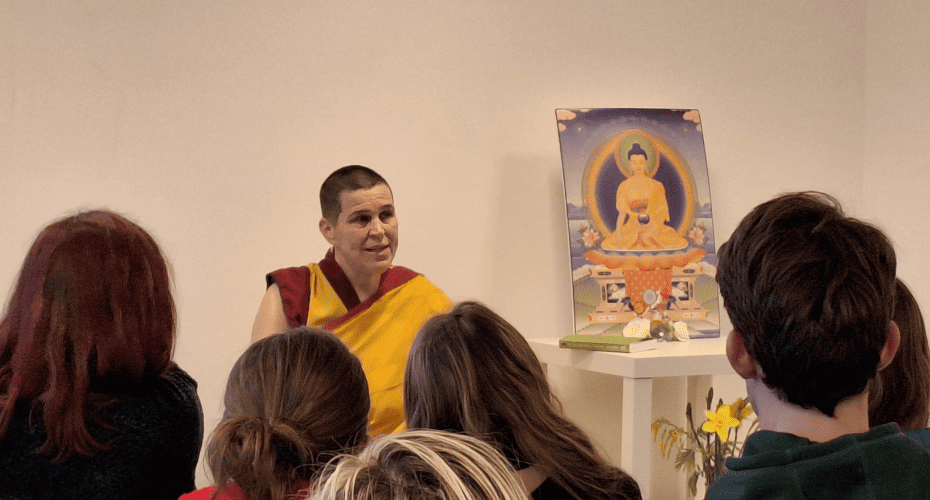

MEDITATION SOCIETY
Chaplains serve all in the University of Exeter community; staff/students of any faith background or none. They offer specialist faith advice, pastoral and spiritual support and run events from various different faith traditions and worldviews.
Our Chaplains
Billie Snowden - Pastoral Chaplain - Soka Gakkai

Hello, my name is Billie and I was born in Exeter, and have lived here most of my life. I work as a Sign Language Interpreter and have practised Nichiren Buddhism as a member of the Soka Gakkai International for more than 35 years. The teachings are based on chanting the title of the Lotus Sutra, Nam Myoho Renge Kyo and studying the writings of Nichiren Daishonin. Chanting is a way to bring forth your Buddha nature in the form of courage, compassion, wisdom, creativity and life force in your daily life. This enables you to bring out the best version of yourself and so transform difficulties and suffering.
I really enjoy being a chaplain at the university and I hold a chanting session in the multifaith centre every Friday at noon - anyone is welcome to attend, either to just sit and listen, or join in. There is tea/coffee afterwards too.
Whether you want to ask questions about Buddhism, give chanting a go or are just looking for a friendly face, someone to talk to about your experience of being here at Exeter Uni then please do get in touch. I’m very happy to meet for a coffee and chat.
Email: B.Snowden@exeter.ac.uk
John Danvers - Faith and Worldview Chaplain - Secular Zen Buddhism
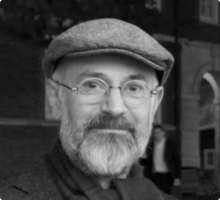
John has over sixty years' experience of Zen Buddhist practice, grounded in the Soto Zen, the teachings of Thich Nhat Hanh and the movement known as 'secular Buddhism'.
As part of the Multifaith Chaplaincy, John is here for all students and staff – whatever their beliefs – for support, advice or an informal chat. If you'd like someone to talk to, you want to know more about Zen, or Buddhism, or you have a particular question, issue or belief you'd like to discuss, John will listen, provide support and advise when he can.
John is an artist, poet and author. He has guided many meditation groups, and run seminars and workshops on Buddhism, creativity, the arts and mindful meditation. He works closely with:
- the University's Meditation Society
- Exeter Meditation Circle
He also guides Mindful Meditation sessions for staff
John runs the Dharma Roads podcast - exploring the wisdom and meditation methods of Zen, Buddhism and other philosophers, writers and poets.
You can find out more about John's background on his website, John Danvers Art.
Email: j.danvers@exeter.ac.uk
Secular Zen Mindful Meditation
Every Tuesday 6:30 - 7:30pm
Weekly evening meditation following the Zen tradition. Session led by our Buddhist Chaplain John Danvers in the Multifaith Room of the Sarah Turvill Multifaith Centre. This is open to all at the University to join.
Nichiren (SGI) Buddhist Chanting
Every Friday 12 - 12:30pm
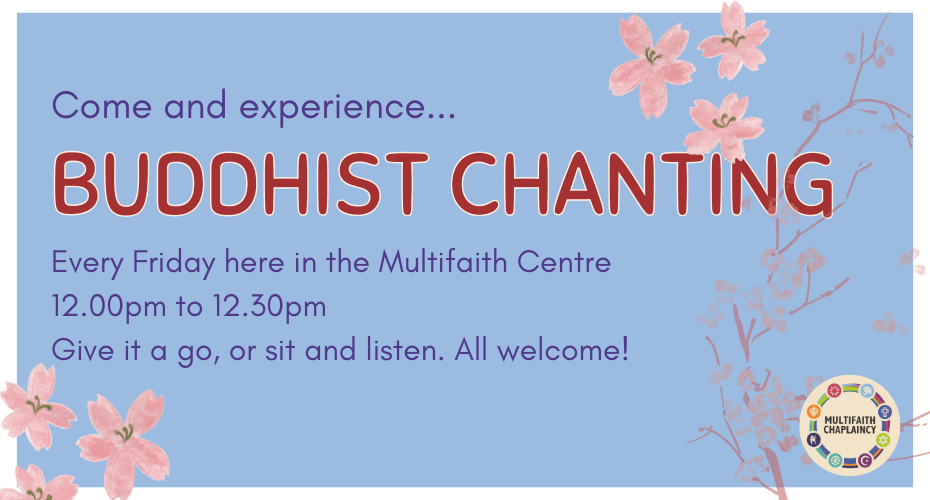
Weekly Buddhist chanting session following the Soka Gakkai (SGI - Nichiren) tradition. At this session, two chapters of the Lotus Sutra are recited, and then the words Nam Myoho Renge Kyo. The chanting lasts for 25 minutes and ends with silent prayers for peace throughout the world and the happiness of all living beings. This session is led by our SGI Buddhist Chaplain Billie Snowden, and held in the Multifaith room of the Sarah Turvill Multifaith Centre.
See all our events
These are events/activities in the wider Exeter community as recommended by our Chaplains! Please be aware the Multifaith Chaplaincy are not running these events.
Exeter Buddhist Network
A resource for people interested in Buddhism in Exeter raising the profile of Buddhism and Buddhist practice contributing to the life of the local community supporting Buddhist groups in the area.
About Buddhism
Buddhism is a major world religion and philosophy founded 2,500 years ago in India by Siddhartha Gautama ("the Buddha"), also known as Shakyamuni Buddha. It emphasizes ethical living, mindfulness, and meditation or chanting as a way to reveal enlightenment and transform suffering.
Core Principles:
- The Four Noble Truths: The foundation of Buddhist belief, stating that suffering exists, arises from craving, can be ended, and that the "Eightfold Path" is the way to end it.
- The Eightfold Path: A guide for living, covering ethical conduct (right speech, action, livelihood), mental discipline (effort, mindfulness, concentration), and wisdom (view, resolve).
- Karma & Rebirth: The belief that actions have consequences and that individuals go through a cycle of death and rebirth.
- The Three Jewels: Taking refuge in the Buddha (teacher), the Dharma (teachings), and the Sangha (community).
Below are the two denominations of Buddhism represented by our Chaplains: 'Secular' Zen Buddhism (John Danvers) and Nichiren Buddhism - Soka Gakkai (Billie Snowden).
The Soka Gakkai International (SGI) is a global, lay organisation founded on the thirteenth century Buddhist teachings of Nichiren Daishonin. The practice is based on chanting Nam Myoho Renge Kyo, the title of the Lotus Sutra (the last Sutra taught by Shakyamuni Buddha).
The term, ‘secular Buddhism’ refers to a movement of individuals and groups who are developing forms of Buddhist practice that meet the needs and demands of people living in twenty-first century cultures across the globe - open to the same kinds of reasonable questioning and rational enquiry we would apply to any other activity. Our Buddhist practices are grounded in this life – our daily life with all its ups and downs, shocks and surprises, messiness and mystery.
We place emphasis on the practice of mindful meditation (zazen) – paying attention without judgment, commentary or clinging – as a way of exploring who we are and how we relate to the world. By developing mindful awareness in all aspects of our everyday life, we cultivate understanding, enjoyment, peace of mind and compassion for ourselves and others.
Our meetings are simple and non-ritualistic, non-dogmatic and free of attachment to any particular teacher or tradition. We particularly draw on contemporary research into the ideas and methods of the historical Buddha and into the questions he poses for us. Personal responsibility and self-reliance are cultivated, alongside a deepening understanding of how we are all interconnected and interdependent. We are all students and teachers, helping each other to grow in understanding.