Minerals and Materials
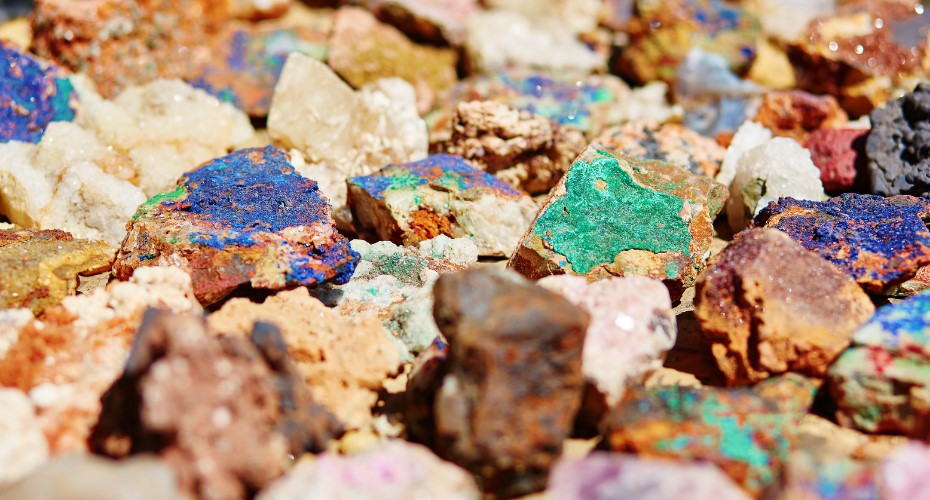
The minerals and materials subsector encompass the exploration, extraction, processing, and recycling of raw materials essential for modern society. From aggregates for construction to critical minerals for renewable energy technologies, this sector and the mining of resources underpins global industrial activity. The World Bank projects that production of minerals such as lithium and cobalt could increase by nearly 500% by 2050 to meet clean energy demands.
The UK minerals sector directly employs approximately 60,000 people with many more in related supply chains. While traditional mining has declined, the sector is experiencing renewed interest driven by demand for battery minerals; the International Energy Agency reports that lithium demand rose by 30% in 2024. Projects such as Cornish Lithium’s exploration of lithium resources and Cornish Metals re-opening of South Crofty Tin mine illustrate upscaling of investment in the UK.
Mining and extraction is a global industry, with many worldwide opportunities available for graduates. The circular economy agenda also creates opportunities in materials recovery and recycling.
Key Work areas in materials and minerals
- Community Relations and Social Licence - interpersonal roles centred on building and maintaining positive relationships with local communities to ensure operational acceptance.
- Environmental Management and Restoration - roles dedicated to minimising the ecological impact of operations and rehabilitating disturbed land.
- Exploration and Resource Evaluation - geoscientific roles focused on discovering and quantifying mineral deposits to determine their economic viability.
- Extraction and Processing Operations - hands-on roles involving the physical removal of raw materials and their initial transformation into usable products.
- Health, Safety and Risk Management - critical functions ensuring the well-being of workers and the systematic identification and mitigation of operational hazards.
- Materials Science and Metallurgy - Specialised fields focused on understanding, developing, and applying materials and their properties, particularly metals.
- Mine Planning and Design - engineering disciplines dedicated to creating efficient and safe plans for extracting resources from the earth.
- Research and Technology Development - innovative positions focused on advancing knowledge and creating new methods or tools to improve efficiency and reduce impact.
- Supply Chain and Logistics - essential roles in coordinating the movement of materials, equipment, and products throughout the entire operational pipeline.
- Sustainability and ESG Reporting - roles focused on integrating ethical, social, and governance principles into business practices and transparently reporting their impact.
In these areas of work within mining and materials we can identify the following occupations.
Technical and Operations Roles
- Asset Manager - optimises the performance, costs, and risks of physical assets throughout their lifecycle to achieve organisational objectives.
- Drilling Engineer - designs, plans, and supervises drilling operations for exploration, resource definition, and blasting within a mine.
- Environmental Consultant - advises on environmental regulations, conducts impact assessments, and develops strategies for environmental protection and compliance.
- Exploration Geologist - identifies and assesses potential mineral deposits through geological mapping, sampling, and data interpretation.
- Geotechnical Engineer - analyses ground stability and rock mechanics to ensure the safety of mine slopes, tunnels, and excavations.
- Health and Safety Adviser- develops and implements safety protocols, conducts risk assessments, and promotes a culture of safety among employees.
- Metallurgist - develops and applies processes for extracting metals from ores and refining them into usable forms.
- Mine Planning Engineer - develops detailed long-term and short-term mining schedules and designs to optimise resource recovery and economic viability.
- Mine surveyor - measures and maps the mine's surface and underground features to guide operations and ensure accurate resource extraction.
- Mining Engineer - designs, plans, and manages the extraction of minerals from the earth, optimising for safety, efficiency, and sustainability.
- Mudlogger - analyses drill cuttings and drilling fluid properties at the well site to identify rock types and potential mineralisation.
- Process Engineer - optimises and designs the physical and chemical processes used to transform raw ore into final products.
- Production Manager - oversees the daily operations of a mine or plant to ensure production targets are met efficiently and safely.
- Quarry Manager - manages all aspects of a quarrying operation, ensuring efficient extraction, processing, and delivery of aggregates while adhering to safety and environmental standards.
- Remediation Specialist - plans and oversees the clean-up and restoration of land and water bodies affected by mining activities.
- Supply Chain Manager - manages the entire flow of goods and services, from procurement of raw materials to the delivery of finished products.
- Tailings Engineer (geotechnical engineer / mechanical engineer) - specialises in the design, construction, and management of facilities for storing and dewatering mine tailings, ensuring stability and environmental protection.
- Water Management Engineer - designs and implements systems for managing water resources on mine sites, including supply, treatment, and discharge.
Every employer is different so there are no definitive lists here. These are meant as a guide and should be considered in addition to fully exploring role requirements outlined in the person specification, job description and advert for each role you consider applying for.
- Attention to detail and ethical decision-making
- Awareness of environmental monitoring and safety management systems
- Cultural sensitivity and collaborative mindset
- Data analysis and geostatistics
- Economic evaluation and feasibility assessment
- Emergency response and safety-first approach
- Environmental and sustainability evaluation
- Geological and geotechnical knowledge
- Knowledge of drilling, blasting, and materials characterisation techniques
- Leadership and teamwork in challenging environments
- Physical resilience and adaptability to remote locations
- Production optimisation and quality control
- Proficiency with mining design, modelling, and GIS software (e.g., Surpac, Vulcan, ArcGIS)
- Project management and regulatory compliance
- Risk assessment and management
- Stakeholder engagement and cross-cultural communication
- Surveying and spatial data management
- Technical reporting and documentation
- Understanding of mineral processing, metallurgy, and resource estimation.
All experiences ranging from volunteering, active involvement in clubs/societies can help you to develop relevant and transferable skills. You may wish to consider:
Volunteering
The sub-sector of materials and minerals offer a wide range of jobs, as demonstrated by the Mineral Products Association, finding someone who works in the sector you are interested in to enquire about voluntary work is a strong recommendation. Exeter’s Alumni LinkedIn tool may get you started in finding relevant contacts.
Student Societies
You could also become involved in the Students' Union (Cornwall) and find student-led societies such as CSMSA or Women in Mining Student Chapter or Exeter Students' Guild (Exeter) focussed on relevant interests such as geology. Please note that societies are subject to change every academic year.
- Geological societies’ field trips, networking events and mapping projects. Participation provides hands-on experience in geological surveying, data collection, and interpretation, which are fundamental skills for exploration and resource evaluation. The South-west chapter of The Geological Survey could serve as a useful starting point.
- Volunteering at mining heritage sites and museums such as the King Edward Mine Museum and Geevor Mine, provides insight into the history of mining and its evolution, offering context for modern-day practices and an appreciation for the industry's legacy.
- Participation in environmental restoration projects can develop experience in ecological management, remediation techniques, and land reclamation.
- Participation in student mining competitions and challenges - Events like the International Mining Games allow students to apply traditional mining skills and modern engineering knowledge in a competitive, collaborative environment, often under the scrutiny of industry professionals.
University of Exeter Employability schemes
- The Career Mentor Scheme may help you to be matched to an experienced professional who can provide you with sector-specific advice and guidance for 6-months.
- Ask An Alum is your chance to access over 700 alumni for custom careers advice and tips in a quick email exchange.
- Green Consultants is an award-winning programme designed to help students develop environmental and sustainability competencies.
- Career Zone Internship schemes: Internships can be extremely useful, so try and get relevant vacation work or placements.
- Exeter Award: The Exeter Award will help you stand out from the crowd and give you the confidence to shout about the experiences you've had at university.
Speculative applications and where to find opportunities
Undertaking relevant work experience will also allow you to develop new skills and gain a valuable insight into the sector. As jobs and opportunities are not always advertised, it can be useful to develop your networking skills and make a speculative application. You may find it useful to read our Researching employers page before making a shortlist of organisations you would like to gain experience with. Prospects has a helpful guide on how to write a speculative application.
Finding part time work
Explore opportunities on local job sites and have a look at Handshake, our vacancy database with employers who are targeting University of Exeter students.
Leveraging professional networks such as through the Camborne School of Mines Association, through informational conversations could develop to introductions or a lead on a part-time position. Part-time operational roles such as a laboratory assistant in materials testing could develop competencies in physical and chemical analysis of minerals, a field assistant role with a geological consultancy company could develop hands-on experience in surveying and data collection. Many exploration companies require help with data processing, a role that can develop analytical skills and proficiency in industry-standard software. Furthermore, you could find yourself supporting environmental monitoring efforts, learning about the crucial ecological responsibilities of the sector, or find work in quarry and aggregates operations, which provides a foundational understanding of the extraction process. These roles could serve as stepping stones to graduate roles, see below for more information.
Competition can be strong, especially for entry-level positions. Use the following resources to find advertised vacancies and research employers.
Specialist Recruitment Platforms & Job Boards
- Allen & York - Environmental and sustainability recruitment specialists since 1993, focusing on purpose-driven organisations across environment, energy, sustainability, ESG, and health & safety sectors.
- Careermine - The world's largest dedicated mining industry job board, founded in 1998, connecting mining professionals with opportunities globally and offering resume matching services.
- Earth Works Jobs - Specialist recruitment platform advertising worldwide careers in energy, geosciences, oil, mining, environmental sciences, remote sensing, GIS, and earth sciences.
- Geo Engineer - Geotechnical and geological engineering job board featuring opportunities in ground engineering, site investigation, and geotechnical consulting.
- Geology.com - Geology careers section of the popular geology educational website, featuring job opportunities in geological sciences and earth sciences.
- Geoplacer - Geoscience recruitment platform connecting geological professionals with employers in mining, oil & gas, environmental consulting, and earth.
- Geoscience Jobs (Geological Society) - Official jobs board of The Geological Society, featuring geology, earth sciences, and geoscience career opportunities primarily in the UK.
- Gradcracker - UK careers site for STEM students and graduates hosting graduate jobs, schemes, internships and placements with over 300 employers across science, technology, engineering and mathematics.
- InfoMine Jobs - Mining careers portal operated by InfoMine, providing access to thousands of mining job opportunities and industry career resources worldwide.
- Jobs.ac.uk – UK academic and research jobs board featuring university positions, research roles, and academic careers across all STEM disciplines.
- New Civil Engineering Careers - Civil engineering jobs portal from New Civil Engineer magazine, featuring opportunities across infrastructure, construction, and civil engineering projects.
- Seek (Australia) – Australian job board showcasing mining jobs across the Australian mining industry.
- The Geological Society Jobs Board - Professional geological careers platform from the UK's leading geological professional body.
- IOM3 Jobs Board - Institute of Materials, Minerals and Mining careers portal featuring opportunities in materials science, mining, and metallurgy.
For general information about finding graduate opportunities, please visit our Graduate Jobs page.
Graduate schemes and internships
- Collection for internships on Handshake
- Gradcracker listings of internships and placements, and graduate jobs
- Bright Network for graduate schemes and internships
Major Employers Offering Graduate Schemes
- Anglo American - multinational mining company offering graduate programs in mining engineering, geology, metallurgy, and business functions.
- Barminco are a common employer of graduates from CSM.
- BHP - world's largest mining company offering graduate programs in mining, engineering, geology, and commercial roles across global operations.
- Glencore - multinational commodity trading and mining company providing graduate schemes in trading, mining, metallurgy, and business support.
- HOLCIM - leading construction materials supplier offering graduate programs in quarrying, concrete production, and construction materials.
- Rio Tinto - global mining and metals company providing graduate opportunities across mining operations, technology, and corporate functions worldwide.
- SRK Consulting - international mining and civil engineering consultancy offering graduate programs in mining engineering, geology, and environmental consulting.
- Tarmac - major construction materials company providing graduate opportunities in quarrying, cement production, and construction services.
- Wardell Armstrong - mining, environmental, and geotechnical consultancy providing graduate opportunities in mine planning, environmental assessment, and ground investigation.
- WSP like to target our graduates
University of Exeter graduates have gone on to work for companies in geoscience, mining, and environmental sectors including AECOM, Balfour Beatty, Cornish Lithium, DustScan Ltd, Fugro, Geotechnics, Murphy & Sons Limited, Lithium Power International, Materials Movement Ltd, and Oracle Environmental Experts Ltd. The nature of this industry is that there are also many small businesses and consultancies in which our graduates have also found great opportunities. Networking is key to successfully exploring and securing a role to suit you.
Placements
If you are interested in finding out more about work placements, you can also access the Work Placements SharePoint via Single Sign-On. This resource covers all aspects of credit-bearing work experiences as part of your degree, including what a placement is, how to apply for them, and bespoke information for international students or those interested in working abroad.
Further sources of support
If you are an international student, visit our international webpages for help finding opportunities both in the UK and globally.
To find opportunities outside the UK use GoinGlobal.
For help with making speculative applications you may find it useful to read our Researching employers page.
Some individuals decide to undertake further study to develop their skills and knowledge of the sector and related occupations. Not all roles or employers will require this, so it is important to research entry requirements and employer preferences before committing to additional training or qualifications. Use the sites below to research your further study options.
Example postgraduate programme at University of Exeter
- MSc Mining Engineering Offered by the Camborne School of Mines, this course focuses on mining, excavation, and geotechnics, with strong industry links and professional accreditation.
- MSc Minerals Processing Designed to prepare students for careers in mineral process engineering, this programme covers extractive metallurgy, geometallurgy, and environmental management.
- MSc Geotechnical Engineering A vocational programme blending rock engineering and geotechnical data analysis, ideal for careers in underground excavation and site investigation.
- MPhil/PhD Research Opportunities Explore research degrees across disciplines, including funded studentships and collaborative international programmes.
Use the sites below to research your further study options at other global institutions.
- Find a masters - search engine of postgraduate options
- Jobs.ac.uk – directory of funded masters
- https://www.prospects.ac.uk/postgraduate-courses/search - Search for relevant postgraduate qualifications including
- Prospects Microcredentials Guide – Search for short courses
Advice
If you would like to pursue postgraduate study before entering your chosen sector, please visit our Postgraduate Study page for more information about choosing further study.
Information and links from professional bodies
If you have studied a related degree, check if your course is accredited by one of the professional bodies. Being a member of a professional body is voluntary, however, it can be valuable for developing networks, continuing your professional development, and generally keeping up to date with what's happening in the sector.
- Association of Geotechnical and Geoenvironmental Engineers - professional body for geotechnical and geoenvironmental specialists providing industry standards, guidance, and career development.
- Cornwall Mining and Geo-Resources – membership association representing practitioners based in Cornwall.
- Institute of Materials, Minerals and Mining - professional body supporting careers in materials and extractive industries.
- The Geological Society - UK's national learned society for geosciences, providing professional development, publications, and career support for geologists.
- University of Exeter Critical Minerals Challenge Centre – UKRI funded interdisciplinary research centre investigating responsible critical minerals production.