Nuclear
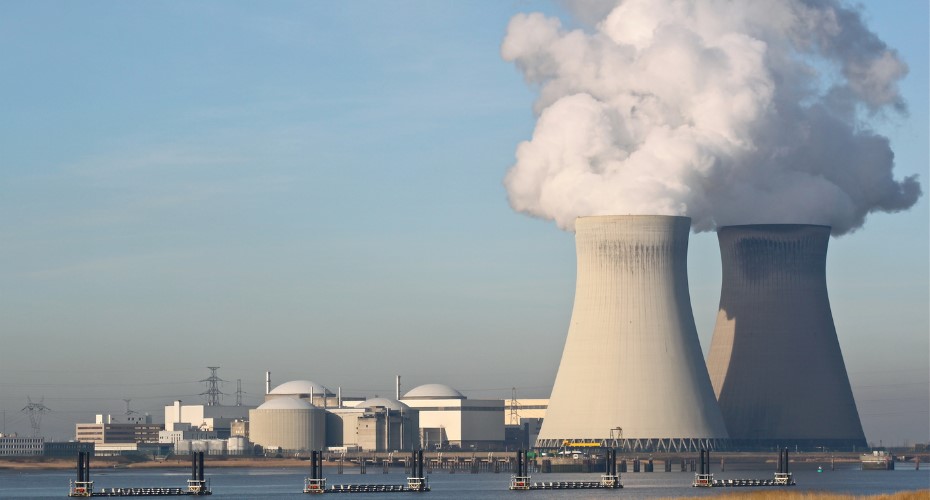
Nuclear power currently provides around 15% of the UK’s electricity. Globally, nuclear accounts for about 10% of electricity, and 18% in OECD countries. The UK government plans to increase this share to 25% by 2050.
Major projects such as Hinkley Point C, Sizewell C, and the Rolls-Royce Small Modular Reactor programme show the scale of this planned growth. Alongside these builds, the Nuclear Decommissioning Authority is leading a £132 billion programme to clean up older sites.
These developments are creating strong demand for skilled workers. A 2024 Imperial College London Energy Futures Lab report predicts a big shift in the nuclear workforce: 53% of employees are over 45, and only 20% are under 34. This means many experienced professionals will retire within the next decade, creating opportunities for graduates and for people reskilling from other sectors.
Core Career pathways include:
- Commissioning & Maintenance – bringing new systems online, system upgrades, troubleshooting, and preventive maintenance.
- Decommissioning / waste management - executing safe dismantling of nuclear facilities and waste.
- Emergency preparedness - developing and testing emergency response procedures.
- International collaboration - working with global partners on technology transfer, best practice sharing, and joint research programmes through organisations like the IAEA and OECD-NEA.
- Nuclear engineering and design - developing and optimising reactor systems.
- Nuclear safety and regulation - developing safety cases, conducting risk assessments, and ensuring compliance with stringent regulatory requirements set by the Office for Nuclear Regulation.
- Project management and construction - overseeing complex nuclear new build projects.
- Quality assurance - implementing rigorous quality control systems and procedures.
- Radiation protection and health physics - monitoring worker and public safety.
- Reactor operations and control - managing the safe and efficient operation of nuclear reactors.
- Research and development - advancing nuclear technology such as next gen reactors.
- Security and safeguards - protecting nuclear materials and facilities from security threats.
Graduate roles in nuclear
- Chemical Engineer - manages chemical processes in nuclear fuel production, waste treatment, and cooling system chemistry control.
- Emergency Planning Officer - develops emergency response procedures and coordinates exercises with local authorities and emergency services.
- Environmental Monitoring Specialist – Collect and analyse environmental samples, prepare reports, support radiological monitoring programmes.
- Health Physicist – Carry out radiation surveys, maintain monitoring equipment, support radiation safety training.
- Maintenance Engineer - Support preventative maintenance tasks, troubleshoot issues under supervision.
- Materials Scientist - Run experiments, analyse materials data, and support lab operations.
- Mechanical Engineer/Electrical Engineer - Assist with inspections, maintenance planning, and performance testing.
- Nuclear Engineer - Work on reactor performance modelling, design support, and systems analysis.
- Nuclear Fuel Specialist - Help analyse fuel performance data and contribute to optimisation studies.
- Nuclear Safety Inspector - assesses compliance with nuclear site licence conditions and enforces regulatory requirements.
- Project Support Officer /Manager - Assist with planning, scheduling, and coordination for delivering complex nuclear projects from new build construction to major plant modifications and decommissioning.
- Radiation Protection practitioner - provides expert guidance on radiation safety compliance and develops procedures to minimise occupational exposure.
- Reactor Physicist (graduate physicist) – Run simulations, analyse data, and contribute to performance predictions.
- Research Scientist - Support experimental work, literature reviews, and data analysis in investigating fundamental nuclear science to advance reactor technology and fuel performance.
- Waste Management Specialist– Help with waste tracking, packaging, and documentation.
Every employer is different so there are no definitive lists here. These are meant as a guide and should be considered in addition to fully exploring the role requirements outlined in the person specification, job description and advert for each role you consider applying for.
- Computer modelling – using tools like MCNP or RELAP to simulate nuclear systems.
- Decommissioning awareness – understanding safe dismantling strategies.
- Instrumentation and control – maintaining and improving monitoring and safety systems.
- Materials science – understanding how materials perform in extreme conditions.
- Nuclear physics and reactor theory – understanding neutron behaviour, fission, and reactor operations.
- Nuclear safety culture – prioritising safety and conservative decision-making.
- Process engineering – improving chemical and physical processes in nuclear systems.
- Radiation protection principles – applying knowledge to minimise exposure risks.
- Regulatory framework understanding – knowing key UK and international rules.
- Risk assessment – identifying and mitigating operational hazards.
- Systems engineering – integrating complex plant systems effectively.
- Thermal hydraulics – modelling heat transfer and fluid flow in reactors.
- Waste characterisation – identifying and managing radioactive waste safely.
Skills Development and Research
- National Skills Academy Nuclear (NSAN) – whilst predominantly focused on CPD for professionals already working in the nuclear industry, NSAN also run short courses and masterclasses.
To develop your skills, remember Career Zone also offers a range of Personal and Professional Development sessions which are available to book on Handshake and run at least once per term. Please also read through the sections about Gaining Experience and Further Study and Professional Development to discover how you can develop your skills through experience and by gaining further knowledge or qualifications.
All experiences ranging from volunteering, active involvement in clubs/societies can help you to develop relevant and transferable skills. You may wish to consider:
Professional Networks and Industry Bodies
- Nuclear Institute Young Generation Network - a community for nuclear professionals under the age of 37, the YGN organises events, lectures, and facility tours.
- Nuclear Industry Association - as the trade body for the UK civil nuclear industry, the NIA website outlines profiles of people working in the sector; utilise in conjunction with LinkedIn networking.
- Nuclear Societies – University of Exeter research group investigating nuclear energy and waste management.
- South West Nuclear Hub - network of academic institutions, industrial partners and a community of Small-Medium Enterprises (SMEs) in delivering civil nuclear science, engineering and technology to the Southwest of the UK.
Volunteering and Speculative Applications
- Volunteering opportunities are rare finds in this sector. However, volunteering in areas unconnected to the nuclear energy industry could develop transferable skills which could help leverage industry internships, placements and graduate jobs. Exeter Students’ Guild - Volunteering and The SU – Volunteering & Fundraising – you can find opportunities to volunteer through the Guild in Exeter and the SU in Penryn. Other volunteering portals include:
- Get Volunteering – a website where you can search for local volunteering opportunities in various areas, e.g., emergency response, health and social care, fitness & sport.
- Reach Volunteering – a skills-based volunteering charity.
- Visit your local Volunteering Centre.
- Do It – a database of ways to help and get involved with thousands of UK charities.
- Vinspired shows volunteering opportunities for up to 14 – 30-year-olds.
- NCVO – Ways to get involved in volunteering, but also details about campaigns, events and networking.
- University research projects – investigate research projects such as SCP roles with academics to develop your skills.
- Site Visits and conferences - look for opportunities to visit operational nuclear facilities. Many companies host open days or student-specific tours. Attending nuclear engineering student conferences such as the International Meeting on Reactor Noise (IMOR), will also keep you up to date on the latest industry developments and connect you with recruiters and professionals.
- Virtual Work Experience - Hinkley Point C (HPC) is a 3200-megawatt nuclear power station being built in Somerset. They offer a free virtual work experience insight programme which can be a great way to gain insight into a large-scale nuclear project.
- Speculative Applications - As jobs and opportunities are not always advertised, it can be useful to develop your networking skills and apply speculatively. You may find it useful to read our Researching employers page.
University of Exeter Employability Schemes
- Career Mentor Scheme - this scheme may help you to be matched with an experienced professional who can provide you with sector-specific advice and guidance for 6 months.
- Ask An Alum - this is your chance to access a large network of alumni for custom careers advice and tips in a quick email exchange.
- Exeter Award - the Exeter Award will help you stand out from the crowd and give you the confidence to talk about the experiences you've had at university, including work experience, volunteering, and extracurricular activities.
- Green Consultants - provides you with additional skills and experience required to work in consultancy.
Finding part-time work
General job sites such as Indeed and LinkedIn will advertise part-time work. Be sure to use key words in your search to bring up the most appropriate roles.
- Explore opportunities on local job sites and have a look at Handshake, our vacancy database with employers who are targeting University of Exeter students. You may want to search for SCP (Student Campus Partnership) or SBP (Student Business Partnership) roles – to find out more, please click on the links.
- Attend the ‘Finding a Part-Time Job’ advice session which explores the benefits of gaining part-time work, where you can find these opportunities and top tips for your applications. This session will be listed on Handshake events.
- Listen to this episode of the Career Zone podcast for more advice about finding a part-time job.
Competition can be strong, especially for entry-level positions. Use the following resources to find advertised vacancies and research employers.
- Destination Nuclear – jobs platform for graduate roles and placements
- National Nuclear Laboratory Careers – UK government civil national laboratory for nuclear fission
- New Scientist Jobs – jobs arm of media outlet
- Nuclear Decommissioning Authority – UK government quango decommissioning and remediation of nuclear facilities
- Nuclear Jobs - jobs platform
For general information about finding graduate opportunities, please visit our Graduate Jobs page.
Graduate schemes and internships
- Gradcracker
- Bright Network - Graduate schemes and networking events
- Handshake Jobs – The University of Exeter's primary platform for graduate opportunities
- Grad South-West - aimed at graduates in the South West across multiple disciplines
- Collection on Handshake for internships
Major nuclear industry employers
- Atkins - a multi-national company providing engineering, design, and project management consultancy services for a variety of sectors, including the nuclear industry.
- Babcock International - international defence company providing support and product solutions to a variety of sectors including nuclear.
- BAE Systems - a multi-national defence, aerospace, and security company that provides some of the technology found in the nuclear industry.
- EDF Energy - a major UK-based energy company, part of the multi-national EDF Group, which is a significant energy producer in the UK energy market.
- Jacobs - a multi-national professional services and engineering firm that delivers a wide range of solutions, including a significant presence in the UK nuclear sector for both new build and decommissioning projects.
- Magnox Ltd - a UK-based government-owned company responsible for the safe and secure decommissioning of twelve nuclear sites and one hydroelectric plant across the UK.
- National Nuclear Laboratory - a UK-based, government owned national laboratory that provides nuclear fission research and development services across the entire nuclear fuel cycle.
- Office for Nuclear Regulation - an independent public body in the UK responsible for regulating the safety, security, and safeguards of the country's nuclear industry.
- Rolls-Royce - a British multi-national company that designs, manufactures, and distributes power systems, including a significant nuclear division focused on small modular reactors (SMRs).
- Sellafield Ltd - a UK-based government-owned company responsible for the safe operation and complex decommissioning of the Sellafield nuclear site in Cumbria.
- UK Atomic Energy Authority (UKAEA) - a UK-based non-departmental public body that leads the research and development of sustainable fusion energy, working towards a future of clean power.
Placements
If you are interested in finding out more about work placements, you can also access the Work Placements SharePoint via Single Sign-On. This resource covers all aspects of credit-bearing work experiences as part of your degree, including what a placement is, how to apply for them, and bespoke information for international students or those interested in working abroad.
Further sources of support
If you are an international student, visit our international webpages for help finding opportunities both in the UK and globally.
To find opportunities outside the UK use GoinGlobal.
For help with making speculative applications you may find it useful to read our Researching employers page.
Some individuals decide to undertake further study to develop their skills and knowledge of the sector and related occupations. Not all roles or employers will require this, so it is important to research entry requirements and employer preferences before committing to additional training or qualifications. Use the sites below to research your further study options.
The nuclear sector faces critical skills gaps, with the Nuclear Skills Strategy Group forecasting 40,000 new workers needed by 2030. Further postgraduate study can equip graduates to fill the gap with additional specialist competencies such as in digital skills including artificial intelligence, predictive maintenance, and advanced modelling for both new reactor designs (SMRs/AMRs) and lifetime extension of existing assets. The £100+ billion decommissioning challenge drives demand for specialists combining technical knowledge with project management and robotics expertise.
Examples of postgraduate programmes
- MSc Decommissioning and Waste Management
- MSc Nuclear Engineering
- MSc Nuclear Science and Technology
- MSc Radiation and Environmental Protection
- PhD opportunities in nuclear research
Advice
If you would like to pursue postgraduate study before entering your chosen sector, please visit our Postgraduate Study page for more information about choosing further study.
Information and links from professional bodies
If you have studied a related degree, check if your course is accredited by one of the professional bodies. Being a member of a professional body is voluntary, however, it can be valuable for developing networks, continuing your professional development, and generally keeping up to date with what's happening in the sector.
- Energy Institute – UK chartered professional membership body for people who work across the world of energy.
- Institute of Physics (IoP) – professional body supporting physicists across academia and industry, including those working in nuclear physics, fusion energy, and radiation science.
- Institution of Chemical Engineers (IChemE) - a global organisation advancing chemical engineering through education, training, and support for professionals in energy, process, and nuclear sectors.
- Institution of Engineering and Technology (IET) - a multidisciplinary organisation offering resources, events, and professional registration for engineers and technicians across sectors including energy and nuclear.
- Institution of Mechanical Engineers (IMechE) - global professional body supporting mechanical engineers through training, events, and accreditation, including nuclear-focused initiatives.
- Nuclear Industry Association – trade organisation representing UK’s civil nuclear industry.
- Nuclear Institute (NI) - the UK’s dedicated membership body for nuclear professionals, offering networking, CPD, and the Young Generation Network for early careers.
- Nuclear Skills Strategy Group - industry body addressing skills needs in the nuclear sector.
- Royal Society of Chemistry (RSC) – professional body encompassing relevant practitioners in radiochemistry, nuclear medicine and environmental monitoring.
- Society for Radiological Protection (SRP) – UK professional body for radiation protection specialists in nuclear safety, environmental monitoring, and health physics.