
Space
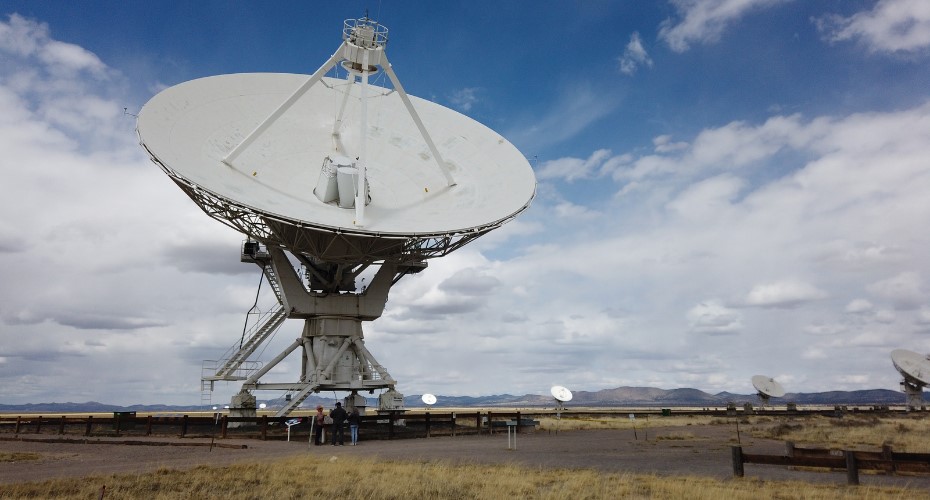
The Space sector provides technologies and infrastructure which we all access in our everyday lives. From satellites providing services which support communications, earth and climate monitoring to defence and navigation. Whilst most of these technologies are space-based, they are managed and operated by teams of people based firmly on earth.
In recent decades, we have become increasingly ambitious with regards to space exploration and harnessing its potential. There are plans to put human beings on Mars as well as continue to examine how we might be able to take advantage of the resources available on other planets.
In March 2025, the UK government announced that the income of the Space sector in the UK is now more than £18.9billion. The UK’s capabilities within the industry span from broadcasting, satellite communications, GPS, defence technologies, transportation right through to research into earth observations and meteorology.
The industry in the UK is spread widely across the regions with both large multi-million operations in addition to many start-ups, demonstrating the buoyancy and growth of the sector. This geographical spread includes the Southwest where Cornwall boasts a thriving Space sector.
Careers in the Space industry are diverse and broad ranging. There are roles and opportunities to join the sector for many skills sets which range from photography to space law so there is something for everyone.
If you are interested in working in the sector, you should explore opportunities which suit your skills set and strengths because there really is something for everyone.
If you are interested in this sector, you may be interested to explore:
- Engineering and Manufacturing
- Politics, Government and the Public Sector
- IT, Data and Tech
- Energy and Earth Resources
- Science, Research and Development
Further research
If you would like to do further research into this sector, the following webpages will be useful.
For an overview of the main areas of work in the space sector visit:
- Space Careers UK explore role profiles in this useful page for common sector roles and opportunities as well as explore how to pursue them
- Esero - Careers In Space A useful collection of career profile videos
Sector careers advice
- Space Careers.UK offers a range of advice and information about opportunities within the Space industry
- UK SEDS - Students for the Exploration and Development of Space
Regional pages of interest
- Cornwall Space Cluster is an organisation made up of academics, business leaders, local government and public sector funders who include the Department of Business & Trade, the Satellite Applications Catapult, Cornwall Council and Innovate UK.
- Spaceport Cornwall was the UK’s first licensed spaceport.
- Goonhilly Earth Station is a satellite, lunar and deep space communications centre.
- The South West Space Partnership exists to support space businesses to set up and operate in the region, network together and secure talent.
Sector news
- The UK Space Agency
- European Space Agency
- Space related Innovate UK programmes
- UK Space – The official trade association of the UK Space Industry
- UK Government Sector Report on Size and Health of the Space Industry
- UK Government’s Space Industrial plan to 2030.
There are certain key skills sets which remain in demand in the sector because of the engineering and scientific nature of much of the work. Therefore, you are likely to find more opportunities related to STEM subjects such as science, engineering, IT and maths as well as geology and geography.
Every employer is different so there are no definitive lists here. These are meant as a guide and should be considered in addition to fully exploring the role requirements outlined in the person specification, job description and advert for each role you consider applying for.
- Engineering: teams of engineers work to design and build various space instruments from spacecraft to control instruments to operate on earth and in space.
- Natural science skills are used to explore and learn more about the Earth such as the planet’s weather systems and climate change. These skills are also helpful in understanding resources which are available on other planets, too. These sciences include disciplines such as geography and geology.
- Space scientists explore and research the fundamental questions about the mysteries of the universe. Physicists and astronomers are considering anything from whether there is life on other planets to which asteroids could potentially be a threat to Earth.
- IT and data skills underpin our technologies and create software and algorithms to help us make sense of all the information we are gathering and communicate the findings.
- Other business skills are also required in the industry to help the industry to grow. Therefore, from HR to marketing there are opportunities for everyone.
To develop these skills, the Career Zone also offers a range of Personal and Professional Development sessions which are available to book on Handshake and run at least once per term. Please read through the sections about Gaining Experience and Further Study and Professional Development to discover how you can develop your skills through experience and by gaining further knowledge or qualifications.
All experiences ranging from volunteering to active involvement in clubs/societies can help you to develop relevant and transferable skills. You may wish to consider involvement in:
Societies at University
The Students’ Guild’s societies based on Streatham campus could be an excellent way to demonstrate an interest in this work area.
There are many broadly relevant societies in Penryn too and remember, you can start one if you don’t feel there is one which meets your needs.
Volunteering
- Alpbach Summer School - focuses on various aspects of space science and engineering through lectures and group work to define and design a space mission under the supervision of noted scientific and engineering experts.
- European Space Camp (ESC) - annual week-long summer camp held at Andoøya Space Centre in Norway. Note the maximum age for participants is 20. Participants can work on various aspects of a rocket campaign in addition to lectures and other activities.
- SpaceCareers.uk - job search offers lots of volunteering opportunities as well as jobs
Speculative applications and where to find opportunities
Undertaking relevant work experience will also allow you to develop new skills and gain a valuable insight into the sector. As jobs and opportunities are not always advertised, it can be useful to develop your networking skills and apply speculatively. Before visiting the sites below you may find it useful to read our Researching employers page.
- UK Space Members: This is a list of members of the UK Space (the industry’s Trade Association) which is brilliant for exploring more about the industry. These profiles link through to the organisations’ websites and provide contact details.
- UK Space SME Members is a list of members which are SME (small and medium sized enterprises). Very handy for exploring the sector, looking for prospective employers or gaining work experience.
- The Space List – a directory of Space sector companies around the world.
- Wikipedia list of private space flight companies.
University of Exeter Employability Schemes
- Career Zone Internship schemes: Internships can be extremely useful, so try and get relevant vacation work or placements
- Exeter Award: The Exeter Award will help you stand out from the crowd and give you the confidence to shout about the experiences you've had at university
- The Global Leaders Experience is a unique opportunity to develop your intercultural skills as part of a short, outbound mobility experience, ideal for working in the international landscapes of the Space sector.
Finding part-time work
You could also have a look at Handshake, our vacancy database with employers who are targeting University of Exeter students. You might also find it helpful to approach some specialist recruitment agencies in addition to making speculative applications and approaching employers directly.
Competition can be strong, especially for entry-level positions. Use the following resources to find advertised vacancies and research employers. Undertaking relevant work experience will not only make your applications stand out, but it will also allow you to develop new skills and gain a valuable insight into the sector.
Graduate schemes and internships
- Airbus - European Aeronautic Defence and Space Company. Various career opportunities including internships for current students
- European Space Agency (ESA) - internships, graduate opportunities, postgraduate funding and vacancies. Or the following link takes you to their graduate scheme: European Space Agency Graduate Scheme
- QinetiQ - a defence technology company and one of Europe’s largest space system integrators. QinetiQ offer a ‘Year in Industry’, summer placements and a two-year Graduate Development Programme
- RAL Space - vacancies in world class science, research and Technology development with a Space focus
- SpaceCareers.uk - job search offers job opportunities within many organisations in the sector
- Space Projects Scheme A scheme to enable students to gain experience before you graduate by doing a degree project in a space industry company
- Surrey Satellite Technology Ltd (SSTL) - internships, industrial year placements and graduate programmes in a variety of areas
- UK Space – The Space Trade Association - a useful page of links for opportunities for placements and graduate jobs
- Space Crew is a jobs board for international job opportunities in the Space Sector
- Royal Aeronautical Society
- Thales Group – for Grad Schemes and Apprenticeships.
For general information about finding graduate opportunities, please visit our Graduate Jobs page.
Placements
If you are interested in finding out more about work placements, you can also access the Work Placements SharePoint via Single Sign-On. This resource covers all aspects of credit-bearing work experiences as part of your degree, including what a placement is, how to apply for them, and bespoke information for international students or those interested in working abroad.
- EDT Placements – offers paid placements for up to a year in (Science, Technology, Engineering and Maths) STEM subject areas
- Space Placements in INdustry (SPIN) - introductory opportunity for those considering employment in the space sector.
Recruitment Agencies
See Agency Central for a list of specialist recruitment agencies and search by sector.
Note - ensure any recruiters you connect with are members of a professional body such as the Chartered Institute of Personnel & Development or the Recruitment & Employment Confederation.
For great advice on making applications in this sector see by Careers in Aerospace - useful for researching the Space sector. It includes a great map of where different space-focused businesses and organisations are based.
If you are an international student, visit our international webpages for help finding opportunities both in the UK and globally.
To find opportunities outside the UK use GoinGlobal. Several of the jobs boards listed above also offer international opportunities.
Some individuals decide to undertake further study to develop their skills and knowledge of the sector and related occupations. Not all roles or employers will require this, so it is important to research entry requirements and employer preferences before committing to additional training or qualifications. Use the sites below to research your further study options.
- Find a Masters – Space focussed Masters courses. It may be helpful to do a search on more specific courses here, such as ‘Astrophysics’ depending on your interests.
- UK Space - What Should I Study?
Information and links from professional bodies
If you have studied a related degree, check if your course is accredited by one of the professional bodies. Being a member of a professional body is voluntary; however, it can be valuable for developing networks, continuing your professional development, and generally keeping up to date with what's happening in the sector.
- Royal Aeronautical Society – student membership
- Royal Aeronautical Society – Young Persons Network
- National Space Academy Careers Conferences
- UKSEDS - Preparing for Launch podcast
- The European Space Agency (ESA) offer courses for students
Advice
If you are considering postgraduate or doctoral level study before entering your chosen sector, please visit our Postgraduate Study page for more information about choosing further study.