Course content
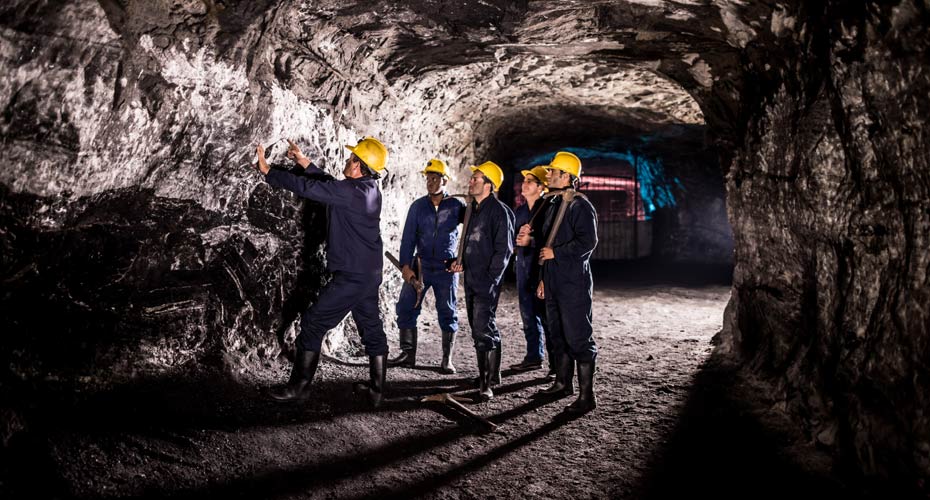
As we move towards a world of carbon neutrality there has never been a greater need for the metals that enable renewable energy generation, like copper, lithium, steel and aluminium. That demand translates directly to good jobs for mining engineers.
Our ambition is for our apprentices to graduate, academically ready to grow into senior roles. Apprentices will gain the knowledge and experience to enable them to:
- Understand the mining lifecycle and the investment and fundraising environment
- Design all aspects of mining operations to be safe and productive
- Address the challenges of environmental sustainability, governance and social responsibility
The apprenticeship involves approximately six hours a week of remote learning, up to four weeks of on-site activity per year and the implementation of this knowledge via the practicing of skills and behaviours in the workplace. Apprentices can expect to be stretched and challenged but supported throughout as they develop the academic skills required to rise through the ranks in the mining, tunnelling and allied industries.
The modules below provide examples of what you can expect to learn on this degree course based on recent academic teaching. The precise modules available to you in future years may vary depending on staff availability and research interests, new topics of study, timetabling and student demand.
Please note that the module information displayed here is subject to change.
Your first year includes an introduction the business of mine, the core engineering disciplines of maths, mechanics and fluid mechanics, and engineering thinking, introduced through the Mine Challenge Project.
90 credits of compulsory modules
Compulsory modules
| Code | Module | Credits |
|---|---|---|
| Compulsory 1 | ||
| Mining Life Cycle and Professional Practice | 30 | |
| Engineering Fundamentals | 30 | |
| Mine Challenge Project | 30 | |
CSM1288DA: Mining Life Cycle and Professional Practice
This module is the introductory overview to the programme. It covers the wide range of activities that need to be undertaken to find a mineral deposit, evaluate it, extract the ore and process it to a saleable product – as well as the impact that this may have on the environment and communities in which they operate. The concepts covered will be developed in more detail in subsequent modules but this covers a range of underpinning concepts that will help contextualise these later modules. This will also allow you to evaluate your own role and mining operations, and how your contribution fits in to the other activities that will be taking place in other departments and by other specialists and colleagues.
The module introduces the overall Mining Life Cycle and gives an introductory overview into the sequence of activities involved in mining. This includes: mineral deposit types, mineral exploration, deposit evaluation, mining operations and mineral processing, waste management, closure and remediation, corporate social responsibility and environmental & social governance. This module will also embed key skills such as group work, effective communication and professionalism as well as an appreciation of reputational risk and expectations of workplace and professional behaviours.
On successful completion of this module you should be familiar with these Knowledge and Skills as specified in the Mine Management Apprenticeship Standard (ST1309):
CSM1289DA: Engineering Fundamentals
This module covers the basic maths and physics required of all engineers, but specifically applied to design and equip mines to allow them to operate safely and efficiently: maths to support the physics; thermo-fluids for ventilation design; mechanics for design of conveying and other systems; statics to understand the behaviour of rock under stress; and electrical engineering to design power systems. The content is taught in the context of mining and linked to applications.
This module provides the mathematics necessary for the other core engineering modules, including trigonometry, differentiation, integration and complex numbers. Using those skills, the module goes on to give you a fundamental knowledge of core engineering principles covering materials & mechanics, fluid and thermodynamics and electrical engineering, which provide a foundation for further applied study in these areas later in the Degree Apprenticeship.
Examples will focus on the mining environment.
On successful completion of this module, you should be familiar with the Knowledge and Skills as specified in the Mine Management Apprenticeship Standard (ST1309):
CSM1290DA: Mine Challenge Project
This module presents the Apprentices with an opportunity to showcase the knowledge, skills and behaviours they have developed in the first year of the course to a particular industrial “mine challenge” whilst working as part of a project team. Apprentices will collect, analyse (using previously acquired data and/or data collected as part of the project), interpret and discuss mining, geology or related environmental data, and come up with potential solutions and/or definitive conclusions. This module develops the attributes that Apprentices need to become an effective and cooperative member of a group and hence making them valued employees and will take place throughout the third teaching block having been introduced at the first residential.
On successful completion of this module you should be familiar with these Knowledge and Skills as specified in the Mine Management Apprenticeship Standard (ST1309):
- K1: The mining life cycle including the key regulations, standards and guidance that influence the design, construction and operations and closure of mining operations.
- K23: Communication techniques, including written, verbal, nonverbal and digital, and different types of interpersonal skills including questioning and listening.
- K24: Different, inclusive leadership styles and models, how to develop diverse teams and support people using coaching and mentoring.
- S13: Communicate with colleagues, stakeholders and other interested parties using a range of different methods and techniques, challenging, influencing, and negotiating where appropriate.
- S17: Manage and lead others including conflict management.
- S18: Plan and manage own time.
- S19: Use evidence-based tools, qualitive and quantitative analysis techniques to demonstrate an ethical approach to problem solving and making decisions that improve the safety, operational and environmental performance of the underground operation.
- B6: Commit to their own and support others’ professional development.
- B7: Take responsibility for their own actions and challenge the behaviours and actions of others.
Please note that the module information displayed here is subject to change.
In second and third year, the focus shifts to mining engineering skills such as geology, rock mechanics, safety, ventilation, and allied skills such as sustainability and mine closure.
90 credits of compulsory modules
Compulsory modules
| Code | Module | Credits |
|---|---|---|
| Compulsory 1 | ||
| Resource Characterisation | 30 | |
| Resource Development | 30 | |
| Energy and Sustainability | 30 | |
CSM1291DA: Resource Characterisation
Mines are made, not found. In order to assess if a mineral deposit is potentially viable to develop into a mine, both the mineralisation and the host rocks in which it sits need to be fully characterised. This involves understanding the geological context of the deposit, and a range of methods to investigate the 3d geological setting. Specific investigations are then undertaken that allow the mineral resource to be evaluated in terms of its tonnage, grade and technical properties. In order to create an excavation, both surface and underground, it is important to understand the engineering characteristics of the material being excavated – both the mineralisation and the surrounding host rocks. The module provides an insight into how resource evaluation is undertaken and how rock mass quality influences excavation method and excavation stability. The module provides a fundamental understanding of rock mechanics and soil mechanics principles related to excavation and provides fundamental geotechnical knowledge that is a prerequisite for subsequent design-related modules.
CSM2322DA: Resource Development
To start to develop a mineral resource, it is necessary to understand excavation techniques in detail. This module will provide an introduction to the principles of drill and blast design in surface and underground mining operations, including the application of both explosives and machine mining for rock breakage. Introduction to Mining Methods and their application to various geological settings. The module will also introduce the applications of surveying. You will develop knowledge, skills and experience in surface and underground surveying techniques through data collection & measurement, and processing and mapping. Finally, the module covers the key aspects of health and safety management, including the legal context in which modern mining is conducted. You will also explore the application of different risk assessment techniques to mitigate the risk of both major and occupational hazards to ensure a safe mining operation.
CSM2323DA: Energy and Sustainability
This module covers a range of issues arising from the use of energy in mining, and from the general challenge of sustainability. It covers ventilation as a major cost for underground mines, and goes on to introduce power measurement and engineering principles as a tool for designing better electrical systems and reducing electrical power consumption. Finally, the module also covers some of the key topics in sustainability, including the importance of maintaining a social license to mine. The value of communication is stressed.
As the world gears up for net zero, demand for raw materials is set to soar. The energy transition presents unique challenges for the mining industry, which will need to innovate to grow. This module focuses on the design or operation of mining systems with the aim of reducing energy demand and carbon emissions to minimise the impact on the environment. This module will build on the core engineering fundamentals developed in Year 1 and make you think across disciplines with the goal of evaluating sustainability on a whole system basis, including resource supply and demand, energy supply and demand and sustainable management. The module will also provide the knowledge and skills required to provide a safe underground mining working environment through sound ventilation practice.
Please note that the module information displayed here is subject to change.
90 credits of compulsory modules
Compulsory modules
| Code | Module | Credits |
|---|---|---|
| Compulsory 1 | ||
| Digitisation and Automation | 30 | |
| Material Processing | 30 | |
| Excavation Design and Optimisation | 30 | |
CSM2320DA: Digitisation and Automation
Mine Automation has begun to revolutionise the ways in which we operate a mining project. This module gives you the opportunity to investigate the various levels of mine automation currently utilised within the industry, along with its rationale. It will provide you with a comprehensive overview of advanced mining systems and methods, including unmanned and remotely operated mining systems, and other digital technologies.
You will also receive an introduction to basic computer analysis of data, including programming:
- K15 - The factors controlling the planning and deployment of automated and digital technologies in mine environments to improve operational efficiency, productivity, and safety.
- K27 - Data analysis techniques used to examine complex and interacting issues, to assist in developing appropriate solutions solving and support the decision-making process.
- S4 - Collect, analyse and use data from mining and asset management systems to review the impact on operation, using the outputs to improve the safety, efficiency and effectiveness of the mining system.
CSM2321DA: Material Processing
This module provides essential understanding about key processes downstream of ore extraction. The module introduces you to the main technologies and processes for mineral processing and hydrometallurgy for a range of important metalliferous and industrial mineral deposits. design and monitoring of tailings dams.
The module complements existing knowledge gained from first-year modules about the sustainable extraction of primary resources. Techniques presented in this module may also be applied to beneficiation and management of secondary resources.
The module aims to equip students with skills and knowledge about the responsible processing of primary resources, with due attention for the processing of secondary resources. The module describes the flow of material from a mine through the beneficiation and refining processes to the products and disposal of any waste.
On successful completion of this module you should be familiar with these Knowledge and Skills as specified in the Mine Management Apprenticeship Standard (ST1309):
K10 Mineral preparation, processing, and waste management techniques including the use of separation techniques, methods of concentrating and further refining, the handling and transport of bulk solids and the safe, sustainable disposal of mineral waste and tailings.
K19 The principles of mine closure and legacy risk management
CSM3405DA: Excavation Design and Optimisation
Effective planning and design of a mining operation is crucial for economic success. This module commences with a review of mine planning requirements and the appropriate input data required for the design of mining operations. The module will provide an overview of mine planning practice and mine method selection. The module will provide an understanding of mine cut-off grade determination and present industrial mine design techniques and the latest developments in project optimisation. The module will provide knowledge relating to the use and application of mine design software. This will include evaluation of stress redistribution, factors influencing the stability of excavations, cut-off grades, optimisation algorithms and development of appropriate mine layouts. The module will also look at the mine scheduling process, the requirements for mine studies and reporting codes.
The module provides specialist analysis and design skills associated with mining. The module provides problem-solving, data-handling and evaluation skills. The module also provides an opportunity for students to develop an awareness of risk assessment applied to underground excavation design.
This module gives you specialist analysis and computer-based design skills associated with mining design and scheduling. We will use computer-based tutorials and practical design exercises to emphasise and consolidate key aspects of mine design and scheduling.
Please note that the module information displayed here is subject to change.
In final year, strategy subjects are introduced, and the course ends with a group project that demonstrates your competence.
90 credits of compulsory modules
Compulsory modules
| Code | Module | Credits |
|---|---|---|
| Compulsory 1 | ||
| Environmental and Social Governance | 30 | |
| Economics and Risk Management | 30 | |
| Feasibility and Business Improvement Project (End Point Assessment) | 30 | |
CSM3404DA: Environmental and Social Governance
This module will provide you with a comprehensive and practical understanding of the range of impacts that mining may have on society and the environment. It covers the vital industry issues of corporate social responsibility, social license to operate, stakeholder engagement, and political & environmental factors that affect mining decisions. The module explores how environmental impact is measured, monitored and controlled, and what sustainability means in the context of mining. It also explores international and local mining legislation, expectations of local people in mining regions, and the long and short-term impacts of mining on a local and national scale, with a particular focus on the social, economic and environmental impacts of mine closure.
CSM3406DA: Economics and Risk Management
This module introduces the fundamentals of project management and mining economics, including project evaluation and economic decision-making techniques.
Principles of project management are introduced, giving you the ability to use standard management tools and the context in which they are applied. The focus is on the management of large, multi-disciplined construction projects, examining the various components and inputs to successful project development.
The mineral economics section of the module examines supply and demand drivers in the metal, bulk commodity and energy mineral sectors and illustrates key cost inputs and productivity issues. The financial appraisal of mines and the economic and risk analysis of project alternatives are considered, together with an overview of broader mining business risks.
This module aims to allow you to master skills and attain thorough knowledge and understanding of project management techniques, including appropriate systems-based tools. Furthermore, you will get the chance to develop your understanding of the way people work as a route to effective management. In addition, the module emphasises the value of experience, whilst ensuring you understand the concepts that underlie successful project management.
CSM3408DA: Feasibility and Business Improvement Project (End Point Assessment)
This module is the final module of the Apprenticeship and incorporates the formal end-point assessment for the Degree Apprenticeship Level 6 Qualification. At this point, the Apprentice will have completed and passed all credit-carrying modules of the degree qualification.
The EPA consists of two components (i) a project that has a real business application and benefit along with a presentation and question and answers and (ii) a Professional discussion underpinned by a portfolio of evidence.
Pre requisite modules: CSM1288, CSM1289, CSM1290, CSM1291, CSM2322, CSM2323, CSM2320, CSM2321, CSM3405, CSM3404, CSM3406
On successful completion of this module, you will demonstrate through the formal assessments that you have met all the KSB’s as specified in the Mine Management Apprenticeship Standard (ST1309) as required by the EPA plan.

Top 30 in the world for Mineral and Mining Engineering
QS University World Subject Rankings 2026
2nd in the UK for Mineral and Mining Engineering
QS University World Subject Rankings 2026

Study at Camborne School of Mines
A world-class combined geoscience and mining department
Entry requirements
| Qualification | Typical offer | Required Subject |
|---|---|---|
| A-Level | ABB | |
| IB | 32/665 | |
| BTEC Extended Diploma | DDM | |
| T-Level | Distinction | |
| Contextual offers | BBC | |
| Equivalences | View other grade equivalences |
NB General Studies is not included in any offer.
Other qualifications of a similar level can be considered. Recognition of prior learning and experience is also available.
Additional entry requirements
As an apprenticeship funding requirement, all apprentices aged 16-18 studying for a level 3 apprenticeship or higher are required to evidence achievement at level 2 in Mathematics and English before their Gateway to End Point Assessment.
If the apprentice is aged 19+ when they begin their apprenticeship training, and they do not already hold a suitable equivalent qualification, English and / or maths is an optional part of the programme under the funding rules. However, L2 English remains a standard entry requirement for University of Exeter programmes.
Find out more about how we support Functional Skills.
Applicants must also have a valid and eligible residency status to gain entry onto the apprenticeship – please see the Department for Education website for further information.
How to apply
This programme does not follow the standard UCAS application process. Apprentices will need to already have a position or job offer from a mining company that is willing to support the application. To be eligible for funding, the apprentice must meet the criteria listed in the Department for Education guidance. Please get in touch with us to proceed with an application or see more information on how to apply.
If a candidate does not meet the funding eligibility criteria for a degree apprenticeship, please see our BEng Mining Engineering part-time programme for the rest of the UK and international students. If you have a query regarding eligibility, please contact us on mine.managementDA@exeter.ac.uk
Funding
Full programme cost: £24,000
The employer fully covers the cost of this apprenticeship; students do not pay for any of the eligible training costs. The students will be an employee of the organisation, gaining an apprenticeship and a University of Exeter award, alongside working and earning a salary.
Employers who pay the Apprenticeship Levy will pay for the apprenticeship fees directly through that contribution.
Employers who do not pay the Levy will be able to claim 95% of the cost of the apprenticeship from the Government. Up to 100% Government contribution may be available if the employer has fewer than 50 employees and recruits an apprentice aged 16-24.
See further information about the Apprenticeship Levy funding.
Employers must pay their apprentices a salary at least consistent with national legislation.
Funding eligibility criteria
To be eligible for funding the apprentice must meet the criteria listed in the Department for Education guidance.
The apprentice must have a valid and eligible residency status to gain entry onto the apprenticeship.
Learning
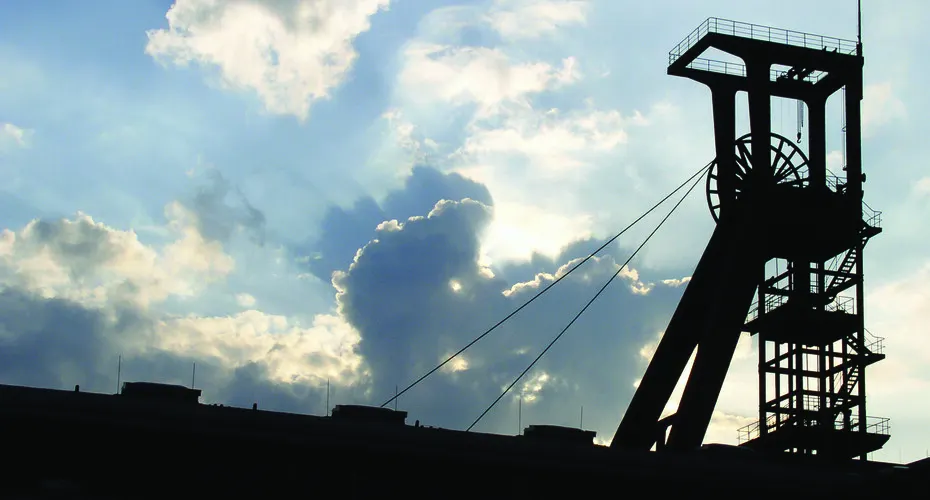
Typically, apprentices learning time will consist of around six hours per week of remote learning and up to four weeks per year of site visits and residentials on various mines and at CSM.
The first year provides fundamental knowledge underlying mining engineer including mathematics, mechanics and fluid mechanics. The mining business is also introduced, and apprentices undertake a challenge project alone or in small groups at their place of work.
In the second year, further basic skills are acquired, such as electrical engineering, geology and geomatics, and the course starts to move into the core mining subjects such as excavation design, geomechanics and safety and hazard management. The third year continues the pairing of core mining subjects including tunnelling and underground space, and ventilation with important related subjects such as mine closure and risk management.
In final year, the focus moves to tools for strategic thinking: economics, business evaluation, planning, and environmental and social governance, and the year ends with a major project, to put into practice all the skills learnt in the four years of study: Apprentices will complete an individual or group project in the final year; an opportunity to apply knowledge and skills to devise an engineering solution at a professional level. The individual or group project should be done in collaboration with employers, giving the company a tangible benefit.
Residentials will consist of up to two-week study blocks in Cornwall, and on-site introductions to mining topics at mines across the UK. The extensive opportunities to meet as a group will allow apprentices to share learning from their own experiences and their own mines and to grow their technical peer network.
During and outside of this time apprentices will also be able to meet one-to-one with their academic mentor, as well as participating in progress review meetings with both their academic and work place mentors approximately every twelve weeks.
Careers
About the apprenticeship
Apprentices will be a full, salaried member of an organisation. Much of the learning will take place at work, either through projects linked to academic content or time set aside for distance learning. Apprentices will be working in an exciting and relevant job from day one of their studies, meaning when they graduate, they'll have both the professional and academic experience sought after by employers.
Employer-valued skills
Solid industry experience is what employers look for when recruiting. The structure of the apprenticeship standards means that apprentices will gain knowledge, skills and behaviours to be a fully-fledged mining engineer at the end of the programme. They will have gained experience in areas including mine design, operations, geotechnical, business, safety, environment, tactical and strategic thinking – all routes to careers within mining and related industries.
Find out more about our Mine Management degree apprenticeship

Employers
We can help you invest in upskilling your people and attract new talent via progression routes.

Aspiring apprentices
Discover why a Degree Apprenticeship is right for you.

Events
Find out more about our programmes and partnering with the University of Exeter.