AI-Based Support for Mental Health Communication (AIM-Health Project)
The next CS seminar will be held on 11th Feb, starting from 14:30 in Harrison 203. Helena Caseli and Vania Neris from Federal University of São Carlos will talk about their research on AI for Mental Health Communication. They are also on a research visit to Prof Aline Villavicencio.
| A Computer Science seminar | |
|---|---|
| Date | 11 February 2026 |
| Time | 14:30 to 16:30 |
| Place | Harrison Building 203 |
Event details
Abstract
Depression is a mental health disorder that affects a large portion of the global population, being the second largest contributor to decrease in healthy life expectancy. Depression is characterized by a clinically significant form of psychological suffering that leads to significant impairment in someone's functionality, reduced quality of life and, in severe cases, can lead to death due to the risk of suicide. However, according to the World Health Organization, only a quarter of individuals suffering from mental health disorders receive proper care. Advances in Artificial Intelligence (AI) and Natural Language Processing (NLP) research have been developed to a level that can be used for proposing computational solutions that assist in the detection and intervention in mental health conditions. AI and NLP based solutions that aid in the identification of signs of depression can be useful both in individual treatment and in making public policy decisions. Similarly, solutions that offer autonomous, ethical, reliable, controlled, and engaging intervention, in real time, can help mitigate the damage caused by depression. This project works on proposing and developing AI and NLP based solutions for the detection and intervention of mental health conditions that can have a broader reach and allow mental health support to individuals and populations that would not otherwise have access to it. Furthermore, as social determinants are frequently mentioned as risk factors for mental health conditions, this project also aims at furthering the understanding about them in two contexts (Brazil and the United Kingdom). AIM-Health project aims to address scientific challenges that are still present and very relevant in this context: (i) dealing with more abstract language (such as figurative language) commonly used in mental health self-narratives, and (ii) outputting personalized interventions suitable for an individual's context. In this seminar, we will give a full overview of the AIM-Health project and describe the preliminary results of its first year.
AIM-Health project website: https://www.aim-health.ufscar.br/
Speakers:
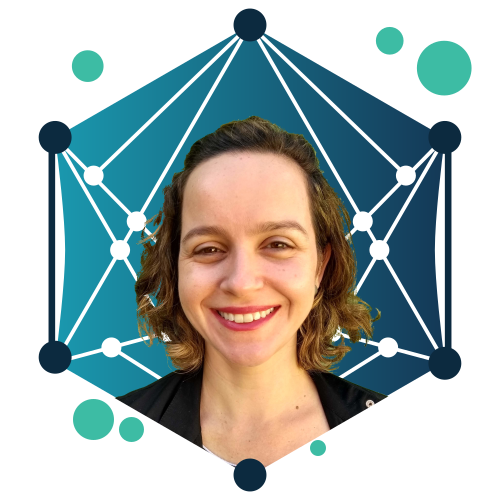
Helena Caseli is a Full Professor in the Department of Computing at the Federal University of São Carlos (UFSCar) in Brazil, where she leads the Laboratory of Computational Linguistics and Intelligence (LALIC). With more than 25 years of experience in Natural Language Processing, she coordinated many projects supported by Brazilian funding agencies or in partnership with Brazilian companies. Currently, she is the coordinator of the AIM-Health project funded by FAPESP (the Brazilian support agency of São Paulo state) and UKRI/MRC – UK Research and Innovation / Medical Research Council, which focus on the development of artificial intelligence solutions for supporting communication about mental health. She was also a member of the Amive project coordinated by Prof. Neris.
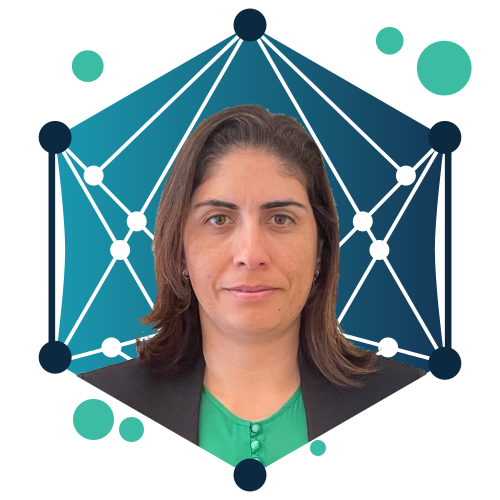
Vânia Neris is an Associate Professor in the Department of Computing at the Federal University of São Carlos (UFSCar) in Brazil, where she leads the Flexible and Sustainable Interaction Lab (LIFeS). She has been researching Human-Computer Interaction since 1999. She received her Ph. D. in Computer Science from the University of Campinas (UNICAMP)(2010) and has conducted research at the University of Reading (UK)(2008-2009). She was a Visiting Scholar in the Department of Information Sciences and Technology atGeorge Mason University (2021-2022). Prof. Neris has received research funding from several Brazilian agencies. Since 2011, she has been studying how to develop emotion-aware systems. Prof. Neris was one of the investigators of the Amive project, which aimed to identify possible depressive symptoms among college students and deliver appropriate interventions to them. Her actual research interests include: (1) computer support for mental health and well-being, (2) human-centred AI, and (3) computer science education.
Location:
Harrison Building 203