Our Research
Addressing the sustainability challenges of today and the future are rooted in the human world. And leading transformative change means harnessing and understanding society and ecology in social, cultural, political, artistic, visual, and literary ways. Academics from across HASS are at the global leading edge of problem and curiosity-led research about these nature, climactic, environmental and sustainability challenges.

This means more than just the research that we as a faculty undertake. It means transforming ourselves, our research cultures, and processes to be fit for the sustainable future. Our faculty's dynamic and innovative research fosters new discoveries, inspires creativity, and brings people together to solve the challenges of today and tomorrow, making the world greener, healthier, and fairer in line with Strategy2023. Below are some examples of the major research projects that HASS academics are leading or involved with.
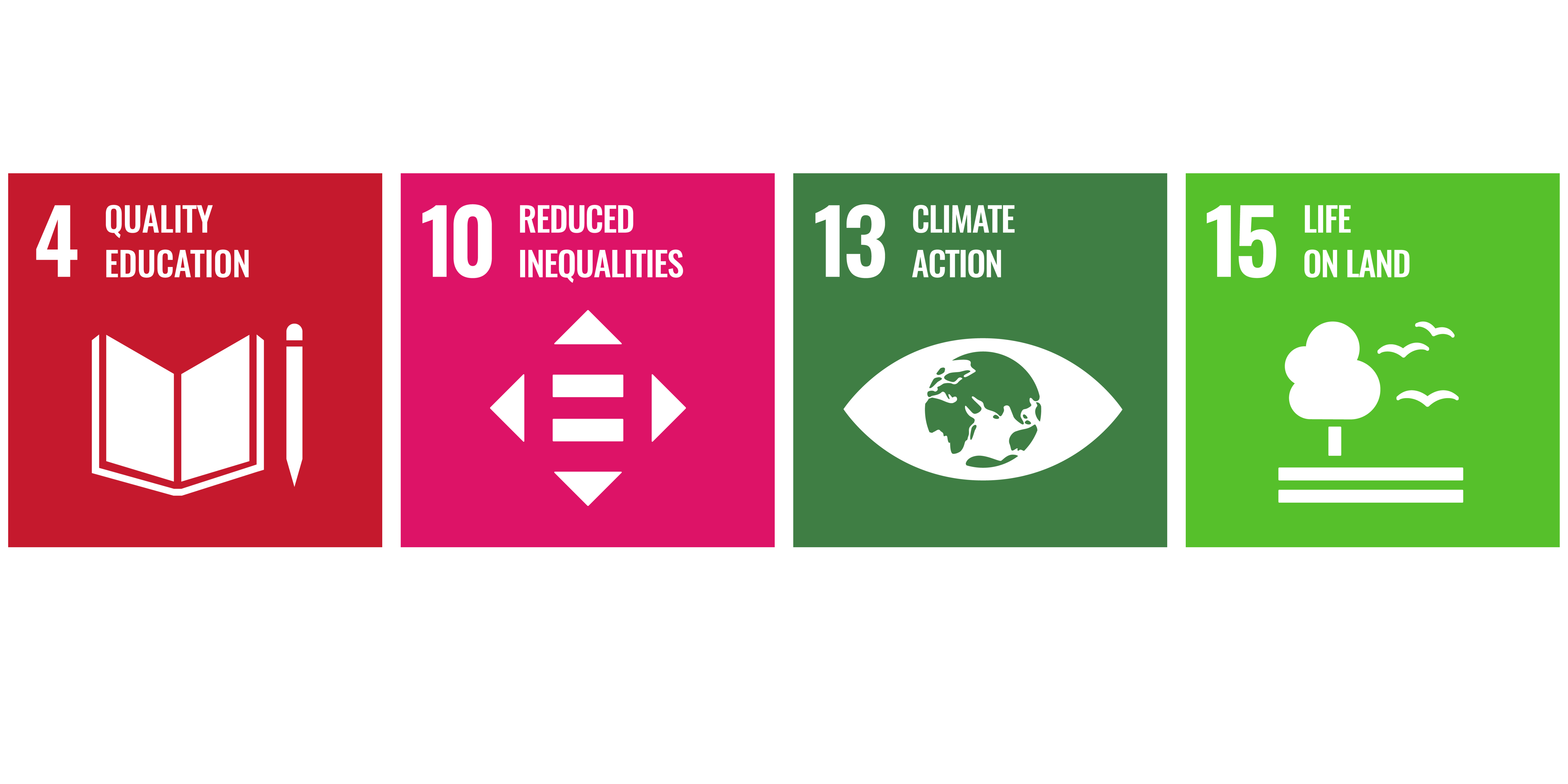
The United Nations Sustainable Development Goals (SDGs) are a set of 17 goals which provide a shared blueprint for sustainable development and a sustainable future, which set out targets to end poverty, protect the planet, and achieve prosperity for all by 2030. Our faculty's research strives to embed these goals into everything we do to work towards creating a more sustainable, healthy and socially just future.
.png)
Education, Justice, and Memory Network (EdJAM)
EdJAM is a network of researchers, educators and civil society organisations working in the arts, education and heritage. They are committed to creative ways to teach and learn about the violent past in order to build more just futures.
SDG Goals Achieved

.png)
Designing a Sensibility for Sustainable Clothing (S4S)
The S4S project sought to help around 40 participants to develop a 'sensibility for sustainable clothing'. We used embodied research - making, mending and modifying clothes in 40 one-day workshops - to encourage them to think, feel and act more sustainably in their clothing choices. We used a range of innovative arts and social science methodologies to chart our participants journeys through the project. Our methodologies include reflective short videos, reflective clothing diaries, wardrobe audits (counts and interviews), surveys, and making collaborative artefacts.
SDG Goals Achieved

.png)
Critical Minerals Challenge Centre - Accelerating the Green Economy
Critical Minerals are the raw materials and enablers of the transition to Net Zero, and essential ingredients of all digital technologies and advanced manufacturing. Southwest England is the leading UK region for potential production of critical minerals, with active exploration and development companies, a history of metals mining that led the world and some 70 service and equipment companies (predominantly SMEs and microbusiness) with a global client base.
The Centre builds on research on geology, mining and minerals at Camborne School of Mines and brings new transdisciplinary, links across the University of Exeter to research in ecology, sustainable investment, social studies, politics and policy to benefit innovation in the region. It will continue to grow and build new relationships and projects.
SDG Goals Achieved

.png)
Centre for Rural Policy Research (CRPR)
The Centre for Rural Policy Research (CRPR) is an inter-disciplinary team of social scientists focussing on social, political and economic issues at the intersection of land, the environment, farming and food systems. While much of our research is conducted in the United Kingdom, we also have an interest in these issues around the world, especially in Europe.
SDG Goals Achieved

.png)
RENEW: Renewing biodiversity through a people-in-nature approach
RENEW is a five-year partnership programme to develop solutions to one of the major environmental challenges for humankind: the renewal of biodiversity.
Funded by the Natural Environment Research Council (NERC), the programme is a collaboration between the University of Exeter and the National Trust, and has been co-designed and developed with 33 partners from a diverse range of sectors. RENEW is led by Professors Neil Gow, Kevin Gaston, and Catriona Mckinnon from the University of Exeter, and Professor Rosie Hails from the National Trust.
SDG Goals Achieved