Why study MA Social and Political Theory at Exeter?
You will study the ideas that have shaped our political and ideological traditions, focusing on the study of key thinkers, such as John Locke, Karl Marx and Michel Foucault
We employ analytical and institutional approaches to debate the history of political ideas and changing perceptions of money, work and commerce
You’ll benefit from an active research culture with seminar series and highly successful annual postgraduate conference
Tailor your degree to your interests with an array of optional modules including Problems and Texts in Social and Political Thought, Sources in Modernity and Post-Modernity and Contemporary Ethics
Flexibility to follow your interests with a world-leading cluster of researchers
Top 100 in the world for Political Sciences
Global Ranking of Academic Subjects (GRAS) or Shanghai Rankings 2025
Entry requirements for 2027 entry
We will consider applicants with a 2:2 Honours degree or above in their first degree. While we normally only consider applicants who meet this criteria, if you are coming from a different academic background which is equivalent to degree level, or have relevant work experience, we would welcome your application.
The MA Social and Political Theory gives you the opportunity to study the thinkers who have shaped the modern world – Locke, Hegel, Marx and others – as well as more recent debates in social and political theory. It draws upon the diverse interests of our lecturers; refers to both Anglo-American and ‘Continental’ literatures; and employs analytical and institutional approaches.
As a graduate of this programme you will have a broad knowledge of classic debates in the history of political ideas and of changing perceptions of money, work and commerce. You will also have the opportunity to take a wide range of options in subjects including philosophy of social science, science and technology studies, and theories of revolution.
The modules below provide examples of what you can expect to learn on this degree course based on recent academic teaching. The precise modules available to you in future years may vary depending on staff availability and research interests, new topics of study, timetabling and student demand.
Please note that the module information displayed here is subject to change.
Overall you must take 120 Credits of compulsory modules and 60 credits of optional modules
Recommended optional modules - Choose between 30 - 60 credits. These modules are some of those currently led by political and social theorists/philosophers, or otherwise closely related to core topics in the MA Social and Political Theory.
The remaining 30 credits can be in Politics, Sociology, Philosophy, or any other discipline in the university, with approval from the programme director (or equivalent) of the relevant discipline.
Code
Module
Credits
Compulsory 1
Sources in Modernity and Post-Modernity
30
Dissertation
60
Social Theory
30
POLM803: Sources in Modernity and Post-Modernity
This module is the main core course for the MA programmes in Political Theory (History of Political Thought, and Social and Political Thought). It is also open to other students on related areas of study. The module is intended to develop your ability to critically reflect about the nature and scope of political and social thought. It is run differently every year, but it always involves careful reading and critical analysis of a few key texts in Western political theory.
Your MA dissertation is an extended piece of writing driven by your own research interests, and a core part of a Master's degree. This module equips you with the skills you need to meet this challenge.
A dissertation is not a long essay, and writing a good dissertation requires you to demonstrate good research skills, the ability to learn independently, the ability to synthesise a complex literature (or literatures), and good writing skills. Furthermore, your Master's dissertation will be driven primarily by your own research interests, the research questions you are able to devise, and the approach you take to research design. It will likely require significantly more work than any assessment you have done previously. It also accounts for a significant proportion of the credits making up your Master’s degree. For these reasons, you will be provided with support during the dissertation writing process in the form of the POLM886 Dissertation Skills module, and from a dedicated dissertation supervisor who aligns with your research interests.
The module introduces you to a range of central themes and issues that both classical and contemporary social theorists have addressed in their work, all with the view of equipping you with a broad range of conceptual tools with which to understand and research the social world. The thematic structure of the module will enable you to understand, as well as be encouraged to assess, the contribution theoretical traditions and paradigms under discussion can make to the analysis of those themes.
To provide a thorough and rigorous discussion of some of the main theoretical traditions and paradigms in sociology
To illustrate theories through the use of empirical research and examples
To foster your capacity to engage with techniques of analytical and critical inquiry
Conflict, Security and Development in World Politics
30
State-Building after Civil War
30
Qualitative Methods in Social Research
30
Digital Politics and Policy
30
From Oppression to Resistance: Exploring the Intersections of Race, Class and Gender
30
Theories of International Development
30
Tools, Policy and Practice of International Development
30
The Politics, Policy and Practice of Sustainable Development
30
Leadership, Equality and Diversity
30
Collaborative and Participatory Governance
30
Strategy and Psychology in Foreign Policy
30
Public Opinion, Misinformation and Public Policy
30
International Relations: Power and Institutions
30
Applied Quantitative Data Analysis
15
Public Policy Process
30
Research Methods in the Social Sciences
15
Fees
UK fees per year:
£13,050 full-time; £6,525 part-time
International fees per year:
£26,300 full-time; £13,150 part-time
Scholarships
The University of Exeter offers a wide range of scholarships to support your education, with £8 million available for international students applying to study with us in the 2027/28 academic year, including our prestigious Exeter Excellence Scholarships. We also provide awards for sport, music and other achievements, as well as regional and partner scholarships with organisations such as Chevening, the Commonwealth Scholarship Commission and the British Council. For more information on scholarships and other financial support, please visit our scholarships and bursaries page.
University of Exeter Alumni Scholarship
We are pleased to offer the University of Exeter Alumni Scholarship, a scholarship for University of Exeter alumni beginning a standalone postgraduate programme in 2027/28 with us a scholarship worth 20% of the cost of your first year tuition fees.
With the exception of the dissertation, each module on this programme is normally taught through academic lectures expanded through seminar discussion, presentations, group work, reading and essay assignments.
You will have an individual supervisor for your dissertation, which is a 16,000-20,000 word extended political theory essay on a topic of your choice (following discussion and approval from your supervisor).
The teaching and assessment on this programme should enable you to develop insight into recent critiques of modern Western societies and their values, and the ways in which these form crucial theoretical elements in debates across the social sciences.
Library services
Our main library is open 24/7 throughout the academic year. With a book stock in excess of 1.2 million, we have one of the highest UK academic library ratios of books to students. The main library offers self-service machines, state-of-the-art multimedia facilities, and an extended wifi network. The library provides world-class study facilities to all students. It has extensive holdings of works on political science, international relations and the various sub-disciplines.
Dr Sarah Drews Lucas
Programme Director
Dr Alex McLaughlin
Lecturer
Dr Dario Castiglione
Associate Professor
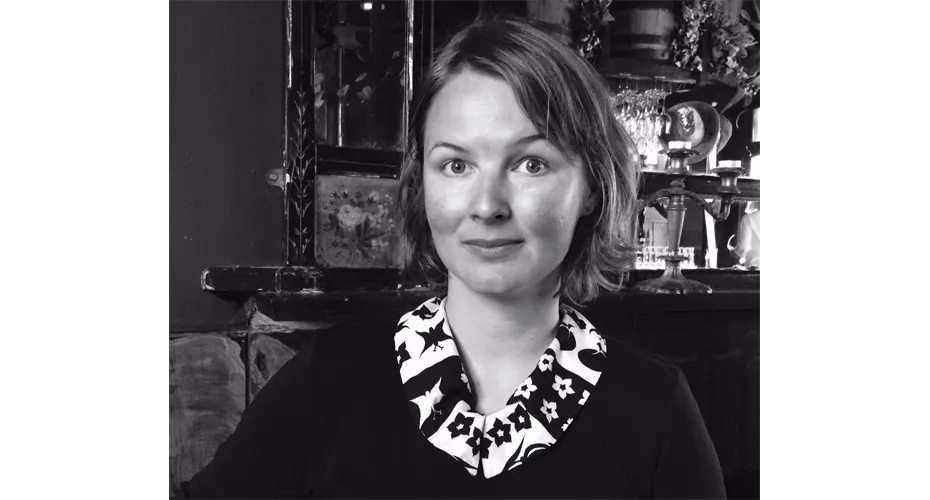
Dr Sarah Drews Lucas
Programme Director
Sarah’s research is focused on developing models of feminist agency that enable political action. She is especially interested in identity formation, communication and communicability, and interrogating the boundaries of the political (especially asking after the necessary pre-political conditions for action).
Her area of expertise is feminist philosophy, but she is also interested in critical theory, contemporary political theory, continental philosophy, and human rights.
My research is in political theory, focusing on questions of global and intergenerational justice, particularly as they arise in relation to climate change. I am currently working on a project that explores the role for political protest and resistance in pressing for a sustainable future.
Dario teaches on the core module Problems and Texts in Social and Political Thought. His field of interest is political theory and its history, with particular application to contemporary European developments. His main areas of research comprise democratic theory, the interconnection between state and society, the history of early modern political thought, and democracy and constitutionalism in the EU.
You will develop a number of skills that are valued in professional and managerial careers: the ability to research and analyse information from a variety of sources along with written and verbal skills needed to present and discuss your opinions. The understanding you will gain of complex political and cultural issues, often in continually changing environments, can also be relevant to both business and public sector appointments.
Consequently, University of Exeter Politics postgraduates have been highly successful in securing interesting career opportunities and progressing to PhD level study.
Careers support
Our careers advisory service provides expert guidance to all students to enable them to plan their futures through psychometric testing, employer presentations, skills events, practice job interviews and CV preparation.
Sign-up for more information about studying with us
If you're thinking about studying MA Social and Political Theory with us, signing up to our emails is the best way to discover if we’re the right university for you.
Streatham Campus in Exeter
The majority of students are based at our Streatham Campus in Exeter. The campus is one of the most beautiful in the country and offers a unique environment in which to study, with lakes, parkland, woodland and gardens as well as modern and historical buildings.
Located on the eastern edge of the city centre, St Luke's is home to Sport and Health Sciences, the Medical School, the Academy of Nursing, the Department of Allied Health Professions, and PGCE students.
Our Penryn Campus is located near Falmouth in Cornwall. It is consistently ranked highly for satisfaction: students report having a highly personal experience that is intellectually stretching but great fun, providing plenty of opportunities to quickly get to know everyone.