We will consider applicants with a 2:2 Honours degree or above in a social science* or humanities subject, biology, chemistry, heritage or environmental science.
Commitment to interdisciplinary teaching and research
Entry requirements for 2027 entry
We will consider applicants with a 2:2 Honours degree or above in a social science* or humanities subject, biology, chemistry, heritage or environmental science. While we normally only consider applicants who meet this criteria, if you are coming from a different academic background which is equivalent to degree level, or have relevant work experience, we would welcome your application.
For applicants from different academic backgrounds or with relevant work experience, please use your Personal Statement to provide additional information. This might include:
Why you want to study this course at the University of Exeter and what personal qualities make you suitable for postgraduate study.
Relevant background (work/degree experience).
Lecturers/modules you are particularly interested in and why.
Career/future ambitions and how the course will help you achieve them.
Feel free to informally contact the Programme Director (see above) for advice before submitting your formal application.
This MSc combines hands-on practical work with theoretical studies, allowing you to develop your skills using advanced laboratories and cutting-edge analytical tools. By the end of the course, you will be able to critically analyse evidence, create strategic solutions for operational challenges, conduct original research, and communicate complex scientific findings effectively.
The programme is divided into units of study called modules which are assigned 'credits'. The credit rating of a module is proportional to the total workload, with 1 credit being nominally equivalent to 10 hours of work.
The modules below provide examples of what you can expect to learn on this degree course based on recent academic teaching. The precise modules available to you in future years may vary depending on staff availability and research interests, new topics of study, timetabling and student demand.
Please note that the module information displayed here is subject to change.
150 credits of compulsory modules and 30 credits of optional modules.
Code
Module
Credits
Compulsory 1
Independent Project: Interpretation, Evaluation and Presentation of Evidence
30
Laboratory Analysis
30
Crime Scene Investigation
30
Forensic Anthropology
30
Forensic Archaeology
30
ARCM701: Independent Project: Interpretation, Evaluation and Presentation of Evidence
The module aims to enable and support your pursuit of conducting an independent piece of research, within the context of forensic investigation, and disseminating its findings. The module emphasises student autonomy and intellectual rigour, fostering the development of critical research skills relevant to various academic and professional fields.
On this module you will identify an area of academic inquiry, that aligns with your individual research interests. You will undertake an effective programme of original and independent research, contributing novel data and insights to your chosen area of study. You will develop knowledge and skills to demonstrate proficiency in collecting and collating data from diverse sources and, the subsequent analysis, interpretation and evaluation of that data and your proposed hypotheses. You will employ relevant methods, analytical techniques and statistical tools, as appropriate. You will clearly disseminate the findings of your research in the form of a detailed and well-written report that makes use of supporting supporting illustrations, graphs, tables. The report will include a comprehensive bibliography, that highlights both the depth of the research undertaken and the breadth of knowledge acquired.
This module aims to provide you with a detailed understanding of the contribution of science to the investigation of criminal activity. You will learn about the analytical concepts, techniques and procedures governing the recovery, examination, and evaluation of both macroscopic and microscopic evidence types in laboratory contexts. You will apply the knowledge gained in lectures to practical work in the laboratory and explore a range of evidence and scenarios to reinforce theoretical understanding. You will interpret, evaluate and write up your practical findings, making use of the literature base relevant to forensic science and produce a forensic report.
This comprehensive module delves into the intricate world of crime scene investigation, equipping you with a thorough understanding of the techniques, procedures, legal and management frameworks that underpin this vital work. Through a blend of theory-based and practical lectures, you will gain hands-on experience in applying theoretical knowledge to real-world scenarios, fostering a deeper appreciation for the complexities and nuances of crime scene investigation.
The module aims to provide you with the knowledge and ability to competently select and perform techniques used during forensic investigations.
In this module, you will gain a deep understanding and hands-on experience of the techniques, methods, and processes employed by forensic anthropologists to gather evidence for solving complex problems and answering questions of legal importance. You will develop the skills to distinguish human remains, formulate taphonomic profiles, and construct biological profiles to reconstruct an individual's life history to help identify them, along with the circumstances surrounding their death.
The module aims to provide you with an in-depth understanding of the role of the forensic anthropologist from crime scene to court, alongside the theories and practical skills that underpin this work.
In this module, you will gain a comprehensive understanding of the techniques, processes, and theories that underpin forensic archaeological practice, with theoretical concepts reinforced through hands-on exercises and simulations. Particular focus is placed on the detection and systematic recovery of buried evidence and clandestine burials. You will develop the ability to search for, locate, identify, recover, record and interpret evidence from scenes of forensic archaeological interest, whilst adhering to admissibility principles, legislative frameworks, and scene of crime protocols.
The module aims to provide you with an in-depth understanding of the role of the forensic archaeologist from crime scene to court, alongside the theories and practical skills that underpin this work.
Giving and Taking: Anthropology and Archaeology of Circulation and Exchange
15
Funerary Archaeology
15
Practicing Archaeological, Forensic and Heritage Science
15
Discovering the Past with Molecular Science
15
Advanced Zooarchaeology
15
Zooarchaeology
15
The Archaeology of Humans and Other Animals
15
Forensic Science, Conflict and Justice
15
Crime Science
15
Policy Analysis in Criminology
30
Advanced Topics in Criminal Justice
30
Criminological Theory and Practice
30
Research Skills in Archaeology and History
15
Critical Approaches to the History of Violence and Conflict
30
Human Rights and Digital Technologies
15
International Crimes and Human Rights Abuses
15
The International Criminal Court: Law and Practice
15
Medical Technology and the Law
15
State Crime
30
Data Governance and Ethics
15
Security, Artificial Intelligence and Emerging Technologies
30
Computational Social Science 1
15
Computational Social Science 2
15
Fees
UK fees per year:
£13,050full-time; £6,525 part-time
International fees per year:
£26,300full-time; £13,150 part-time
Scholarships
The University of Exeter offers a wide range of scholarships to support your education, with £8 million available for international students applying to study with us in the 2027/28 academic year, including our prestigious Exeter Excellence Scholarships. We also provide awards for sport, music and other achievements, as well as regional and partner scholarships with organisations such as Chevening, the Commonwealth Scholarship Commission and the British Council. For more information on scholarships and other financial support, please visit our scholarships and bursaries page.
University of Exeter Alumni Scholarship
We are pleased to offer the University of Exeter Alumni Scholarship, a scholarship for University of Exeter alumni beginning a standalone postgraduate programme in 2027/28 with us a scholarship worth 20% of the cost of your first year tuition fees.
We seek to inspire and educate students in stimulating ways so as to develop intellectual skills for life and employment in the contemporary world. Skill gain and tailored immersive engagement are central tenets of the programme’s design, with learning enhanced through practical exercises and progression captured through portfolio and skill-based assessments.
Teaching team
We believe in “no borders” interdisciplinary collaboration, a particularly essential attribute for forensic casework. Given the nature and scope of criminal activity, a vast array of expertise is required to identify, record, and reconstruct events accurately. We therefore operate a collaborative cross-disciplinary team from across the university and industry, drawing a wide range of expertise into the delivery of this MSc.
Classes
Most of the formal classes that you will attend will be a mixture of lectures, seminars, workshops, and laboratory sessions. The precise mix will vary between modules. These aim to outline the principal issues of the module, to explore some detailed issues, and, where relevant, to give you experience of working with a particular technique or data set.
Assessment
The assessment for the MSc Forensic Investigations is through a combination of tests, essays, reports, posters, portfolios, oral and visual presentations, viva voce, and an independent project. The independent project of up to 10,000 words is a substantial piece of original and independent research on a topic aligned to career aspirations or research interests, subject to the approval of a supervisor.
Engagement
All members of staff are actively engaged in research and casework, both in Britain and abroad, regularly attending conferences, workshops and symposia. It is through this engagement in both academia and industry that the university are able to provide top quality teaching by experts in their field.
Lab
In addition to the facilities below, you will have access to our Science Heritage and Archaeology Digital (SHArD 3D) Lab which includes equipment for: advanced digital microscopy, x-ray imaging and micro-CT imaging, and 3D modelling capabilities utilising structured light scanners for both small objects and entire landscapes. We also have a portable XRF for elemental analysis, and two drones for aerial survey and landscape modelling.
The SHArD Lab also provides you with the opportunity to collaborate and network with its commercial forensic partners and clients.
Facilities
As a member of the Archaeology and History Department and key part of our Postgraduate community you will have full access to our exceptional, modern facilities and resources. These include:
Dedicated Experimental Archaeology laboratories and workshop spaces.
Clean lab with fume cupboards for chemical work.
Microscope room equipped with high specification microscopes and image processing facilities
Wet labs for sample processing
State of the art surveying equipment which includes resistivity equipment, magnetometers, differential and hand-held GPS, and a total station theodolite.
Collections
We also have extensive reference collections of artefacts, animal bones and plant remains. You will also have access to the wider resources of the University too, including the Library, Special Collections and our Digital Humanities Lab.
As a member of the Archaeology Department and key part of our postgraduate community you will have full access to our exceptional, modern facilities.
• Experimental Archaeology Labs • Bioarchaeology Lab • Clean Lab and fume cupboards for preparing stable isotope samples • Landscape archaeology project office • Microscope room equipped with high specification microscopes and image processing facilities • Digital Humanities Lab • Wet labs for artefact and environmental sample processing • Digital x-ray facilities and equipment for elemental analysis • State-of-the-art surveying equipment • Outdoor experimental space
SHArD 3D Laboratory
The University of Exeter's Science, Heritage and Archaeology Digital 3D (SHArD 3D) Laboratory, is a state-of-the-art facility dedicated to digitally replicating and preserving biological and cultural artefacts. Funded by nearly £893,000 from the Arts and Humanities Research Council (AHRC), SHArD 3D employs advanced scanning and microscopy techniques to create detailed 3D models, enhancing the study of archaeological finds and bio-cultural heritage.
This cutting-edge laboratory offers students unparalleled opportunities to engage with the latest digital preservation technologies, including portable 3D scanning equipment for fieldwork and a microCT scanner for non-destructive imaging of artefacts. Collaborations with institutions like Exeter’s Royal Albert Memorial Museum will further enrich the learning experience, providing practical skills in digital archiving and analysis.
By studying Archaeology at the University of Exeter, students will be at the forefront of innovative research methods, preparing them for dynamic careers in heritage preservation and forensic analysis.
On top of all that we also have extensive reference collections of artefacts, animal bones and plant remains. So whatever your specific interests within archaeology we have the kit for it.
And of course you will have access to the wider resources of the University too, including the Library and Special Collections.
Senior Lecturer in Forensic Archaeology and Anthropology
Dr Sophie Beckett
Lecturer in Archaeology
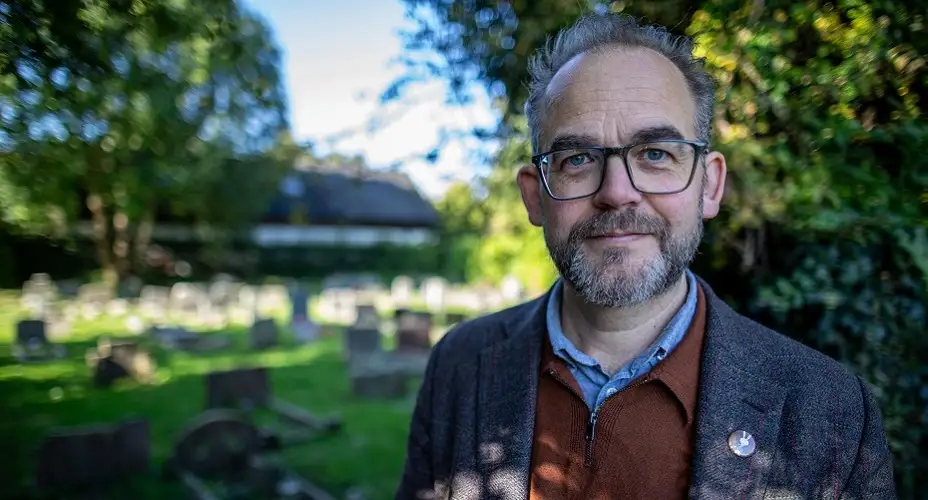
Professor Karl Harrison
Professor of Practice in Forensic Investigation
Professor Karl Harrison has worked in the field of forensic investigations for over 20 years. He is a former National Forensic Specialist Adviser and one of the most experienced Forensic Archaeologists currently operational. Most of his casework has been UK-based and focused on prosecution work with UK police forces, but he has in addition worked internationally in Portugal, Greece, Poland, Iraq and in international waters. Focused on forensic archaeology, Karl has a broad background in scene forensics and major scene coordination, and has provided forensic strategy advice across a range of complex major investigations. Commended for his work at Grenfell Tower, Karl has a particular interest in the intersection between forensic investigation and mass fatality procedure.
Senior Lecturer in Forensic Archaeology and Anthropology
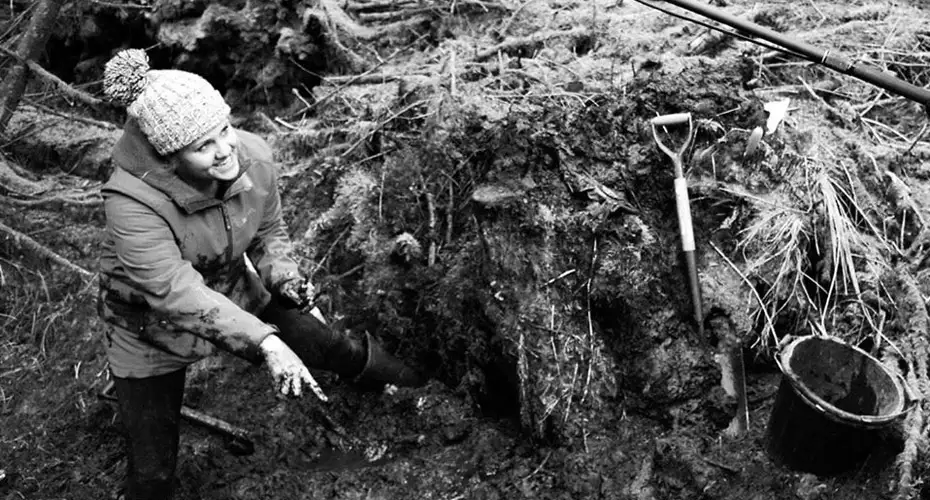
Dr Laura Evis is a forensic bioarchaeologist who adapts and applies various archaeological and anthropological techniques to help answer questions and solve problems for medico-legal investigations. Topics of interest include the development of specialist search, location, recovery and recording methods for forensic casework, including work conducted in domestic, international and mass disaster settings. Laura's previous research focused on experimentally testing existing archaeological excavation techniques and recording methods to validate their suitability for use in forensic casework. Laura teaches across a range of subjects, but specialises in forensic archaeology and anthropology.
Dr Sophie Beckett is a lecturer in Archaeology at the University of Exeter. Research interests span Human Osteoarchaeology, Forensic Anthropology and Applied Archaeological Science with particular focus on biological minerals (such as dental calculus, urinary stones and burnt bone), disarticulated human skeletal remains, osteometrics and, the application of computed tomography (CT) and X-ray diffraction (XRD) analysis within Archaeology. Sophie is an Honorary Fellow of Melbourne Dental School (University of Melbourne) and a Chartered Chemist (Royal Society of Chemistry). She has experience of management of large multi-user laboratories, commercial analysis in XRD and CT and, working in the UK and abroad within mass fatality incident response.
This programme prepares you to excel in the forensic science sector and various other related fields. The MSc has been designed to align with the latest industry standards.
The interdisciplinary nature of the programme provides a range of employment options both within and outside of the forensic science sector, as well as progression opportunities to study a PhD.
Example fields where graduates find employment:
Police
Military
Crime Scene Investigation
Fire and Rescue Service
Forensic Service Provision (Private) Laboratories and Scene Support
Government Laboratories (e.g., CAST or DSTL)
Medical Laboratories
Medical Sector (NHS; Doctors; Mortuary Technicians)
NGOs/IGOs (e.g., Red Cross; Human Rights Watch; Amnesty International; International Commission on Missing Persons)
Emergency Response
Heritage (Museums; Commercial Archaeology)
Law (Barristers; Solicitors)
Project Management
Academia (PhD; Research; Lectureships)
Developing your skills and career prospects
Employment and professional development: Our excellent Career Zone provides invaluable support, advice and access to graduate employers. Visit the employment and professional development pages for more information, including podcasts and profiles, about the range of support available.
Sign-up for more information about studying with us
If you're thinking about studying MSc Forensic Investigations with us, signing up to our emails is the best way to discover if we’re the right university for you.
Streatham Campus in Exeter
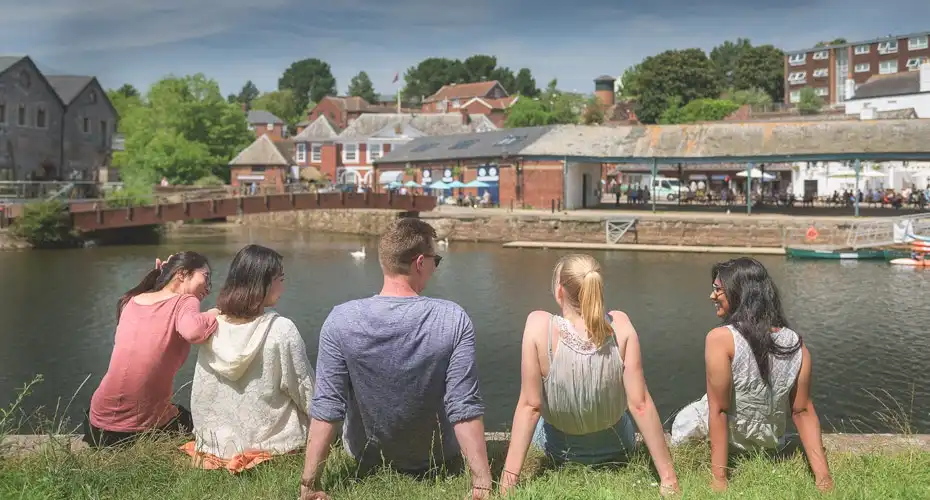
The majority of students are based at our Streatham Campus in Exeter. The campus is one of the most beautiful in the country and offers a unique environment in which to study, with lakes, parkland, woodland and gardens as well as modern and historical buildings.
Located on the eastern edge of the city centre, St Luke's is home to Sport and Health Sciences, the Medical School, the Academy of Nursing, the Department of Allied Health Professions, and PGCE students.
Our Penryn Campus is located near Falmouth in Cornwall. It is consistently ranked highly for satisfaction: students report having a highly personal experience that is intellectually stretching but great fun, providing plenty of opportunities to quickly get to know everyone.