Accreditation and rankings
The University of Exeter Business School is proud to be triple accredited by The Association to Advance Collegiate Schools of Business (AACSB), EFMD Quality Improvement System (EQUIS), and the Association of MBAs (AMBA). These accreditations are the highest possible standards for business schools, and they demonstrate our commitment to excellence in teaching, research, and student outcomes.
Globally recognised for sustainability
Our MBA is particularly recognised for its sustainability, responsible business, and social impact content - placing 1st in the UK and 10th globally in Corporate Knights' Better World MBA Ranking. We are also an approved university partner of the Institute of Sustainability and Environmental Professionals (ISEP).

UK's No. 1 Sustainable MBA
Ranked 1st in the UK and 10th globally in Corporate Knights’ Better World Ranking.

Five Real-World Projects
Strategic consulting projects in partnership with external organisations covering Local, Global, and Circular Economy challenges.


World-Leading Faculty
Learn from researchers with 92% of Business & Management research rated as world-leading.
Course content and modules
We integrate environmental responsibility into every core discipline, ensuring that concepts like the Circular Economy, climate risk, and social governance are central to your leadership practice.
- Future-focused: Built around the latest thinking and techniques in regenerative business models, ethical finance, and purposeful leadership.
- Holistic rigour: Acquire a solid grounding in core business disciplines – from Finance and Operations to Strategy and Marketing – all redefined through a sustainable lens.
- Elective specialisation: Tailor the programme to your ambitions with specialist modules that deepen your expertise in high-demand areas, or stretch your capabilities into new territory.
The modules below provide examples of what you can expect to learn on this degree course based on recent academic teaching. The precise modules available to you in future years may vary depending on staff availability and research interests, new topics of study, timetabling and student demand.
Please note that the module information displayed here is subject to change.
150 credits of compulsory modules, 30 credits of optional modules
| Code | Module | Credits |
|---|---|---|
| Compulsory 1 | ||
| Economics and Sustainability | 15 | |
| AI, Data and Financial Intelligence | 15 | |
| Strategy and Marketing in the Age of AI | 15 | |
| Leading with Purpose | 15 | |
| Organisational Behaviour, Risk and Governance | 15 | |
| Tackling Global Challenges | 10 | |
| Circular Economy Design Corporate Challenge | 10 | |
| Digital and AI-Enhanced Business | 10 | |
| Entrepreneurship and Innovation | 10 | |
| Operations Management with Climate Risk | 15 | |
| Career Transformation | 0 | |
| MBA Project | 20 | |
MBAM869: Economics and Sustainability
The environment and the economy are deeply intertwined. Just as firms depend on resilient, reliable physical assets, they also rely on deeper foundations: strong institutions, healthy ecosystems, and capable people. In a world shaped by climate change, biodiversity loss, and numerous other resource pressures, business leaders must be fluent in not just how markets work, but also how to respond when they fail. This module is about the economics of a world where prices can send the wrong signals, risks are mis-estimated, and long-run value depends on more than what is reflected in traditional balance sheets and macroeconomic statistics.
Our aim is to make you the kind of decision-maker who can read the landscape of stocks, flows, and services that determine long-run value, and act accordingly. To achieve this, we will pair discussion of topics with in-class simulations designed to give you practice making decisions, negotiating agreements, and managing scarce resources governed by non-linear dynamics in real time. The final project-based assessment will help you apply concepts from the module to build a well-evidenced sustainability dashboard for a country or organisation of your choosing, producing analysis targeted at a real audience. Work of sufficient quality will have the opportunity to be submitted directly to the organisations assessed.
MBAM870: AI, Data and Financial Intelligence
This is a leadership focused, interdisciplinary module integrating management accounting information, data analytics, and AI to strengthen business decision-making.
Information is now one of the most valuable assets within any organisation. Leaders who can interpret data, understand financial signals, and apply emerging technologies such as AI are better equipped to make confident, ethical and strategically sound decisions. This module develops those capabilities.
You will explore how organisations collect, manage and transform data into meaningful insight, and how financial information, both internal and publicly available, can be interpreted to understand performance, risk and sustainability implications, challenge underlying assumptions, and apply professional scepticism.
You will work with case organisations, intelligence frameworks, and applied tools to analyse performance, model decision scenarios and communicate insights with clarity. You will learn foundational principles of financial reporting and management information. You will examine how AI, automation and analytics are reshaping decision processes, and develop the practical skills required to evaluate information systems.
MBAM871: Strategy and Marketing in the Age of AI
In this module, you will develop the analytical capabilities you need to lead organisations through the complexities of the 21st-century digital landscape, all of it informed by the latest thinking on AI – both the opportunities and risks that it affords.
You will begin by mastering strategic analysis, learning how to evaluate an organisation’s competitive environment and internal capabilities through the integration of traditional academic frameworks with the potential AI-driven research.
You will then study how strategic positioning acts as a foundation for marketing strategy and learn to align high-level corporate goals with practical marketing interventions.
This includes developing skills in segmentation, customer valuation, and brand management, ensuring that your marketing efforts are not just cost-efficient, but strategically grounded in growth and competition.
As you progress from basic principles to advanced AdTech, recommendation and other automated systems, you will explore the ideas of leading scholars and prominent practitioners.
You will learn to diagnose complex organisational problems and develop recommendations for Board level decision makers.
Furthermore, you will develop a critical understanding of how to apply creative intelligence and your ethical foundation to global challenges, ensuring that environmental and social considerations are central to your strategic decision-making.
MBAM872: Leading with Purpose
“Leading with Purpose” equips participants with knowledge, analytical capability, and practical leadership skills to drive sustainable and regenerative transformation within organisations. Building on leadership research, the module explores psychological, sociological, and systems-based theories to understand leadership effectiveness in organisational contexts. It critically examines contemporary leadership theories, with particular emphasis on purpose-driven, ethical, and regenerative leadership approaches. Participants will analyse how leaders cultivate shared vision, mobilise collective intelligence, and exercise responsible influence to create long-term social, environmental, and economic value. The module emphasises leadership practices that enhance employee performance and well-being, organisational performance, and systemic resilience.
This module aims to integrate leadership theory and practice to support effective action in real organisational contexts. It synthesises insights from organisational behaviour, psychology, sociology, and related disciplines to understand how leaders influence outcomes and shape organisational systems. A central aim is to connect theory to practice through applied learning and structured self-reflection. The module supports participants in developing self-awareness, identifying leadership strengths, and strengthening their capacity to lead responsibly and regeneratively in complex environments.
MBAM873: Organisational Behaviour, Risk and Governance
We live in a world of polycrisis – a complex interplay of wicked social, economic, environmental problems. The volatility of this environment poses a range of challenges for organisations who are trying to act responsibly. Navigating such challenges requires robust and resilient ethical decision-making frameworks.
This module will prepare you for this. It will introduce you to the concept of behaviour and governance in responsible organisations. It will begin, by outlining key ethical frameworks, as well as foundation principles behind them. You will have the opportunity to reflect on your own ethical values and take part in group discussions on whether the diversity of modern organisations leaves room for one-size-fits-all approaches.
To be meaningful, ethical principles must be embedded in organisational life. The module will propose the concept of ethical infrastructures as a holistic framework with visible and invisible components as a means of doing so. You would be able to evaluate whether this approach is sufficient to create a positive culture, or whether negative behaviours, corruption and group conflict can continue to exist, sometimes undetected.
MBAM874: Tackling Global Challenges
We recognise the importance of identifying and tackling the systemic global challenges in all our futures and as a core value and goal of the One Planet MBA programme, this module launches the whole programme. Based on our experience of the One Planet MBA and the increasing complexity of global environmental and societal challenges, this module explores macro and 'wicked' global problems facing us, to understand the nature of those challenges and draws upon design thinking to develop long term sustainable solutions.
As we look forward, we know that we will continue to experience pivotal moments of political, social, environmental, technological, and economic change - which have the potential to disrupt our current socio-ecological systems. These changes will drive the emergence of new ways of living and working and shape how society understands the world. Whilst this perspective has been a key feature of the MBA curriculum for some time, the global pandemic of 2020, the publication of the 2023 IPCC report and various geopolitical uprisings all bring these issues into sharper focus.
MBAM875: Circular Economy Design Corporate Challenge
We recognise the importance of identifying and tackling the systemic global challenges in all our futures and as a core value and goal of the One Planet MBA from Exeter. Based on our experience of the One Planet MBA and the increasing complexity of global environmental and societal challenges, this module engages with systems thinking to understand the nature of those challenges and draws upon design thinking to develop long-term sustainable solutions.
You will interact with researchers from academia, practitioners from the corporate world and a range of sustainability and circular economy experts working at the fore of innovation in this critical area. This interaction happens in workshops, lectures, seminars, networking events and design studios, culminating in a client-based design sprint[LD1.1]. The important thing is that the theme and its implications is constantly revisited through the MBA.
The aim is that you leave the programme as an ethical and responsible change maker with a set of theories, concepts, tools, design principles and personal values that you will apply in whatever working context you ultimately occupy.
MBAM876: Digital and AI-Enhanced Business
As the business world experiences an increase in the scope and pace of change, dealing effectively with uncertainty becomes a must for business survival. Current themes such as the 4th industrial revolution, rapid ‘up-teching’ and the associated ‘future of work’, ecosystem centred innovation coupled with the global environmental and social challenges require us to engage in new ways of doing business.
By the end of this module students should be able to:
· Evaluate and critically analyse how the ‘Fourth Industrial Revolution’ affects business and society and associated opportunities and risks
· Understand how organizations use data and analytics to inform decision-making processes, and create data-driven products and services, as well as how they are organizing into ecosystems to co-create value in the digital age
· Engage with the fast-evolving landscape of Ai, Cloud and associated emerging technologies and understand how these can be ‘designed-in’ to organisations to strategic advantage
· Use AI tools to evaluate an organisation’s strategy, operating model in the digital/AI era, and identify ranked use cases for AI use within their organisation
· Build an understanding of digital disruption and transformation from the perspective of both a startup and a ‘Legacy’ incumbent organization
MBAM877: Entrepreneurship and Innovation
This module develops a critical and practice-oriented understanding of entrepreneurship, focusing on how ventures are conceived, launched, and scaled in dynamic and uncertain environments. The primary emphasis is on entrepreneurial thinking, behaviour, and venture creation, with innovation positioned as a strategic tool that enables venture growth and competitive advantage.
The module explores how ideas are transformed into viable opportunities through entrepreneurial and agile approaches, and how innovation can be managed to generate both commercial and social value. While innovation is an important theme, it is framed within the entrepreneurial process, emphasising how founders and venture teams deploy innovation as their businesses evolve.
Students will engage with real-world entrepreneurial journeys through a series of guest speakers: founders who have successfully built and scaled ventures from inception. These lived experiences will provide insight into how innovation evolves from an initial idea into a sustained capability within growing enterprises.
The module integrates theory and practice, encouraging students to develop their own entrepreneurial ideas while understanding how innovation supports opportunity recognition, business model development, and long-term scalability.
Module Aims
MBAM878: Operations Management with Climate Risk
In this module, you will develop the capabilities required to design, manage, and improve operational systems in an increasingly digital, AI-enabled, and climate-constrained world. You will explore how organisations create value through their operations and supply chains, and how these systems must evolve to remain resilient, efficient, and environmentally sustainable.
You will begin by building a strong foundation in Operations Management, examining how processes are designed, managed, and improved across manufacturing and service contexts. You will learn to evaluate operational performance using established frameworks, while understanding the trade-offs between cost, quality, speed, dependability, flexibility, and environmental sustainability.
The module then introduces Climate Risk as a critical lens through which modern operations must be understood. You will explore physical, regulatory, and reputational risks, and learn how these translate into supply chain vulnerabilities and operational disruptions. Through practical exercises, you will develop tools such as climate risk registers to assess and prioritise these risks.
As the module progresses, you will apply these insights to redesign operational systems. This includes rethinking sourcing strategies, supply chain configurations, and capacity decisions in response to uncertainty and disruption.
MBAM900C: Career Transformation
This module is focused on achieving clarity about career direction, and cultivating the tools, personal effectiveness and interpersonal excellence needed to effect career transformation and preparation for entering the workplace as an MBA Graduate. This module is launched at the start of the academic year and progresses alongside all other modules. Through a series of in class career sessions, workshops, working in 1:1s and small groups, cohort members deepen their understanding of themselves, identify their strengths, values and drivers that anchor and shape their life and career aspirations. Using an iterative process of reflection, cohort members review progress using feedback drawn from self-assessment, career coaches, mentors, academic tutors, module leads and MBA peers. Engaging widely and embracing career exploration is encouraged through networking and seeking opportunities to try out new skills to boost career confidence.
Career acceleration, career change, career pivot, career progression, business start-up. These are some of the many career transformations that MBA students typically go through. Whether you know what your next step is going to be after your MBA, have hit a career plateau, or want to explore where your next five to ten years might take you, this module is designed to help you gain the level of personal insight to identify your true vocation, and adopt the mindset, tools and techniques to get there and be highly effective in the workplace.
MBAM914: MBA Project
This module introduces you to the field of applied management consulting and develops an understanding of the principles, tools and processes involved through a 'hands-on' live project with a client organisation. It is a practical experience designed to develop consultancy and other transferable skills.
Introduction: The module is primarily focused on the final piece of the MBA programme, but also includes the Local Community Impact Challenge (LCIC) and the Global Sustainability Challenge (GSC) as developmental steps. Both LCIC and GSC will contribute to the final grade for MBAM914.
Internationalisation: client organisations are both based in the UK and internationally.
External Engagement: guest speakers from the world of consulting will contribute to the module, and you will be engaging with external client organisations throughout the duration of your project.
Employability: You will gain valuable, transferable skills through the undertaking of a consultancy project as part of the module.
Sustainability: a number of consulting projects will focus on the area of sustainability
Ethics and Corporate Responsibility: the module will specifically address ethical aspects of data collection, research and consulting
Research in Teaching: You will be introduced to the process and practicalities of undertaking Applied Research.
| Code | Module | Credits |
|---|---|---|
| Optional 1 | ||
| Being An Entrepreneur: New Venture Creation | 10 | |
| Behavioural Economics for Leaders | 10 | |
| Media in the Age of AI | 10 | |
| Strategic Brand Management | 10 | |
| MBA Sustainable International Business Week | 10 | |
| Leadership Skills Expedition | 10 | |
MBAM849: Being An Entrepreneur: New Venture Creation
This module aims to explore the concepts of entrepreneurship related to new enterprise formation. The new enterprise may be in the form of a business start-up or within an existing organisation. The module centres on the development of individual ideas by you and applying them to the entrepreneurial process in order to create a tangible new venture. The module will give you an insight into the processes and systems important in business model generation (from idea creation through to implementation), and into improving the probability of success. The module will also give you a pragmatic insight into the processes required to conceive, research, write and pitch a credible plan in order to gain the necessary resources to launch a new enterprise.
Internationalisation: The module focuses on principles and process elements which are transferable internationally, although non-UK students will also gain insight into the challenges facing UK start-ups. You will be able to develop a business plan for an overseas market if desired
External Engagement: Workshops will include significant input from entrepreneurs and small business specialists.
Employability: You will be able to assess whether or not the entrepreneurial route is an appropriate career choice and, if it is, to embark with greater confidence on the process of converting an idea into commercial or social reality.
MBAM852: Behavioural Economics for Leaders
Why do people not always act as rational economic decision makers? How can we apply psychology to improve our understanding of decision-making? Contrary to assumptions in traditional economics, people do not automatically choose the optimal course of action, even if given proper incentives. Seemingly irrational behaviour can have impacts in every aspect of business, from organisational behaviour to consumer behaviour and market forces.
This module provides an overview of the field of behavioural economics and focuses on the psychology of decision-making processes, both as an individual and in groups. Behavioural economics considers the ways that people are more social, more impulsive, less adept at using information, and more susceptible to psychological biases than the standard economic models assume. We will explore key departures and the consequences for individuals, organisations and policy.
MBAM855: Media in the Age of AI
This is a course in contemporary value generation within the Media in the age of Artificial Intelligence.
It considers how media sectors are being changed by digital transformation, AI technologies and potentially the Metaverse - which is predicted by Bloomberg (2022) at $800 billion annual revenue by 2025.
The module methodically considers the creation, production, distribution and monetisation of media in each of a range of media segments, from podcasts to streamers, from games to esports, from social networks to influencers, and from fiction production to factual. In each case it considers how AI and other technologies are driving value creation.
The course structure breaks media categories down into Principles, Platforms, Producers and Pioneers.
The course builds on digital marketing learned in the core Marketing class, and layers on top of that a wider understanding of the creator economy, algorithmic distribution and value creation in and through the media.
Learning will be specific to the media but also, because all businesses, governments and charities are now content creators for their communication goals, will be translatable across other sectors. The example set used will go well beyond Anglo/US and draw in material from African countries, India, Asia and Latin America.
MBAM856: Strategic Brand Management
Brands today pervade all aspects of life, pretty much for everyone on the planet. We live in a world of consumer-led brands. We are surrounded by them - in the supermarket, at the service station, in our shopping malls, in our homes and on our electronic devices. In fact, brands are some of the most important assets owned by corporations. An understanding of Brand Management is therefore essential for tomorrow's leaders and managers whether or not your career has a marketing focus.
This module will provide you with the necessary tools to build brands, engage with customers, position brands, refresh or revitalise tired or faded brands and manage brand portfolios critical to ongoing brand performance. It leads through general principles and then into more depth around brand management practices, the brand at retail, brands in the digital world and brand strategy.
Expect some challenges and have some fun: brands are here to stay!
It is increasingly argued within marketing management circles that companies no longer provide products or services: rather they create, develop and build brands.
The aims of this course are:
MBAM857: MBA Sustainable International Business Week
The purpose of this elective module is to enable you to broaden your understanding and experience by studying in a different geography as part of your MBA programme: to live, study and broaden your knowledge of business in a different international context, to interact with experts and corporate organisations in a new, cross-cultural environment overseas. The module will be managed and curated in-market by a specialist student travel
company. Its 10 credits will be counted as an MBA option and assessed by assessments set by the Business School.
Students will interact with a series of organisations in the chosen destination that exemplify performance in sustainability, or their deployment of AI in pursuit of responsible leadership, or their entrepreneurial journeys. Some will be global organisations, others tech-based, and others start-ups and scale-ups. These interactions will be via visits to premises, invited guest speakers and/or local briefings. Arrangements and speakers will be
contracted and offered by the partner institute in collaboration with the Business School (and potentially a locally aligned business school).
NB: Visa arrangements, travel and insurance are the students’ responsibility and expense: the School will help facilitate where possible.
MBAM860: Leadership Skills Expedition
The leadership expedition is an opportunity for MBA students to implement and practice the theoretical leadership insights they have gathered during their MBA experience – in a different context. At the end of the expedition, students come to a new consolidated leadership narrative they can use moving forward, based on good understanding of the skills they bring to the table. At the same time, this expedition is an opportunity to transition – from the turbulence and learning environment of the MBA to the new chapter of their life and the professional identity that comes with that. A moment to press pause and reflect with the intent of moving forward with energy and intent.
On the expedition, groups are supported by a coach, an outdoor safety officer and a faculty member.
The module objectives centres on a Personalised Leadership Journey (where every student is unique):
Hear from our One Planet MBA students
Inspiring guest speakers and networking opportunities
The University of Exeter Business School attracts world-class leaders to speak to One Planet MBA students, often in an informal setting ideal for networking. Guest speakers from Ecotricity, IKEA, IBM, IDEO London, JML, PwC, and Sotheby’s have contributed along with a wealth of highly successful leaders, entrepreneurs and consultants from a wide range of backgrounds.
Latest guest speakers
| Speaker | Title/Role |
|---|---|
| Jon Amaechi OBE | Organisational Psychologist, Speaker, CEO, Amaechi Performance Systems Ltd. |
| Josh Olomolaiye | Senior Manager, KPMG UK |
| Jasmine Olomolaiye | Managing Associate, Linklaters LLP |
| Niroosha Loganathan | Director of People & Performance, Charity Finance Group |
| Hamdi Talib | Associate, JP Morgen |
| Matthew De Jesus | Principle, Talis Capital |
| Tonya Nelson | Area Director, Arts Council |
| Karime Hassan | Chief Executive, Exeter City Council |
| Megan Butler | Executive Director of Transformation, FCA |
| Matt Peacock | CEO, With One Voice |
| Sue Riddlestone | CEO, Bio Regional |
| Jack Romero | Entrepreneur |
| Kresse Wesling | Entrepreneur, Elvis & Kresse |
| Erika Brodnock | Founder & CEO, Karisma Kidz |
| Oliver Blackwell | Industrial Designer & Accredited Member of the Chartered Society of Designers |
| Brandon Shockley | Head of Brand Strategy, Vanguard |
| Claire Barrett | Apisfirst.com |
| Mike Beaven | Amazon Web Services |
| Nick Moody | Cerulean Consulting |
| Dr Beth Kewell | Director of Education for SITE, University of Exeter |
| Will Harvey | Internal Lecturer, University of Exeter |
| Navdeep Arora | PhD candidate in Management, University of Exeter |
| Oli Young | Associate Dean for Taught Students and Chief Diversity Officer, University of Exeter |
| Dr Elicia Robinson | Corporate Social Psychologist, Leadership Strategist and Executive Coach |
| Margaret Casely-Hayford CBE | |
| Professor Hannes Leroy | Distinguished Research Professor, University of Exeter |
| Professor Alexandra Gerbasi | DPVC and Dean of the University of Exeter Business School |
| Ciara Eastell | University of Exeter |
| Jim Gales | Superintendent, DC Police |
| Charmaine De Souza | Assistant Director, HR & OD, Greater London Authority |
| Laetitia Tierny | Diversity Lead, PMI |
| Professor Ruth Sealy | Director of Impact, University of Exeter |
| Lauren Salter | Head of Training, Team Fika |
| Fran Longstaff | Head of Psychology, Team Fika |
| Zoe Dimov | Head of Research, Team Fika |
| Monika Koncz-MacKenzie | Learning Innovation Manager, Ellen MacArthur Foundation |
| Louise Roper | CEO, Volans |
| Chris Hewitt | Head of International Climate Services, The Met Office |
| Professor Gail Whiteman | Founder, Artic Basecamp |
| Craig Gorsline | Chief Growth Officer, Avanade |
| Sally Uren | CEO, Forum of the Future |
| Thekla Teunis | Founder & Director, Grounded |
| Robin Gaddum | Director Risk & Resilience, Deloitte Risk Advisory |
| David Mansell Moulin | Communications Co-ordinator, Sustainable Wildlife Management, FAO, United Nations |
| Anna Turrell | Head of Environment, Tesco |
| Courtney Holm | Head of Sustainable Technology, Unilever |
| Chris Williams | Lead AI Architect, IBM |
| Sean de Cleene | Head of Food Systems Initiative, World Economic Forum |
| Alison Taylor | Executive Director, Ethical Systems; Adjunct Professor, NYU Stern School of Business |
| Henry Timms | CEO, Lincoln Centre; Co-founder, #givingTuesday |
| Margaret Effernan | Author, Entrepreneur |
| Pavita Cooper | Founder & Consultant, More Difference |
| Jobo Butera | Managing Director of DBI, Diversity Business Incubator |
| Brenda Emmanus | Arts, Culture & Entertainment Correspondent, BBC |
| Tinu Cornish | Consultant, Sea Change |
| Rob de Beer | Consultant, V-team Leader |
| Rob Hayes | Consultant, Presenting Change |
The Leading Edge events
This series of inspirational talks will provide a space for us to discuss some of the most pressing global challenges and consider how we can all play a role in shaping a better and more sustainable world. This series brings together One Planet MBA students, alumni, forward-thinking chief executives and business managers to give you the chance to hear and share fresh perspectives on contemporary challenges in business.
If you are keen to explore creative and innovative approaches to tackling social and environmental challenges, this is your opportunity to join with managers from across the world and take part in provocative and thought-provoking conversations stimulated by our prestigious guests.

Merve Azdiken
When I decided to pursue an MBA, I wanted to push myself beyond my previous public sector experience and obtain a broader, more global perspective on leadership, strategy, and transformation. I chose The Exeter MBA because it provided just that: a degree based on sustainability, ethical leadership, and systems thinking.

Nathan Lee
What surprised me most, though, was how much I evolved as a person. The MBA sharpened my critical thinking, helped me lead with more tact and self-awareness, and encouraged me to reflect more deeply — something I hadn’t previously made time for. The coaching sessions with Tracy were transformational. She’s one of those people who gets it — and gets you to get it too. Our conversations genuinely changed the way I approach decisions, feedback, and ambition.

Pitt Porapakkham
Working with classmates from different backgrounds and experiencing a new academic culture broadened my perspective and reinforced the importance of seeing issues through multiple lenses. Sustainability has become a consistent theme throughout my MBA journey.

Pooja Prasanna
Before coming to Exeter, I worked as a Senior Sociology Faculty and also co-founded two ventures close to my heart, a plastic recycling factory and a regenerative organic coffee farm. Sustainability and circular living have always been at the centre of everything I do, so when I was looking for a business programme, the MBA at Exeter stood out as the perfect choice. It combined rigorous management training with a strong focus on the environment and future-oriented thinking, which is exactly where I see my career heading.
Experiential learning: real impact, real clients
Your learning is defined by action. The One Planet MBA is built around a practical, project-based model that sees you deliver high-value consultancy work for external clients.
You will complete five diverse, hands-on projects with external organisations, culminating in the capstone MBA Consultancy Project, a 12-week individual assignment with a client partner.
Project examples include:

Global Sustainability Challenge
Address a major international issue for a global corporate organisation, working collaboratively with MBA students at other global business schools.

Circular Economy Challenge
A five-day sprint project to develop innovative, waste-minimising solutions for a major corporation.
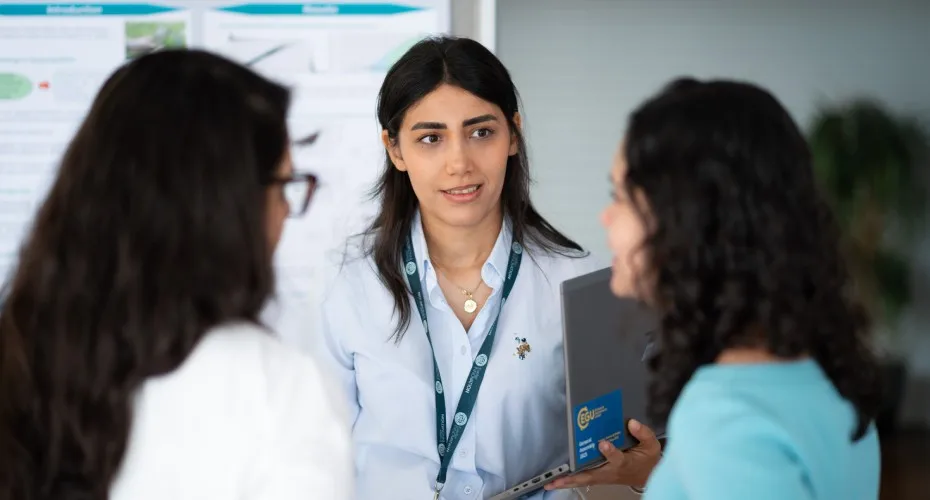
Local Community Impact Challenge
Apply your skills to solve specific problems for a third-sector organisation.
Your career, transformed
We are committed to helping you pivot, accelerate, and define your career as a purposeful global leader.
- 1-to-1 careers support: Receive dedicated, personalised career development throughout the programme and beyond.
- Corporate partnerships: Benefit from strong links with enlightened corporate partners who co-deliver modules and offer real-life business challenges, ensuring the curriculum remains industry relevant.
- Alumni Power: Join a unique global network of over 30,000 alumni who are driving positive change across every sector.
Meet the One Planet MBA academics
The University of Exeter Business School's first-class academic reputation attracts internationally renowned researchers and skilled educators, with 92% of Business and Management Studies research rated as world leading or internationally excellent in the Research Excellence Framework (REF) 2021.
On the One Planet MBA, you will benefit from direct and immediate access to top researchers in the teaching team and work with experts in the latest business ideas, theories and approaches. You will discuss and debate the current challenges and opportunities facing businesses with some of the top business professionals and leading business academics in the world, sharing insights from their vast and varied years working in industry around the globe.
The One Planet MBA is taught by over a dozen leading business academics and researchers, including:

Programme Director » Professor Donald Lancaster
"Donald is a practice-led Management academic. Having driven corporate and marketing success for advertising agencies over 35 years in many parts of the world, Donald has significant experience and expertise in international marketing communications, management, leadership, presentation, coaching and training.
He led well-known agency offices such as JWT, Ogilvy and Lowe, working with diverse brands including HSBC, Unilever, P&G, Mars, Mazda and Toyota."
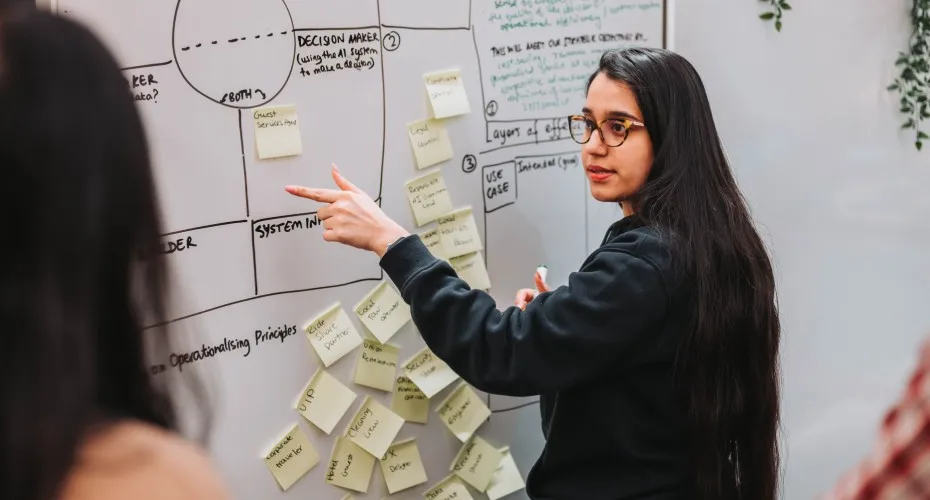
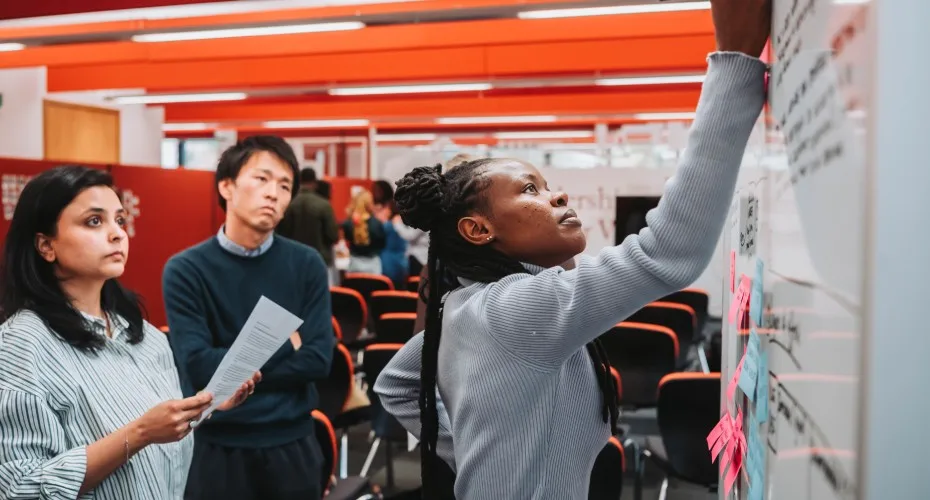
Photo gallery




Fees, funding and scholarships
Fees for 2027/28 entry
- UK/EU fees per year: £34,500 full time
- International fees per year: £34,500 full time
MBA funding and scholarships
At the University of Exeter Business School, we want to ensure we attract the very brightest minds and talent from all over the world, regardless of financial background.
To apply for these scholarships you will first need to have an offer of a place on the One Planet MBA. The programme interview will be used to determine your suitability for these scholarships. You may be asked to submit a scholarship video application.
Entry requirements
We seek ambitious leaders with a proven track record. You must have a minimum of three years' managerial experience (managing people and/or substantive projects). While a GMAT score is welcome, we prioritise demonstrated work experience and career progression.
Entry requirements for international students
English language requirements
International students need to show they have the required level of English language to study this course. The required test scores for this course fall under Profile D. Please visit our English language requirements page to view the required test scores and equivalencies from your country.
For those students that don’t yet meet our entry criteria of IELTS 7.0, you may wish to attend one of our INTO Pre-sessional English programmes.
Contact or visit us
Want to discover how you can advance your career with our One Planet MBA? We offer a range of in-person and virtual opportunities to connect with us, please find out more below.
- Arrange a chat: You can contact Murray Scott in the One Planet MBA Office to find out when we will be in your country or to arrange a personal visit to campus or an informal online conversation.
- Join us for an open day: Tour our beautiful campus and network with current students and staff at one of our in-person open days. Find out more and book onto a postgraduate open day.
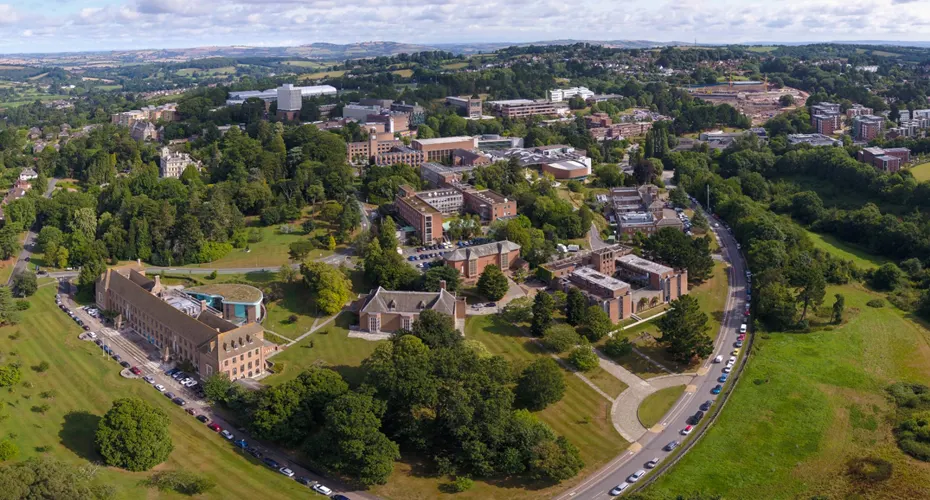
The University of Exeter Business School is located at our Streatham Campus in Exeter. View directions to Streatham Campus, as well as the Streatham Campus map and campus accessibility information.
Study a sustainability-driven MBA at a Top 15 UK University*
Apply now for September 2027 entry »
Application checklist
You should check the following are included when sending your application:
- Transcript and degree certificate for first/second degree.
- A detailed CV.
- Two professional reference letters.
- A personal statement supporting your application. This statement should detail your achievements in your career so far, the experiences you will bring to the programme, and how you believe the One Planet MBA will enhance your career and future aspirations.
- Evidence of English proficiency if applicable.
- We do not require GMAT, but if you have a GMAT Score you should upload with your application in support of your academic qualifications.
After submitting your application, qualified applicants will be contacted by the One Planet MBA Admissions team to arrange an interview. Please contact the One Planet MBA Admissions team for more information.