
Brian is a highly experienced international capacity building expert. Over his career he has designed and delivered programmes with multiple partners across the Globe including with civil society organisations, research councils, trusts and foundations, government and international organisations, high net worth individuals and corporate donors. He has designed and implemented multiple, multi-year projects in conflict and post-conflict zones and in states in transition to democracy. He is currently running the Ukraine programme for Option Venture Partners, acting as a Senior Adviser on Ukraine at Folke Bernadotte Academy – Swedish agency for peace, security and development, an Adviser at the Ukraine Strategic Initiatives at National University Kyiv-Mohyla Academy, Kyiv, and a Visiting Professor at Kingston University.
Our team
Professor Paul Cornish

Paul Cornish is Professor of Strategic Studies at the University of Exeter and Director of the Centre for the Public Understanding of Defence and Security. He studied at the University of St Andrews (MA History) and the London School of Economics (MSc International Relations) before serving in the British Army (Royal Tank Regiment) and in the Foreign and Commonwealth Office (Arms Control and Disarmament Research Unit). He taught international relations at several universities (Cambridge, King’s London, Bath, Exeter and the Australian National University) and held senior research positions at think tanks including Chatham House, the Centre for Defence Studies and the RAND Corporation (Europe). His main areas of research interest are international security, UK defence policy, the ethics of armed conflict and cyber security. He returned to Exeter in 2023 to develop a think-tank style approach to defence and security analysis, resulting in the Centre for the Public Understanding of Defence & Security (CPUDS).
Professor Harry Pitts

Professor Harry Pitts is Deputy Director of the Centre for the Public Understanding of Defence & Security. He is an Associate Professor in Political Economy and the Future of Work, and Head of Department for Humanities & Social Sciences on the University of Exeter’s Cornwall Campus in his hometown of Penryn. Previously, he worked at University of Bristol Business School and the University of Bath. He is a Co-Investigator of the UKRI Critical Minerals Challenge Centre and the ESRC Centre for Sociodigital Futures, and currently leads a collaboration with defence prime Babcock on the project: The Next Line of Defence: Unlocking SME Potential in UK Defence from Policy to Practice.
CPUDS fellows
Professor Peter Roberts
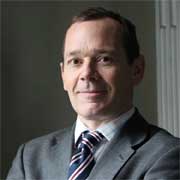
Professor Peter Roberts is a Senior Associate Fellow, previously Director of Military Sciences, at the Royal United Services Institute (RUSI).
His work at RUSI is centred around research on contemporary conflict, the development and trends in how we fight, and trying to understand what the norms and behaviours will be in future conflict between major military forces. During his eight years in the academic world, Peter was a regular commentator for global media outlets, provided evidence to parliaments around the world on military matters, and advised UK and foreign ministers, military chiefs and governments on conflict, force design, and the future risks from warfare.
Prior to joining RUSI, Peter spent twenty-three years in the Royal Navy as a warfare officer and served all over the world with a variety of militaries and agencies.
Professor Brian Brivati
Elizabeth Vallance-Bull

A graduate from the Universities of St. Andrews, Aberdeen and Cambridge, and Fellow of the Geological Society, Libby started her career with the MOD, Army, Royal Signals during the period of the Bosnian Conflict. Emerging as a Geophysicist from her studies, Libby has spent a privileged two decades, travelling the world and its major oil capitals, working as an exploration geophysicist and latterly digital transformation strategist, within the largest multinational Oil and Gas organisations globally. Libby brought her experience of solving complex hydrocarbon exploration challenges to Defence and National Security, where she has provided, technical and strategic advisory to Defence Primes, SMEs, and MOD. She brings a wealth of expertise, in the practical application of artificial intelligence, and machine intelligent process to defence and security.
Air Vice-Marshal Philip Lester

Philip is an operator, innovator, strategist and conceptual thinker with over 35 years’ experience within the Defence and Security community including with numerous allies and partners, including NATO. He has been at the forefront of a number of Defence’s force development initiatives including UK and NATO doctrine, professional military education, multi-domain integration, space, cyberspace, strategic communication, modern deterrence and CBRN defence as well as being at the heart of strategy design, implementation and orchestration as well as contributing to 3 UK defence and security reviews.
He is currently a member of the senior directing staff at the Royal College of Defence Studies (RCDS); an independent consultant focusing on strategy at the local government, national government and international levels; and has recently contributed to an MOD assessment into the use of evidence during the 2021 Integrated Review of Defence, Security and Foreign Policy. He is the Editor of the RCDS strategy handbook – Making Strategy Better – and leads the design and delivery of RCDS’s strategy modules.
He has published numerous articles, participated in a number of international conferences, as well as having been a member of a UK-US-Russia and China Track 2 initiative to improve military cyber security understanding.
Philip will contribute a wealth of broad practical experience and perspective across the range of defence and security issues.
Bob Baxter
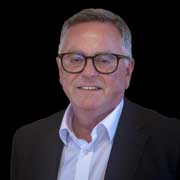
With a career spanning over 40 years working for global Defence & Security companies, Bob brings a deep understanding of the challenges faced by Government and Industry in working together to deliver industrially and politically complex, international Defence & Security Projects. Bob is currently the Chief Growth Officer for Marhsall of Cambridge – responsible for driving the growth of the business in the UK and in overseas Aerospace & Defence markets.
He has amassed over 40 years of experience working for UK, European and US companies operating in global Defence & Security markets – with his expertise lying in navigating the complexities of national and/or international Government, Military and Industrial needs and interests in order to bring to fruition large, complex (and often) multi-national projects.
Bob has worked on projects such as the Eurofighter Typhoon (as part of a pan-European Joint Venture), the Hunter Class programme in Australia (supporting BAE SYSYEMS and UKG in promoting the UK’s T26 as the preferred platform), the Type 31 programme in the UK (helping to create a new paradigm for UK shipbuilding in the process) and SEA 1000 - the precursor to the Submarine component (Pillar 1) of AUKUS.
Bob was previously an Associate Fellow of the Chatham House International Security Programme – working on the UK’s National Security Strategy, the UK’s Strategy for Serious Organised Crime and on International Drug Control Policy.
Clifford Beal
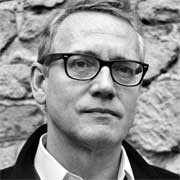
An aerospace & defence journalist, consultant, and author with some 40 years of experience, Clifford has written hundreds of articles and has been quoted by news organisations around the world. He appeared numerous times on television and radio to offer analysis based on his extensive knowledge and worldwide contacts in order to provide context for the general public to make sense of what was happening in defence and security. Joining the Jane’s news organisation in 1991, he rose to become Editor in Chief of Jane’s Defence Weekly in 1998.
In 2004 Clifford launched The Strix Consultancy, where he helped British, American, and European industry involved in aerospace and defence with media outreach. Since then, he’s assisted both large and small companies and scientific institutions to help them develop and hone messaging as well as to build relationships with influential print, broadcast, and online journalists worldwide. He has also helped the Royal Aeronautical Society (RAeS) institute a media outreach effort to assist journalists in gaining new sources of objective information on aviation issues. From 2017 to 2020, he served on the RAeS policy committee, providing guidance on external communications.
Early in his journalistic career in Washington, he was hired by the American Institute of Aeronautics and Astronautics in 1986 to help resurrect public support for the manned space programme in the aftermath of the Challenger shuttle disaster when Congress could have completely ended NASA’s next steps in manned orbital flight. Clifford also helped administer public policy efforts directly through conferences in Washington and elsewhere as well as in the preparation of white papers to Congress. He shuttled between public policy work and journalism in Washington for six years before moving to the UK and joining the Jane’s organisation. He holds an MA in International Relations from Sussex University.
Dr Tim Reilly
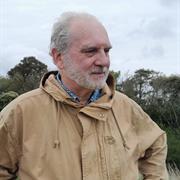
Dr Tim Reilly is an Honorary Senior Fellow at Exeter University’s, Centre for the Public Understanding of Defence & Security. He was formerly an Institute Associate at the Scott Polar Research Institute at Cambridge University, and specialises in Sino-Russian Arctic relations, and associated Space activities.
Tim was a Lt Colonel in the Ministry of Defence’s Specialist Group Military Intelligence (SGMI), as their Sino-Russian and Arctic Adviser. He has given several Arctic/Polar lectures at NATO locations throughout Europe, and some of his recommendations to the Secretary of State for Defence, and others, were incorporated into the UK’s latest Arctic policy paper. He also works regularly with U.S. Space Force (Washington DC) on the Arctic/Technology/space overlap and was the reviewer of the latest U.S. policy paper on the Arctic region, including its space aspects and integration with NATO. Tim regularly writes in the papers on Russian/ Sino-Russian and Arctic matters, including The Times, Financial Times, Wall Street Journal, NYT, and La Tribune.
Paul Hough

Paul Hough has over thirty years’ experience in the European defence industry. His particular area of interest is how the defence industrial base can be considered a military capability and how that would transform the relationships between Governments and businesses. He is a former member of the House of Commons Defence Committee advisory panel. He is an Honorary Senior Research Fellow at CPUDS and an Associate Fellow of RUSI.