Our alumni
Over 90 PGRs have graduated from the CMRI since it was set up over 10 years ago and we continue to attract high-quality, motivated students for our PhD projects. Most of our alumni have gone on into a wide variety of careers across industry and academia in the UK and abroad. We now have former PGRs working as Professors and Post Doctoral Research Fellows in this country and in Chile, Spain, Italy, Demark and beyond. We have alumni working as Scientists, in industry, academia, and in government departments, across metamaterials areas such as Antennae, Electromagnetics, Magnonics, Photonics, Nanophotonics, and Optics, Process analytics and Data. Some have moved to innovation and patent work, product management and analytics, teaching and science outreach.
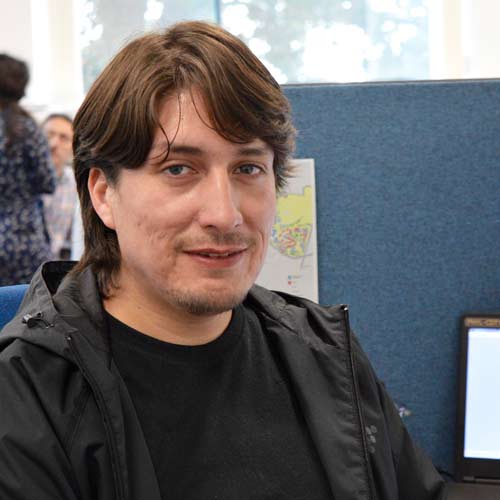
Tanveer Tabish
Current role: Senior Research Fellow in Cardiovascular Nanotherapeutics at the University of Oxford
Since completing his PhD through the EPSRC Centre for Doctoral Training (CDT) in Metamaterials at the University of Exeter, he has established an interdisciplinary career straddling nanomedicine and cardiovascular science. His doctoral research focussed on engineering biocompatible graphene nanostructures for therapeutic applications, establishing the scientific foundation for his subsequent postdoctoral work and his transition into cardiovascular medicine through a British Heart Foundation (BHF) Advanced Training Fellowship - one of only two such fellowships awarded by the BHF over the past decade.
He is now a Senior Research Fellow in Cardiovascular Nanotherapeutics at the University of Oxford, where he leads the NanoCARD research group, comprising a postdoctoral researcher, a research fellow, a DPhil student and three master’s students. Our research develops advanced nanomedicine platforms for cardiovascular applications, including nitric oxide-releasing graphene materials, mitochondria-targeted therapeutics and nanomaterial coatings for vascular stents. He has secured more than £1.4 million in competitive research funding as PI from the BHF, Wellcome Trust, the Royal Society and the BHF Oxford Centre of Research Excellence. The translational potential of this work has resulted in multiple patent applications and nurtured multidisciplinary collaborations bridging academia, clinical research and industry. He is also regularly invited to present his research at leading international institutions and conferences across Europe, North America, Australia and Asia including the Nitric Oxide Gordon Research Conference. His contributions have been recognised through distinctions including the Larry Hench Young Investigator Prize, selection for the British Cardiovascular
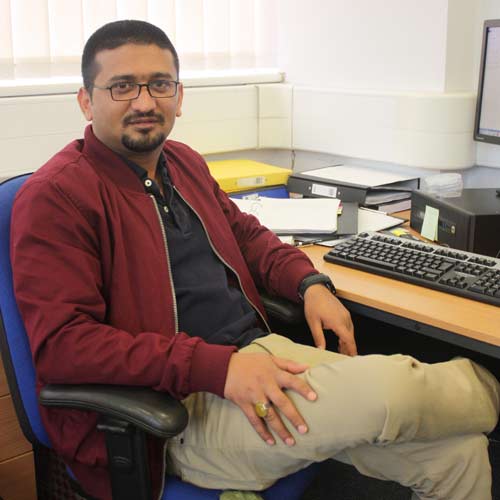
Christopher King
Current role: Theoretical Physicist at QinetiQ
Following completion of his PhD in the Centre for Doctoral Training in metamaterials at Exeter in 2018, Chris took up the position of Theoretical Physicist within the Radio-Frequency Signatures team at QinetiQ, a defence company based in Farnborough, Hampshire, and he continues in this job to this day. The team is concerned with the design, manufacture and characterisation of materials and technologies for defence-related applications. Chris’s role encompasses a range of activities providing mathematical support to the rest of the team. In his role, he has worked on predicting the scattering behaviour of material coatings, creating mathematical models for understanding the measurements of diffuse texture scatter, and formulating calibration and extraction routines for material characterisation and their uncertainties.
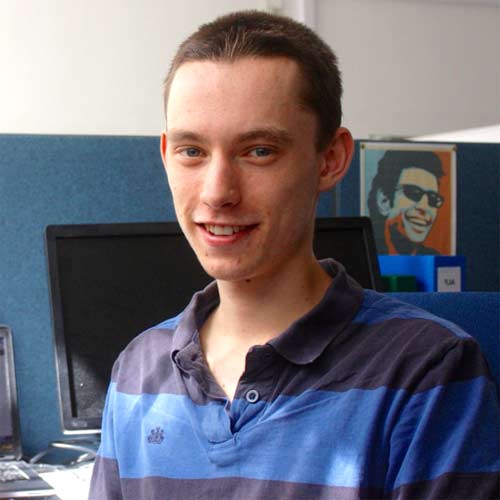
William Ferguson
Current role: Data Scientist at the Joint Biosecurity Centre (UKHSA)
Will submitted their thesis the day before the university locked down due to Covid-19, so they didn't have the easiest time getting a job. They did some volunteer work tutoring pupils remotely for a while and eventually found a socially useful role in data analysis and computer modelling of the pandemic in the civil service. Will worked on a range of projects: producing estimates of covid cases and R numbers; tracking variants; exploring new datasets trying to find leading indicators; converting old ad hoc scripts into structured pipelines; and helping run the team's compute cluster. Little crumbs of their work will have worked their way up the chain to what you might have seen on the news. The team's codebase was all in R, a programming language they had never used before, but learned fast, and they eventually gave them a permanent position.
As the pandemic eased a little, the team’s work shifted to include other public health threats. Will compiled a wide range of potential threats to the UK from climate change that they could potentially do some modelling work on, primarily the spread of mosquito borne diseases further north, but also other carriers like ticks, sandflies, and birds; extreme weather events; worsening air quality (wildfires, particulates, novel pollens), ecosystem collapse, climate refugees, permafrost release, etc. Since the organisation became formalised as UKHSA, they have been involved in several incidents, but their typical work is prepping the winter respiratory infection forecasts for the NHS every winter. He has met many wonderful people in this job and learned a great deal.
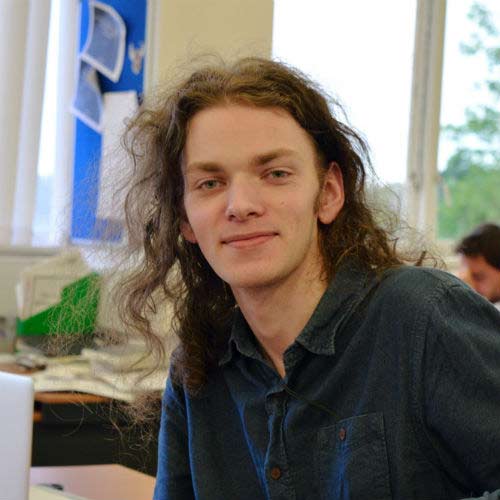
Henry Fernandez
Current role: Chief Research Engineer at Agate Sensors Oy, Finland
In October 2019, after his PhD defence, Henry moved to Finland to continue his career in a postdoctoral position in the Photonics Group at Aalto University. In August 2022, he moved to an industry position as Research Scientist at Dispelix Oy (Augmented and mixed reality waveguide combiners | Dispelix). He was promoted to Senior Research Scientist at Dispelix in October 2023.
In July 2024, he joined Agate Sensors Oy (Agate Sensors | Revolutionizing Hyperspectral Intelligence) as a Senior Research Scientist and has recently been promoted to Chief Research Engineer. Agate Sensors was set up that year to bring cutting edge academic research in photonics and nanomaterials into real-world applications. His current role holds the responsibility for the development of the core technology of the company, and he is building a team of researchers with different backgrounds combining theoretical and experimental physics, engineering, and computational methods.