About Engagement

Public engagement is the process by which non-academics can engage with research, making sure research is informed by the expertise and skills of people’s real-world experiences. At the University of Exeter, researchers are supported to build purposeful partnerships with people outside the University – if you are a researcher looking to learn more about this, check out our PER Resources Hub.
A range of communities can interact with research, including public and voluntary sector organisations, community groups, users of a particular product, and members of the general public. By engaging with these audiences, researchers can improve their understanding, and produce research which benefits the people who need it most.
Types of Engagement
Activities we support include but are not limited to:
- Mutually beneficial collaboration between academics and the public.
- Nurturing existing partnerships with the public.
- Piloting innovative ways to engage the public with research.
- Making research relevant and accessible.
- Highlighting the effectiveness of public engagement.
Take a look below at examples of ways to engage!
"Public engagement describes the myriad of ways in which the activity and benefits of higher education and research can be shared with the public. Engagement is by definition a two-way process, involving interaction and listening, with the goal of generating mutual benefit."
NCCPE
(National Co-ordinating Centre for Public Engagement)
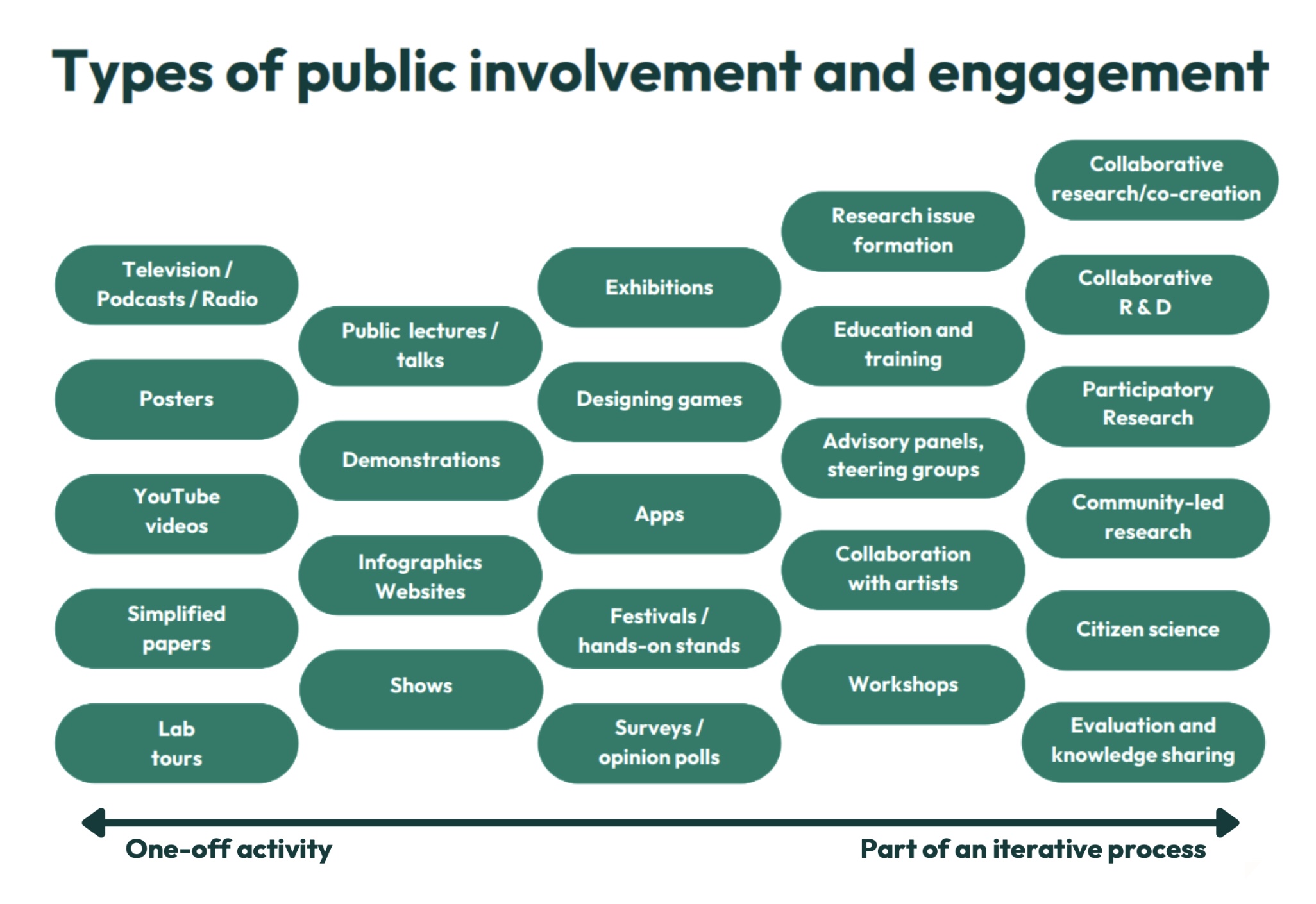
"Public engagement includes any activities that seek to break down the barriers between research, innovation and society. This can include collaborative research, patient and public involvement (PPI), public dialogue, activity at festivals, museums and science centres, schools engagement, and much else."
UKRI
(United Kingdom Research and Innovation)