Employer Guide to Attending Careers Fairs
Attending a careers fair at the University of Exeter is a valuable opportunity to connect directly with motivated, high-calibre students from a wide range of academic backgrounds. Whether you are promoting graduate schemes, placements, internships or wider recruitment opportunities, a well-prepared and engaging stand can make a real difference to the quality of conversations you have and the talent you attract.
This guide brings together practical tips from experienced employers to help you get the most out of your time at our careers fairs - before, during and after the event. It also includes specific guidance on engaging with Exeter’s international student community and navigating visa-related queries with confidence.
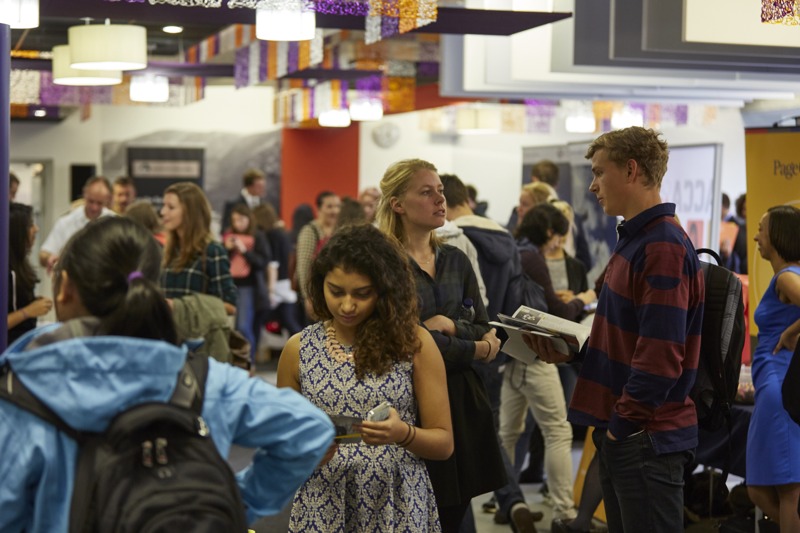
Preparing well before you arrive will help you get the most out of the fair and ensure your team feels confident and ready to engage with students from the outset.
Build a strong, approachable team
Think carefully about the people you bring to represent your organisation. A diverse mix of representatives in terms of background, role, experience and gender can make a real difference to student engagement. Students naturally gravitate towards those they feel they can relate to, so visible diversity on your stand is a real strength.
Brief your team
Before the fair begins, take a few minutes as a team to align on key information and frequently asked questions. This helps ensure consistent messaging and builds confidence across your representatives. You may wish to confirm:
- Graduate scheme or role start dates
- Programme length and structure
- Entry requirements and eligibility
- Recruitment timelines
As we have a large international student population at Exeter, we recommend preparing for visa-related questions. Where possible, identify a colleague who is confident in this area or ensure your team is clear on what they can and cannot advise. It’s always better to signpost students to official sources than risk giving incorrect information, or offer to follow up with the students after the fair.
Other practical preparation includes:
- Bringing a range of engagement materials (QR codes, digital resources, and optional printed materials) - not every student will want, or have time for, a full conversation
- Planning a few talking points for representatives who may be less comfortable initiating conversations
- Encouraging your team to wear comfortable, professional-but-approachable clothing and shoes
- Arriving early to allow time to set up and familiarise yourselves with the room layout and neighbouring stands.
Career fairs can feel busy and high-energy, but students value genuine, relaxed conversations above all else. We encourage representatives to lead with curiosity rather than sales messaging. Opening with a friendly question such as what a student is studying or how their day is going can help put them at ease and shape a more meaningful conversation.
Rather than immediately promoting your opportunities, take time to understand the student first. This allows you to tailor your discussion and, where appropriate, signpost to relevant roles, programmes or even other employers if your organisation isn’t the right fit. Students really appreciate this honesty, and it helps build trust in your brand.
To maximise engagement:
- Avoid clustering staff behind the table — spreading out makes your stand more approachable
- If a large group approaches at once, gently split conversations so students still receive individual attention
- Be mindful of the pace and volume of conversations, particularly during quieter periods
- Use both verbal engagement and self-guided options (QR codes, leaflets, laptop/tablet displays) to suit different student preferences
Staying until the end of the fair is also important. Many students attend later once they’ve built up confidence, or to fit around lecture times, and these final conversations can be some of the most meaningful.
Pro tip: bring a water bottle - fairs are long, busy and surprisingly dehydrating! Refill points will always be available nearby.
Following up after the event is a valuable part of the student experience and helps maintain momentum – engagement doesn’t end when the doors close!
Where possible, we recommend:
- Reviewing common questions or themes that emerged
- Reflecting on what worked well and what might be refined for future fairs
- Following up with students you invited to apply, attend events or connect via LinkedIn
- Sharing any feedback with your internal recruitment teams
If students were directed to online resources, ensure these are up to date and easy to navigate. A smooth post-fair experience reinforces the positive impression you create on the day.
The University of Exeter is proud of its diverse, global community. As a Russell Group institution with a large international student population, we encourage employers to consider the many benefits of recruiting international students, including:
- Global perspectives
- Experience in international markets and industrial experience
- Language skills
- Cultural awareness
- Resilience and adaptability.
We understand that recruiting international students can sometimes feel complex. However, we are here to support you and can work with you to explore realistic and compliant options.
Key points for employers to consider:
- Graduate visas allow eligible international graduates to live and work in the UK for 24 months after their studies without employer sponsorship (reducing to 18 months after graduation from 1 January 2027.
- Skilled Worker visas require sponsorship but offer longer-term employment routes.
How Exeter can support you:
- Signposting to official government guidance
- Providing guidance on visa routes
- Exploring options with you based on your roles and organisational needs
- Assist with targeted promotion via different channels
- Sharing best practice from other employers.
While we recognise that sponsorship may not be feasible for every organisation or role, we are keen to work with you to explore practical options. To learn more about international recruitment, we encourage you to visit our dedicated webpage, which includes contact details. We understand that hiring internationally can feel challenging in some industries, and we are committed to supporting you collaboratively to find workable solutions.