Anxiety
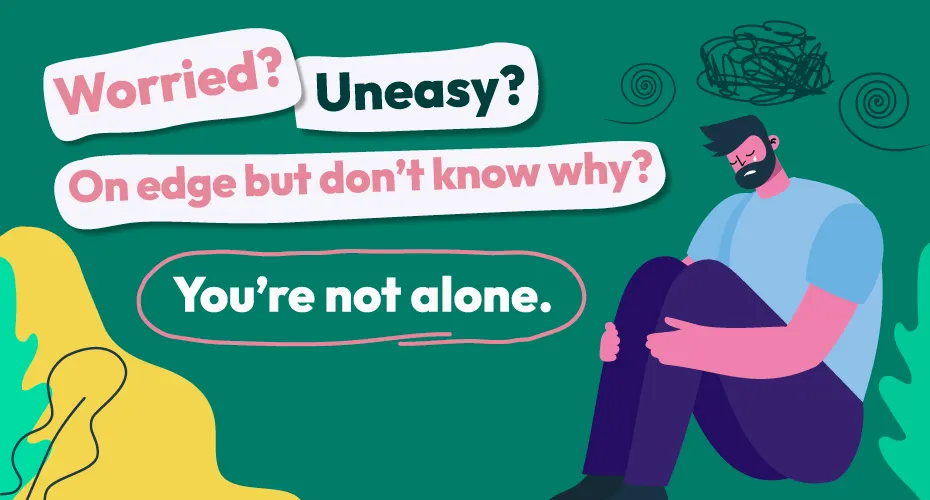
What is anxiety
Anxiety is the body and mind’s natural reaction to threat or danger, commonly referred to as the ‘fight or flight’ response, which is designed to help us respond to sudden dangers and threats. The response evolved millions of years ago when early humans often faced life-threatening situations.
We may not need to face sabre-toothed tigers anymore, but we can experience the same response today in situations we fear or find stressful, like an exam, job interview, walking through a crowded place or trying to manage money problems.
When anxiety stops you from doing everyday things, it can affect your wellbeing.
Common symptoms of anxiety
Anxiety is what we feel when we are worried, tense or afraid – particularly about things that are about to happen or we think may happen in the future. Common signs of anxiety are:
- Finding it hard to relax
- Difficulty sleeping
- Spending large amounts of time worrying
- Feeling tired, restless, irritable or on edge
- Struggling to concentrate or make decisions
- Experiencing physical sensations like tense muscles, ‘butterflies’ in your stomach, headaches, loss of appetite, sweating or dizziness
- Stopping doing things you enjoy or avoiding certain situations
- Shortness of breath when you feel anxious, or a stronger or irregular heartbeat
There are different types of anxiety, like social anxiety or phobias, and people who experience anxiety may also experience panic attacks when they feel overwhelmed.
If anxiety is affecting your daily life, speaking to a mental health professional for support and advice may be the best first step towards managing it.
You can make an appointment with our Wellbeing team for advice and support.
Ways to manage anxiety
There are some self-care steps you can take to try to manage your anxiety. Here are a few ideas.
Understand what you are feeling and why
Acknowledging that you are feeling anxious and understanding where that feeling is coming from is a good first step. Once you start noticing what thoughts make you feel anxious, with practice, you can start challenging them.
You might find it helpful to keep a diary of what you are doing and how you feel to help understand your anxiety. This can help identify ways to reduce anxiety.
Talk to someone you trust
Talking through what is making you feel anxious with someone you trust can help. If you aren’t able to open up with someone close to you, you could call the Spectrum Life 24/7 helpline on 0800 031 8227, get online support from Togetherall (sign up using your University email) or contact the Samaritans.
Look after yourself
What you eat can impact your mood and energy, so eating well and exercising regularly can make a difference to how you feel. NHS Every Mind Matters has some ideas on ways to be active for your mental health.
Try and improve your sleep
A good night’s sleep can help boost your mood. See our page on sleep for tips.
See if self-help techniques work for you
NHS Every Mind Matters has short videos and practical guides on cognitive behaviour therapy (CBT) that can help you deal with worries, anxiety and unhelpful thoughts. You can also use SilverCloud, a clinically proven digital mental health and wellbeing platform, which offers digital CBT programmes and tools, including a programme on anxiety. Sign up using your University email address.
Give breathing exercises and Mindfulness a go
Some people find that learning breathing techniques works for them. The NHS has some tips on breathing exercises for stress, Calm.com has a useful blog on 7 breathing exercises for calming anxiety, and Smiling Mind is a free mental fitness app that offers lots of different Mindfulness practices for you to try.
Try peer support
Peer support brings together people who've had similar experiences to support each other. Many people find it helps them to share ideas about how to stay well, connect with others and feel less alone. In Cornwall, Georgia’s Voice and Man Down meet locally. Visit our peer support page for more.
Face anxious situations gradually
Avoiding situations that make you feel anxious can make your anxiety worse. One approach is to slowly face up to a situation. The idea is that by gradually exposing ourselves, we can start to overcome our anxiety and feel more in control. The NHS has more info.
Reach out for support
If anxiety is impacting your daily life, support is available to you. You can talk to someone in the Wellbeing Team by requesting a wellbeing appointment at the Student Helpdesk, emailing the team at wellbeing@fxplus.ac.uk, submitting the confidential support form or calling 01326 370 460.
For more information, including wellbeing resources, visit our wellbeing pages.
Useful Links
Student Space – Adjusting to university with autism and anxiety
Spectrum Life – Owning It. The Anxiety Podcast. Access the self-help portal using the code FXPlus.
Mind – Self-care for anxiety
Mind – Stress
Mind – Panic attacks
Mind – Relaxation
NHS Every Mind Matters – Anxiety
Mental Health Foundation – How to overcome anxiety and fear