Sleep
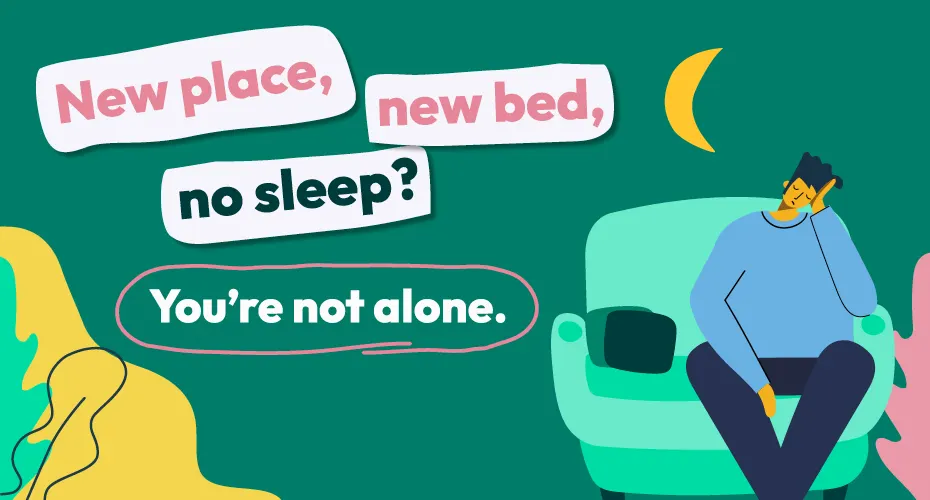
Getting a good night’s sleep
A restful night’s sleep can improve your concentration, help your academic performance and even help you manage stress better. Most research suggests we need 7-9 hours’ sleep a night.
The benefits of a good night’s sleep
Sleep contributes to our overall wellbeing and makes us feel better. It can improve your mood, boost your immune system and help with focus and concentration. Watch our Wellbeing Team's tips for a good night's sleep below.
Tips for a good night's sleep
Establish a good bedtime routine
Get into a routine that helps you relax before bed, so your body knows what to expect. You could read a book (might be a good idea to avoid a thriller), listen to relaxing music or a podcast, have a bath, shower or meditate.
Go to bed at the same time (as often as possible) and always wake up at the same time every day.
Try to get exposure to morning sunlight. Our bodies have a natural 24-hour circadian rhythm, which affects hormone balance and works best if a regular daily routine is repeated.
Avoid tech before bed
Electronic devices like your phone or laptop emit blue light which suppresses the sleep hormone melatonin. Try to avoid using your devices 30-60 minutes before bed. Use the ‘do not disturb’ function on your phone to limit late-night texts.
Create a restful environment
Turn your bed into a sleeping space rather than a study space, make sure the room temperature isn’t too hot (15-19 degrees is ideal), and it’s dark. Try earplugs if you have noisy flatmates.
Don’t clock watch
Try not to lie awake for ages in the dark; it is best to get up and do something else calming, have a drink, read or listen to an audiobook to distract your mind, then try again after 10-15 minutes. Repeat this process if you wake again to try and break the cycle.
Think about lifestyle factors
Avoid a big meal at the end of the day and consider factors like sugar and caffeine. Be aware that alcohol can disrupt the quality of your sleep, and be mindful of drugs.
Exercise
Make time for exercise during the day, but be mindful of late night gym sessions that might make your body feel more alert rather than helping you wind down. Fresh air and exercise during the day can aid sleep quality.
Try to make small changes one at a time; you could keep a sleep journal to identify patterns, problems and what works.
Look at Spectrum Life’s sleep resources
The Spectrum Life portal has a variety of resources to help you get a better night’s sleep. You could take one of their courses, watch a webinar or try some Zone out yoga. Sign up for the online self-help portal using your University email address and FXPlus as your organisation code. Then search ‘sleep’.
Reach out for support
Remember, support is available if you need it; you can talk to someone in the Wellbeing Team. Request a wellbeing appointment at the Student Helpdesk; email the team at wellbeing@fxplus.ac.uk, submit the confidential support form or call 01326 370 460.
For more information, including wellbeing resources, visit our wellbeing pages.
Useful Links
NHS – How to sleep better
Student Space – Improve your sleep
The Sleep Charity
The Sleep Foundation
University of Glasgow – Good Night’s Sleep Booklet
University of Exeter Podcast – Letting sleep happen