Social Media and Mental Health
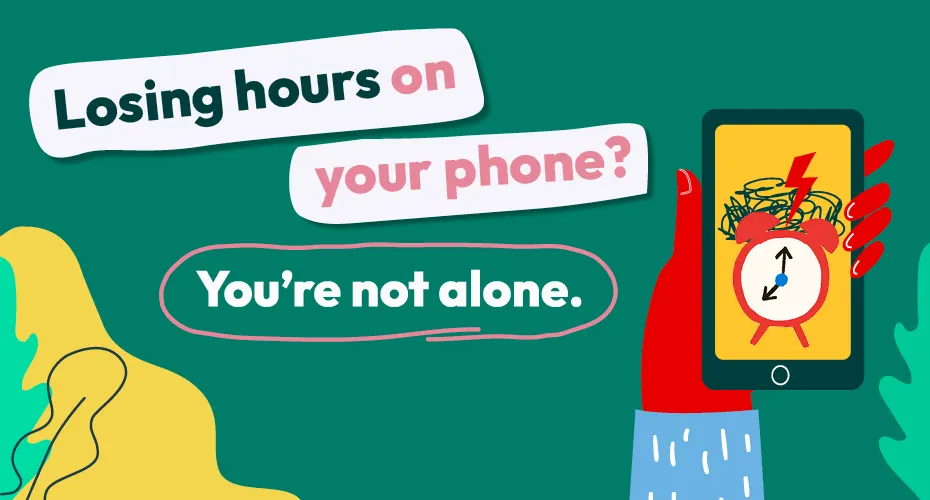
Everyone uses social media – but how does it make you feel?
Social media is part of everyday life for most students. It’s a brilliant way to stay connected, share experiences, and express yourself. But it can also affect your wellbeing – sometimes without you realising it.
Research shows that young people aged 16–24 are the biggest users of social media, and while it has many benefits, too much scrolling can sometimes leave us feeling anxious, distracted, or just not good enough.
It’s important to remember that what you see online isn’t always the whole story. Posts are often filtered, edited or show only the best bits of someone’s life. Comparing yourself to this can make you feel like you’re falling short – but what you’re comparing yourself to may not even be real.
And it’s not just the content. The constant pings, likes and notifications can make us feel pressured to always be ‘on’, which can take a toll on both our mental and physical health.
Things to think about when using social media
- Check your privacy settings – review them and your friends list regularly, are you still mates with these people?
- Think before you post – would you be happy if your post ended up on a billboard? If not, don’t share it.
- Be mindful of your time – if you’re losing hours to TikTok or doomscrolling, ask yourself how it makes you feel afterwards.
- Remember the real world – try to focus on face-to-face connections and experiences too.
Tips for reducing screen time
Phones and apps are designed to keep you hooked – but there are things you can do to take back control:
- Set daily screen-time limits, use features like silent mode or apps that help you stay focused.
- Switch off notifications or mute the ones that aren’t essential.
- Try disabling “like” counts on Instagram or read receipts on messaging apps to reduce pressure.
- Curate your feed – decide who gets to invade your space and unfollow accounts that make you feel bad about yourself.
- Schedule “phone-free” times, like meals, study sessions, or when you’re with friends.
- Try a digital detox – as a rule, it takes 30 days to reset our frazzled dopamine levels in our brains, get a dumb phone, a basic mobile phone that offers calls and text messages, and take a break. It will all be there when you come back.
- Use the time you get back differently – try a new hobby, get outside, or simply enjoy some headspace. Empty spaces in our day are important for just being. They are a vital part of good mental health.
Remember: your phone can be as harmful and helpful as you make it. The more intentional you are about how you use it, the more positive your relationship with it will be.
Ways to feel better if social media feels overwhelming
- Do something offline that makes you feel good – music, sport, reading, art, or gaming with friends.
- Move your body – a walk, a run, or a kickabout with friends can reset your mood.
- Rest – better sleep is linked to putting screens away before bed.
- Connect in person – coffee with a friend, a society meet-up, or joining a study group can help balance online time.
- Practise self-care – notice how you feel after passively scrolling and make some changes if it’s leaving you drained.
Social media is what you make of it. With balance and boundaries, it can be fun, positive and inspiring – but it’s always okay to take a step back.
Reach out for support
Remember, support is available if you need it; you can talk to someone in the Wellbeing Team. Request a wellbeing appointment at the Student Helpdesk, email the team at wellbeing@fxplus.ac.uk, submit the confidential support form or call 01326 370 460.
You could also try the Spectrum Life course on taking a break from social media in their self-help portal; use the organisation code FXPlus when signing up with your uni email address.
For more information, including wellbeing resources, visit our wellbeing pages.
Useful links
Sign up to Reclaim your brain: the Guardian’s free email to help you spend less time on your phone
Mind – Looking after your mental health online
The Guardian – Ten ways to take control of your smartphone
Be more with less – 15 tricks to spend less time on your phone
Appstinence - The 5D Method to get off social media
Forest App – is designed to encourage you not to pick up your phone for a set length of time.
Reconnect movement - hang out with friends without your phone
University of Nottingham blog – Strategies to reduce screen time: disconnect to reconnect