About the University of Exeter
Here, staff, students and partners work in harmony to build a more positive, future-facing world. This is a place where every individual can build resilience, find purpose and thrive.

29,700 students from 150 countries

195,000 alumni from 183 countries

7,360 staff from 100 countries
From research-led teaching to building carbon-neutral campuses, we’re striving for something bigger. This is a place for those who believe the world can do better, a world that is greener, healthier and fairer for all, and are ready to build it, together.
We bring together students and staff from around the world to share ideas, challenge thinking and make a positive difference. Discover more about who we are and what we stand for.
Our Story
We can trace our history back to 1855, a century later, in 1955, we received our full University Charter and became the University of Exeter.
Today, we’re proud to be a world-leading Russell Group University with local roots and global impact. We remain steadfast in the belief that knowledge should empower, inspire, and be open to all. That commitment still drives us now.
Find out more about the University of Exeter


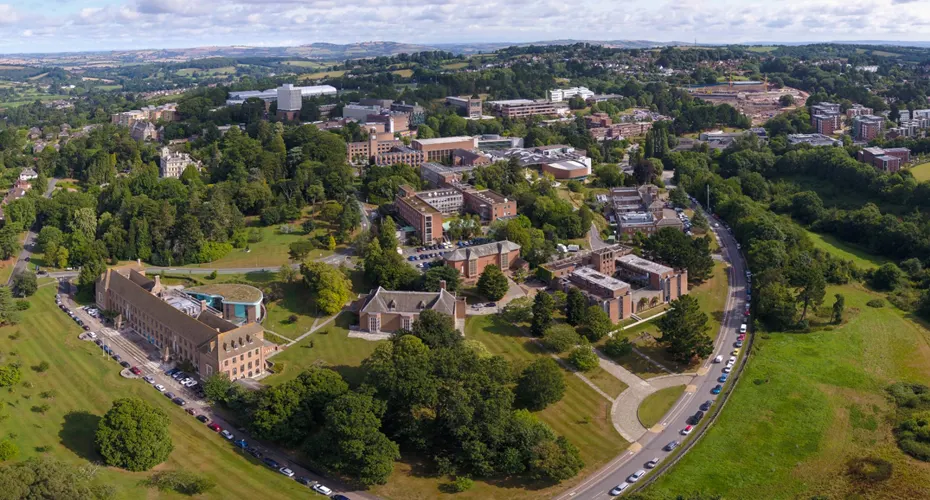
Key information
Social responsibility
Community
Rankings and Reputation
From earning TEF Gold for outstanding research-informed teaching, to securing top spots in national and global league tables, our students receive a high-quality, future-facing education that enhances their resilience, knowledge, skills and sense of purpose, setting them up for whatever the future holds.




The University of Exeter in Cornwall
Offering a close-knit, friendly community, and a unique opportunity to expand networks, as the campus is shared with Falmouth University; a leading specialist arts institution. Cornwall is a place where friendships and connections blossom that last well beyond graduation, — a distinct community where innovation, sustainability and personal growth are enhanced.


University of Exeter Sport
We believe that sport is an important part of your student experience. Whether you’re training to compete at the highest level or simply looking to try something new, we offer outstanding facilities, expert coaching, and a thriving sports community.
With partnerships such as The Exeter Chiefs, we provide pathways to excel in both professional and recreational sport.


