- Exceptional global employment prospects; 1st for graduate level employment and postgraduate study rates1
- 1st in the UK for Minerals Technology in The Sunday Times University Guide 2012
- Only UK institution to offer an undergraduate Mining Engineering degree
- Close links with industry and paid placement opportunities around the world
- Accredited by the Institute of Materials, Minerals and Mining (IOM3)
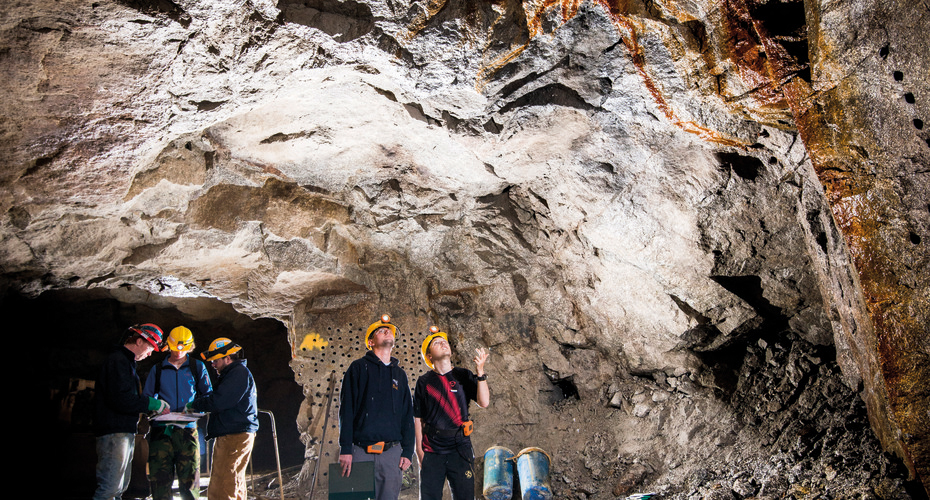
- Superb facilities include an underground test mine and world-class analytical mineralogy labs
- Taught by Camborne School of Mines which has an excellent international reputation
- Emphasis on field-based training
- Merit scholarships of £2,000 per year
The demand for minerals will continue to grow as the world’s population doubles over the next 40 years. Mineral development and production must be managed in a responsible manner if we are to obtain these minerals without great damage to our environment. Highly trained engineers and scientists are needed by the minerals industry now and in the future. Mining applies many different branches of science and engineering to understand how minerals can be extracted from the earth.
Mining engineers are primarily responsible for the safe and economic production of the Earth’s minerals. They work with metal ores, diamonds, coal, oil and industrial minerals such as clays, granites and limestone. Many mines involve deep underground excavations with high temperatures and very large stresses in the rock. Others involve surface working in quarries, open pits and strip mines.
Mining engineers often manage teams of engineers and others from many different disciplines. Because of this, mining engineering degrees are very wide ranging and ideal for careers in engineering management.
Mining engineers must be able to understand the nature of the rocks with which they work. They apply sound engineering principles to design safe and economic methods of extraction. Knowledge of geology, engineering, rock mechanics, economics, surveying and management is necessary for anyone involved in the design and management of mines.
Recycling and reclamation are of growing international importance within the mining industry. Improvements in extraction technology now allow the treatment of secondary sources, such as the waste from previously mined deposits, industrial and domestic waste and contaminated land. In many cases it is possible to develop processes which allow a range of materials, including metals, plastics and glass, to be recovered from waste streams offering the potential for increased recycling.
Numbers
Cornwall
Entrants: 40
Applicants: 71
I am honoured to have been given the opportunity to study here with CSM. The teaching system here is brilliant and it’s my hope that a similar system will be employed at the new institution that they will open in Botswana. The most interesting part is practical work at the test mine which most people don’t have the privilege to experience whilst studying. I have also learnt much about the Cornish lifestyle and different cultures as I have met people from all corners of the world.
Mpho Gobagoba from Botswana, 2nd year BEng Mining Engineering
1 Based on proportion of UK domiciled, full-time, first degree graduates in Materials Technology with a known career or study destination (HESA 2009/10)