Waste & Recycling
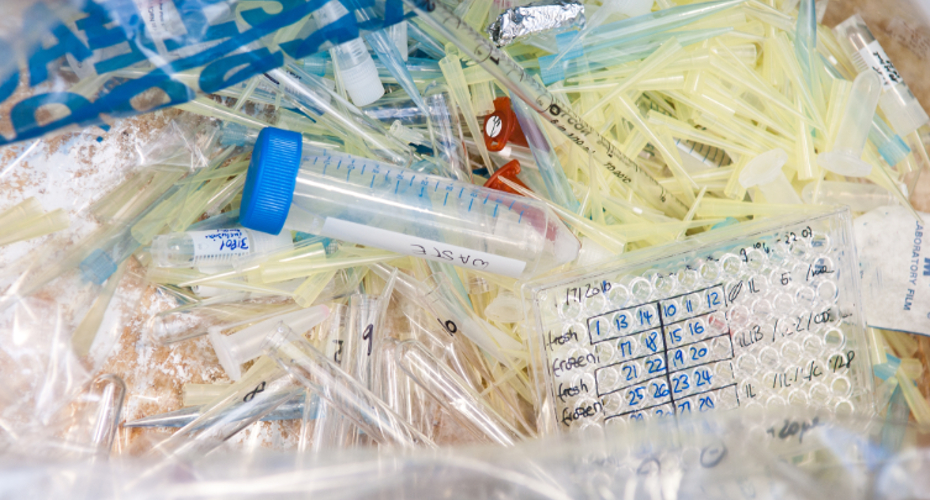
Laboratories are resource-intensive environments that generate a wide variety of waste—from single-use plastics and packaging to hazardous chemicals. Managing this waste responsibly is essential not only for safety and compliance, but also for reducing environmental impact and supporting the University’s sustainability goals.
For guidance on lab waste processes (clinical, hazardous & lab plastic recycling), please visit the Technical Strategy & Operations SharePoint.
This page explores how applying the waste hierarchy—from reducing and reusing, to recycling and responsible disposal—can help labs operate more sustainably. By taking simple actions like segregating waste correctly, reusing packaging, or recycling uncontaminated PPE, lab users can make a meaningful difference. The University is committed to diverting waste from landfill and maximising recycling and recovery. Up-to-date guidance on waste disposal, recycling systems, and collection services is available through our Sustainability team.
These efforts directly contribute to several UN Sustainable Development Goals, including:
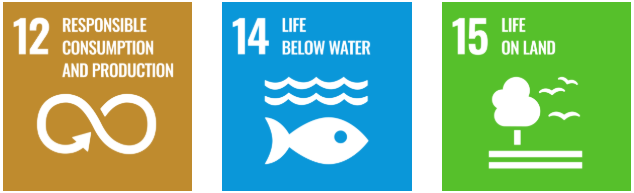
- SDG 12: Responsible Consumption and Production – by promoting longer equipment life, reducing waste, and encouraging sustainable purchasing decisions.
- SDG 13: Climate Action - by reducing carbon emissions from minimising waste and optimising collections.
- SDG 14: Life Below Water - by proper and safe disposal practices, preventing pollution of waterways and harm of marine ecosystems.
Lab Waste & Recycling Practices
Effective waste management is essential for lab safety, environmental protection, and compliance with legal and institutional standards. It also plays a key role in supporting the University’s sustainability and net zero goals.
Proper disposal of lab waste is essential to prevent accidents, reduce environmental harm, support research integrity and it ensures legal and ethical compliance.
It is every lab users responsibility to understand waste streams, including what can and cannot go down sinks, and know who to contact in case of incorrect disposal.
Best Practices
- Train Personnel - Ensure lab users are trained on waste procedures, the waste hierarchy, and emergency contacts. Induction sessions should cover this, supported by clear signage and documentation.
- Compliance & Signage- Use clearly labelled containers and signage to separate waste streams. Prevent cross-contamination by placing signs in visible, relevant locations.
- SOPs & Documentation - Maintain a local waste management SOP for your lab. Include relevant risk assessments and COSHH forms. This supports training, compliance, and cost-effective waste handling.
- Waste Audits & Calculators - Monitor waste generation and identify areas for improvement. Use tools like the LEAF calculators to establish a baseline and track progress.
Local Signage & Emergency Protocols
Ensure waste and recycling bins are clearly marked with accepted and non-accepted items and they are in line with the campus waste collection for Exeter and Cornwall campus'.
In the event of incorrect disposal (e.g., hazardous substances down the drain), users should know to notify the technical team immediately. Keep emergency contact details visible and accessible.
For more information regarding available waste streams, contact: sustainability@exeter.ac.uk
For more information on sustainable practices and support with green accreditations, contact: sustainablelabs@exeter.ac.uk
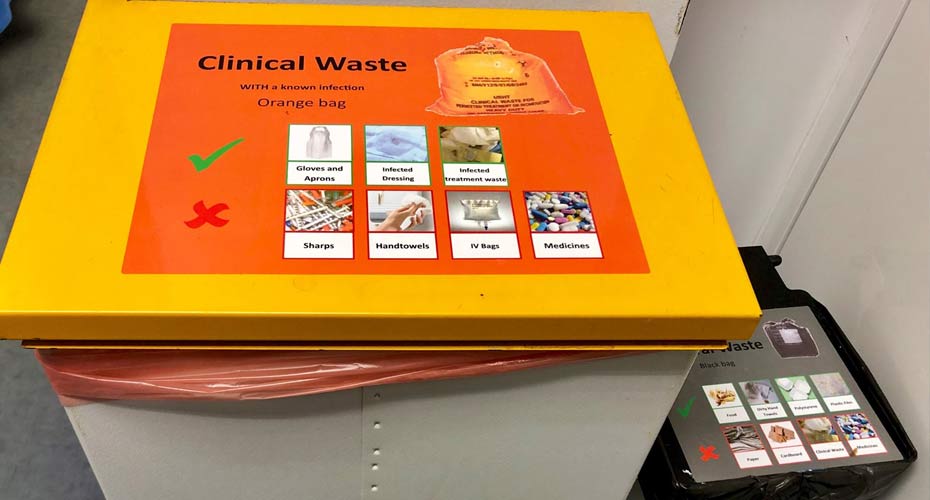
Reducing and reusing materials are top priorities in the waste hierarchy and are essential for transitioning to a circular economy. Labs generate significant waste—especially from single-use plastics—so adopting sustainable practices can greatly reduce environmental impact and carbon emissions.
Reducing Waste
Minimising waste at the source is the most effective way to reduce environmental harm and support a shift away from the linear “take-make-dispose” model. Examples of waste reduction can include:
- Reusable labware: Replace single-use items like cling film, weighing boats, and petri dishes with durable alternatives.
- Sustainable purchasing: Order in bulk to reduce packaging waste and audit deliveries to avoid overstocking.
- Managing resources: Apply the 12 Principles of Green Chemistry to streamline protocols and reduce resource use. See more in Managing Resources.
LEAF Silver Criteria encourages labs to assess consumables use and implement realistic measures to reduce single-use plastics.
Reusing Materials
Reusing lab materials conserves resources, cuts costs, and extends the lifecycle of valuable items. Where research allows, reuse is a practical and impactful way to lower your lab’s environmental footprint. Examples of reuse:
- Decontaminating and reusing labware: Reuse pipette tip boxes, glassware, and some single-use plastics where appropriate.
- Sharing equipment and resources: Use platforms like WarpIt, LabCup, and the UniGreenScheme to redistribute surplus items.
- Reusing packaging: Repurpose polystyrene boxes, ice packs, and bubble wrap for shipping or cold storage.
LEAF Gold Criteria recognises reuse as a key sustainability practice.
Decontamination & Sterilization
To safely reuse or recycle lab materials, proper decontamination is essential. Contaminated items—exposed to chemicals, biological agents, or GMOs—must be treated before reuse.
For autoclaving, follow your lab’s autoclave SOP and ensure items are compatible with heat and pressure.
For chemical disinfection, ensure there is an approved SOP in place to allow for appropriate decontamination times. Soak items in 2% Virkon or Naturama for at least 1 hour for non GMO exposed plastics or extend the disinfection to 24 hours for GMO exposed plastics. Ensure adequate space for rinsing and drying, and keep disinfection baths away from communal areas during treatment.
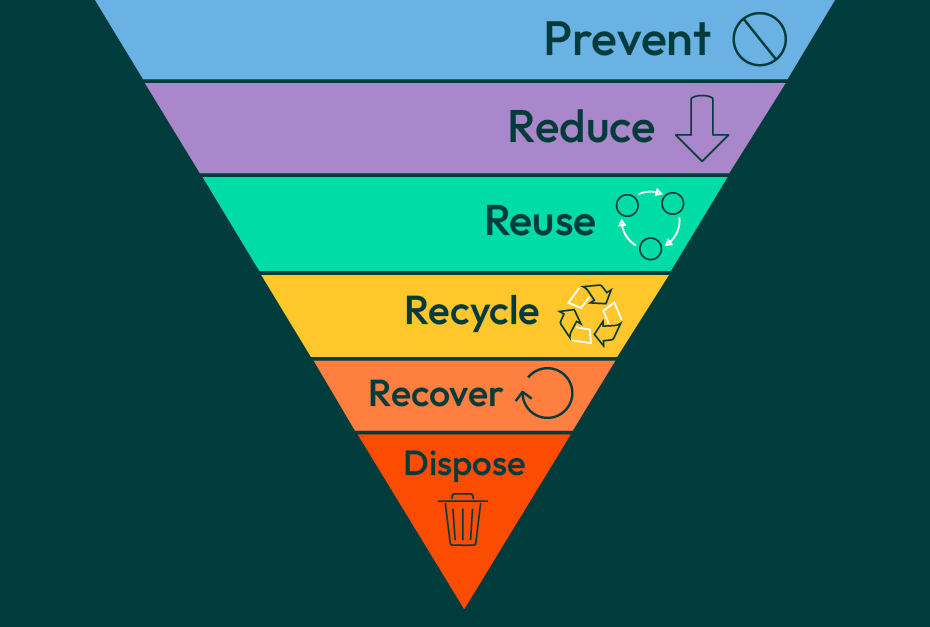
Recycling uncontaminated PPE is a simple and effective way to reduce lab waste and support sustainability goals.
The ReFactory PPE Recycling Scheme allows labs to recycle plastic-based PPE such as nitrile gloves, face masks, visors, and goggles—helping divert waste from landfill and contributing to higher-level green accreditations.
If it is appropriate for your space to do so, you can now set up the glove recycling scheme through the same cost code as used for lab waste.
How It Works
- Order the appropriate sized box for your lab space. Use the same cost code as lab waste. The order includes the shipping box, the liner, collection and customer support from ReFactory: PPE Recycling Box - ReFactory Plastic Waste Recycling.
- Collect items for recycling and for decontamination (if applicable). Set up the process into your lab space. Ensure you have any risk assessments and amendments to SOPs in place and there is clear signage indicating the accepted and unaccepted items.
- Once the bag is full, package the PPE into the cardboard box.
- Schedule a collection with the supplier from an approved campus collection point and include your contact details within this. Where possible, coordinate with other labs to consolidate collections and reduce transport-related emissions. Only bring boxes to the collection point on the day of collection to avoid storage issues.
Streatham: Contact LSI Stores (bs-stores@exeter.ac.uk)
St Luke’s: Contact Matt Lear (m.m.lear@exeter.ac.uk)
Penryn: Contact Penryn Delivery Hub (penryndeliveryhub@exeter.ac.uk)
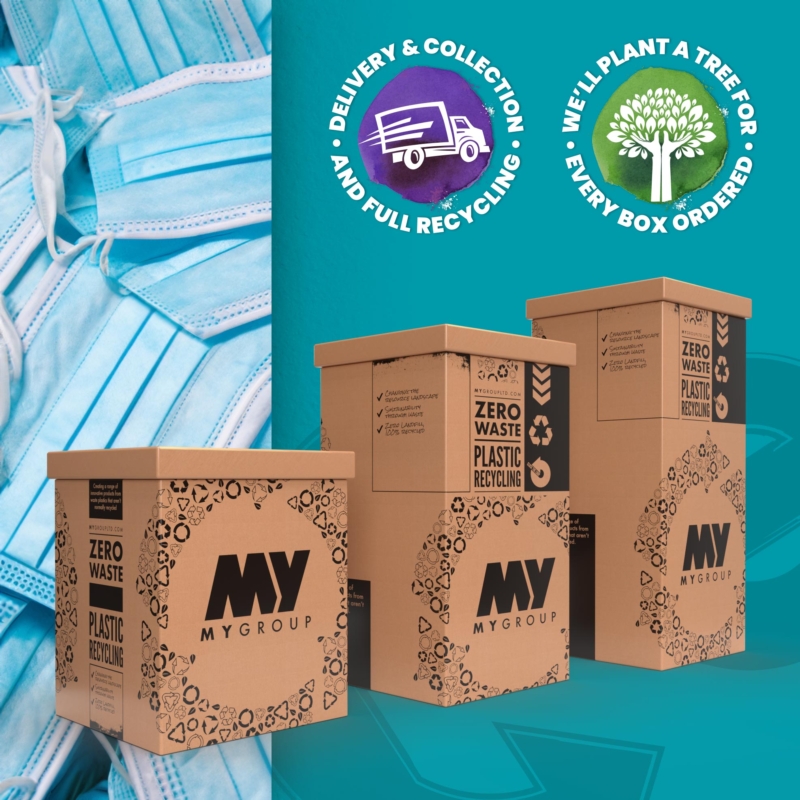
Many lab plastics are unsuitable for standard recycling due to the type of plastic and contamination from research activity. Other suppliers can provide specialised recycling solution for single-use plastic lab consumables, helping science and healthcare organisations reduce waste, lower carbon emissions, and support a circular economy. This closed-loop system accepts a wide range of uncontaminated or sterilised lab plastics.
We advice labs to enrol into the scheme from RecycleLab. RecycleLab accepts wide range of uncontaminated or sterilized lab plastic consumables. Accepted items are available here.
How It Works
1. Contact RecycleLab via info@recycle-labs.com to begin the process. You will be given the current guidance on the types of plastic RecycleLab collects (including resin codes) and how to safely decontaminate your lab plastics ready for collection.
2. Order the boxes for your lab space. Use the same cost code as lab waste. The order includes the shipping box, the liner, collection and customer support from RecycleLab. : Lab Consumable Recycling | RecycleLab Ltd
3. Collect items for recycling and for decontamination (if applicable). Set up the process into your lab space. Ensure you have any risk assessments and amendments to SOPs in place and there is clear signage indicating the accepted and unaccepted items.
4. Once the bag is full, package the recycling into the cardboard box.
5. When 5 full boxes are ready for collection, contact RecycleLab via info@recycle-labs.com to arrange a collection. Where possible, coordinate with other labs to consolidate collections and reduce transport-related emissions. Only bring boxes to the collection point on the day of collection to avoid storage issues.
Streatham: Contact LSI Stores (bs-stores@exeter.ac.uk)
St Luke’s: Contact Matt Lear (m.m.lear@exeter.ac.uk)
Penryn: Contact Penryn Delivery Hub (penryndeliveryhub@exeter.ac.uk)
Since 2021, the University of Exeter has partnered with UniGreenScheme—a company dedicated to collecting, storing, and reselling unwanted or surplus equipment, while returning a share of the profits back to the institution. The University is proud to have supported a wide range of successful projects through our sustainability initiative fund, helping all staff across the university implement practical, high-impact sustainability solutions within our technical spaces. So far, over 153 items have been successfully redistributed through the scheme, delivering an environmental impact equivalent to removing 20 cars from the road for an entire year!
Through the Advancing Sustainability Initiatives (ASI) fund, we’ve supported a wide range of projects that enable staff across the University to implement practical, high-impact sustainability solutions within technical spaces. This fund is made possible thanks to profits generated by UniGreenScheme.
A common misconception is that lab users don’t benefit directly from the scheme. However, the ASI Fund exists specifically to reinvest these profits into our technical spaces through measurable, impactful projects. By donating to UniGreenScheme, you’re not only extending the life of valuable lab resources and improving the efficiency of your own lab space—you’re also helping fund future sustainability initiatives across the University. You can read more about the Advancing Sustainability Initiatives fund and how to apply here.
Have surplus lab equipment to donate? Click the below image to access the donation enquiry form.

WarpIt is the University’s official reuse platform, open to all staff and students. It allows you to find, give away, or loan surplus items—helping reduce waste, save money, and support a circular economy.
You can use WarpIt to exchange:
- Office furniture
- Electrical equipment
- Stationery and office supplies
- Lab equipment
- Most other reusable items
You can also post wanted items, making it easier to source what you need without buying new. For more information visit the university's page Warp-It.
If you wish to donate to a third party not listed on WarpIt, please contact: sustainability@exeter.ac.uk

For guidance on implementing sustainable practices in your lab, keep in touch with us with the below channels.
Keep in Touch
Contact us: sustainablelabs@exeter.ac.uk
Join our Teams channel
Bookmark our SharePoint site
Instagram: @ExeterTechs Bluesky: @exetertechs.bsky.social LinkedIn: linkedin.com/showcase/exetertechs