You will acquire theoretical and analytical skills to address critical challenges developing and emerging economies, including poverty, inequality, climate change, migration and displacement, health, and violence and conflict.
Learn from world-leading experts with extensive hands-on experience in development management and consulting.
Benefit from practice-oriented training that provides the skills and experience needed for a career in international development, including roles in governmental and non-governmental organisations.
Enjoy the flexibility to choose between a rigorous academic-oriented dissertation or a career-focused, consultancy-based research project.
Join our global network of research partnerships, international development and policy organisations.
Global Ranking of Academic Subjects (GRAS) or Shanghai Rankings 2025
Entry requirements for 2027 entry
We will consider applicants with a 2:2 Honours degree or above (or equivalent). We welcome students from any academic background.
We would encourage applicants to use their personal statement to indicate their interests in International Development and any relevant work experience.
Please note, if we receive an application which we deem more suitable for one of our other programmes, we may make an offer for that alternative programme instead.
We will provide you with a comprehensive understanding of the main theories of global development and consider core debates that have emerged from the early 20th Century to the current day. Our programme is interdisciplinary in nature, encompassing politics, political economy, sociology, and anthropology. We will encourage you to become independent, critical, and inquisitive researchers and provide you with the opportunity to develop your practical skills in project management.
Our wide range of optional modules enable you to tailor your degree to your career interests covering topics such as international relations, conflict and security, global governance and international development in the Middle East.
The modules below provide examples of what you can expect to learn on this degree course based on recent academic teaching. The precise modules available to you in future years may vary depending on staff availability and research interests, new topics of study, timetabling and student demand.
Please note that the module information displayed here is subject to change.
120 credits of compulsory modules, 60 credits of optional modules.
Code
Module
Credits
Compulsory
Work Placement in Conflict, Security and Development
30
Theories of International Development
30
Dissertation
60
POLM085: Work Placement in Conflict, Security and Development
This module is composed of six forms of structured activity: i) Preparatory session to prepare you for specific work placements /research projects; ii) Academic seminars focusing on (a) the actors in conflict, security and development, and (b) research methodologies for studying and assessing the nature of conflict, security and development and the effectiveness of international aid; iii) Policy- and practice-focused seminars with visiting speakers who are professionals in conflict, security and development in the UK and/or overseas; iv) A 75-hour FTE work placement or research project in the UK or overseas, to be completed before the end of summer term; v) Plenary, reporting and presentation sessions following completion of your work placement; and vi) Meetings with academic advisor before and after your work placement.
You will be assisted in finding placements at one of the institutions, companies and NGOs with which the university has contact, or a placement with a relevant organisation identified yourself. Alternatively, research assistantships with Exeter academics working on a contemporary policy issue are available. The university cannot guarantee you a particular placement or assistantship. You must be active from the outset in pursuing placement opportunities of your choice to give you the greatest chance of achieving your preference.
This course provides a comprehensive understanding of the main theories of international development. It situates these theories in their historical context, looking at the core debates that have emerged around development from the early 20th century through to the current period. You will gain an understanding of how development theory is situated in broader social science debates. Some of the main topics examined include: poverty, inequality, and underdevelopment; the role of institutions and power in shaping development processes; gender; aid and structural adjustment; migration and displacement; the impact of environment and climate change; race; and violence and conflict.
This module aims:
To provide a thorough and interdisciplinary analytical understanding of theories of development.
To encourage the development of specialised knowledge of particular case studies, as well as overall trends
To provide skills enabling students to think in policy relevant terms
To provide analytical skills and understanding of practical methodologies enabling students to proceed to professional employment and/or PhD research
Your MA dissertation is an extended piece of writing driven by your own research interests, and a core part of a Master's degree. This module equips you with the skills you need to meet this challenge.
A dissertation is not a long essay, and writing a good dissertation requires you to demonstrate good research skills, the ability to learn independently, the ability to synthesise a complex literature (or literatures), and good writing skills. Furthermore, your Master's dissertation will be driven primarily by your own research interests, the research questions you are able to devise, and the approach you take to research design. It will likely require significantly more work than any assessment you have done previously. It also accounts for a significant proportion of the credits making up your Master’s degree. For these reasons, you will be provided with support during the dissertation writing process in the form of the POLM886 Dissertation Skills module, and from a dedicated dissertation supervisor who aligns with your research interests.
Conflict, Security and Development in World Politics
30
State-Building after Civil War
30
Theories of Diplomacy and Foreign Policy
30
Qualitative Methods in Social Research
30
Brexit: Causes, Interpretation and Implications
30
Digital Politics and Policy
30
From Oppression to Resistance: Exploring the Intersections of Race, Class and Gender
30
Management and Governance: Comparing Public Administration around the World
30
The Politics, Policy and Practice of Sustainable Development
30
Leadership, Equality and Diversity
30
Collaborative and Participatory Governance
30
Security Futures
30
How to Make a Decision: Understanding Command, Leadership and Management
30
Theory of Strategy: Conceptual Approaches for Surviving and Thriving
30
Strategy and Psychology in Foreign Policy
30
Public Opinion, Misinformation and Public Policy
30
International Relations: Power and Institutions
30
Sources in Modernity and Post-Modernity
30
Applied Quantitative Data Analysis
15
Public Policy Process
30
Security, Artificial Intelligence and Emerging Technologies
30
Social Networks
15
Fees
UK fees per year:
£13,050 full-time; £6,525 part-time
International fees per year:
£26,300 full-time; £13,150 part-time
Scholarships
The University of Exeter offers a wide range of scholarships to support your education, with £8 million available for international students applying to study with us in the 2027/28 academic year, including our prestigious Exeter Excellence Scholarships. We also provide awards for sport, music and other achievements, as well as regional and partner scholarships with organisations such as Chevening, the Commonwealth Scholarship Commission and the British Council. For more information on scholarships and other financial support, please visit our scholarships and bursaries page.
University of Exeter Alumni Scholarship
We are pleased to offer the University of Exeter Alumni Scholarship, a scholarship for University of Exeter alumni beginning a standalone postgraduate programme in 2027/28 with us a scholarship worth 20% of the cost of your first year tuition fees.
Teaching takes place over the first two terms leaving the third to concentrate on your dissertation. Our teaching is research-led, ensuring that what you learn will be cutting edge and at the heart of contemporary public debate.
Teaching methods may include:
Small academic seminars
Presentations
Group work
Extensive reading and reflection
Debates and discussions
15,000 word dissertation
By the end of the programme you will have acquired a series of valuable skills ranging from conducting analyses and research to presenting, debating, formulating arguments and managing groups.
Research
Students can take advantage of our seminar series and its long-running and highly successful annual postgraduate conference which brings together researchers from across all humanities and social sciences disciplines.
Our research is funded by leading research councils and is used by governments and networks around the world.
Our main library is open 24/7 throughout the academic year. With a book stock in excess of 1.2 million, we have one of the highest UK academic library ratios of books to students. The main library offers self-service machines, state-of-the-art multimedia facilities, and an extended wifi network. The library provides world-class study facilities to all students. It has extensive holdings of works on political science, international relations and the various sub-disciplines.
Associate Professor in International Development and Public Policy
Dr Pedro Perfeito Da Silva
Lecturer in Political Economy
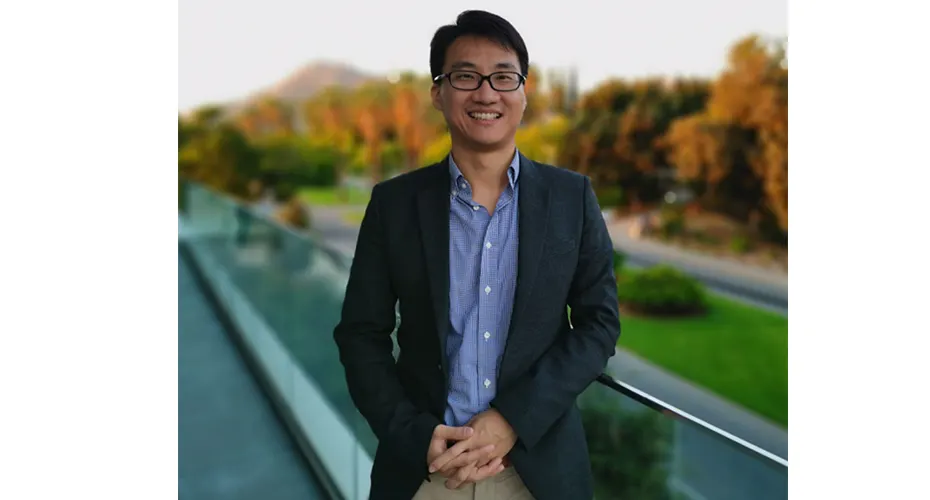
Dr. Jianzhi (Jason) Zhao
Associate Professor in International Development and Public Policy
Dr. Jianzhi (Jason) Zhao is an Associate Professor (Reader) in International Development and Public Policy. He also has extensive experience in the policy world.
He has worked at multiple development organisations, including the World Bank, Asian Development Bank, and Inter-American Development Bank. He was a visiting researcher at the Bank of Finland and consulted with UNIDO. He has also worked at the People's Bank of China (China's central bank) as a summer PhD. researcher.
His work has been invited to present at various government agencies, such as China's Ministry of Finance and Ministry of Commerce, the US Congressional Budget Office (CBO), the Bank of Finland, and UNDP. He was a Shorenstein Postdoctoral Fellow at Stanford University and received his PhD specialising in International Economic and Development Policy from the School of Public Policy at the University of Maryland, College Park.
Dr Pedro Perfeito Da Silva's research and teaching interests revolve around the challenges that globalisation introduces for the pursuit of development and the sustainability of democratic regimes at the capitalist periphery. In light of this broad political economy theme, he has investigated topics like the financial agenda of populist parties, the regulatory implications of the Latin American Pink Tide, the macroeconomic effects of capital account liberalisation, and the socioeconomic impact of creative industries.
His publications have appeared in leading journals of the subfields of comparative politics, development studies, and political economy. Currently, his research agenda covers the strategies of left-wing governments to financial subordination, the varieties of financial nationalism in Latin America and East-Central Europe, and the political economy of cultural policy in Brazil.
In line with his research and methodological expertise, he teaches on modules covering topics such as comparative capitalism, international development, and political economy of populism.
The MA in International Development enables you to develop the skills and knowledge required for a future career within international development, including within governmental and non-governmental organisations, humanitarian organisations or doner organisations.
Graduates could also go on to work in a range of other careers, such as journalism; local, national or international government service; policy analysis and advocacy. You may also go on to postgraduate study in a range of social science disciplines (including Politics, Development Studies).
Employer valued skills
Apart from specialist knowledge and skills relating to a range of careers in international development, you will also develop transferrable skills that are highly desirable in a range of careers. These include:
High-level research and writing skills
Analysis, evaluation and presentation skills
Excellent communication skills and experience, both written and oral
Ability to engage critically with complex ideas and arguments
Independent work skills of time-planning and motivation
Careers support
Ourcareers advisory serviceprovides expert guidance to all students to enable them to plan their futures through psychometric testing, employer presentations, skills events, practice job interviews and CV preparation.
Sign-up for more information about studying with us
If you're thinking about studying MA International Development with us, signing up to our emails is the best way to discover if we’re the right university for you.
Streatham Campus in Exeter
The majority of students are based at our Streatham Campus in Exeter. The campus is one of the most beautiful in the country and offers a unique environment in which to study, with lakes, parkland, woodland and gardens as well as modern and historical buildings.
Located on the eastern edge of the city centre, St Luke's is home to Sport and Health Sciences, the Medical School, the Academy of Nursing, the Department of Allied Health Professions, and PGCE students.
Our Penryn Campus is located near Falmouth in Cornwall. It is consistently ranked highly for satisfaction: students report having a highly personal experience that is intellectually stretching but great fun, providing plenty of opportunities to quickly get to know everyone.