Our approach mirrors the wider shift within the social sciences towards the analysis of transnational and global level processes and phenomena
You will examine individuals’ experiences and relationship with their social and cultural environment and acquire a broad knowledge of the current debates in sociology
We’ll equip you with the analytical skills needed to engage in and across a range of empirical domains and theoretical perspectives
Join a truly multicultural and culturally enriching environment, comprising of students from all three disciplines of Sociology, Philosophy and Anthropology
You will develop a wide range of key transferrable skills that are highly valued by employers within a range of professions
We will consider applicants with a 2:2 Honours degree or above in a social science* or humanities subject. While we normally only consider applicants who meet this criteria, if you are coming from a different academic background which is equivalent to degree level, or have relevant work experience, we would welcome your application.
The programme will draw on the department’s research strengths and interdisciplinary outlook to provide students with a sound foundation in sociology at postgraduate level. In addition to taking optional modules from sociology, anthropology and philosophy, you will explore a range of different social research methods and theoretical and conceptual tools, learning to use and apply them in your own research into the social world.
Our programmes have been planned, organised and are delivered in a way oriented towards tapping into and addressing points of overlap and divergence between different disciplinary perspectives. These perspectives are explored, explained and made relevant to the material covered.
The core module in social theory is concerned in the broadest sense with the distinctiveness, or not, of human life and experience in late modern society. More specifically, social theory can be understood as a series of intellectual formulations concerned to respond to a range of questions:
How does the structure and organisation of society shape how individuals think and (inter-)act?
What does it mean to say that social order is achieved and how does this occur?
How and in what ways are our identities and actions enabled and constrained by social structures?
We’ll introduce you to a range of central themes and issues that both classical and contemporary social theorists have addressed in their work equipping you with a broad range of conceptual tools and research methods with which to investigate the social world.
You’ll also choose from a range of optional modules covering fields such as research methods, cultures and environments of health, food and society and philosophy of science.
The modules below provide examples of what you can expect to learn on this degree course based on recent academic teaching. The precise modules available to you in future years may vary depending on staff availability and research interests, new topics of study, timetabling and student demand.
Please note that the module information displayed here is subject to change.
This programme consists of 105 credits of compulsory modules, plus 75 credits of modules selected from a list of options offered in the Department of Social and Political Sciences, Philosophy and Anthropology.
Pathway information:
As a student on MA Sociology you may, if you wish, choose to take a pathway in Health, Culture and Society. This pathway allows you to focus study on the social and cultural dimensions of health through a sociological lens. If you complete completing this pathway can choose to have the pathway appear in parentheses after your degree title: MA Sociology (Health, Culture and Society). To qualify for this pathway you must select SOCM057 Health, Culture and Society from the pathway group shown and complete the SOCM904 Dissertation on a theme in the area of Health, broadly conceived.
Code
Module
Credits
Compulsory 1
Research Methods in the Social Sciences
15
Social Theory
30
Dissertation
60
Compulsory 2 Health, Culture and Society Pathway-Specific
Health, Culture and Society
30
SOCM019: Research Methods in the Social Sciences
Postgraduate study in the social sciences includes both comprehension of research methods and the ability to use them. But how do you know which method to pick? Can you avoid common problems at the data collection stage? How do you conduct high quality analyses? This module offers an overview of the main qualitative, quantitative and digital methods in the social sciences. These range from qualitative methods such as interviews and ethnography through to quantitative methods such as surveys and experiments. There is an emphasis on both good research design and ethical research. There are no requirements in terms of previous research methods training.
The aim of this module is to provide a general introduction to the nature of research in the social sciences, the methods associated with such research, problems of research design, and a range of relevant research skills (conducting and reporting research). Together with generic research training in quantitative, qualitative and digital methods, this module provides you with the understanding and skills required to successfully undertake postgraduate level research. You will be introduced to the nature of explanation in the social sciences and to methodological issues specific to particular sub-fields. The module will further introduce you to basic principles of research design and methodology, including research ethics in the social sciences.
The module introduces you to a range of central themes and issues that both classical and contemporary social theorists have addressed in their work, all with the view of equipping you with a broad range of conceptual tools with which to understand and research the social world. The thematic structure of the module will enable you to understand, as well as be encouraged to assess, the contribution theoretical traditions and paradigms under discussion can make to the analysis of those themes.
To provide a thorough and rigorous discussion of some of the main theoretical traditions and paradigms in sociology
To illustrate theories through the use of empirical research and examples
To foster your capacity to engage with techniques of analytical and critical inquiry
In this module you will pursue an individual programme of social research, applying appropriate research methodologies and drawing on appropriate materials, to a topic approved by the programme director and under the guidance of an academic supervisor.
The object of the dissertation is to give you the opportunity to display your abilities in the collection, handling and ordering of material, and to be an exercise in the communication of ideas, appropriate to research topics chosen, with help and guidance from members of the academic staff, by themselves. The aims are to afford you the opportunity to obtain a solid knowledge of the issues that pertain to your dissertation topics. It will also develop your ability to explore and present your arguments in relation to empirical data provided by library research and/or fieldwork, where the latter is undertaken.
This module will introduce you to core material and debates within the social sciences, health, and public health. It will explore how diverse approaches and perspectives can enhance our understandings of what it means to be healthy; how health can be sustained; and how health is threatened and fostered. Learning will be centred on understanding: transitions across the life-course; unequal health outcomes; and health across time and space.
This module is suitable for individuals wishing to gain interdisciplinary understanding of the ways that health and wellbeing are conceptualised, researched, and responded to within policy and practice; and for those working in or intending to work in applied health and community care settings. There are no pre-requisite modules. However, students should have some knowledge in the social sciences, humanities and/or medical sciences prior to undertaking this module.
Please note that the module information displayed here is subject to change.
As a student on MA Sociology you may, if you wish, choose to take a specialism in Health, Culture and Society. This specialism allows you to focus study on the social and cultural dimensions of health through a sociological lens. Students completing this specialism can choose to have the specialism appear in parentheses after their award title: MA Sociology (Health, Culture and Society).
For students on this pathway, SOCM052 Cultures and Environments of Health is compulsory. Your dissertation will also focus on a theme in the area of Health, broadly conceived. In addition to the list of relevant optional modules for students on the MA Sociology, your convenor will provide you with a list of health-related modules that may be of interest to students choosing this pathway.
Fees
UK fees per year:
£13,050 full-time; £6,525 part-time
International fees per year:
£26,300 full-time; £13,150 part-time
Scholarships
The University of Exeter offers a wide range of scholarships to support your education, with £8 million available for international students applying to study with us in the 2027/28 academic year, including our prestigious Exeter Excellence Scholarships. We also provide awards for sport, music and other achievements, as well as regional and partner scholarships with organisations such as Chevening, the Commonwealth Scholarship Commission and the British Council. For more information on scholarships and other financial support, please visit our scholarships and bursaries page.
University of Exeter Alumni Scholarship
We are pleased to offer the University of Exeter Alumni Scholarship, a scholarship for University of Exeter alumni beginning a standalone postgraduate programme in 2027/28 with us a scholarship worth 20% of the cost of your first year tuition fees.
The department is home to a number of leading figures in the subject areas covered by our MA Sociology. Giving students the opportunity to be taught by and learn from some of the most esteemed and respected scholars in their respective fields.
Many of the modules offered on the MA Sociology are taught by members of staff who are actively engaged in research within their specialist areas. Very often, this means that students are typically taught using journal articles, monographs and textbooks, written by the course leader. Not only does this mean they have direct access to the authors whose work they are reading and engaged with, but that the opportunity to discuss the ideas and themes directly both in seminars and a range of more informal settings.
Teaching takes place over the first two terms, leaving the third for your dissertation. Research-centred teaching is at the heart of the programme. Teaching is done in small seminar groups to allow students the best possible interaction with academic staff, through individual presentations and round table discussions of common readings.
Students have the opportunity to engage in a serious piece of research into a topic of their choosing through the dissertation module. You will be assessed through coursework which will vary depending on the modules you choose and the completion of a dissertation.
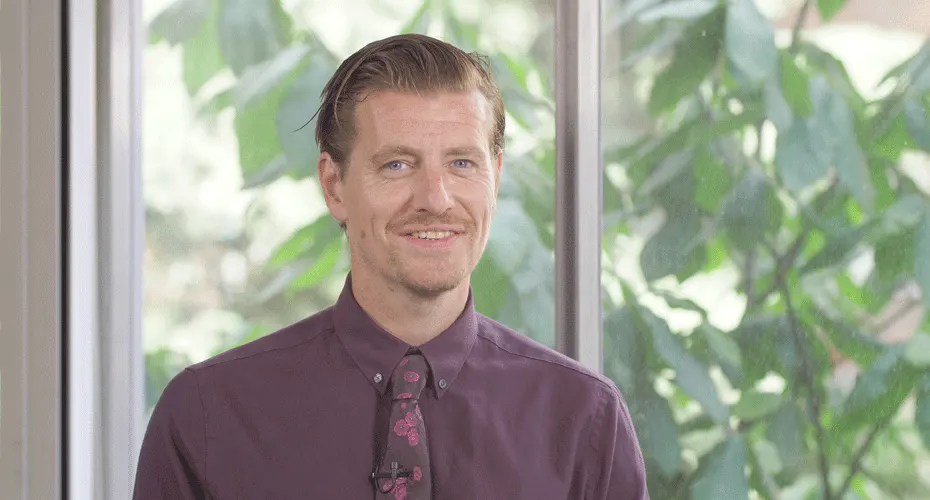
Dr Christopher Thorpe
Professor Harry G West
Professor of Anthropology
Dr Christopher Thorpe
Christopher’s work explores issues and debates situated at the historical cultural sociology/ sociology of culture interface. He is particularly interested in the subjects of cultural representation, appropriation and the 'autonomy of culture' debate. His work draws on historical forms of 'data' spanning comparative English literature, social and cultural history, travel studies and other disciplines as they relate to the subject of discursive representations of Italy and appropriations of Italian culture, in England and later Britain during the period spanning approximately the English Renaissance to the present day.
Harry teaches on the core module Social Theory. He is a socio-cultural anthropologist with expertise in political anthropology and the anthropology of food, farming and agrarian society. He has conducted research in Africa, as well as in Europe and North America. He is currently working on food, heritage and memory, with a focus on artisan cheesemaking.
He is Co-Director of the Centre for Rural Policy Research, and Coordinator of the Food Studies Network.
In addition to the specialist knowledge you will gain during your programme, you will also develop transferrable skills valued by employers such as:
researching, analysing and assessing sources of information
written and verbal communication skills
managing and interpreting information
developing ideas and arguments
Career support
The College's Employability Officer works with our central Career Zone teamto give you access to a wealth of business contacts, support and training, as well as the opportunity to meet potential employers at our regular Careers Fairs.
Related courses
The University of Exeter is recognised for its distinctive emphasis on cultural sociology, which includes the study of sociology of music, science and technology, health and addiction, and power and inequality.
The MA Sociology draws on classical and current theoretical concepts and frameworks to interrogate a wide range of empirical research, studies, and data sets. However, it is worth noting this is not a practically based programme.
We know finding the right programme to study can take time, particularly if you’re looking for something that corresponds with and maps closely onto your own intellectual interests, academic knowledge, and experiences to date. To help you decide which course is right for you please see our related courses below.
Sign-up for more information about studying with us
If you're thinking about studying MA Sociology with us, signing up to our emails is the best way to discover if we’re the right university for you.
Streatham Campus in Exeter
The majority of students are based at our Streatham Campus in Exeter. The campus is one of the most beautiful in the country and offers a unique environment in which to study, with lakes, parkland, woodland and gardens as well as modern and historical buildings.
Located on the eastern edge of the city centre, St Luke's is home to Sport and Health Sciences, the Medical School, the Academy of Nursing, the Department of Allied Health Professions, and PGCE students.
Our Penryn Campus is located near Falmouth in Cornwall. It is consistently ranked highly for satisfaction: students report having a highly personal experience that is intellectually stretching but great fun, providing plenty of opportunities to quickly get to know everyone.