MSc Mining Environmental Management
| UCAS code | 1234 |
|---|---|
| Duration | 1 year full time 2 years part time |
| Entry year | 2027 |
| Campus | Penryn Campus |
| Typical offer | 2:2 honours degree |
|---|---|
Why study MSc Mining Environmental Management at Exeter?
- Gain specialist expertise that’s centred on environmental geochemistry and mineralogy, as well as a multi-disciplinary skillset covering natural, engineering and social science aspects of mining environmental management
- Taught by the internationally established Camborne School of Mines (CSM), a combined mining school and geoscience department
- Undertake training in the management, remediation and mitigation of the environmental impacts of mining
- Become an in-demand geoscientist helping mining companies and governments carry out mining as sustainably as possible, and protect the environment from its potentially negative impacts
- Gain the knowledge and skills for a career in national and international mining and environment industries, consultancy, academia, and government or non-governmental organisation sectors.

Top 30 in the world for Mineral and Mining Engineering
QS University World Subject Rankings 2026

Leading research facilities include a £3.5 million investment Critical Minerals Equipment Hub for minerals processing and analysis

2nd in the UK for Mineral and Mining Engineering
QS World University Subject Rankings 2026

Top 20 in the world for Earth Sciences
18th in the 2025 Global Ranking of Academic Subjects (GRAS) or Shanghai Rankings
Accreditations

This degree has been accredited by the Institute of Materials, Minerals and Mining (IOM3) under licence from the UK regulator, the Engineering Council as meeting the requirements for Further Learning for a Chartered Engineer (CEng) for candidates who have already acquired an Accredited CEng (Partial) BEng (Hons) undergraduate first degree. See www.iom3.org for further information.
Accreditation is a mark of assurance that the degree meets the standards set by the Engineering Council in the UK Standard for Professional Engineering Competence (UK-SPEC). Accreditation is awarded for a maximum of 5 years under each assessment exercise. The dates applicable to the current accreditation of this degree programme can be viewed on the Engineering Council list of accredited degrees. See www.engc.org.uk for further information.
The MEM programme is a well-designed, structured and enriched course that equips students with an outstanding skillset covering natural, engineering and social science aspects of environmental management and mining sustainability. I really enjoyed the environmental landscape of the Penryn campus, the research facilities, the outstanding lecturers and extra academic support from the university.
The technical skills and experiences that have been most useful for my career are planning, environmental risk assessment, drafting of technical reports, stakeholder engagement, partnership building, capacities building in environmental best practices, and environmental monitoring. Adding to this, skills such as team leadership and project management, problem solving, critical thinking, time management, effective communication, flexibility, accuracy and good attention to detail, have also been so useful in my professional journey. Since I left Exeter I worked as an expert for the German Federal Institute for Geosciences and Natural Resources (BGR) and joined World Health Organisation (WHO) in late June 2022.
Read more from Guy, Democratic Republic of Congo
Guy, Democratic Republic of Congo
Environmental and Social Safeguards Expert, World Health Organisation. Studied MSc Mining Environmental Management, 2021

Entry requirements for 2027 entry
A 2:2 honours degree (or higher) from a recognised university in a science, earth or environmental science, engineering or maths based subject.
Please also see our guidance on essential documentation required for an initial decision on taught programme applications.
Entry requirements for international students
English language requirements
International students need to show they have the required level of English language to study this course.
The required IELTS test scores for this course fall under Profile B1.
Please visit our English language requirements page to view the required test scores and equivalencies from your country.
Course content and modules
The specific focus of the programme and specialist expertise provided will be centred on environmental geochemistry and mineralogy, but students will be provided with a multi-disciplinary skillset covering natural, engineering and social science aspects of mining environmental management.
The course is based on a robust understanding of scientific and social science theory in the field of mining environmental management, and the practice and application of field, laboratory and computing skills. You will gain experience in acquiring, synthesising and critically evaluating data from a range of geochemical, mineralogical, remote sensing and social science databases.
The modules below provide examples of what you can expect to learn on this degree course based on recent academic teaching. The precise modules available to you in future years may vary depending on staff availability and research interests, new topics of study, timetabling and student demand.
Please note that the module information displayed here is subject to change.
180 credits of compulsory modules
| Code | Module | Credits |
|---|---|---|
| Compulsory 1 | ||
| Economics, Processing and Environment | 15 | |
| Soil and Water Contamination | 15 | |
| GIS for Mineral Explorationists and Geoenvironmental Engineers | 15 | |
| Extractive Metallurgy | 15 | |
| Mine Waste Characterisation, Prediction and Treatment | 15 | |
| Politics, Mining and Sustainable Development | 15 | |
| Research Project and Scientific Article | 90 | |
| CSM Professionalism Year 4 and MSc | 0 | |
CSMM135: Economics, Processing and Environment
The module provides the opportunity for graduates from a range of disciplines to study important aspects of the mining cycle. These include mineral economics, processing of mineral ores to produce concentrates or metal and environmental impacts and remediation techniques. When linked to other specific modules, it forms part of the specialist training for the MSc in Mining Engineering, Exploration and Mining Geology, Minerals Processing, Geotechnical Engineering and Mine Environmental Management.
This module aims to provide you with a broad understanding of both the macro-economic and the industry specific economic environment in which mines and projects operate and are evaluated. It introduces you to financial analysis and explores how technical and operational parameters influence the revenue stream and cost structure at mines.
This module has been designed to develop a systematic understanding of the unit processes used in minerals engineering and an appreciation of how these unit processes are combined to produce an overall treatment system for a range of minerals and metals.
This module familiarises the student with the legal and regulatory framework within which companies explore, exploit and manage mineral resources. It highlights the key environmental and societal impacts and issues arising from mineral exploration and exploitation and introduces concepts of Social Licence To Operate and Corporate Social Responsibility.
CSMM185: Soil and Water Contamination
This module will provide an overview of the occurrence, behaviour and fate of mine waste pollutants along with contemporary methodologies for their remediation. The fundamental properties of soil, groundwater and surface water will be covered along with an overview of the analytical techniques that are currently used to characterise mining derived pollutants within such matrices.
This module is suitable for students studying courses in geology, mining, engineering and environmental science. It is recommended for interdisciplinary pathways. No pre-requisite module is required.
The aim of this module is to provide an understanding of the causes, characteristics and hazards related to contaminated land (with particular focus within the mining sector) and of the practical approaches to its assessment and remediation. The module is enriched with case studies from the lecturers’ own research.
CSMM219: GIS for Mineral Explorationists and Geoenvironmental Engineers
Provides an introduction to basic and advanced GIS skills used by geologists, scientists and engineers in the mining and environmental industry. You will learn and familiarise with the most fundamental tools and software packages used to collect, analyse, manipulate and display spatial datasets.
Prerequisite modules for MSc cohort: Undergraduate module(s) in GIS.
The module introduces and develops advanced spatial visualisation and modelling skills associated with the daily work of an exploration geologist and environmental scientist. These include practical work on a number of spatial datasets and will guide the student from simple data visualisation to designing geodatabases and spatial modelling/ mineral potential mapping practicals. The module caters for the needs of senior undergraduate and postgraduate students and will therefore be split into the following components:
CSMM431: Extractive Metallurgy
This module aims to provide a systematic understanding of the background and application of extractive metallurgy, from mineral to metal, and its position within the mining value chain. This develops a critical awareness of current methods and techniques used for the recovery and separation of metals using metallurgical techniques.
You will learn about important factors influencing selection of processes such as leaching (including bio-leaching), smelting and electrowinning. Part of the module will be devoted to developing practical testwork skills in the mineral processing laboratory and you will write a technical report which describes the analysis of the experiments. The module also features a critical evaluation and understanding of literature and you will be given the opportuntiy to present your findings on a selected topic about the extraction of metal(s).
This module is suitable for non-specialist students and those on interdisciplinary pathways. Note that if you take this module, you should have a reasonable understanding of physical chemistry, and would benefit from a basic grasp of mineralogy.
CSMM441: Mine Waste Characterisation, Prediction and Treatment
This module will provide students the opportunity to learn about the geochemical, mineralogical, geophysical and remote sensing techniques of mine waste characterisation, the methods used to predict their behaviour in the environment, the character of common mine waste types, and techniques of remediation. Students will be trained to use the geochemical modelling programme PHREEQC. This module is suitable for students studying courses in land and environmental management, geology, mining, engineering, geography and environmental science. It is recommended for interdisciplinary pathways. A basic understanding of chemistry (e.g. at GSCE level) is required, but no formal pre-requisites are needed.
The aim of the module is to provide an overview of the geochemical, mineralogical, geophysical and remote sensing techniques of mine waste characterisation and prediction, along with contemporary methodologies for their remediation. Topics covered will include (one sentence). The current state-of-the-art with regard to the characterisation of mine wastes and prediction of their effects using the popular geochemical code PHREEQC will be covered. The module will be underpinned by case studies from the Lecturers' own research and/or from industrial contacts.
CSMM442: Politics, Mining and Sustainable Development
This module covers the vital industry issues of corporate social responsibility, social license to operate, stakeholder engagement, health & safety and political & environmental factors that affect mining decisions. The module explores how environmental impact is measured, monitored and controlled, and what sustainability means in the context of mining. It also explores international and local mining legislation, expectations of local people in mining regions, and the long- and short-term impacts of mining on a local and national scale with a particular focus on the social, economic and environmental impacts of mine closure. The module covers the key aspects of health and safety management that future managers, engineers and scientists will need to know and find useful in their future lives and careers.
CSMM443: Research Project and Scientific Article
This module will provide you with the opportunity to plan, execute and write up an individual research project in mining environmental management, remediation and mitigation. The project will be carried out under the supervision of an appropriate member of staff with expertise in the chosen research area. The main reporting for the project will consist of a scientific article akin to those in peer-reviewed journals. Training will be provided in essential scientific communication skills. This module runs concurrently with modules of the MSc Mining Environmental Management Programme and is intended for students of this programme.
The aim of this module is to provide students with the opportunity to carry out an independent research project that builds on the skills learned in the MSc programme. Students will collect, analyse (using previously acquired data and/or data collected as part of the project), interpret and discuss geological, geochemical, mineralogical, or modelling mining environmental data, and derive conclusions and recommendations. The project must be of research value within an industrial or academic setting. The project must also show and in-depth understanding of the background to the research project. Students will learn the skills of scientific research and communication that will underpin future careers in industry, academia, government or other organisations.
CSMM904: CSM Professionalism Year 4 and MSc
The aim of this module is to support students as they adapt to MSc study and prepare for industry and industry aligned research careers. This includes building an understanding of professional accreditation and bodies, and further support with successfully applying for graduate jobs. Additionally, it will foster a sense of academic belonging and community within the broader department.
Fees
UK fees per year:
£14,300 full-time
£7,150 part-time (where available)
International fees per year:
£30,100 full-time
£15,050 part-time (where available)
Scholarships
The University of Exeter offers a wide range of scholarships to support your education, with £8 million available for international students applying to study with us in the 2027/28 academic year, including our prestigious Exeter Excellence Scholarships. We also provide awards for sport, music and other achievements, as well as regional and partner scholarships with organisations such as Chevening, the Commonwealth Scholarship Commission and the British Council. For more information on scholarships and other financial support, please visit our scholarships and bursaries page.
University of Exeter Alumni Scholarship
We are pleased to offer the University of Exeter Alumni Scholarship, a scholarship for University of Exeter alumni beginning a standalone postgraduate programme in 2027/28 with us a scholarship worth 20% of the cost of your first year tuition fees.
Terms and conditions, including deadlines, apply.
Fieldwork
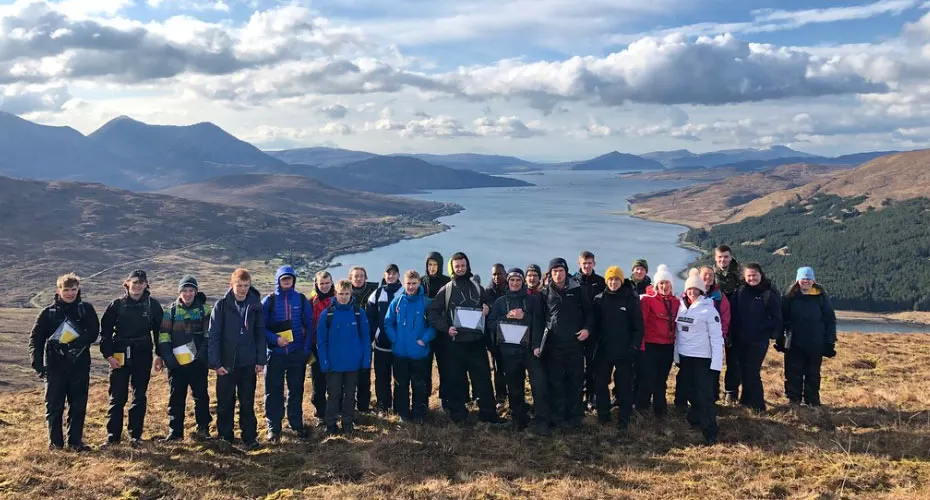
On the Mining Environmental Management MSc, you will receive practical experience of working with the environment industry and on real-case mining environmental issues.
The programme aims to produce high-quality graduates who can enjoy high employment rates and easy transition into further PhD study. Emphasis remains on applied teaching and research relevant to careers in the mining environmental management sectors.
Field visits and practical field-based assignments are used, where appropriate, to emphasise key areas within each module.
You will spend a good proportion of your time in the field, visiting various high-profile sites affected by metal mining. This hands-on experience will provide you with expertise in multiple areas, such as site evaluation, water and stream sediment sampling, soil sampling, and assessing natural geochemical processes.
Teaching and research
The programme is delivered through a mix of lectures, workshops, tutorials, practical activities, case studies, industry visits, computer simulations, project work and a dissertation.
Field visits and practical field-based assignments are used, where appropriate, to emphasise key areas within each module.
The taught part of the programme is structured into two semesters.
A research- and practice-led culture
We believe every student benefits from being taught by experts active in research and practice. You will discuss the very latest ideas, research discoveries and new technologies in seminars and in the field and you will become actively involved in a research project yourself. All our academic staff are active in internationally-recognised scientific research across a wide range of topics. You will also be taught by leading industry practitioners.
Students are encouraged to undertake projects directly linked with industry, which may result in industrial placements for their project period.
Graduate School of Environment and Sustainability
You will become part of Exeter's Graduate School of Environment & Sustainability - a vibrant and supportive postgraduate community based here on our Penryn campus in Cornwall. The Graduate School brings together experts from across the spectrum of earth and life sciences, engineering, humanities, social sciences and business. You will interact with students from other MScs and have the opportunity to explore issues from a range of perspectives, benefiting from a truly interdisciplinary experience. All our programmes are designed with a focus on developing solutions to global challenges and creating a better future for our planet and its people.
Careers

This MSc in Mining Environmental Management offers a unique opportunity to gain specialist knowledge in theory and technologies in the environmental management before, during and after mining. You will gain the knowledge and skill needed to work in relevant roles across sectors including the national and international mining and environment industries, consultancy, academia, and government or non-governmental organisations.
Reputational and networking benefits
A unique benefit of studying at Camborne School of Mines is the community and connections you will gain, both during and after your studies. Camborne School of Mines has a world-class reputation and excellent alumni network, allowing our graduates to prosper in their respective fields in all corners of the globe:
“I have worked in many places around the world and have yet to visit a country where I could not find at least one CSM graduate. In fact, there are normally several and they can often be found in influential positions.”
Tim Henderson, CSM graduate and current Technical Director at Glencore
Graduate skills and destinations
In addition, a degree form Camborne School of Mines will teach the necessary technical skills and theoretical knowledge required, as well as additional complementary skills relating to communications, teamwork and problem solving. We have excellent rates of graduate employment, with many postgraduates working overseas.
Support and opportunities
The Career Zone (CAS) at our Cornwall Campus provides high-quality careers information and guidance to students of all disciplines. Our experienced careers team can give you individual support whilst you are at the University and after you have graduated.
Services include talks, confidential careers interviews and an extensive careers library of reference books, magazines and journals. A new computer suite is also available for accessing online careers information, vacancy services and specialist software on, for example, sources of funding for courses and worldwide volunteering.
The CAS can help you to identify attractive jobs, careers paths and employers and assist with your CV, interview technique and identifying work experience placements.
Find out more about studying at Exeter








Sign-up for more information about studying with us
If you're thinking about studying MSc Mining Environmental Management with us, signing up to our emails is the best way to discover if we’re the right university for you.