MSc Sport and Exercise Medicine
| UCAS code | 1234 |
|---|---|
| Duration | 1 year full time 2-3 years part time |
| Entry year | 2027 |
| Campus | St Luke's Campus |
| Typical offer | Typically a 2:2 degree in a related discipline. |
|---|---|
Why study a Sport and Exercise Medicine Masters at Exeter?
- Learn alongside a multinational, multidisciplinary cohort of doctors, physiotherapists, sport and exercise scientists, biomedical scientists and other health professionals, gaining a broad range of perspectives on sport, health and medicine.
- Develop specialist knowledge and practical skills in sport and exercise medicine, including injury, rehabilitation, biomechanics, physiology and exercise medicine, whether you’re a recent graduate or experienced health professional.
- Learn from experienced researchers, clinicians and practitioners, gaining insight into current practice and research in sport and exercise medicine.
- Apply your learning through the optional Applied Experience in Sport and Exercise Medicine module, with opportunities to work with organisations including Exeter Chiefs, Exeter City and the Commando Training Centre Royal Marines.
- Support your professional development, with learning relevant to the CSEM Diploma pathway for GPs and allied health professionals, while complementing specialty training in sport and exercise medicine.

Top 20 in the world for Sports-related subjects
QS World University Subject Rankings 2026

Top 5 in the UK for Sports Science

1st in the UK for world-leading research in Sports Science
Research Excellence Framework 2021 based on 4* research submitted to UoA24 Sport and Exercise Sciences, Leisure and Tourism

Opportunities to engage with research through the Exeter Biomechanics Research Team (ExBiRT)
Entry requirements for 2027 entry
Typically a 2:2 degree with 55% and above in a related discipline. Related disciplines may include: Exercise and Sport Science, Sport and Exercise Medicine, Physiotherapy, Medical Sciences, Medicine, Human Biosciences. A 2:2 degree below 55% in a related discipline will also be considered.
Applicants who do not meet the exact published entry criteria should also submit a personal statement outlining why they wish to study this programme.
Please note that for the optional module Sport and Exercise Medicine Placement and, in some circumstances, research projects as part of a dissertation, students will be required to complete a Disclosure and Barring Service (DBS) check.
Please also see our guidance on essential documentation required for an initial decision on taught programme applications.
Entry requirements for international students
English language requirements
International students need to show they have the required level of English language to study this course.
The required IELTS test scores for this course fall under Profile B2.
Please visit our English language requirements page to view the required test scores and equivalencies from your country.
Course content and modules
As an MSc Sport and exercise Medicine student, you’ll explore the science and practice of sport and exercise medicine through a broad range of perspectives, including biomechanics, physiology, rehabilitation, psychology, nutrition, physical activity and health.
The programme brings these areas together to help you understand the complex factors that influence injury, recovery, physical performance and health. You'll consider how scientific evidence can inform assessment, treatment, rehabilitation and approaches to improving health and performance.
You'll also have opportunities to engage with current research in sport and exercise medicine. For example, dissertation students may have the opportunity to work with ExBiRT, the Exeter Biomechanics Research Team, investigating areas such as lower-limb injury mechanisms and prevention.
The modules below provide examples of what you can expect to learn on this sports medicine degree course based on recent academic teaching. The precise modules available to you in future years may vary depending on staff availability and research interests, new topics of study, timetabling and student demand.
Please note that the module information displayed here is subject to change.
The MSc Sport and Exercise Medicine programme is a one year full-time or two-year part-time programme of study at National Qualification Framework (NQF) level 7 (as confirmed against the FHEQ). This programme consists of a single stage. Each stage is normally equivalent to an academic year.
You may take optional modules as long as any necessary prerequisites have been satisfied, where the timetable allows and if you have not already taken the module in question or an equivalent module.
You may take up to 30 credits of elective modules outside of the programme as long as you have obtained the explicit permission of the Programme Director, the permission of the discipline where the elective module is offered, any prerequisites have been satisfied, where the timetable allows and you have not already taken the module in question or an equivalent module.
Stage 1: 150 credits of compulsory modules and 30 credits of optional modules.
| Code | Module | Credits |
|---|---|---|
| Compulsory 1 | ||
| Research Methods and Analytical Procedures | 30 | |
| Dissertation (Journal Article) | 60 | |
| Introduction to Sport and Exercise Medicine | 15 | |
| Health Challenges in Sport and Exercise Medicine | 15 | |
| Orthopaedic Challenges in Sport and Exercise Medicine | 15 | |
| Preparation, Rehabilitation and Return to Sport | 15 | |
SHSM024: Research Methods and Analytical Procedures
Studying at Master’s level provides opportunities to take part in and design exciting and innovative research. This module will provide you with the tools to prepare for a Master's level dissertation using quantitative research methods. You will gain a greater understanding and appreciation of research methods, design and ethics, and learn how to use advanced-level statistics in research, including techniques that almost all of you will need to use to analyse your dissertation data.
SHSM025: Dissertation (Journal Article)
Writing a dissertation at MSc level will provide you with the opportunity to pursue, in depth, your interests within the field of sport and health sciences. You will develop your research idea that can involve a particular area of the course, or be interdisciplinary. You will develop your ability to find, interpret and present different materials for investigation as well as your independence of thought. The journal article will involve writing to the style of a particular journal that you will agree with your supervisor. You will also be required to make an oral presentation as part of the assessment for this module.
The dissertation is an opportunity for you to pursue systematically, and in depth, a personal interest in a particular topic, utilising the concepts, techniques, and skills developed within module SHSM024 or SSIM901 on quantitative research methods. The dissertation may be based within a particular area of the course or may be interdisciplinary in nature, and will encourage the synthesis of appropriate knowledge from different field s. It will cultivate independence of thought and develop your ability to find, and present material, according to selected approaches to understanding and prescribed methods of investigation.
Graduate attributes. As part of this module you are expected to develop the following skills:
SHSM035: Introduction to Sport and Exercise Medicine
This module will provide an evidence-based foundation to support the study of fundamental areas relevant to sport and exercise medicine. You will consider the latest research on factors relating to injury and illness risk and mitigation, and factors limiting performance in specific populations. Evidence will be applied to specific populations, including different age groups, sex and sport specialisation. You will learn about the application of this evidence by multi-disciplinary support teams to maximise athlete performance and to prevent and optimally manage sports related injuries and illnesses.
This module aims to develop your understanding of the knowledge underpinning the support of sports participants. The foundation developed will equip you with knowledge and understanding to critically appraise approaches to the management of those participating in sport and exercise.
Graduate attributes: As part of this module, you are expected to develop the following skills:
- Application of knowledge in developing an essay evaluating injury and/or illness epidemiology in a specific population and the role of the sport and exercise medicine support team in optimising the health and performance of the chosen population.
- Building confidence as a communicator in critically discussing research evidence in written arguments.
- People skills in communicating with peers and module teaching team.
- Enquiring mind in pursuing further reading on topics covered in the module.
SHSM057: Health Challenges in Sport and Exercise Medicine
In this module you will be introduced to a broad overview of non-orthopaedic health issues as they relate to Sport and Exercise Medicine, including energy deficiencies, heat stroke and concussion. This module leads to a summative assignment in the form of an evidence-based infographic, in the style of those published in the British Journal of Sports Medicine on a specific health topic for a defined audience of practitioners, clubs or teams or athletes.
The main objective of this module is to provide you with specialised knowledge and critical understanding of interdisciplinary health related topics in Sport and Exercise Medicine that relate to positive health and positive performance.
This module will improve your employment prospects by enabling you to critically evaluate the evidence supporting the guidelines and consensus statements issued by the relevant advisory bodies in Sport and Exercise Medicine. You will develop transferable skills in identifying and reviewing the relevant literature, summarising and condensing information and communicating complex information in an accessible form to a specific audience within sport and exercise.
SHSM058: Orthopaedic Challenges in Sport and Exercise Medicine
In this module you will be introduced to a broad overview of orthopaedic health issues as they relate to Sport and Exercise Medicine. This module comprises two study days taught by practitioners and academics, supported by online engagement with reading and activities on the module's ELE page, leading to a summative assignment in the form of an abstract and e-poster, aligned to the format of one of the key conferences in the field.
This main objective of this module is to provide you with specialised knowledge and critical understanding of interdisciplinary orthopaedic-related topics in Sport and Exercise Medicine that relate to positive health, performance and recovery from injury.
This module will improve your employment prospects by enabling you to critically engage and evaluate the evidence relating to key issues relating to orthopaedic challenges in Sport and Exercise Medicine. Through the contact days, you will have interactive sessions which will provide you with insights to anatomy and clinical examination techniques, as well as case-based approaches to ensure a holistic understanding of the context in which orthopaedic issues are considered and managed, for different sports and a range of athletes. You will develop transferable skills in identifying and reviewing the relevant literature, summarising and condensing information and communicating complex information in an accessible form to a specific audience within sport and exercise.
SHSM060: Preparation, Rehabilitation and Return to Sport
This module will focus on the athlete journey from preparation for competition, through to injury diagnosis and rehabilitation, and determination of return to sport readiness. The module will consider areas such as periodic medical assessment, functional performance screening, load management, injury diagnosis and injury classification systems, acute and overuse injury management, nutritional considerations, and psychological readiness. This module will provide you with a detailed, theoretical basis and practical experience in preparation for future employment in sport and exercise medicine environments.
This module aims to develop your understanding of the role of different screening and monitoring methods in the management of athlete health and performance throughout their competitive journey. This will provide you with the skills and knowledge to critically evaluate the role of musculoskeletal, physiological, biomechanical, and psychological screening, providing an evidence base for the appropriate selection of athlete-specific screening methods for preparation, rehabilitation, and return to sport.
Graduate attributes. As part of this module you are expected to develop the following skills:
| Code | Module | Credits |
|---|---|---|
| Optional 1 | ||
| Laboratory Techniques in Physiology | 30 | |
| Nutrition for High Performance | 30 | |
| Applied Experience in Sport and Exercise Medicine | 30 | |
SHSM006: Laboratory Techniques in Physiology
This is a specialist module on measuring human physiology in response to exercise. A pre-requisite for this module is good understanding of undergraduate level exercise physiology. A major feature of the learning and teaching methods in this module will be the active encouragement of laboratory work. Much of this module will take place in the laboratory utilising techniques not necessarily previously available to undergraduate students. Part of the learning and teaching strategy will include practical class participation and this may include exercise from time to time.
This module aims to develop your understanding of laboratory techniques utilised in physiology research laboratories. The module will be research-driven and will benefit from recent and ongoing research of Lecturers involved in the module.
By the completion of this module you will have an understanding of different laboratory techniques, collection and subsequent analysis of data and interpretation of results. In addition, through your participation in this module you will expand your skill set and acquire practical skills that are required in your career.
SHSM059: Nutrition for High Performance
This module explores how nutrition drives high-quality training and elite performance, but with a strong focus on real-world practice. You won’t just learn what the literature says, you will learn how to translate research findings into evidence-based decisions for actual athletes with unique goals, lifestyles, training demands and performance pressures.
You’ll engage with cutting-edge studies across a range of sports, from explosive power to long-duration endurance and weight-category competition—and critically evaluate how well different nutritional strategies work in practice. The emphasis is on understanding not just what the research shows, but how to apply it to individual athletes without losing scientific integrity.
A major feature of the module is developing the skill of adapting best-practice guidelines to real people. You will assess athletes’ nutritional intakes, explore performance-enhancing strategies and ergogenic aids, and learn how to manipulate diets to meet evidence-based targets. By working through real case scenarios, you’ll gain the confidence to bridge the gap between theory and elite practice, an essential capability for anyone aiming to work in applied sports nutrition or in any applied field.
SHSM071: Applied Experience in Sport and Exercise Medicine
This module provides the theory and practice of undertaking assessments of physical function in individual athletes and athletic groups. Assessments on individual athletes will be undertaken during their rehabilitation from injury and will be used to inform decision making on rehabilitation status, evidence of progression, and readiness to return to sport. Athletes will primarily be involved with the University of Exeter High Performance Sport Programme (HPP) and under the care of a sport and exercise medicine team. You will gain hands-on experience of planning, conducting, and reporting on assessments of the athlete’s physical function from tests conducted in the laboratory and/or field.
For assessments on athletic squads, these will represent either pre, mid, or post-season tests to provide information on physical fitness status, risk factors for injury, and the status of rehabilitated injuries. You will operate as part of a multidisciplinary sport and exercise medicine team including physiotherapists, strength and conditioning coaches, sport scientists, and sport psychologists. There may be opportunities to complement your in-house university experiences with time spent with our external partners operating in high-performance sport and military environments.
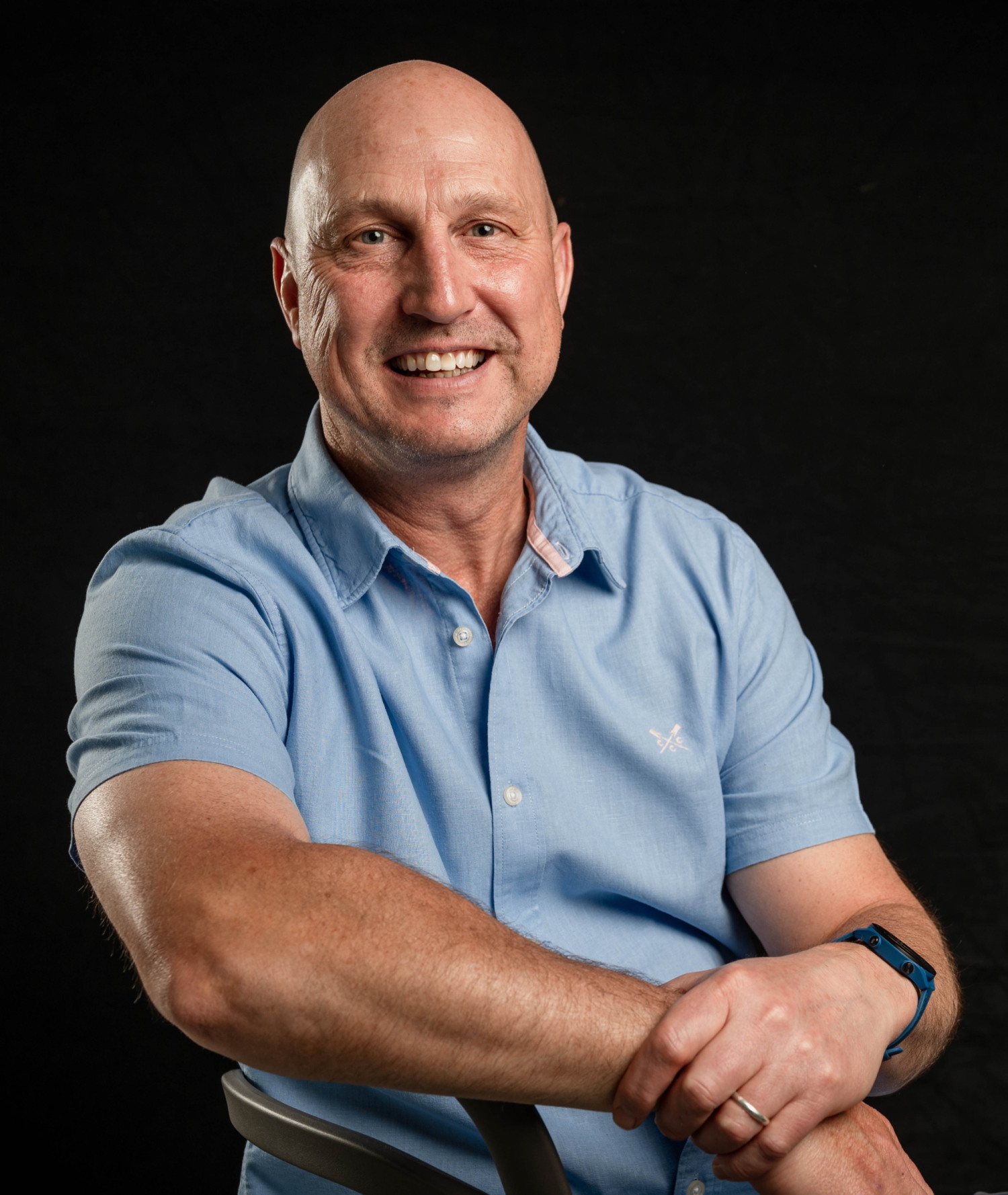
My interests include the use of state-of-the-art physical function assessments to guide injury rehabilitation and inform return to sport decision making. Our students learn to think critically about the use and value of such assessments and have the opportunity to develop practical competency.
Dr Chris Byrne
Programme Director Senior Lecturer in Physiotherapy
Fees
UK fees per year:
£15,000 full-time; £7,500 part-time (2 years); £5,000 part-time (3 years)
International fees per year:
£32,150 full-time; £16,100 part-time; £10,700 part-time (3 years)
Scholarships
The University of Exeter offers a wide range of scholarships to support your education, with £8 million available for international students applying to study with us in the 2027/28 academic year, including our prestigious Exeter Excellence Scholarships. We also provide awards for sport, music and other achievements, as well as regional and partner scholarships with organisations such as Chevening, the Commonwealth Scholarship Commission and the British Council. For more information on scholarships and other financial support, please visit our scholarships and bursaries page.
University of Exeter Alumni Scholarship
We are pleased to offer the University of Exeter Alumni Scholarship, a scholarship for University of Exeter alumni beginning a standalone postgraduate programme in 2027/28 with us a scholarship worth 20% of the cost of your first year tuition fees.
Terms and conditions, including deadlines, apply.
Funding
UK government postgraduate loan scheme
UK students studying one or two year variants of this programme may be eligible for a Postgraduate Master’s Loan. More information can be found on the government website.
Scholarships
Details of scholarships, including our Exeter Excellence scholarships for international fee paying students, can be found on our dedicated funding page.
Teaching and research
Placements and Employability
Gain hands-on experience through our optional Applied Experience in Sport and Exercise Medicine module, and opportunities to work with organisations across professional and grassroots sport — including Exeter Chiefs, Exeter City and the Commando Training Centre Royal Marines. Clinicians and practitioners from these partners also contribute to teaching, bringing real-world experience from high-performance and applied sport settings.
The Department of Public Health and Sport Sciences has a thriving research culture spanning biomechanics, physiological testing, human performance, sport injury, rehabilitation, physical activity and health which directly informs your teaching. Dissertation students have various opportunities to engage in research can also work with the Exeter Biomechanics Research Team (ExBiRT), led by Dr Chris Byrne, exploring areas like lower-limb injury mechanisms and prevention.
Our multinational cohort brings together students from a range of professional backgrounds, with around half joining us from outside the UK. You'll learn alongside peers with different professional experiences and perspectives, reflecting the multidisciplinary nature of sport and exercise medicine.
Teaching and assessment
You'll learn through a combination of teaching, learning and assessment methods that develop your theoretical knowledge, practical skills and ability to apply evidence to real-world sport and exercise medicine.
Teaching may include lectures, seminars, practical laboratory and clinical sessions, group discussion, independent study and applied placements in high-performance sport. You'll learn from internationally recognised University of Exeter experts, with guest lecturers bringing additional clinical and applied perspectives.
Personal tutor support is available throughout your studies, alongside postgraduate guidance. Assessments may include coursework and examinations, laboratory reports, practical skills assessments, dissertations, oral presentations, posters and infographics.
Your future with an MSc in Sport and Exercise Medicine
Employer-valued skills this course develops
This programme develops the advanced knowledge and practical skills needed to apply sport and exercise medicine in clinical, health and performance settings.
You'll develop skills in critical areas of sports medicine and sports science, such as analysing injury and rehabilitation, interpreting research and evidence, assessing physical performance, and applying scientific knowledge to real-world situations. You'll also develop your ability to work across professional disciplines and contribute effectively as part of a wider support team.
These skills can support career development across sport, exercise, health and related fields, depending on your professional background and career goals.
Placement opportunities
Our partners span a range of professional, elite and applied settings. Examples include University of Exeter High-Performance Sport, Ocean Physio & Rehab, Exeter Chiefs Rugby Union Club, Exeter City F.C. and the Commando Training Centre Royal Marines.
The optional Applied Experience in Sport and Exercise Medicine module provides opportunities to gain practical experience within a performance sport setting and contribute as part of a multidisciplinary support team.
Depending on your academic and professional background and your area of interest, opportunities may include sports science performance testing, physiotherapy treatment and rehabilitation, clinical assessment or medical screening.
You'll gain insight into the demands of working in a high-performance environment, including how different professionals work together to support athletes and performers. This experience can also help you explore potential career directions and develop a better understanding of working in high-performance sport.
Supporting your career
Career pathways vary depending on your previous professional background and goals, with graduates progressing into clinical practice, physiotherapy, sport science, rehabilitation, research and high-performance sport. Destinations include NHS Foundation and medical specialty training, NHS and private physiotherapy in the UK, India and Australia, and roles with organisations such as Nuffield Health and Bupa. Graduates have also progressed to PhD study at the University of Exeter and Mississippi State University, and high-performance roles with Birmingham City FC, Plymouth Argyle FC, Exeter Chiefs, England Rugby, Uno-X Mobility and Al-Quadsiah FC in the Saudi Pro League.
For doctors, physiotherapists, and other allied health professionals
The programme is designed to align with aspects of the CSEM curriculum, providing complementary learning for doctors wishing to take the CSEM Speciality Exam as part of their pathway towards becoming a Sport and Exercise Medicine physician.
The programme also aligns with the CSEM Diploma examinations in Musculoskeletal Medicine, Team Care and Exercise Medicine, which aim to evidence competency for doctors and allied health professionals.
The programme can support physiotherapists and other allied health professionals working towards advance practice roles.
For sport scientists
The programme can support sport scientists looking to develop their knowledge of injury and rehabilitation alongside their existing expertise, helping them explore potential career directions in sport, rehabilitation and performance. The course can also be beneficial for those considering professional accreditation or recognition through the Chartered Association of Sport and Exercise Sciences (CASES), the UK professional body for sport and exercise sciences.
Careers services
You'll have access to the University's Careers service, with careers advisers, mentors and resources to support your career planning and development.
You can also take part in the Exeter Award and Exeter Leaders Award, which include employability workshops, skills events, volunteering and employment opportunities to help you develop your experience and career skills.
Find out more about studying at Exeter








Sign-up for more information about studying with us
If you're thinking about studying MSc Sport and Exercise Medicine with us, signing up to our emails is the best way to discover if we’re the right university for you.