Aerosols, Clouds and Climate
The focus of our research is atmospheric aerosols and their roles and impacts in climate. Atmospheric aerosols consist of microscopic particles suspended in the troposphere and stratosphere. They interact with both solar and terrestrial radiation (aerosol-radiation-interactions, ARI) and with clouds (aerosol-cloud-interactions, ACI). Aerosols can also play a key role in climate feedbacks.

Aerosol-Cloud-Climate interactions
The interactions between aerosols, clouds and radiation are highlighted as the key climate uncertainties in the recent Intergovernmental Panel on Climate Change (IPCC) assessment report. ARI and ACI are both very uncertain. Whether aerosols cool or heat the atmosphere through ARI depends strongly on their absorption properties, but also upon their horizontal and vertical spatial distribution. Aerosol cooling through ACI is highly uncertain because of the challenge in representing complex aerosol and cloud microphysical interactions, many of which cannot be adequately represented in relatively coarse resolution global climate models.
Combining measurements with state-of-the-art models
To improve our understanding of aerosols, clouds, and climate interactions, our studies involve airborne and surface-based in-situ measurements, retrievals of aerosol and cloud physical and optical properties from satellite instrumentation and numerical simulation across a range of scales by using process-scale models as well as regional and global meteorological and climate models.
Solar Radiation Modification Research
The climate crisis means that the targets set by COP21 will soon be exceeded leading to increasingly damaging climate impacts. While stringent mitigation methods are obviously essential, temperatures will continue to rise until we reach net zero, exposing us to increasingly dangerous levels of warming. It is therefore important that humanity examines additional tools such as Solar Radiation Modification (SRM), a form of so-called geoengineering, that might be needed in the future fight against climate change. In 2023 the United Nations Environment Panel called for establishing “a robust, equitable and rigorous trans-disciplinary scientific review process to reduce uncertainties associated with SRM and better inform decision-making”. Jim Haywood has been the UK’s principal investigator and scientific steering committee of the Geoengineering Model Intercomparison Project (GeoMIP) since its inception in 2010. The group has published widely in stratospheric aerosol injection (SAI), marine cloud brightening (MCB), and marine sky brightening (MSB) (see publication list). The research work that the group performs strives to be as objective as possible and aligns with the government’s position on SRM. SRM forms a key pillar of the University of Exeter’s “Responsible Climate Interventions” theme.
In this section
People

Dr Charlotte (Charlie) Alexander
Postdoctoral Research Associate
C.L.B.Alexander@exeter.ac.uk Exeter





Dr Monisha Natchiar Subbiah Renganathan
Postdoctoral Research Fellow


| Name | Role |
|---|---|
| Dr Prerita Agarwal | PDRA |
| Dr Paul Bowen | PDRA |
| Dr Ying Chen | PDRA |
| Dr Michael Cotterell | PDRA |
| Ms Lilly Damany-Pearce | Graduate Research Assistant |
| Dr Nick Davies | PhD |
| Dr Megan Haslum | Graduate Research Assistant |
| Dr Matt Hawcroft | PDRA |
| Paul Kim | PhD |
| Dr Ju Liang | PDRA |
| Dr Zixia Liu | PDRA |
| Dr Florent Malavelle | PDRA |
| Martin Osborne | PhD |
| Dr Federica Pacifico | PDRA |
| Dr Fanny Peers | PDRA |
| Ms Lizzy Quaye | Graduate Research Assistant |
| Dr Alice Wells | PhD |
Research projects
Current projects
Past projects here.
Southern Ocean Clouds (SOC)

Funded by: NERC NE/T006390/1
Principal Investigator: Dr T Lachlan-Cope, NERC British Antarctic Survey
University of Exeter Co-Investigator: Dr Daniel Partridge
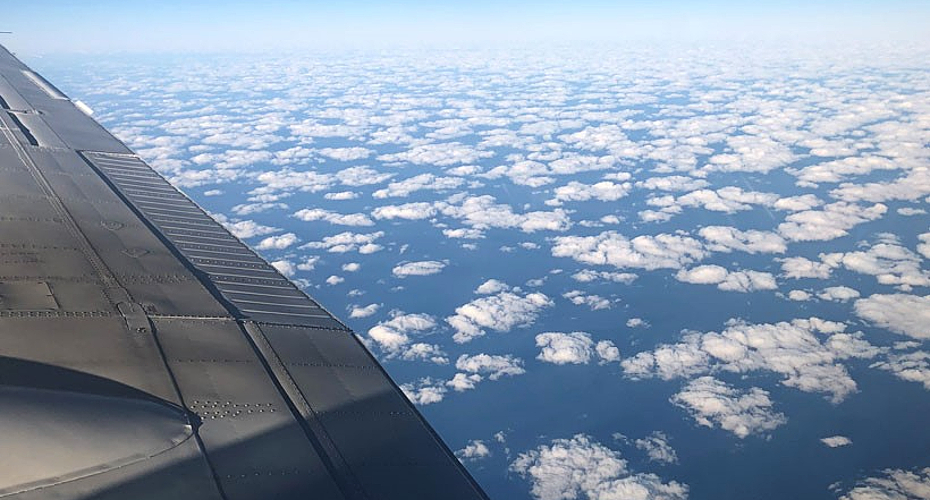
This proposal will use a novel multi-scale, multi-platform approach over a variety of temporal and spatial scales that will improve understanding of aerosol and cloud microphysics over regions with maximum climate model bias, namely both the Southern Ocean and coastal areas around Antarctica, leading to better representation of these processes in climate models. For further details see the SOC project website.
QR-CODE: Quantifying and Reducing aviation Contrail radiative forcing
Funded by: NERC: NE/Z503800/1
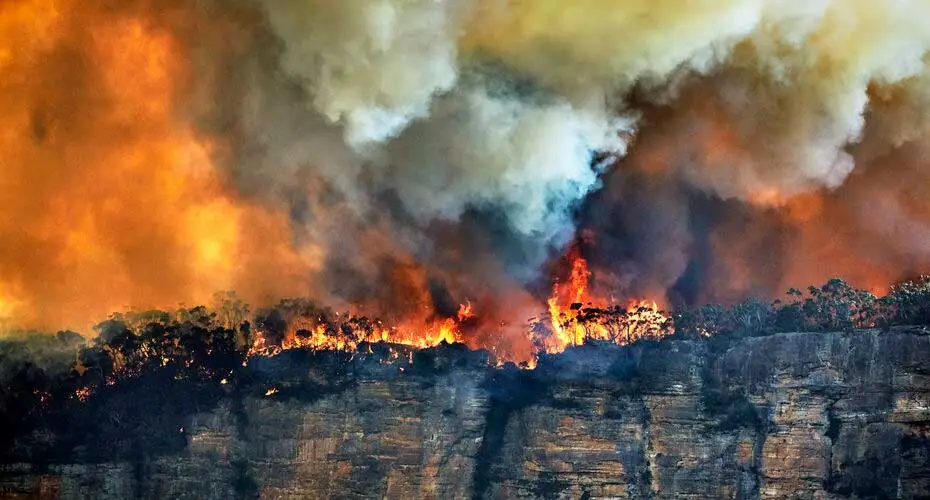
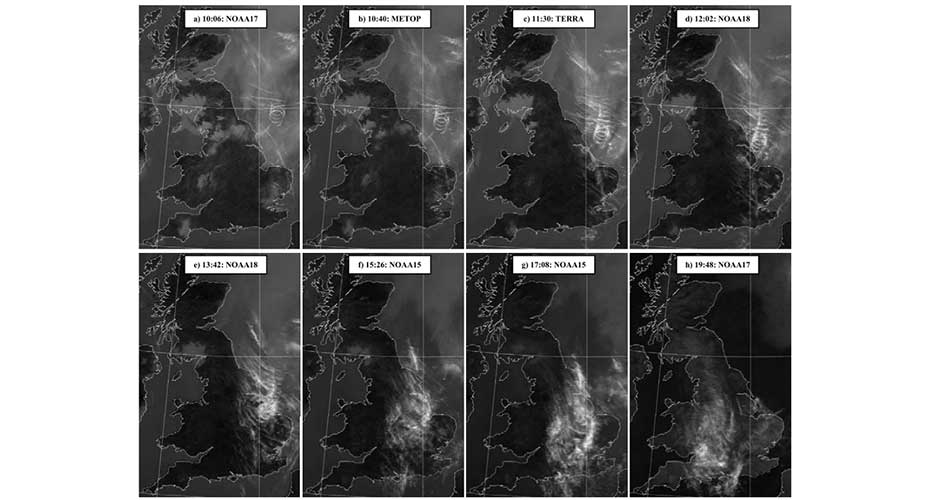
IPCC stresses that limiting warming to 1.5 C requires "reaching net zero CO2 emission globally around 2050" and aviation activities are expected to steadily grow by 4-5% per year. If aviation emissions growth is unmitigated, it could contribute 4-15% of emission budget in 2050. UK has committed to Jet-Zero by decarbonizing aviation by 2050, however, aviation's climate warming and uncertainty are both dominated (> 50%) by contrail cirrus created by aircraft when flying through cold and humid regions. QR-code will enable the design of mitigation strategies via trade-offs QR-code will improve aviation cirrus prediction and quantify its climate effects, hence enabling the optimization and implement of trade-off mitigation strategies via contrail avoidance through the Met Office Civil Aviation Authority to support the UK Jet Zero strategy. The University of Exeter affiliated post-doctoral research associate is Dan Williams.
View full image: Showing the evolution of an unusual spiral shaped contrail generated over the North Sea evolving into contrail induced cirrus (Haywood et al., 2009).
X-FIRES: Extreme Fires (European Space Agency).
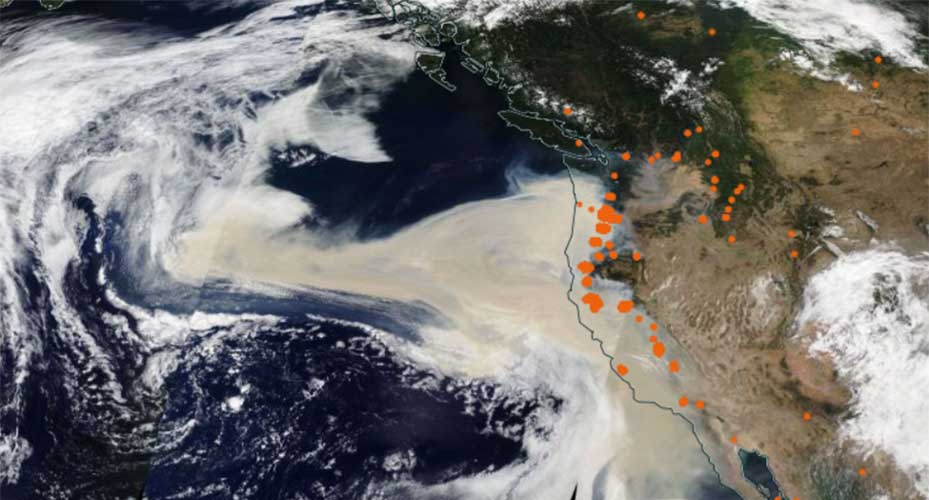
Extreme fires are the most damaging in terms of their effects on climate and the wider environment, yet they remain ill defined. The XFires project aims to gain a holistic understanding of extreme fires and their impact in the Earth system. The project uses a broad selection of relevant climate data records of Essential Climate Variables that have been developed through the European Space Agency's Climate Change Initiative to help define and differentiate extreme fires from ‘normal’ fires. The project will then determine the impact of extreme fires. The University of Exeter will examine and improve the representation of emissions of wildfire smoke with a focus on the impacts on climate. The University of Exeter affiliated post-doctoral research associate is Tom Eames.
Satellite image from 10 September 2020 showing the huge plume of smoke generated by extreme Californian wildfires. Courtesy of NASA worldview.
View full version.
SHIVER: StratospHeric aerosol Impacts under Various nuclEaR conflict scenarios (Future of Life Institute).
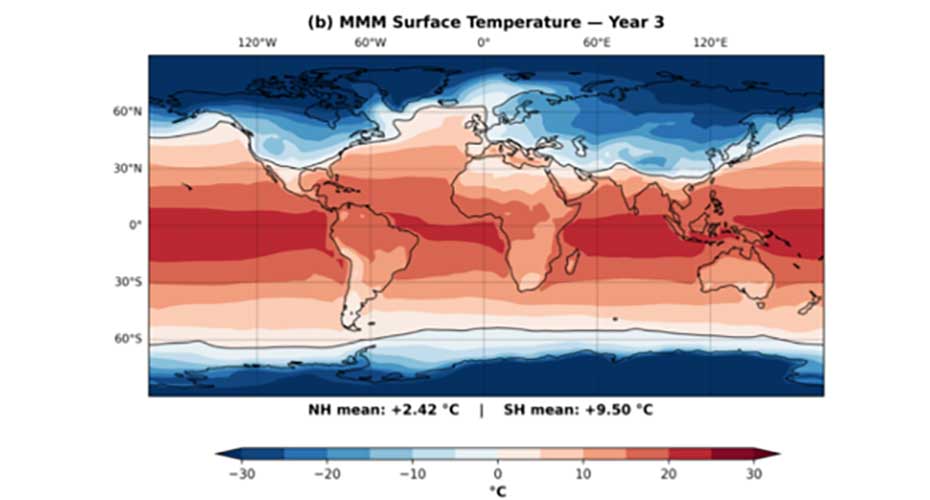
Model studies suggest that intense fires subsequent to the detonation of nuclear warheads would create so-called ‘nuclear-winters’ that could persist for many years leading to global famine. Even regional-scale wars could pose an existential threat to ecosystems and humanity.
SHIVER utilises a fully-coupled version of the UKESM1 Earth System model to assess the impacts of three different nuclear scenarios i) all-out USA-Russia nuclear war, ii) war between India-Pakistan, iii) more limited nuclear conflicts in eastern Europe. Different numbers of nuclear detonations, vertical profiles, and seasons of conflict are assumed over each area and the climate response are analysed over the subsequent twenty year period. Analyses are likely to include the physical evolution and longevity of the stratospheric plume and the response in terms of near-surface temperatures, precipitation, stratospheric ozone, induced changes in atmospheric and ocean dynamics, impacts on net primary productivity, ecosystem adaptability and impacts on crop productivity.
The University of Exeter affiliated post-doctoral research associate is Ananth Ranjithkumar.
Image: A multi-model mean (3-climate models) projection of surface temperature subsequent to a full scale nuclear war between nuclear super-powers that is assumed to release 150Tg of soot into the stratosphere. The bold line represents the 0degrees Celsius isotherm indicating that much of land mass of the northern hemisphere would be frozen.
View full version
Solar Radiation Modification Research under the Safe Earth System Research Initiative (SilverLining).
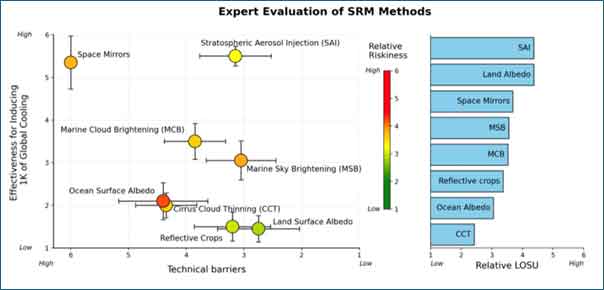
Our solar radiation modification research involves examining the benefits and risks of solar radiation modification methods such as stratospheric aerosol injection (SAI), and marine cloud brightening (MCB) to combat the impacts of greenhouse-gas induced warming. Research that has been performed under funding under the SilverLining Safe Earth System Research Initiative includes performing model simulations with the UKESM1 climate model of SAI and MCB which have contributed to the GeoMIP framework and the ARISE multi-model ensemble. SAI and MCB are chosen as they are the among the most promising proposals in assessments of effectiveness and technical feasibility (see Figure below). UKESM is a highly regarded global climate model that has a well-documented heritage at the forefront of cutting-edge climate research. The research is entirely model-based, using the same climate modelling framework used in multi-centennial climate scenarios. University of Exeter affiliated senior research fellows are Andy Jones and Matthew Henry, and the University of Exeter affiliated PhD student is Alex Mason, while Alice Wells also received funding for a short-post-doctoral position prior to moving to Colorado State University.
Figure: An expert evaluation of the Effectiveness, Technical Barriers, Relative Riskiness, and Level of Scientific Understanding (LOSU) for a range of SRM technologies. Figure courtesy of Josh Smith.

MACLOUD: Marine Cloud Brightening
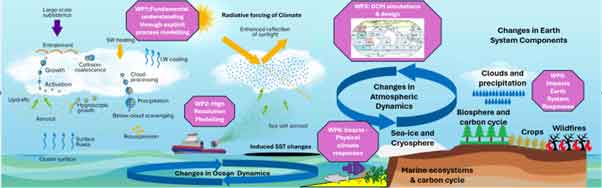
MACLOUD is a directed grant from the Natural Environment Research Council, tasked with better understanding the impacts of Marine Cloud Brightening (MCB) across a range of scales. The project is led by the University of Exeter, and includes collaborative work with the Universities of Leeds, Manchester, Oxford and Reading. MACLOUD will use a range of models from parcel-models through, large eddy simulation models, numerical weather prediction models, right through to fully coupled Earth System Models.
Work-packages include
1) Fundamental understanding through explicit modelling,
2) High-resolution modelling,
3) Global simulations with Earth System Models,
4) Assessing the physical impacts and climate response, and
5) Impacts on the Earth System components (see Figure).
University of Exeter affiliated research fellows are Monisha Natchiar and Brittany Dygert.

EXCLAIM: Exploring the role of CLimAte Interventions in Mitigation (Met Office)
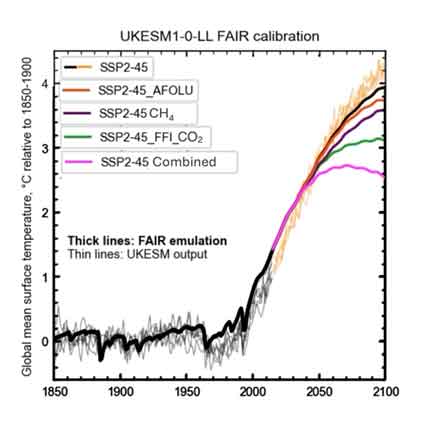
This project looks to combine several mitigation carbon dioxide removal (CDR), SAI and methane removal to limit global warming to the COP21,1.5C limit whilst reducing undesirable impacts that some of the strategies might have when applied alone. We have first modelled the potential cooling of various greenhouse gas removal strategies using the simple FAIR climate model (Smith et. al., 2018), as shown below. We will then be combining these interventions with SAI using the GeoMIP G6-1.5K-SAI protocol in UK’s Earth System Model (UKESM1) to identify combined scenarios that are able to keep temperatures at 1.5C while minimising detrimental side-effects. The project supports the Met Office Hadley Centre Climate Programme and the Met Office position on geoengineering research in delivering an assessment of the risks, impacts and co-benefits of potential pathways combining different climate interventions including SRM. The University of Exeter affiliated research associated is Charlotte Alexander.
Image: Calibrated FAIR model simulations. SSP2-45 is used for the baseline, with SSP2-45 AFOLU representing the reduction in CO2 emissions due to land use changes, SSP2-45 CH4 being the reduction in methane emissions, SSP2-45_FFI_CO2 being the decrease in emissions from fossil fuel and industry. The SSP2-45 Combined is the combination of these emission reductions. With thanks to Chris Smith for the calibration.

Solar Radiation Modification Research (Quadrature Climate Foundation, QCF).

Funded by: Quadrature Climate Foundation, QCF).
Our research tackles a number of fundamental questions surrounding SRM in both the science of stratospheric Aerosol Injection (SAI), Marine Cloud Brightening (MCB), and Marine Sky Brightening (MSB). Our research under QCF consists of 5 inter-related, but synergistic activities. These activities will examine the potential impacts of plausible deployment strategies including examining
- the relative contribution of MCB and MSB from sea-salt injection and the impacts on climate and atmospheric composition
- the potential of SRM in reducing the likelihood of tipping points such as Amazon die-back
- the representation of complex aerosol-cloud interactions across a range of scales
- the benefits and risks of combining strategies that deploy both SAI and MCB
- the development of fast emulators for quick and accurate projections of the impacts of SRM across various deployment strategies
By using cutting-edge scientific models and analyses, each of these activities will develop a step-change in knowledge of SRM scenarios and strategies, and provide crucial information for policy-makers.
The five specific activities are listed below:-
- We are examining the impacts of sea-salt spraying via MCB and MSB using both low-resolution fully coupled versions of UKESM1 and high-resolution atmosphere (NUMAC) models running at a resolution of ~10km. The former will allow assessment of any teleconnections i.e. whether any cooling imposed over limited regions (e.g. the Mediterranean Sea) induce any teleconnections that may impact other areas of the planet. The latter will allow assessment of the impacts on the atmospheric composition, sunlight, visibility, air quality etc using various deployment strategies.
- We are developing spatial Early Warning Indicators (EWIs) for Amazon forest dieback and examining how the Amazon rainforest responds to various global warming scenarios and to the deployment of SAI and MCB. The impacts of SAI have been investigated under the GeoMIP G6 scenario using multiple models and the results suggest that SAI can protect the productivity, and hence the carbon drawdown, of the Amazon rainforest. The University of Exeter affiliated researchers include Isobel Parry, Paul Ritchie, and PhD student Josh Smith. Isobel and Paul are members of the group led by Prof Peter Cox.
- There are fundamental uncertainties associated with representing sub-gridscale processes such as aerosol activation and cloud-base updraft velocities. Activation is the process where aerosol particles which act as cloud condensation nuclei and transform into cloud droplets, while cloud-base updraft velocities have a critical influence on the maximum supersaturation that can be achieved and hence activation. These processes are therefore heavily parameterised in global climate models. In this activity we examine the dependence of MCB efficiency and impacts on these parameterisations. We will develop a Gaussian Process emulator using machine learning methods to increase the computational efficiency in accurately representing these sub-grid scale processes.
- Simulations that combat the greenhouse-gas induced global warming in UKESM1 via SAI generally tend to undercool high latitudes of the northern hemisphere, even when using relatively sophisticated multi-latitude injection strategies. Other residual climate impacts are also evident. We are currently investigating whether these undesirable residual impacts could be ameliorated using a combination of SAI augmented by MCB applied at specific locations. Our simulations will use the most up-to-date version of UKESM1 which will include more accurate parameterisations of aerosol activation, impacts such as the diffuse radiation fertilisation effects of SAI, and impacts of heterogeneous chemistry on stratospheric ozone. The utility of a combined ‘controller’ for both SAI and MCB will be investigated. The University of Exeter affiliated researcher for this activity is Ellie Duncan.
- Exploration of how different SAI strategies may lead to different climate impacts and hence analysis of the different trade-offs involved is severely limited by the fact that Earth System Model simulations are very computationally expensive. This represents a key knowledge gap for SAI and for MCB. The existing work on the impacts of SAI is often limited to analysing one SAI or MCB scenario and strategy compared to the baseline greenhouse gas emission scenario. We will develop a fast emulator for rapidly assessing the climate impacts of SRM strategies. Any emulator that is designed will need to be able to assess multiple climate targets well beyond the global mean temperature change such as changes in temperature and precipitation patterns.
REFLECT: REsponsible innovation Framework for assessing noveL spray tEChnology research To examine local albedo changes from marine brightening and its multi-scale impacts (ARIA).
Funded by: ARIA
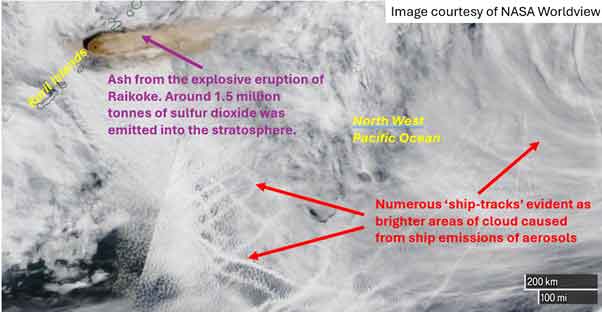
REFLECT is led by Hugh Coe from the University of Manchester, and includes contributions from the University of Cambridge and the University of Exeter. There is plentiful observational evidence from both ship-tracks and effusive volcanic eruptions that the addition of pollutant particles can increase the reflectivity, and potentially the lifetime and hence frequency of clouds. The increase in reflectivity leads to a brightening of the planet and is associated with a cooling as more sunlight is reflected away from the Earth. REFLECT is funded by the ‘Exploring Climate Cooling’ ARIA program to further our understanding of the impacts of using sea-spray to brighten clouds and also to examine the direct reflection of sunlight from the sea-salt particles themselves. Modelling will be performed at a variety of scales to examine the impacts at local, regional and global scales. These modelling activities will be informed by the development of sea-water sprayers to fine tune the resulting size distribution of sodium chloride particles; the size distribution appears to be one of the most important variables in determining whether marine cloud brightening could be effective at global scales.
AeroCOM Experiments


Aerosol Volcano Aerosol and Cloud Interaction Experiment (VolcACI)
Funded by: NERC: NE/Y000021/1).
Aerosol Volcano Aerosol and Cloud Interaction Experiment (VolcACI)
Principal Investigator: Dr Florent Malavelle and Prof Jim Haywood (University of Exeter) and George Jordan (Met Office)
External Partners: AeroCom participating modelling groups
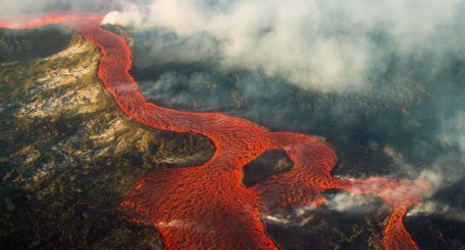
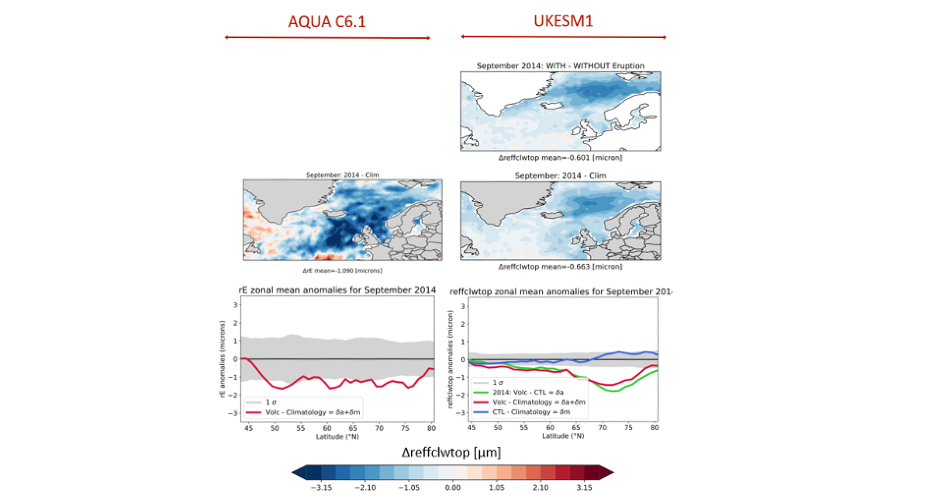
Understanding how changes in aerosol particles affect clouds remains one of the most challenging and persistent problems in atmospheric science. Aerosol-Cloud Interactions (ACI) are hard to constrain as they operate at scales much smaller than those resolved by Earth System Models (ESMs). Degassing volcanos emit huge amount of sulphur dioxide forming large-scale aerosol plumes create ideal experimental conditions for testing large scale models representation of ACI. Aerosol plumes from the Holuhraun (Iceland) and the Kilauea (Hawaii, US) degassing volcanos cover huge areas affecting low clouds in different environments. This experiment proposes to extend the protocol described in Malavelle et al., 2017 (Nature) and Yuan et al., 2011 (ACP) to investigate ACI during these two volcano most recent eruptions involving a larger group of ESMs
For further details, and for information on how to get involved, see the Aerocom webpage.
Aerosol GCM Trajectory Experiment (GCMTraj)
Principal Investigator: Dr Daniel Partridge
Co-Investigators and External Partners: Paul Kim, AeroCom participating modelling and measurement groups
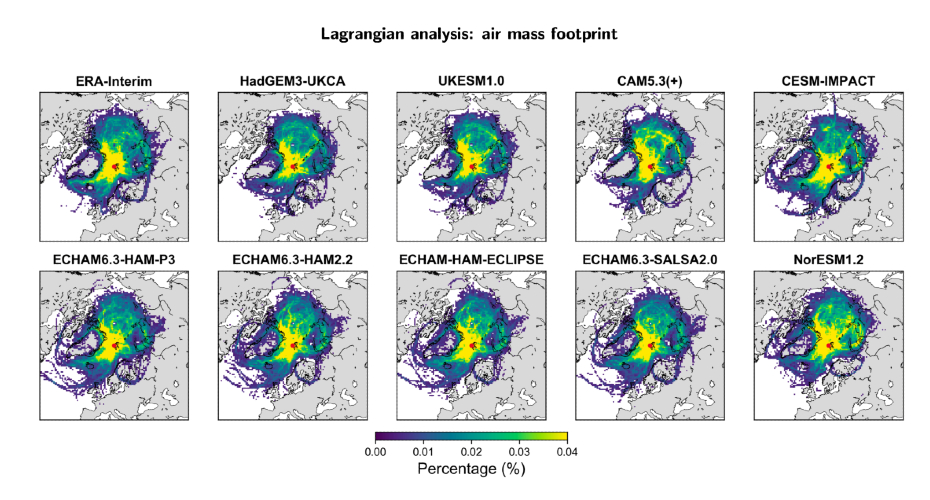
In this collaborative project as part of the international AeroCom framework we lead a multi-model evaluation against reanalysis meteorological fields combined with ground-based observations of aerosol properties in a trajectory-based Lagrangian framework.
Applying trajectory calculations to the meteorological fields from reanalysis and GCM data for the same location and time-period facilitates a highly transparent means for evaluating the discrepancies between models and observations as a function of aerosol source/sink pathways during transport to a measurement station.
This analysis technique will have wide scientific relevance as it facilitates tracing the aerosol evolution during transport to investigate the role of sources, dynamical processes and sinks on the aerosol properties in the model. For further details, and for information on how to get involved, see their dedicated webpage.
Teaching
Academics linked to the group teach on the following programmes:
We have an applied science module available for both Natural Science and Mathematics students,
Aerosols, Clouds and Climate module (NSC3009)
This module is designed to explore the atmospheric physical processes determining the role of aerosols and their interaction with clouds on the climate to provide insight on the importance in reducing current uncertainties associated with ACI for adoption of more robust adaptation and mitigation strategies.
Grand Challenges
Challenges Online is a project week, in which you will work in interdisciplinary groups with other like-minded students to design innovative solutions to real-world sustainability problems. Top academics and invited speakers will share their views and help you apply your skills and knowledge to the questions and issues you are most passionate about. You will further develop your transferable skills including teamwork, presentation skills and project planning, which will make you stand out to future employers.