BSc Neuroscience
| UCAS code | B140 |
|---|---|
| Duration | 3 years |
| Entry year | 2027 |
| Campus |
Streatham/St Luke's |
| Typical offer | A-Level: ABB |
|---|---|
|
A-Level: ABC |
| UCAS code | B141 |
|---|---|
| Duration | 4 years |
| Entry year | 2027 |
| Campus |
Streatham / St Luke's |
| Typical offer | A-Level: ABB |
|---|---|
|
A-Level: ABC |
Why study BSc Neuroscience at Exeter?
- Explore neuroscience in the context of both normal physiology and disease
- Boost your employability with an optional professional placement in the UK or abroad and gain valuable experience working as part of a leading research team
- Develop your critical-thinking by working in small groups with expert facilitators
- Gain in-demand transferrable skills in statistical methods, analysis, and effective communication across a range of media
- Take an active part in scientific discovery within our world-renowned research community, working with researchers on current research

Top 10 in the Russell Group for student satisfaction in six out of seven themes
National Student Survey 2026: Neuroscience

Small group learning
independent learning, teamwork, collaboration and communication

Professional Placement in the UK or abroad
open to all students

Research-inspired teaching
part of our research community from day one
Entry requirements for 2027 entry (typical offer)
| Qualification | Typical offer | Required subjects |
|---|---|---|
| A-Level | ABB | Grade B in two GCE A level science subjects* |
| IB | 32/655 | HL 5 in two Science subjects. |
| BTEC | DDM | Applicants studying a BTEC Extended Diploma will also require grade B in two GCE A level science subjects* |
| GCSE | C or 4 | English Language |
| Access to HE | 24 L3 credits at Distinction Grade and 21 L3 credits at Merit Grade. | To include 12 L3 Credits at Merit Grade in two suitable science subject areas. |
| T-Level | T-Levels not accepted | N/A |
| Contextual Offer | A-Level: ABC |
Specific subject requirements must still be achieved where stated above. Find out more about contextual offers. |
| Other accepted qualifications | ||
| English language requirements |
International students need to show they have the required level of English language to study this course. The required test scores for this course fall under Profile B2. Please visit our English language requirements page to view the required test scores and equivalencies from your country. |
|
NB General Studies is not included in any offer.
Grades advertised on each programme webpage are the typical level at which our offers are made and provide information on any specific subjects an applicant will need to have studied in order to be considered for a place on the programme. However, if we receive a large number of applications for the programme we may not be able to make an offer to all those who are predicted to achieve/have achieved grades which are in line with our typical offer. For more information on how applications are assessed and when decisions are released, please see: After you apply
*Accepted A level/AS science subjects include: Biology/Human Biology^; Chemistry; Computing; Design and Technology; Electronics; Environmental Science; Environmental Studies; Geography; Geology; Maths/Pure Maths/Further Maths^; Life and Health Sciences; Physical Education; Physics; Psychology; Science (applied); Statistics.
^If more than one of these is taken they would only count as one ‘science’.
Helping you to apply
Will there be an interview?
No – we don’t interview for this programme.
What happens next?
If you receive an offer from us, you’ll be invited to an offer-holder visit day where you can find out more about the programme from our current students and meet the academics who will be teaching you.
Course content
Our BSc in Neuroscience has been carefully designed to help you understand the human body and the world around us, using the latest ideas about biological processes in nervous tissues.
Understanding these processes better could transform healthcare and illuminate what it means to be human. To do this, we use small-group teaching throughout the course to help you develop your subject knowledge and capacity for critical thinking.
You’ll be given an introduction to neuroscience in your first year, including the practical and theoretical grounding needed to appreciate contemporary neuroscience research in context. You’ll then be able specialise your degree to your career ambitions in the following years.
If you choose the professional placement for this course, it will take place between your second and third (final) year.
Underpinning this is our commitment to research-engaged teaching. Alongside formal teaching sessions, we encourage you to take an active part in the process of scientific discovery within in our interdisciplinary community. Right from the start of your degree you’ll have the opportunity to do your own hands-on research.
You may notice changes to some of our modules over the coming months. This is because we are making space for the following:
- Minors: Future Skills Pathways - Alongside your main degree you may be eligible (depending on your course) to choose modules from another subject to broaden your skills and interests.
- Skills to Thrive built into every degree - Essential skills for your future, including communication, problem-solving, teamwork and digital confidence.
- Increased innovation and wellbeing - More room for creative learning, real-world projects and a healthier study rhythm.
Please note that the module information displayed here is subject to change.
120 credits of compulsory modules.
Compulsory modules
| Code | Module | Credits |
|---|---|---|
| Compulsory 1 | ||
| Fundamentals of Pharmacology | 15 | |
| Fundamentals of Pharmacology | 15 | |
| Introduction to Neuroscience | 15 | |
| Introduction to Neuroscience | 15 | |
| Introduction to Genetics | 15 | |
| Introduction to Genetics | 15 | |
| Medical Cell Biology | 15 | |
| Medical Cell Biology | 15 | |
| Chemistry of Life | 15 | |
| Chemistry of Life | 15 | |
| Methods in Neuroscience | 30 | |
| Methods in Neuroscience | 30 | |
| Introduction to Cognitive Neuroscience | 15 | |
| Introduction to Cognitive Neuroscience | 15 | |
CSC1012: Fundamentals of Pharmacology
This module will provide you with a broad introduction to pharmacology. You will be introduced to the physiology of selected cells, tissues, and organs in the body and how drugs modulate their function. The nature of common drug targets (receptors, enzymes, ion channels, and transporters) will be studied. You will cover the fundamental principles of pharmacokinetics (what the body does to the drug), pharmacodynamics (what the drug does to the body), and pharmacogenomics (individual gene-based responses to drugs). These concepts will be illustrated using cutting-edge examples of how drugs act on selected organ systems. This module provides the foundation from which you may progress to higher modules in Experimental Pharmacology, Pharmacogenomics and Rational Drug Design.
NEU1006: Introduction to Neuroscience
The human brain is the most complex object in the known universe. Through its function, and that of the wider nervous system, we can respond to environmental stimuli and construct hypotheses about the world around us. These hypotheses, and many other aspects of our conscious experience, may then be shared through external communication. To begin your detailed exploration of these processes, this module will introduce functional neuroanatomy, considers key features of molecular cell biology, describes synaptic transmission and plasticity, and addresses the modern methods for the exploration of cognition.
This module is mandatory for students on the BSc Neuroscience programme and optional for students on the BSc Medical Sciences and other related programmes.
Module aims:
In this module, you will be introduced to four main aspects of contemporary Neuroscience:
1. Neuroanatomy
Structure of the Nervous system
Cells of the Nervous System
Development of the Nervous System
2. Neurophysiology
Membranes
The action potential
3. Neuropharmacology
Neurotransmitter and receptor signalling
4. Synaptic function and memory
Synaptic function: pre and postsynaptic
Synaptic plasticity
Learning, memory, and behaviour
NEU1007: Introduction to Genetics
Genetics plays a key role in much of the cutting-edge research in Neuroscience. In this module you will be introduced to the key concepts in genetics, including key historic discoveries, and how our understanding of inheritance has advanced over the last 200 years. You will explore the structure and replication of DNA, and how genetic information is stored in both prokaryotic and eukaryotic cells. You will also consider how gene expression is regulated, hereditary patterns, and how population genetics and evolution have contributed to human diversity. You will also explore how naturally occurring genetic variation in humans and mutagenesis studies in model species are used to advance our understanding of neuroscience. Modern techniques in gene editing, DNA sequencing and gene discovery will be introduced, with examples from humans and other organisms.
Laboratory and computer workshops will provide hands-on experience of research methods used in genetic studies and will complement the theory of genetics covered in the lectures.
This is a core module for the first-year students on the BSc Neuroscience programme.
This module introduces you to core concepts in genetics and complements this theory with appropriate laboratory demonstrations and computer workshops. The module will explore topics including DNA structure and organisation, DNA replication, gene regulation, genetic engineering, evolution, the origins of DNA variation and hereditary patterns.
NEU1008: Medical Cell Biology
In this module you will be introduced to a variety of cell biology topics. You will learn how cells are organised, the various functions of the subcellular components, how cells receive and respond to stimuli from the surroundings, and the various fates for cells within eukaryotes such as cell division and cell death.
The principles of cell biology discussed in this module will be illustrated with appropriate human processes and disease complications using neurobiology examples where appropriate.
To complement the theory of cell biology covered in the lectures, you will also undertake laboratory practical work where you will be introduced to techniques to visualise cells, study cell dynamics and quantify experimental results.
This module is compulsory for BSc Neuroscience students.
This module introduces you to core concepts in medical cell biology and complements this theory with appropriate practical class sessions. The module will discuss topics including cell diversity, intracellular organelles, intra- and intercellular communication, responses to signalling from the outside of the cell, cell division and cell death.
The theory of various techniques used to study cell biology will be discussed to complement the laboratory practical class sessions.
NEU1009: Chemistry of Life
In this module you will be introduced to a variety of biochemistry topics. You will learn the importance of biochemistry in all living processes. The principles of biochemistry will be discussed in this module will be illustrated through references to physiological phenomena, with particular attention paid to those arising through neural mechanisms.
To complement the theory of biochemistry covered in the lectures, you will also undertake laboratory practical work where you will be introduced to techniques that cover fundamental biochemistry skills and enzyme kinetics.
This is a compulsory module for BSc Neuroscience students.
This module introduces you to core concepts in human biochemistry and complements these with appropriate practical class sessions. The module will discuss topics including structure of proteins, enzyme kinetics and metabolic pathways. The module will also provide a background to fundamental aspects of chemistry. The theory of various techniques used to study biochemistry will be discussed to complement the laboratory practical class sessions.
NEU1010: Methods in Neuroscience
This module will introduce you to essential methods and skills needed for your development as a neuroscientist. You will learn about the scientific method, from the history and philosophy of neuroscience to the contemporary research landscape. You will receive training in different aspects of experimental design, hypothesis testing, data analysis and presentation. In addition, you will be introduced to key science communication skills such as how to find and read scientific research literature, scientific writing, and presentation skills. This module will have a strong emphasis throughout on ethics, research integrity and reproducibility in science.
This is a compulsory module for BSc Neuroscience students.
This module is not suitable for non-specialist students.
This module aims to provide a foundation of key neuroscience skills. This module introduces the key principles of safe laboratory practices, experimental design and basic laboratory techniques, data handling, analysis, and presentation, and key the skills of literature searches and scientific communication. You will gain a good working knowledge of scientific writing, critical appraisal and referencing, and effective visual representation and statistical analysis of experimental data. These skills will be applied throughout your degree programme.
NEU1011: Introduction to Cognitive Neuroscience
Cognitive neuroscience seeks to uncover the neural basis of what makes us human—our ability to think, remember, perceive, and feel. In this module we will look into the brain's role in shaping core aspects of our identity, from memory and language to consciousness and decision-making. Understanding techniques like fMRI and EEG, you will learn how researchers map these human traits to specific brain functions. By linking cognitive processes to neural pathways, the module will teach you how the brain shapes who we are, offering fascinating insights into the biological causes of our thoughts, behaviours, and what sets us apart as a species.
This module will introduce you to the fascinating history and philosophy of cognitive neuroscience while exploring key methods used in the field, including neuroimaging and neuropsychological testing. You'll examine essential cognitive processes, such as memory and perception, and learn how cognitive neuroscience helps explain symptoms associated with various conditions, providing a foundation for future studies in cognitive neuroscience and clinical neuropsychology.
You will gain a solid theoretical grounding in core methods, such as fMRI and EEG, and engage with data from both patient studies and research on healthy individuals. This will allow you to understand cognitive functions and the cognitive symptoms that can arise.
Please note that the module information displayed here is subject to change.
90 credits of compulsory modules, 30 credits of optional modules.
You must choose at least two of NEU2002 Brain and Behaviour, NEU2005 Cognitive Neuroscience or NEU2004 Neuroanatomy.
Compulsory modules
| Code | Module | Credits |
|---|---|---|
| Compulsory 1 | ||
| Advanced Methods in Neuroscience | 30 | |
| Advanced Methods in Neuroscience | 30 | |
| Neural Circuits | 15 | |
| Neural Circuits | 15 | |
| Neuropharmacology | 15 | |
| Neuropharmacology | 15 | |
| Compulsory Choice 2 | ||
| Brain and Behaviour | 15 | |
| Brain and Behaviour | 15 | |
| Neuroanatomy | 15 | |
| Neuroanatomy | 15 | |
| Cognitive Neuroscience | 15 | |
| Cognitive Neuroscience | 15 | |
NEU2001: Advanced Methods in Neuroscience
Building on the skills and knowledge gained in the first year of the BSc Neuroscience programme, this module provides an opportunity to apply and further develop your research skills by participating in a series of laboratory practicals. Each of these has been designed to complement other compulsory and optional modules that take place in the second year of the BSc Neuroscience programme. Practical sessions may include analysis of rodent neurobehavioural data; electrophysiological recording; assessments of human cognitive function, and microscopy on histological sections of brain tissue. This module should prepare you well for your final year research project and optional professional training year.
This is a compulsory module for BSc Neuroscience students. This module is not suitable for non-specialist students. This module aligns with sustainable development goal (SDG)3, good health and wellbeing.
NEU2018: Neural Circuits
Neural networks are formed from massively interconnected ensembles of neurons; these connections are extensive yet remarkably selective. Deciphering the mechanistic basis of these networks holds a key to understanding the operation of nervous systems, and a means to link the neurophysiology of individual neurons to an animal's behaviour.
This module examines in detail our current understanding of neural circuits, placing in a clear contemporary context many of the cell-types and basic principles that you have already encountered. Specifically, you will consider how circuits become connected, can be studied, and underpin behaviours.
NEU1006 Introduction to Neuroscience is a pre-requisite for this module. Students in disciplines other than Neuroscience may take the module if they meet the pre-requisites.
Learning will be framed around four main themes:
1. Anatomy and physiology of neural circuits
2. Neural circuits underlying sensation and movement.
3. Neural circuits underlying perception, learning and memory.
4. Development of neural circuits
NEU2019: Neuropharmacology
In this module you will learn how altering neurotransmitter signalling in the central nervous system using drugs affects brain function. For this, you will explore how different types of neuroactive substances affect mood, perception, thinking, and behaviour. You will also learn how research drives the development of novel pharmacological therapeutics for different types of disorders affecting the central nervous system.
NEU2002: Brain and Behaviour
The brain plays a central role in regulating physiological processes and behaviour. Indeed, many types of behaviour are shaped by a drive to meet fundamental physiological needs. But how does the brain balance and prioritise the demands of these complex, and sometimes competing, needs? In this module you will begin to explore the complexity of regulating behaviour and the neural mechanisms that underpin these processes. By understanding data from a variety of model organisms, you will learn about pathways in the brain underlying learning and memory, and how these interact with other systems regulating phenomena such as mood, motivation and reward. Finally, you will consider how changes in these systems may contribute to and be impacted by disease.
This is an optional module for BSc Neuroscience students. NEU1006 Introduction to Neuroscience is a recommended pre-requisite module; however, you may have covered similar material elsewhere. If you have not studied the preliminary content, you should be able to successfully complete this module by undertaking some additional study but should discuss this further with your Academic Tutor and the Module Convener.
This module is not suitable for non-specialist students.
NEU2004: Neuroanatomy
In this module you will learn the main structural characteristics and organization of the human brain, spinal cord and peripheral nervous system. You will also learn to correlate the characteristics of these structures across animal species and will gain an understanding of the different techniques used in their study.
NEU2005: Cognitive Neuroscience
This module examines how mental processes arise from the biological functions of the brain, integrating neuroscience with psychological theory. You will engage with current research in key areas of cognitive neuroscience, including clinical topics such as neurodiversity and aphasia, as well as non-clinical applications such as education and eyewitness testimony. Throughout the module, you will develop skills in interpreting widely used cognitive neuroscience methods and findings.
This is an optional module for students studying BSc Neuroscience. This module builds on the knowledge you will have gained in Introduction to Cognitive Neuroscience (NEU1011) and Introduction to Neuroscience (NEU1006). However, you may have covered similar material elsewhere. If you have not studied the preliminary content, you should be able to successfully complete this module by undertaking some additional study, but you should discuss this further with you Academic Tutor and the Module Convenors.
This module aligns with sustainable development goal (SDG) 3, good health and wellbeing.
The overall aim of the module is to provide in-depth knowledge of core topics in cognitive neuroscience and to develop a critical understanding of widely used experimental techniques. You will strengthen your ability to analyse, evaluate, and apply cognitive neuroscience concepts across clinical and non-clinical contexts.
Optional modules
| Code | Module | Credits |
|---|---|---|
| Optional 1 | ||
| Medical Genetics | 15 | |
| Medical Genetics | 15 | |
| The Biology of Cancer | 15 | |
| The Biology of Cancer | 15 | |
| Biomedical Innovation and Entrepreneurship | 15 | |
| Biomedical Innovation and Entrepreneurship | 15 | |
| Coding for Biomedical Scientists | 15 | |
| Coding for Biomedical Scientists | 15 | |
| Diabetes: From Pathophysiology to Public Health | 15 | |
| Diabetes: From Pathophysiology to Public Health | 15 | |
| Immunology of Infectious Diseases | 15 | |
| Immunology of Infectious Diseases | 15 | |
CSC2004: Medical Genetics
Genetics influences every aspect of our growth, reproduction and health. A deep understanding of how our genes are inherited and regulated, and how genetic variants or epigenetic factors affect gene function, is crucial for understanding normal human development, and the basis of genetic diseases. Knowing how molecular pathways function and are altered by genetic variants is important to identify molecular biomarkers to monitor disease onset and progression, and define new therapies to treat disease. For example, research studies have detailed how breast cancer risk is greatly increased by the inheritance of specific BRCA1 and/or BRCA2 variants, and how some of these variants are more common in certain ethnic groups. Research has also shown that some patients with maturity-onset diabetes of the young (MODY) may transfer from insulin injections onto sulphonylurea tablets taken orally. Thus medical genetics, as practiced today, involves close scientific, clinical and patient interaction. In this module you will explore how genomic research and clinical genetic services work in close synergy to deliver modern diagnostic and clinical genetics services, and discuss some of the ethical challenges and considerations as well as patient perspectives associated with this increasingly important discipline. Genetic diseases are individually rare but in total 1 in 15 people have a rare diseases, making them vital to understand.
CSC2026: The Biology of Cancer
Despite intense research in the last 30-40 years, cancer remains a relatively frequent and debilitating disease. There are many un-answered questions on how cancers appear, evolve, and spread in the organism. As such, understanding cancer biology should be one of the priorities of the next generation of medical scientists. This module intends to take you through the basics of cancer biology, both at molecular and cellular levels.
This is an optional module if you are a student on BSc Medical Sciences, Biosciences and Flexible Honours, provided the prerequisites have been met.
The aim of the module is to gain in-depth knowledge on advances in molecular understanding of cancer cells properties. The module will be divided into two main parts: one following the concept of hallmarks of cancer (e.g inhibiting angiogenesis, blocking invasion and metastasis, reactivating apoptosis); the second part will be looking from a different angle at levels of gene expression and regulation (e.g epigenetics, circulating DNA, RNAi, miRs, splicing).
CSC2029: Biomedical Innovation and Entrepreneurship
This module introduces you to the fundamental principles of biomedical enterprise, innovation, and entrepreneurship. You will engage in real-life case studies and cultivate an entrepreneurial mindset to solve problems to create impactful solutions. This includes market validation, pitching of solutions, and preparing a business case. By working collaborative and applying design thinking, playful learning and storytelling you will gain key skills to identify problems, explore disruptions, and overcome obstacles with confidence. Whether you aspire to drive innovation within established organizations or launch your own venture, this module will prepare you to apply innovation and entrepreneurship within your future career.
CSC2030: Coding for Biomedical Scientists
In this practical module, we will introduce you to Matlab, a programme commonly used among the biomedical scientists and neuroscientists who are invested in research for carrying out analyses of complex data sets. Once you have grasped basic Matlab skills, you will learn how to apply these to specific analytical problems in science.
We assume NO prior knowledge in computer coding: we will be teaching ‘from the ground up’. Matlab will be provided and is available to download free-of-charge. This module is not suitable for students who have already taken other university modules in computer coding. Admission from non-Clinical and Biomedical Sciences-degree programmes is at the discretion of the module lead. This module is part of the Proficiency in Data Science.
Analysing large dataset is increasingly common within research in biomedical sciences and neuroscience and to do so, programming skills are essential. For example, modern recording techniques allow scientists to record the activity of hundreds of cells (e.g. neurons) at once, and the only way to fully understand and integrate these complex dataset is to write ad-hoc code to extract relevant information.
The overall aim of this module is to develop some of the fundamental skills required to analyse and model complex data sets using a straightforward programming language. You will learn basic practical coding skills in a package commonly used in Medical Sciences: Matlab.
CSC2031: Diabetes: From Pathophysiology to Public Health
This module aims to provide you with specialised knowledge and critical understanding of one of the most pressing global health challenges - Diabetes. You will explore the genetic and environmental factors influencing the onset and progression of diabetes, along with the cellular and molecular mechanisms underlying the disease. You will learn about the genetic basis of Type 1 and Type 2 diabetes, the impact of environmental factors such as diet, physical activity, obesity, viral infections and socioeconomic status. You will also explore public health strategies for diabetes prevention and management, bridging evidence-based practices with real-world applications.
The module adopts a research-inspired and inquiry-led approach to learning, encouraging you to engage with the latest scientific discoveries and advancements in diabetes research. It includes innovative assessments designed to develop both academic and professional skills, including a graphical abstract and a case study. This module will equip you with the skills for careers in biomedical research, healthcare, public health and policymaking, preparing graduates to tackle chronic diseases and improve global health outcomes.
Graduate attributes: as part of this module, you will develop the key employability skills of evidence-based decision-making and professionalism & Translational Thinking .
CSC2035: Immunology of Infectious Diseases
This module introduces the complex yet fascinating field of science known as Immunology. In this module, you will learn about the key cells and proteins that constitute the immune system, and how they work together to fight pathogens and other threats to keep us healthy. You will learn about the key pathways that result in either activation or inhibition to mount an effective immune response. The molecular mechanisms will be discussed in the context of future global challenges and historical events. This knowledge will then be applied to a variety of pathogenic organisms to see the varied and powerful mechanisms that keep us healthy and disease-free. This module provides the foundation from which you may progress to higher modules in Immunopathology, Introduction to Tropical Medicine and Global Health and Rational Drug Design.
Please note that the module information displayed here is subject to change.
75 credits of compulsory modules, 45 credits of optional modules.
Compulsory modules
| Code | Module | Credits |
|---|---|---|
| Compulsory 1 | ||
| Neuroscience Research Project | 45 | |
| Neuroscience Research Project | 45 | |
| Frontiers in Neuroscience | 30 | |
| Frontiers in Neuroscience | 30 | |
NEU3001: Neuroscience Research Project
This module offers an opportunity to draw together all your prior learning to address a key question in contemporary Neuroscience.
You may collect data first-hand in a laboratory, work with an existing dataset, or draw your information exclusively from published literature to synthesise new knowledge. In every case, success depends upon your critical appraisal and ability to communicate your insights to a range of audiences.
Students engage in one of the following project types: Experimental (including wet and dry laboratory), data analysis, systematic review, or critical review.
Experimental (including wet and dry laboratory), data analysis, and systematic review will submit a maximum 6000-word dissertation.
Critical review will submit a maximum 8000-word dissertation.
This module marks the culmination of your intellectual development as an undergraduate. As such, success in this module provides an important opportunity to showcase your knowledge and ability, thereby preparing for future employment or further study.
During this dissertation experience, you will work as part of a team, but with the intellectual independence needed to shape the project and to make your first substantive contribution to our knowledge of Neuroscience.
This module is compulsory for students studying BSc Neuroscience and for students on the BSc Medical Sciences (Neuroscience) pathway.
NEU3008: Frontiers in Neuroscience
This module focuses on the neurobiology of disorders of the nervous system. Specifically, the module explores the ways in which recent research has answered questions about the operation of the nervous system yet also poses new questions. In particular, the module highlights the potential for further progress in deciphering and repairing neural circuitry by considering some of the reasons effective treatments for many neural disorders remain elusive.
The module focuses on eight important disorders of the nervous system, utilising these to understand both pathology and normal physiology. The course is delivered by leading experts working in each of these disorders and will allow you to work with these researchers to identify key outstanding questions in neuroscience and formulate a literature review to investigate your chosen disease area. This module will equip you with the theoretical, analytical, and methodological skills necessary for postgraduate work or study in industrial or academic environments.
This is a compulsory module for final year students of the BSc Neuroscience or BSc (intercalated) Neuroscience Programme. This module aligns with sustainable development goal (SDG) 3, good health and wellbeing.
Optional modules
| Code | Module | Credits |
|---|---|---|
| Optional 1 | ||
| Pharmacogenomics | 15 | |
| Pharmacogenomics | 15 | |
| Rational Drug Design | 15 | |
| Rational Drug Design | 15 | |
| New Therapeutic Targets in Cancer | 15 | |
| New Therapeutic Targets in Cancer | 15 | |
| Science Communication | 15 | |
| Science Communication | 15 | |
| Cognitive Neuroscience | 15 | |
| Cognitive Neuroscience | 15 | |
| Psychology Applied to Health | 15 | |
| Psychology Applied to Health | 15 | |
| Neurodevelopment | 15 | |
| Neurodevelopment | 15 | |
| Neuroendocrinology | 15 | |
| Neuroendocrinology | 15 | |
| Pain, the Brain and Analgesia | 15 | |
| Pain, the Brain and Analgesia | 15 | |
| Neuroimmunology | 15 | |
| Neuroimmunology | 15 | |
Course variants
BSc Neuroscience with Professional Placement
UCAS code: B141
You can choose to, and we actively support and encourage you to, undertake a professional placement. The professional placement provides you with an excellent opportunity to gain invaluable experience of working as part of a leading research team. This gives you the chance to discover what it is like to work in a real research environment or a health intervention setting and will enhance your career prospects. You will contribute to a medical or health-related project, and may have the opportunity to attend a national or international science conference to present your research data, or co-author a research paper.
If you choose a professional placement, it will take place after your second year of study, and your degree will take four years to complete.
Why choose a professional placement?
Undertaking a professional placement will enhance your professionalism, independence and confidence; increase your subject knowledge and research skills; improve your problem-solving, team-working, leadership, communication and project management skills; and prepare you for working in a professional work environment.
How is the professional placement organised?
You apply for a professional placement during your second year of study and are supported to apply for positions with guidance from our staff. During your professional placement you are closely support by both your workplace supervisor and visiting professional placement tutor.
How do I apply?
You can apply directly to one of these options using the UCAS codes below, or you can apply to the standard BSc Neuroscience course and transfer onto the professional placement option at the end of your first year.
| Option | UCAS Code |
|---|---|
| BSc Neuroscience (standard course) | B140 |
| BSc Neuroscience with Professional Placement | B141 |
How does it affect my tuition fee?
If you spend a full year on a work placement, you will pay a reduced tuition fee of 20 per cent of the maximum fee for that year. Visit the Tuition Fees page for more information.
Fees
Tuition fees for 2027 entry
UK students: £10,050 per year
International students: £31,500 per year
Scholarships
The University of Exeter offers a wide range of scholarships to support your education, with £8 million available for international students applying to study with us in the 2027/28 academic year, including our prestigious Exeter Excellence Scholarships*. We also provide scholarships for sport, music and other achievements, alongside regional and partner awards such as The Beacon Trust. Financial support is available for students from disadvantaged backgrounds, lower income households and other under-represented groups to help them access, succeed and progress through higher education.
For more information on scholarships and other financial support, please visit our scholarships and bursaries page.
* Terms and conditions, including deadlines, apply. See our website for details.
Learning and teaching
Throughout the programme, you benefit from a careful blend of innovative and traditional teaching methods. A variety of stimulating, cutting-edge resources are also available to support your learning.
Structured small group learning sessions
In tutor-led groups of 8-12 students you will investigate key scientific concepts and systems presented in the form of triggers. The style of trigger varies week by week but will include patient-based clinical case studies, current media-worthy medical science breakthroughs and extracts from research papers.
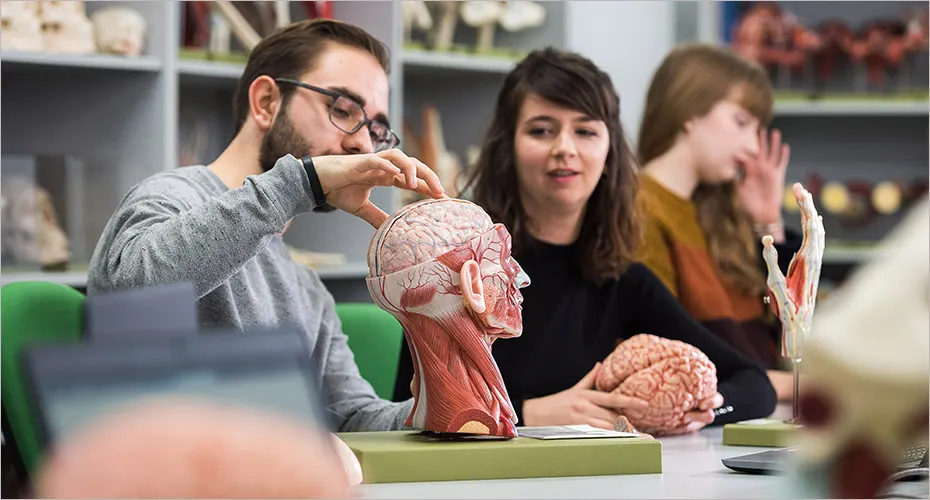
Life Sciences Resource Centre activities
You’ll be supported in your exploration of the human biomedical science that is presented in your small group sessions by the rich variety of state-of-the-art resources available in the Life Sciences Resource Centre. These resources include anatomical models, multimedia and IT resources, and a well-stocked library. Tutor-led activities will drive your engagement with selected resources in order to increase your understanding of the small group triggers.
Lectures and seminars
Large group lectures and cutting-edge research seminars delivered by academics as well as external speakers will complement your studies. Lectures may contain students from a variety of different programmes for which the lecture content is relevant.
Practical laboratory sessions
You will develop your laboratory skills in the biosciences teaching laboratory on the Streatham Campus and the new teaching lab at the St Luke’s campus, which are equipped with instruments for observational, experimental and numerical aspects of biosciences including a range of biochemical, molecular, physiological and electronic apparatus.
Online learning
Your learning will be supported by the University’s virtual learning environment. You will have individual access to electronic journals, content-rich study guides, and interactive online learning materials covering various science disciplines, formative online assessments and group discussion forums.
Assessment
Regular assessment is used to help provide you with frequent feedback, enabling you to identify your strengths, as well as areas for improvement. Feedback is provided in a number of different ways including online written feedback and self, peer, tutor or small group feedback. Assessment formats include multiple-choice tests, essays, structured practical exams, reflective essays, oral and poster presentations, scientific report writing, short-answer question tests and independent project work.
Optional modules outside of this course
Each year, if you have optional modules available, you can take up to 30 credits in a subject outside of your course. This can increase your employability and widen your intellectual horizons.
Minors: Future Skills Pathways
You can study a Future Skills Pathway alongside your main degree by choosing up to 30 credits of modules from a different subject area in your second and final years.
Your future with a Neuroscience degree

This course prioritises your development of the range of skills needed for scientific research. Critical thinking forms the core of this, with a focus on helping you to communicate effectively across a range of media. You’ll expand your numeracy and knowledge of statistical methods, with the option to specialise further in mathematics and computation.
A clear focus on these skills means that our Neuroscience course will prepare you for employment in a wide variety of careers, including:
- NHS-entry: Scientist Training Programme (STP), or Graduate Management Training Scheme (GMTS)
- Industry: Research and Development; Clinical Trials; Sales and Marketing
- Scientific Officer or Public, Private or Third Sector
Many of our graduates also go onto postgraduate study on courses including MSc Neuroscience and MPhil/PhD Neuroscience, or graduate entry to BMBS Medicine or Dentistry.
"The course at Exeter stood out for me as I liked the idea of studying modules that explored human physiology and its relation to the nervous system. After visiting Exeter on one of their open days, I was sure that this is where I wanted to spend my 3 years. The size of the city is well-suited for student living and the quality of both the teaching and their research was something that inspired me."
"After my degree, I am looking to study Medicine, as the experience I have gained from the Neuroscience course has furthered my interest in both science and healthcare.”
Hana
studying Neuroscience

Find out more about studying at Exeter








Sign-up for more information about studying with us
If you're thinking about studying BSc Neuroscience with us, signing up to our emails is the best way to discover if we’re the right university for you.