BA Modern Languages
Please note: This page is for 2026 entry. Click here for 2027 entry.
| UCAS code | R902 |
|---|---|
| Duration | 4 years |
| Entry year | 2026 |
| Campus | Streatham Campus |
| Typical offer | A-Level: ABB-BBB |
|---|---|
|
A-Level: BBC-BCC |
| UCAS code | R901 |
|---|---|
| Duration | 3 years |
| Entry year | 2026 |
| Campus | Streatham Campus |
| Typical offer | A-Level: ABB-BBB |
|---|---|
|
A-Level: BBC-BCC |
Why study BA Modern Languages at Exeter?
- Highly flexible programme which allows you to structure your studies around your interests or follow a specific career-orientated pathway.
- Choose from Chinese (Mandarin), French, German, Italian, Portuguese, Russian and Spanish.
- Study one, two or three languages from Beginners level or post A-level. Students studying beginners languages are required to study the 4-year “with International Placement” course.
- Develop practical competency, employability skills and intercultural awareness
- Engage with the culture of the societies where your language is spoken, choosing from options on linguistics, history, politics, literature, philosophy, gender studies, visual culture and film.
- Broaden your horizons by taking modules in other languages, including Japanese, Korean, British Sign Language or Arabic, or even in TESOL and other disciplines such as Business or International Relations.
- Opportunity to combine Modern Languages with other subjects as part of our Combined Honours courses.

Study 1-3 languages with 7 language options to choose from

Top 150 in world subject rankings for Modern Languages and Cultures
QS World University Subject Rankings 2025

All languages ranked top 20 in the Complete University Guide 2026

Choose our 4 year course to spend a year abroad, studying at a partner university or in employment
Studying Modern Languages isn’t just about poring over endless grammar notes! Our course is so rich and varied that you will have the fantastic opportunity to develop not only your language skills, but a knowledge and interest in the culture of your chosen languages.
If you ask any student about the course, I very much doubt you will come away without them mentioning the Year Abroad, which for many is the highlight of the four years. I still cannot quite believe that I managed to go from working as a waitress over the summer in France, to studying in Italy, then to working as a marketing assistant in Spain all within the space of a year!
Aside from massively improving my language skills and cultural knowledge, this year definitely opened my eyes to the amazing opportunities out there for language students, and certainly made me realise how well my course and the support at the University of Exeter has prepared me for more exciting opportunities like this in the future.
Kate
BA Modern Languages (French, Italian and Spanish)

Course duration
Did you know that there are both 3-year and 4-year degree programmes in Modern Languages at Exeter?
There are significant benefits of choosing the 4-year with International Placement programme, particularly in enhancing your language proficiency.
Both the 4-year and 3-year programmes offer a comprehensive and in-depth study of modern languages and cultures. However, the 4-year degree includes a valuable international placement year, giving you the opportunity to immerse yourself in the language and culture of your chosen country while either studying or working.
We know that graduates who have studied the 4-year course with a year abroad have benefitted from a range of key skills that have been vital in shaping their early careers:
- Enhanced language proficiency – Evidence shows that speaking your chosen language in the country where it is the main language helps improve proficiency significantly.
- Cultural immersion – Spending time on an international placement will give you a deeper understanding of the nation’s cultures and broaden your appreciation of individuals from different backgrounds.
- Personal and professional development – You will have the opportunity to independently build intercultural communication skills and experience a range of professional sectors. These are key skills highly valued by today’s employers.
- Competitive edge – Our graduates have gone on to work for organisations across the globe, and they tell us that gaining skills and experiences while on the international placement is the most important factor when applying for jobs after graduating.
Please also note that, if you are starting a language from beginner level, you must take the 4-year programme to ensure you develop the necessary language skills. If you are studying languages post-A-Level, it is possible to choose the 3-year programme. You can apply to both the 3- and 4-year courses via UCAS.
Entry requirements (typical offer)
| Qualification | Typical offer | Required subjects |
|---|---|---|
| A-Level | ABB-BBB | View our Language entry requirements below |
| IB | 32/655-30/555 | View our Language entry requirements below |
| BTEC | DDM | View our Language entry requirements below |
| GCSE | C or 4 | English Language |
| Access to HE | 24 L3 Credits at Distinction Grade and 21 L3 credits at Merit Grade | Depending on language level chosen (see below), 12 L3 credits in a Modern Foreign Language subject area may also be required. |
| T-Level | Distinction | Depending on language level chosen (see below), GCE A-Level in a Modern Foreign Language may also be required. |
| Contextual Offer | A-Level: BBC-BCC |
Specific subject requirements must still be achieved where stated above. Find out more about contextual offers. |
| Other accepted qualifications | ||
| English language requirements |
International students need to show they have the required level of English language to study this course. The required test scores for this course fall under Profile B1. Please visit our English language requirements page to view the required test scores and equivalencies from your country. |
|
NB General Studies is not included in any offer.
Grades advertised on each programme webpage are the typical level at which our offers are made and provide information on any specific subjects an applicant will need to have studied in order to be considered for a place on the programme. However, if we receive a large number of applications for the programme we may not be able to make an offer to all those who are predicted to achieve/have achieved grades which are in line with our typical offer. For more information on how applications are assessed and when decisions are released, please see: After you apply
Find out more about our Language entry requirements
Completing your UCAS form
When completing your UCAS form it is essential that you indicate the language(s) you want to study with us under ‘further details’ in the ‘choices’ section of the application form using the below abbreviations (separated by a space).
| French | Fren |
| Chinese (Mandarin) | Chin |
| German | Germ |
| Italian | Ital |
| Portuguese | Port |
| Russian | Russ |
| Spanish | Span |
Please note that you may only choose one language if applying to a Combined Honours degree. For more information on language requirements for our Combined Honours degrees, visit the individual pages for these programmes in the degrees list on the Modern Languages and Cultures page.
It may be possible to study further languages to a lower level of proficiency than degree level in the Language Centre, subject to demand: this is arranged on registration at Exeter.
For further information on completing your UCAS form, please visit the UCAS website.
Course content
The Modern Languages degree programme is made up of compulsory (core) and optional modules, which are worth 15 or 30 credits each, worth a total of 120 credits each year. Take up to 30 credits outside the department through modularity. Students studying beginners languages must take the 4-year “with International Placement” course.
You may notice changes to some of our modules over the coming months. This is because we are making space for the following:
- Minors: Future Skills Pathways - Alongside your main degree you may be eligible (depending on your course) to choose modules from another subject to broaden your skills and interests.
- Skills to Thrive built into every degree - Essential skills for your future, including communication, problem-solving, teamwork and digital confidence.
- Increased innovation and wellbeing - More room for creative learning, real-world projects and a healthier study rhythm.
The modules below provide examples of what you can expect to learn on this degree course based on recent academic teaching. The precise modules available to you in future years may vary depending on staff availability and research interests, new topics of study, timetabling and student demand.
Please note that the module information displayed here is subject to change.
Subject to choosing 120 credits for the stage overall, you must:
Select one, two, or three compulsory language modules depending on your UCAS offer, totalling 30-90 credits.
Select a further 30-90 optional credits; you may select a maximum of 30 credits of SML-coded modules for the year. Please note that certain modules may only be available to students on Single Honours programmes, or to students who have taken a particular language module. This information will be given in the pre-requisites or co-requisites section of the relevant module descriptor.
Compulsory modules
| Code | Module | Credits |
|---|---|---|
| Compulsory Choice Language Modules 1 | ||
| French Language | 30 | |
| French Language for Beginners | 30 | |
| German Language | 30 | |
| German Language for Beginners | 30 | |
| Italian Language | 30 | |
| Italian Language for Beginners | 30 | |
| Beginners Chinese | 30 | |
| Portuguese Language for Beginners | 30 | |
| Contemporary Russian Written and Oral | 30 | |
| Russian Language for Beginners | 30 | |
| Spanish Language | 30 | |
| Spanish Language for Beginners | 30 | |
MLF1001: French Language
This module will allow you to consolidate and develop your language skills in French. You will work on the key skills of language learning - reading, writing, speaking and listening - through a variety of exercises. You will develop your understanding of French grammar and deepen your knowledge of French society and culture. The material for study is drawn from a range of sources, including language textbooks, recent articles, and a short novel.
This module is designed for students with an A-level in French language or equivalent, and who wish to acquire the foundation for studying French at Stage Two and beyond .
- To reinforce and extend the level of the four skills - listening, reading, speaking and writing - achieved at A-level.
- To consolidate your understanding of French grammar, and facilitate your application of this to written and oral tasks.
- To increase your level of comprehension of written and spoken French.
- To enhance your ability to communicate in accurate French, in a clear and structured manner.
- To expand your vocabulary in French.
MLF1052: French Language for Beginners
Spoken by more than 270 million people globally, French is a crucial asset: it is one of the most common languages in many domains (business, the Internet, media, international organisations), and the second most learned language in the world. The MLF1052 module will help you become part of this community, as it covers the essentials of the French language and culture. You will follow a structured programme and dynamic classes, and will develop a better awareness of the range of strategies available to learn a language. The sessions are conducted in the target language, so you become familiarised with the language and immerse yourself in the learning process.
This module can be taken even if you have no prior knowledge of French, but it is also available for those who have learned French up to an appropriate level.
This intensive language module aims to provide you with a practical working knowledge of the language, enabling you to acquire the skills to communicate effectively in writing and verbally, so that you can express opinions, and compare and contrast viewpoints. The module aims to train you in all four language skills (reading, writing, speaking, listening comprehension) as well as to equip you with the required grammatical knowledge and vocabulary to deal with a range of topics and situations. It aims to bring beginners and GCSE entrants to the equivalent A-level standard (B1 of the CEFR).
MLG1001: German Language
This module is designed to offer you the chance to practise all four skills of German language learning - reading, writing, speaking and listening - through a wide variety of exercises. You will have the opportunity to practise translations, both into German and English, write short essays, give presentations and take part in debates on a range of topics. The module also aims to consolidate and extend your understanding of German grammar through weekly lectures, class practice and online exercises. Through the study and discussion of texts and videos, you will be able to deepen your understanding of German and Austrian history and culture and contemporary life in German-speaking countries. The module uses structured learning materials which have been tailor-made for first-year undergraduate students of German and which include a wide range of independent online study materials.
This module is designed for students who have an A-level in German language, or equivalent, and who wish to acquire the foundation for studying German at Stage 2 and beyond.
The module aims to:
MLG1052: German Language for Beginners
The importance of Germany within a European and global context is well understood: it is a major economic power with considerable political influence. This module is designed to provide you with the skills to write and speak German as well as to train you in reading and listening comprehension, so enhancing your employability, but also giving you access to a culture that is rich in literature and art, music and film.
This module can be taken by students who have no prior knowledge of German, but it is also available for those who have learned German up to GCSE level or equivalent.
This intensive language module aims to give you a practical working knowledge of the language, enabling you to acquire the skills to communicate effectively in writing and verbally, so that you can express opinions, and compare and contrast viewpoints. The module aims to train you in all four language skills (reading, writing, speaking, listening comprehension) as well as to equip you with the required grammatical knowledge and vocabulary to deal with a range of topics and situations. The module aims to give beginners and GCSE entrants a firm grounding in the German language, which will enable you to continue your studies of the language at higher levels.
MLI1001: Italian Language
This module gives you the opportunity to further develop your Italian language skills through a balanced programme of reading, writing, listening comprehension, translation, and speaking. You will study a range of grammatical features, always explored in context to support accurate and effective communication. Particular emphasis is placed on expanding your vocabulary, developing awareness of linguistic variation in contemporary Italian, and building an understanding of Italian-speaking cultural contexts. Through engagement with a variety of authentic materials, you will also begin to develop intercultural awareness, considering how language use reflects social, cultural, and regional diversity in Italy and the wider Italian-speaking world.
The module is intended for students who have completed A-level Italian or an equivalent qualification and who wish to build a strong foundation for studying Italian at Level 5 and beyond.
MLI1052: Italian Language for Beginners
This module covers the essentials of the Italian language in a dynamic and up to date fashion. You will follow a structured programme involving both individual learning and working with others in small groups, drawing on previous experiences of language learning to develop a better awareness of the range of learning strategies available, and of which work best for you. The sessions will be conducted in the target language from the start in order to encourage you to become familiarised with the language and immerse yourself as much as possible in the learning process.
This intensive language module aims to elevate beginners and GCSE entrants to A-level standard or beyond by the start of the second year of study. The module includes writing activities, comprehension and in-context grammar exercises, and oral practice with native speakers.
MLM1052: Beginners Chinese
Beginners Chinese is designed for people with little or no previous knowledge of Mandarin Chinese, and provides an introduction to the basics of this language and culture within the context of typical, everyday situations.
You will acquire a solid foundation of the basic grammatical structures of the language, which will allow you to listen, speak, read, and write at an elementary level on a variety of topics. Particular emphasis is placed on listening and speaking. You'll also learn about the culture and society in which Mandarin Chinese is spoken to develop awareness of the language's background and context
The module is intended for students who have little or no previous knowledge of Mandarin Chinese and offers an introduction to Mandarin Chinese language and culture. This module is broadly equivalent to A1 / A2 Basic User level of the Common European Framework and aims to:
- Provide students with a solid foundation of the basic grammatical structures of the target language thus enabling them to communicate effectively across the four key language skills (listening, speaking, reading and writing) at an elementary level on a variety of general topics
- Enable participants to give and understand information and to achieve a confident elementary level of communicative competence in everyday situations
- Provide an introduction to the customs, culture and society of the regions/countries in which the languages are spoken and to develop student awareness of the general social and cultural background of the language
MLP1052: Portuguese Language for Beginners
Portuguese is spoken worldwide by around 200 million people in four continents. You will learn the language ab initio acquiring all the basic language skills - reading, writing, speaking and listening - at A1/low A2 level (European Framework of Languages).
You will also become familiar with the two standardised varieties (European and Brazilian Portuguese).
This module can also be taken by Level 2 Modern Languages students who wish to start a second or third language in their second year.
This intensive language module aims to allow you to:
- Develop a practical working knowledge of the language
- Acquire the skills to communicate effectively in writing and verbally - expressing opinions, contrasting and comparing viewpoints
This module aims to bring beginners and GCSE entrants to the equivalent A-level standard
MLR1001: Contemporary Russian Written and Oral
This module is designed to cover all aspects of language learning: producing Russian, both orally and in writing; you will improve your comprehension of Russian through translation of Russian texts into English; you will also gain a sound understanding of key aspects of Russian grammar. The writing and translation classes are structured around the literary text 'Dom s mezoninom', by Anton Chekhov. Every week you will read a section of the story, and classes will be based on this material. Alongside these classes you will have Russian grammar and oral classes. In this way, you will engage each week in activities designed to promote independent learning, while making sure that there is plenty of opportunity for classroom discussion and practice of essential skills.
This module is designed for students who have an A-level in Russian language, or equivalent, and who wish to acquire the foundation for studying Russian at level two and beyond.
The aims of this module are to:
- Build upon language skills previously acquired at A-level (or equivalent) and to ensure a sound grammatical and structural understanding of the principles of the contemporary Russian language
- Increase vocabulary
- Develop strategies in comprehension and vocabulary acquisition
- Build confidence in the use of written and spoken Russian
MLR1030: Russian Language for Beginners
This module covers the essentials of the Russian language. You will follow a structured programme involving both individual learning and working with others in small groups, drawing on previous experiences of language learning to develop a better awareness of the range of learning strategies available, and of which work best for you.
This module can be taken by students who have no prior knowledge of Russian, but is also suitable for those who have learned Russian up to GCSE level.
To enable you to acquire skills in speaking, understanding, reading and writing basic Russian. In completing the module successfully you will have a firm grounding in the Russian language which will enable you to continue your studies of the language at levels 2-4.
MLS1001: Spanish Language
The module provides you with the opportunity to develop your language skills in Spanish through the medium of translation, reading and listening comprehension and oral debates. The course book for this module has been chosen to incorporate the most advanced techniques in the learning of the Spanish language but in a focused and varied manner. Different grammar points will be studied throughout the course, but they will be always explored in context. The translation classes will enhance the vocabulary acquisition as the students will be able to learn the use of bilingual and monolingual dictionaries effectively and appreciate the differences of style and structure between the English and the Spanish language. In the oral classes, you will be given the opportunity to become acquainted with cultural elements of Spain and Latino America and to explore them in depth through the medium of individual presentations and debates.
This module is designed for students who have A-level or AS-level in Spanish language or equivalent, and who wish to acquire the foundation for studying Spanish at level two and beyond.
The module's aims to teach:
MLS1056: Spanish Language for Beginners
This module covers the essentials of the Spanish language in a dynamic and up to date fashion. You will follow a structured programme involving both individual learning and working with others in small groups, drawing on previous experiences of language learning to develop a better awareness of the range of learning strategies available, and of which work best for you. The sessions will be conducted in Spanish from the start in order to encourage you to become familiarised with the language and immerse yourself as much as possible in the learning process. You will be given the learning tools to follow the class and your materials will reinforce this approach.
The module is an intensive language course which aims to bring beginners and GCSE entrants to A-level standard or beyond by the start of the second year of study.
The module includes grammar exercises; translation; composition; listening and reading comprehension and oral classes with a native speaker.
Optional modules
| Code | Module | Credits |
|---|---|---|
| French Optional Modules | ||
| The Making of Modern France | 15 | |
| The Devil is in the Detail: An Introduction to the Short Story in French | 15 | |
| The French Language, Present and Past | 15 | |
| An Introduction to French Thought | 15 | |
| German Optional Modules | ||
| A Nation Remembers: Issues in German Cultural Memory | 15 | |
| Turning Points in German History 1200 - 2000 | 15 | |
| Russian Optional Modules | ||
| An Emotional Experience: Russian Literature and the Expression of Feeling | 15 | |
| Russia: Empire and Identity | 15 | |
| Chinese Optional Modules | ||
| Chinese Art and the Art of Living | 15 | |
| Introduction to Asian Philosophy | 15 | |
| Italian Optional Modules | ||
| Italy Inside Out: Popular Visual Narratives about Italy | 15 | |
| A Thousand Faces: Cultures and History in 19th-Century Italy | 15 | |
| Neutral Optional Modules | ||
| Comparative Literatures and Cultures: Theories and Approaches | 15 | |
| Reading Comparatively | 15 | |
| Introduction to Film | 15 | |
| Language, Culture, International Relations | 15 | |
| Spanish beginner Optional Modules | ||
| An Introduction to the Hispanic World: Texts in Context | 15 | |
| Spanish post A-Level Optional Modules | ||
| The Making of Modern Latin America: History Through Literature and Culture | 15 | |
| An Introduction to the Literature and Film of Spain | 15 | |
MLF1017: The Making of Modern France
This team-taught module offers a wide-ranging social and political history of the French state from the medieval period onwards. Weekly lectures will focus on famous figures and events in French history - from Joan of Arc and Louis XIV to the French Revolution and the German Occupation - whilst in seminars you will use a variety of sources from literary and visual culture in order to explore these themes further. This module is also open to students studying degrees outside of French, and will therefore be taught in English.
This module will provide you with a firm foundational knowledge of French history. You will be able to draw from this in a variety of period-specific French modules offered later in your degree, some of which are convened by lecturers who will teach you on this module. It will also introduce you to a variety of media through which French cultural history can be analysed, from literary texts to paintings and sculptures.
MLF1018: The Devil is in the Detail: An Introduction to the Short Story in French
This module introduces you to a range of important writers and texts from different periods of French history, all connected by the short narrative form. In any given year we will study three or more of the texts indicated on the syllabus, exploring issues of national identity, individualism, love, desire, death, and freedom. We will look at how these themes are brought to the fore within the stylistic conventions of short form writing, and draw both formal and thematic comparisons between the texts studied to gain insight into important literary works and events from across French history.
This module aims to introduce you to a range of short stories and novellas originally written in French, distinct in their historical setting but connected in aspects of form. It analyses the ways in which short narratives can be used to make ideologically engaged or culturally meaningful comment, and identifies how this is connected to stylistic features. More generally, it seeks to increase awareness of a range of Francophone literary texts, and to consider them both within their socio-historical and cultural context and in more universal ways.
MLF1103: The French Language, Present and Past
As a student of French, you will naturally be interested in learning how the language works and has changed over time. In the phonetics part of the module, we study French speech sounds, notably their production and their representation in the Phonetic Alphabet. In the historical part of the module, we learn how French emerged as the national language of France, and how Old French differed from the modern language. The module will enhance your understanding of French, especially its pronunciation, grammar and history. A prerequisite is normally A-level French or equivalent, but the module can also be taken by students taking MLF1052: French Language for Beginners.
The aim of this module is to introduce you to the phonetics of contemporary French, to the history of French and to Old French and to lay the foundations for further linguistic study of French, in its contemporary and historical forms. It is normally a prerequisite for the module Evolution of the French Language (second year).
MLF1105: An Introduction to French Thought
In this module, you'll be introduced to French philosophy through four major thinkers, all of whom were radical visionaries: Michel de Montaigne, Marie de Gournay, René Descartes, and Simone Weil.
Montaigne's essay on the cannibals of Brazil first published in 1580 breaks with colonial thinking to argue that the indigenous people of Brazil are superior to the Europeans in all ways. Gournay's short work on the equality of men and women, published in 1622, was the first such work written by a woman - its radical perspective also speaks very directly to present-day concerns. Descartes's Discourse (1637) is a foundational work of modern Western philosophy, which tells how he rejected the educational authorities of his day to rebuild truth and knowledge from scratch and offers a method anyone may still follow, if they wish. Simone Weil's 'On the abolition of all political parties' (1943) is a radical rejection of collective thinking from a philosopher who was also an activist and a mystic.
By studying this module, you'll gain an insight into philosophical works that have changed the course of intellectual and social history. You'll also have the chance to have fun thinking for yourselves by producing your own creative and critical pieces inspired by works by French thinkers who changed the world.
MLG1014: A Nation Remembers: Issues in German Cultural Memory
Two dictatorships within the space of half a century have provided Germany with ample reason to want to forget and an equally strong imperative to remember. Rather than analysing the history of National Socialism (1933-1945) and the GDR (1949-1989), in this module you consider how a nation such as Germany remembers its past. Official forms of public commemoration (memorials and museums) are contrasted with artistic responses (film, documentary, autobiography) and with forms of private memory (such as letters, diaries, and photographs).
MLG1017: Turning Points in German History 1200 - 2000
German history is about more than National Socialism and the Berlin Wall. In approaching a more rounded understanding from the perspective of cultural studies, in this module you will use particular concepts to assess major and often formative events - be it the "Reich" and the changes in perception it underwent; the importance of revolutions and "new beginnings", for example in the course of Unification in 1871 and 1989; or the role of individuals such as Martin Luther for the German Reformation. In all cases you will scrutinize the short- and long-term impact of events and consider a variety of documents ranging from historical documents, to literature, film, souvenirs and depictions by historians. You will also explore 'iconic images' and question the links between politics and daily lives.
MLR1006: An Emotional Experience: Russian Literature and the Expression of Feeling
You will read a range of works or parts of works of Russian literature - available to you in Russian and in translation - which are concerned at least in part with the expression of emotion and mood. The module aims to get you think about how writers create mood and express feeling in literature and in particular the relationship between language and emotion.
This is a module that looks at the expression of emotion in literature and analyses how such expression is achieved. We aim to get you thinking about what it means for literature to create, express or describe emotion. What, for example, is the relationship of the author to those emotions? Does language straightforwardly express emotion, and if so, whose? We will be discussing the problems that we encounter in reading and understanding emotion in literature and thinking about the reasons why writers explore emotion in the ways that they do. The module will help you to think about how writers interrogate our experience of emotion through their works.
MLR1023: Russia: Empire and Identity
When the Soviet Union collapsed in 1991, Russia was confronted with the question of its national identity. This module considers key aspects of Russia's development from its origins to the nineteenth century, introducing you to ways of understanding Russia's unique identity. In exploring some of the models of self and other which have been used to define Russian identity, you will discover why empire has played such a dominant role in Russia's understanding of itself as a nation.
You do not need to have any knowledge of the Russian language to complete the module successfully; all materials are in English.
The module aims to:
- Familiarise you with aspects of Russia's past which have profoundly shaped its understanding of its identity
- Give you a foundation which you can build on in your study at higher levels, and will give you valuable context for developing your understanding of Russia today
- Introduce you to skills that you will need throughout your programme
- Develop your confidence in putting forward opinions and asking questions
MLM1014: Chinese Art and the Art of Living
Art and life are integrated in China. Rather than being practised exclusively by artists, traditional Chinese art was entrenched in people's daily living, a phenomenon that continues today. This module will provide hands-on experience of Chinese art such as calligraphy and painting. It will also introduce you to the diverse forms of the art of living, from architecture, gardening and fengshui to eating and drinking. Through this module you will deepen your understanding of Chinese art and the art of living in both theory and practice. There are no pre-requisites or co-requisites. This module is suitable for specialists and non-specialists and recommended for interdisciplinary pathways.
In this module, you will:
- Develop an understanding of different forms of artistic practices and the art of living in China;
- Grasp the aesthetic, social and cultural values that are associated with Chinese art and the art of living;
- Understand how Chinese art and the art of living shaped Chinese cultural sensibility and their view of a good life.
PHL1010: Introduction to Asian Philosophy
This module introduces you to some of the most important philosophical traditions of Asia: Hinduism, Buddhism, Confucianism, and Taoism. It analyzes and discusses ancient classical texts in these traditions, and looks at different conceptions of reality, selfhood, consciousness, meditation, virtue and self-cultivation.
At the end of the module, you will be familiar with major Asian philosophical traditions, their historical and social background, and their central concepts as discussed in major classical texts. You will be aware of the existence of spiritual traditions concerned with the practice of self-cultivation, and understand the relationship between meditative practices and philosophical worldviews.
MLI1016: Italy Inside Out: Popular Visual Narratives about Italy
What ideas and images come to mind when you think of Italy or Italian? In this module, you will explore some of the most influential visual narratives about Italy, produced both within the country and circulating internationally. Through films, television series, and other content available on online streaming platforms, we will examine recurring themes such as classical antiquity, romantic landscapes, glamour, crime and corruption, and the proliferation of “virtual Italies” and postmodern simulacra. You will discover why certain stereotypes about Italy remain so persistent, how they travel across borders, and how different audiences respond to them. No prior knowledge of the Italian language is required - just curiosity.
MLI1121: A Thousand Faces: Cultures and History in 19th-Century Italy
We analyse and link together aspects of recent Italian history that are generally considered in isolation by students of anthropology (what did Italians eat and drink in the past?), economics (to what extent was the battle against poverty won after unification in 1861?), social mores (what structures did families have across regions? Were local identities overly strong?) and arts (why and how did opera develop in Italy? Were arts and crafts encouraged?). This module lays the foundations of an advanced understanding of contemporary Italy, but does not require any knowledge of Italian and is also suited to non-specialist students.
SML1003: Comparative Literatures and Cultures: Theories and Approaches
This module provides the theoretical grounding and methodological tools to study comparative literature and culture. The module has a unique focus on literatures and cultures within a system of producers and consumers: we will consider the agents involved in the production of literature, film, and art, and explore cultures of reading and viewing. We will think about key topics in comparative literature such as intertextuality and genre. You will develop your translation literacy in preparation for reading and viewing in translation.
This module aims to:
- Prepare you for the study of comparative literatures and cultures with a grounding in relevant theories and methodological tools
- Develop your understanding of the multiple systems that shape the production and reception of literature and cultures
- Provoke reflection on your own attitudes to literature and culture from around the world
- Encourage independent and collaborative specialised study of selected topics and texts, developing valuable transferable skills in cultural contextualisation, textual analysis, critical thinking, and group discussion
SML1004: Reading Comparatively
In this module, you will put comparative literature into practice. Over the course of the module, we study three core themes - gender and sexuality, the environment, and migration - through a selection of extracts from texts from around the world. You will develop intercultural understanding and appreciation of the factors that shape the similarities and differences in cultural expressions over time and across borders. You will practice close reading and develop 'translation literacy', an understanding of the factors that shape the production and circulation of translated texts.
The module aims to:
- View responses to key societal issues through literature across multiple cultural contexts
- Emphasise intercultural understanding
- Develop your core skills of close reading, comparative analysis and essay writing as a foundation to a degree in Comparative Literatures and Cultures
SML1207: Introduction to Film
This module offers an engaging introduction to the study of film for students of any language background, with no prior experience of Film Studies required. You will explore a diverse range of films drawn from Italian, French, Spanish, Portuguese, Russian, German, and Irish-language cinemas. While the films themselves come from different national and cultural contexts, the module’s primary aim is to introduce you to the language of film—the shared techniques and conventions through which films tell stories and create meaning. A unifying theme throughout the module is the representation of the child, a powerful and recurring motif in global cinema that helps you draw connections across otherwise diverse films. Teaching draws on the expertise of a wide range of staff, meaning you will encounter different lecturers across the module.
This module aims to:
- introduce you to the study of film. Through a series of specialist lectures, each focussed on one film, and on a particular aspect of film-making, you will learn to analyse a number of film styles. By focussing on different aspects of film-making you will learn more about how to read a film's narrative, cinematography, and soundtrack.
- discover the importance of genre, directors, and stars in shaping a film's success. The module will enable you to develop two key skills in the study of film. It will teach you how to carry out a clip analysis, enabling you to read the language of a film in a particular clip very closely, as you learn how narrative, mise-en-scene, camerawork, editing, and soundtrack work together to create certain effects and generate possible meanings.
- teach you how to write a film essay or allow you to make and write about a video essay, in which you put together a series of clips of your choice, using the medium of film itself to reflect upon how films exert their sometimes powerful effect.
SML1208: Language, Culture, International Relations
This module provides an overview of the role that language and culture play in society and international relations. It analyses and evaluates cultural policies and practice in promoting language and culture at local, national and international levels in different countries. In this course,you will not only develop your understanding of complex political and cultural issuesbut also deepen your knowledge of languages and cultures from a diverse range of societies. There are no pre-requisites or co-requisites. This module is suitable for specialists and non-specialists and recommended for interdisciplinary pathways.
This module aims to:
- develop an understanding of notions and concepts such as culture and soft power
- broaden your intellectual experience and deepen your critical understanding of your own disciplines
- adopt an interdisciplinary approach and help you to develop a familiarity with different analytical tools and approaches
- improve critical thinking and communication skills from a practical perspective using case studies
- develop your ability to engage with and research an individual topic
- develop your ability to respond appropriately to unfamiliar cultural practices
MLS1064: An Introduction to the Hispanic World: Texts in Context
How does Hispanic culture engage with politics, society and history? What makes Hispanic culture so widely known? What can you learn from the work of acclaimed writers and directors such as Ramón J. Sender and Carlos Saura? This course introduces you to key themes and lines of enquiry relevant to modern and contemporary Hispanism through film and text. Texts may be used in translation or parallel text and films are available with subtitles. Your confidence to read in the target language will develop as the term progresses and your knowledge of the language increases.
The aim of this core module is to:
- Introduce you to a representative sample of Hispanic texts and films from a variety of genres and periods
- Acquaint you with the salient thematic emphases and motifs of key works and their essential historical background
- Familiarise you with the principal socio-cultural issues underpinning Hispanic creative work by way of preparation for the later study of more specific elements of Hispanic historical culture
MLS1066: The Making of Modern Latin America: History Through Literature and Culture
Latin America is a continent characterised by long-standing historical and cultural continuities and rich diversity. This module explores these complex dynamics and tensions by studying key aspects of Latin American history, literature and culture from conquest to contemporary times. Through the prism of texts from different media, including literature, art and film, the module examines topics relating to continental and country-specific historical and cultural experiences, such as military dictatorship, popular revolution/resistance, immigration/exile and national/ personal identity, memory, the struggle for democracy and the search for new modes of artistic expression.
This module aims to:
- Introduce you to Latin American history, literature and culture by exploring seminal historical and cultural episodes and experiences, from conquest to the present day, through a close reading of texts spanning a range of written, oral and visual media and genres
- Develop historical and cultural understanding of a possibly unfamiliar continent with deep-rooted connections with Spain and Portugal, the former colonial powers
- Encourage independent and collaborative specialised study of selected topics and texts, developing valuable transferable skills in historical/cultural contextualisation, textual analysis, critical thinking, oral discussion and team work
MLS1068: An Introduction to the Literature and Film of Spain
This course is a team-taught module. It explores some key aspects of Spanish history, culture and society from the seventeenth century to contemporary times though literature and film. You will cover a variety of significant materials relating to early-modern and modern Spain, and you will acquire skills necessary for critical analysis. The lectures will offer you an overview of key themes and the seminars will provide an opportunity for in-depth, more individualised, study.
This module aims to:
- Introduce you to Spanish history, culture and society by exploring key historical and socio-cultural developments through literature and film.
- Encourage independent and specialised study of selected topics and texts, preparing you for the formative and summative assessments, and for further study of different areas of Hispanism throughout your degree.
Please note that the module information displayed here is subject to change.
Subject to choosing 120 credits for the stage overall, you must:
Select one, two, or three compulsory language modules, totalling 30-90 credits;
Select a further 30-90 optional credits; you may select a maximum of 30 credits of either the SML-coded modules listed below for the year. Please check with the module convenor or DESE if given SML-coded modules can count towards your chosen language.
Compulsory modules
| Code | Module | Credits |
|---|---|---|
| Compulsory Choice Language Modules 1 | ||
| French Language, Written and Oral | 30 | |
| Intermediate French | 30 | |
| German Language, Written and Oral | 30 | |
| Intermediate German | 30 | |
| Italian Language, Written and Oral | 30 | |
| Italian Language | 30 | |
| Intermediate Chinese (One) | 30 | |
| Intermediate Portuguese | 30 | |
| Contemporary Russian Written and Oral I | 30 | |
| Intermediate Russian | 30 | |
| Spanish Language, Written and Oral | 30 | |
| Spanish Language (ex-beginners) | 30 | |
MLF2001: French Language, Written and Oral
You will consolidate and develop further your French reading, writing, speaking and listening skills by working with a variety of different types of written (literary, journalistic and administrative) and aural (video and audio) texts, and by participating in oral presentations and debates. Exercises, including translation tasks and reading comprehension questions, are designed to widen the range and accuracy of your vocabulary and to enhance your sociolinguistic skills (e.g. the use of appropriate register). The module will help you to deepen your knowledge of French society and culture, to develop your employability skills and to prepare for the year abroad.
The aim of the module is to:
- extend your command of reading, speaking and writing French
- consolidate your understanding of French grammar, and facilitate your application of this to written and oral tasks
- enhance your ability to communicate in accurate French, in a clear and structured manner
- increase your understanding of the nuances of the French language
- expand your vocabulary in French
MLF2152: Intermediate French
This intensive language module is designed for students who have completed MLF1052 (French Language for Beginners) or equivalent. The module aims to train you in all four language skills (reading, writing, speaking, listening comprehension) as well as translation. It will expand your grammatical knowledge of French, with a focus on more advanced grammatical structures, which you will apply to written and oral tasks. The module will also focus on equipping you with the vocabulary required to deal with a range of authentic topics and situations. Particular emphasis will be on preparing you for your year abroad in a French-speaking country.
This module consolidates and develops the language skills acquired in MLF1052 'French Language for Beginners', enabling you to communicate confidently in French through a range of written, oral, and comprehension exercises, as well as through translation exercises, covering different registers and areas of vocabulary.
The module will focus on more advanced grammatical constructions and functions, which will enable you to communicate in a wider range of communicative contexts and express your ideas in an increasingly varied and sophisticated manner.
The module also aims to prepare you for your year abroad and further your understanding of life and culture in French-speaking countries.
MLG2001: German Language, Written and Oral
The module is designed for students who studied the first-year language module (MLG1001) or possess equivalent language proficiency. It is designed to expand your vocabulary, to consolidate your understanding of grammar, and to enhance your oral, aural, reading, writing and translation skills. The module also focuses on the linguistic and cultural knowledge required for the year abroad; for example, you will learn how to write CVs and cover letters. In the oral classes, you will discuss topics that relate to contemporary life and culture in the German-speaking world and practise your aural comprehension using audio-visual exercises.
To extend the linguistic knowledge and the written, reading, oral and aural skills acquired by students in their first year and to equip students with the linguistic and cultural knowledge required for the year abroad.
MLG2052: Intermediate German
This intensive language module is designed for students who have completed MLG1052 (German Language for Beginners) or equivalent. The module aims to train you in all four language skills (reading, writing, speaking, listening comprehension) as well as translation. It will expand your grammatical knowledge of German, with a focus on more advanced grammatical structures, which you will apply to written and oral tasks. The module will also focus on equipping you with the vocabulary required to deal with a range of authentic topics and situations. Particular emphasis will be on preparing you for your year abroad in a German-speaking country.
This module consolidates and develops the language skills acquired in MLG1052 'German Language for Beginners', enabling you to communicate confidently in German through a range of written, oral, and comprehension exercises, as well as through translation exercises, covering different registers and areas of vocabulary.
The module will focus on more advanced constructions and categories, which will enable you to communicate in a wider range of communicative contexts and express their ideas in an increasingly varied and sophisticated manner.
The module also aims to prepare you for your year abroad and further your understanding of life and culture in German-speaking countries.
MLI2001: Italian Language, Written and Oral
The module is designed for those who follow the Year 1 module MLI1001 the previous year or equivalent. It will provide you with the opportunity to enhance your language skills through listening, reading, writing and speaking. You will revise uses of advanced Italian linguistic structures while continuing expanding on the knowledge of vocabulary.
This module aims to consolidate the skills acquired during the previous year, and to improve and extend your command of modern Italian, written and spoken. Emphasis will be on the consolidation and expansion of the Italian language through grammar, reading comprehension, translation into Italian and composition.
MLI2051: Italian Language
The module is designed for those who follow the Year 1 module MLI1052 the previous year or equivalent. It will provide you with the opportunity to enhance your language skills through listening and reading comprehension exercises as well as through the medium of translation in and out of Italian. The grammar classes will give you a sound understanding of the most important grammatical structures of Italian. Particular emphasis will be given in preparing you for your year abroad: looking for accommodation in Italy, the Italian university system, creating a CV as well as job interview techniques.
This module builds directly on the foundation laid by the beginners' course and is designed to achieve a good standard of spoken and written Italian.
MLM2052: Intermediate Chinese (One)
The module is appropriate for students who have completed successfully module MLM1052 Chinese Beginners or have an equivalent qualification. You will be given a solid foundation of the basic grammatical structures of the language, which will allow you to listen, speak, read, and write at an intermediate level on a variety of topics. You will also learn about the Chinese culture and customs in which Mandarin Chinese is spoken in order to develop the awareness of the language's background and context.
This module is between A2 Basic User and B1 Independent User of the Common European Framework and aims of this module are to:
- Consolidate the essential structures of the target language, developing both vocabulary and range of language structures thus equipping students with the linguistic tools to enable them to communicate effectively in everyday situations
- Further develop active and passive language skills, including comprehension skills in listening and reading, productive skills in speaking, and writing
- Deepen your understanding and appreciation of the customs, culture and society of the regions/countries in which the languages are spoken and to develop student awareness of the general social and cultural background of the language
MLP2052: Intermediate Portuguese
The module is designed for students who completed MLP 1052.
You will enhance your listening, speaking, writing and reading skills by being exposed to different types of texts and different registers. The module will also expand your grammatical knowledge of Portuguese, with a particular focus on more advanced grammatical structures and categories, which you will apply to written and oral tasks.
You will also further your knowledge on contemporary cultural aspects of Portuguese-speaking countries.
In addition, particular emphasis will be given in preparing students for their year abroad: how to create your CV, write a covering letter and job interview techniques.
This course consolidates and develops the basic language skills acquired in MLP 1052, enabling students to communicate confidently in Portuguese through a range of written, oral, and comprehension exercises, as well as through integrated translation exercises, covering different registers and areas of vocabulary.
The module will focus on more advanced grammatical constructions and categories, namely the Subjunctive, which will enable students to communicate in a wider range of communicative contexts.
Finally, the module is committed to address important current affairs and cultural and social topics which are particularly relevant in the diverse Portuguese-speaking world.
MLR2001: Contemporary Russian Written and Oral I
This module is crucial in ensuring you have the skills needed to benefit from study abroad in Russia in their third year. It involves practice of aural skills, which is an essential part of study abroad preparation. In addition it aims to ensure that you have covered all aspects of Russian grammar and can apply this knowledge when tackling translation passages from Russian, and that you have enough experience of writing independently in Russian so that you are well placed to deal with the writing element in your year abroad assessment. A growing level of skill in comprehension, grammatical knowledge, and vocabulary all contribute to developing your confidence in spoken Russian.
This module can be taken by students who have successfully completed a level one Russian language module, either MLR1001 or MLR1030.
This module will enable you to:
- Build on the language skills you developed at level one
- Prepare you for study abroad in Russia in your third year
- Provide a solid foundation for advanced study of the Russian language at level three
- Cover all aspects of language learning: writing, speaking, translating written texts, and understanding spoken Russian
MLR2030: Intermediate Russian
This module will help you build on language skills acquired by taking MLR1030 (Beginners' Russian). You will cover all the Russian grammar not dealt with in the first year, and revise other important elements of grammar. The module will help you develop the skills you need for study abroad in Russia in your third year, including aural skills. Oral practice will focus on real-life situations you may encounter. You will practise writing independently in Russian to prepare you for the writing element in your year abroad assessment. Translation from Russian will enable you to develop your vocabulary and use your grammatical knowledge. A growing level of skill in comprehension, grammar, and vocabulary all contribute to developing your confidence in spoken Russian.
This module is designed for students who have successfully completed the level one Russian language module for beginners, MLR1030.
This module aims to:
- Build on the language skills you developed at level one
- Prepare you for study abroad in Russia in your third year
- Provide a solid foundation for advanced study of the Russian language at level three
- Cover all aspects of language: writing, speaking, translating written texts, and understanding spoken Russian
MLS2001: Spanish Language, Written and Oral
This course will advance your Spanish language proficiency, building on your completion of MLS1001 or an equivalent. In MLS2001, you'll sharpen your listening and reading comprehension, develop more sophisticated speaking and writing abilities, and master complex grammatical structures. Immerse yourself in contemporary Spanish and Latin American culture while expanding your practical vocabulary for living and working abroad. By the end of this course, you'll possess the advanced language tools needed to communicate confidently across diverse Spanish-speaking environments.
The aim of this module is to:
Increase your understanding of the target language in both its written and spoken forms
Improve capacity for self-expression in Spanish
Instil habits of accuracy and correctness of expression
Develop an in-depth knowledge of the uses of the Subjunctive versus the Indicative in all the subordinate clauses
Written work consists of translation from Spanish into English together with a variety of reading comprehension and compositional exercises. Oral work includes group debates, vocabulary expansion and a media project.
MLS2156: Spanish Language (ex-beginners)
The module is designed for students who completed MLS1056 or equivalent. Students will enhance their language skills through listening and reading comprehension, as well as through translation. The grammar classes will give students a sound understanding of the use of the Subjunctive in subordinate clauses as well as a complete revision of the grammatical features of the language. The oral classes will expand students' knowledge on Spanish and Latin American culture and will offer the chance to develop debating skills. In addition to this, students will expand their lexicon and will receive practical advice on their year abroad.
This module aims to:
- Increase your understanding of the Spanish in both its written and spoken forms
- Improve capacity for self-expression in Spanish
- Instil habits of accuracy and correctness of expression
- Develop an in-depth knowledge of the uses of the Subjunctive versus the Indicative in all the subordinate clauses
Written work consists of translation from Spanish into English and from English into Spanish, together with a variety of reading comprehension and compositional exercises; oral work includes a number of short presentations in Spanish, together with group debates, vocabulary expansion and clarification of grammar points where necessary.
Optional modules
| Code | Module | Credits |
|---|---|---|
| Chinese Optional Modules | ||
| Chinoiserie and Européenerie: Artistic and Vultural Exchanges between China and Europe | 15 | |
| Digital China: Popular Culture, Technology, and Society | 15 | |
| French Optional Modules | ||
| Revolutions! Art and Society in France, 1770-1830 | 15 | |
| Evolution of the French Language | 15 | |
| Intimate Spaces of the French Enlightenment | 15 | |
| Violence and Virtue: Early Modern French Theatre | 15 | |
| Subversive Texts: Baudelaire and Rachilde | 15 | |
| German Optional Modules | ||
| Berlin - Culture, History and Politics | 15 | |
| Gender, Race and Migration in 20th and 21st-century German Literature | 15 | |
| Neutral Optional Modules | ||
| Migrating Texts: Classical Reception, Adaptation, Translation | 15 | |
| Research Skills in Languages and Cultures | 15 | |
| Contemporary Latin American Cinema | 15 | |
| Multilingualism in Society | 15 | |
| Tales of Freedom, Necessity and Providence | 15 | |
| From Page to Screen: Female Detectives in Literature, Film, and Television | 15 | |
| Russian Optional Modules | ||
| Exploring Revolution: The Making of Soviet Society and Culture in the 1920s | 15 | |
| Apocalypse/Utopia: the Russian Roots of Revolution | 15 | |
| Other Shores: Exile and Emigration in Russian Literature | 15 | |
| Spanish Optional Modules | ||
| Federico Garcia Lorca: Theatre and Poetry | 15 | |
| The Latin American Short Story | 15 | |
| Catalonia Is Not Spain? Modern Catalan Culture in Context | 15 | |
| "What is Love? And Do I Need It?" An Introduction to Spanish Renaissance Love Poetry | 15 | |
| Fiction in Post-War Spain: Voices of Conformity and Subversion | 15 | |
MLM2003: Chinoiserie and Européenerie: Artistic and Vultural Exchanges between China and Europe
Living in the global world of the 21st century, we do not always recognise how exchanges between China and Europe have long been shaping the art and culture we enjoy today. This module on Chinoiserie and Européenerie will introduce you to the diverse hybrid forms of material culture and artefacts such as porcelain, interior décor, gardens, fashion and mapping in both Europe and China since the 1600s. You will learn about the fascinating stories of how hybrid forms of material culture and artefacts evolved through the processes of Chinese-European exchange. You will understand the significance of these hybridities in both personal and social contexts. No pre-requisite modules are needed.
MLM2013: Digital China: Popular Culture, Technology, and Society
This module explores how digital technologies and platforms have influenced and transformed contemporary Chinese society, popular culture, and everyday life. If you are interested in social media, digital storytelling, gaming, influencer and celebrity culture, fandom, and AI-driven creativity and entertainment, this module offers an engaging and research-informed introduction to China’s fast-changing digital landscape. You will critically examine how platforms, algorithms, and digital infrastructures shape cultural production, everyday communication, and new forms of labour and participation. A distinctive feature of this module is its practical and interactive approach. You will work with real digital materials, such as platform interfaces, online debates, promotional media, and user-generated content, and learn how to analyse them using key concepts and methods from disciplines such as cultural, media, communication, publishing, and translation studies. This module is taught in EngliAHV2026: Revolutions! Art and Society in France, 1770-1830
From the arms of David’s Horatii Brothers, raised up to swear upon their swords eternal allegiance to the fatherland, to the raised arm of Delacroix’s Liberty as she leads the people of Paris forwards into battle, revolutionary action dominated both the art and the politics of France between 1770 and 1830. Spanning the Bourbon monarchy, the Revolution of 1789, the Directory, the Consulate, the Napoleonic Empire, the Hundred Days, the Bourbon Restoration, and the Revolution of 1830, this violent period of political and cultural upheaval witnessed extraordinary transformations in art’s purpose and audience. These transformations included everything from the ‘death’ (and subsequent rebirth) of the French Academy and of history painting, to the growing influence of popular art and contemporary politics on academic work, to the increasing intermediality of Revolutionary expression, to a radical rethinking of portraiture. This course, whose major primary sources will be images and which will engage heavily in visual analysis, seeks not to trace stylistic changes in the abstract (eg. Rococo to Neoclassicism), but rather to look closely at the relationship between artistic and social change. We will consider not only political and institutional pressures upon artists but also the ways art offered shifting constructions of gender, sexuality, race, slavery, nation, and empire during this time.
MLF2012: Evolution of the French Language
As an advanced learner of French, you will be curious about the origins and history of the language. This module explores:
how historical events and political decisions shaped the destiny of the medieval dialect that has become the modern standard language;
what linguistic, especially phonetic, processes have occurred since spoken Latin, to make the sounds of French distinctive;
etymology and the borrowing of vocabulary from various languages over the centuries.
Prerequisites: a good command of French (e.g. MLF1001), and either MLF1103, or willingness to do some specified 'catch-up' work during the previous summer.
This module aims to:
explore the external (sociolinguistic) history of French and aspects of its internal (linguistic) history;
build on knowledge of the phonetics and history of French acquired on MLF1103 (or independently, via the specified 'catch-up' work);
develop your familiarity with linguistic concepts and terminology;
enhance your understanding of the role of both external socio-political and internal linguistic influences on the historical development of the French language.
MLF2066: Intimate Spaces of the French Enlightenment
This module focuses on eighteenth-century France, when privacy and private life came to have particular cultural significance. Literature, painting, interior spaces, and artefacts contain clues and give access to private worlds of the past. They enable us to understand the lives lived by individuals, households and families, as well as wider social structures, behaviours and beliefs.
We will begin with an examination of the Rococo domestic interior as a site of intimacy and eroticism. We will then consider the promotion of family values as part of civic identity in the Enlightenment period, and the ways in which these domestic ideals were problematised by artists and writers. We will conclude with an examination of Enlightenment notions of the self and the cultivation of interiority through leisure activities such as walking and reading.
MLF2070: Violence and Virtue: Early Modern French Theatre
The seventeenth century was a great age of French theatre, including the celebrated comedies of Molière and the tragedies of Racine. This module offers an overview of French theatre during this period through its three great playwrights. Our French texts transport you to Medieval Spain, highlight the influence of Italian sketch comedies, offer biting satires of French society, and culminate in ancient Greek myth. You will study bloodthirsty revenge, the place of women in patriarchal society, education and social mobility, brainwashing manipulators behind masks, and the world of gods and monsters. You will also observe changes in literary tastes, as theatregoers desensitized to violence from the Wars of Religion gave way to spectators whose fondness for linguistic eloquence and moral commentaries on their own times were strikingly modern.
You will gain a solid knowledge of three of the most decorated writers in French literature. This will allow you to acquire a firm understanding of the full range of social, linguistic and moral stakes and shifts that these plays represent. Along with a general awareness of the development of theatrical theories and codes of practice in seventeenth-century France, you will develop confidence in analysing developments in character and plot when writing on plays and wider literature.
MLF2076: Subversive Texts: Baudelaire and Rachilde
This module will give you the opportunity to study the verse and prose poems of Charles Baudelaire, one of the most well-known, well-loved, and influential French poets, and a novel by Marguerite Vallette-Eymery, otherwise known as Rachilde, a less well-known but equally extraordinary writer. Both authors, he as a proto-Modernist and she as a Decadent, were considered scandalous and subversive in their time, and both saw their work censored for alleged obscenity. Both were interested in challenging comfortable narratives of what it means to be human, and both were among the most brilliant and daring thinkers of their day.
MLG2018: Berlin - Culture, History and Politics
In the course of the 20th century the city of Berlin has been many things: a beacon of modernity, the seat of two dictatorships, a ruin, the frontier city of the Cold War, and the city that signified the Cold War's end. This module encourages you initially to explore Berlin's history, and then to explore cultural responses to its unique fate in literature, film, journalism, architecture and advertising. In particular, you'll focus on the situation after World War Two, the long-term impact of the Berlin Wall and the importance of the 1990s capital debate, and consider topics like reunification and immigration.
The module's main aims are:
- To focus on the specific fate of a German metropolis in the 20th century
- To demonstrate the impact of historical events on the city
- To illustrate key cultural aspects of Berlin, including literature, architecture, film and advertising
- To foster an awareness of the links between history, literature and culture
MLG2019: Gender, Race and Migration in 20th and 21st-century German Literature
How do experiences of gender, race and migration affect the ways in which we feel a sense of identity and belonging in this world? In this module you will explore concepts of gender, race and migration in German-language literature of the twentieth and twenty-first century to critically examine this and other questions. We will explore how transitions - from one gender to another, between languages, and across national borders - can have an impact on one's sense of self and identity. By familiarising yourself with writers who lived through political, cultural and social changes in the German-speaking world, you will debate how modern literature can give us an insight into how ideologies of race, sexuality, gender, nation and class have functioned in an important period in German history, from the German Empire to contemporary Germany.
This module is suitable for all students.
SML2001: Migrating Texts: Classical Reception, Adaptation, Translation
This module will examine different acts of textual comparison — reception, translation, adaptation — to think about how texts have been received and re-articulated differently at different periods (from ancient to contemporary). You will consider reception, adaptation and translation as overlapping but distinct practices and examine how they intersect with wider contextual questions, such as the legacies of colonialism and imperialism, nationhood, canonicity, gender, the literary market and the environmental crisis.
This module aims to increase your knowledge and understanding of how texts move between cultures, across space and time, and between genres. It will introduce you to a range of cultural productions and methods for analysing processes of reception, adaptation and translation, allowing you to practice both close textual reading and broader critical analysis of secondary material. This module also aims to develop your skills in communication, intercultural understanding and research. Through the group editorial project, you will develop your creative skills and ability to talk about culture for a non-academic audience.
SML2003: Research Skills in Languages and Cultures
This module is ideal for anyone considering a dissertation or further study - or if you just want to learn more about research. The module takes you through the process of preparing a research proposal and literature review, introduces you to key methodologies for research in languages and cultures, and embeds you within the university research community.
This module will equip you with the skills you need to design, carry out, analyse and present a research project. This includes both general skills, such as formulating a research question or understanding research ethics, and specific methodologies. The module also aims to introduce you to the research community at the university: as part of your Guided Independent Study time you will attend research seminars hosted by research centres across Humanities and Social Sciences, where researchers present their work. From both your classes and these research seminars, you will learn more about how researchers structure and present their arguments effectively.
Your research proposal can be used as the basis for your SML3030 dissertation.
SML2004: Contemporary Latin American Cinema
In this module, you will explore some of the most significant films that have emerged in Latin America since the mid-1990s, a period marked by the formation of Mercosur, the consolidation of democracy, and neoliberalism. It is designed to enable students from a wide range of disciplinary backgrounds, such as Modern Languages, English, History, Politics, and Philosophy, to engage critically with the social context and production conditions of Latin American films, as well as with critical national and transnational issues. Prior experience in film study is not necessary. The focus of the module is on how Latin American films articulate certain tropes, and how films deal with narratives of nationhood whilst simultaneously inserting themselves into a transnational dialogue. Major themes include the family unit, filmmaking practices, globalization, and genre.
The module can count towards Spanish or Portuguese in the BA Modern Languages, provided students satisfy the relevant requirements in their assessment. Students do not need to speak Portuguese or Spanish.
This module aims to enable you to:
SML2244: Multilingualism in Society
In this module you will be introduced to various aspects of multilingualism from a sociolinguistic perspective: bilingualism, diglossia, language maintenance and shift, language planning, language endangerment and death. We will focus on regional minority languages in Europe, but will also touch on minority languages elsewhere in the world. Examples from a variety of contexts will be discussed and you will be expected to explore specific case studies and data from contexts around the world according to your own programme of study and language interests/experiences. If you need credits towards a particular language, you must focus your assessment on that language.
SML2247: Tales of Freedom, Necessity and Providence
Freedom and necessity, used by philosophers as complementary or opposite concepts, have recently been studied as everyday experiences. Genevieve Lloyd did this by focussing on literary texts or by highlighting the more literary aspects of philosophical texts. You will follow her example by reading selected passages of key texts of European, North African and East Asian cultures. You can choose to develop your creativity through writing your own story inspired by these texts.
SML2248: From Page to Screen: Female Detectives in Literature, Film, and Television
In this module, you will explore international female detectives in literature, film, and television from the nineteenth century to the present, discovering how they challenge the traditionally male-dominated crime genre. You will analyse texts in their cultural, historical, and socio-political contexts, focusing on representation, power, gender, and relational dynamics. The module takes an interdisciplinary approach, combining literary, film, and cultural studies, and welcomes students from all languages and disciplines.
No prior knowledge is required, and texts are studied in target languages and/or English translation. Where appropriate, the module may be credited towards a specific language pathway. You will also benefit from flexible assessment options, choosing between a written or video essay.
In this module, you will explore key debates surrounding crime narratives, gender, and representation across international literary and screen cultures. You will gain an understanding of the historical development of the crime genre, with a particular focus on the emergence and evolution of female detectives within different national and cultural contexts.
MLR2024: Exploring Revolution: The Making of Soviet Society and Culture in the 1920s
For many people, understanding of Soviet history begins with the revolution, skates over the 1920s in sketchy detail, and then focuses on the ‘big’ topics of Stalinism, the Great Patriotic War and the Cold War. This module puts the spotlight on the key decade of the 1920s, when the Bolshevik Party and members of the new Soviet nation more widely sought to revolutionise Russian society. The module focuses on a variety of groups contributing to ideas about what this new society would be – women, intellectuals, workers, peasants – using primary and secondary sources to see the hopes, dreams, ideals and reality that revolution brought to Russians and Russians brought to revolution.
The module will help you to focus on selecting and interpreting sources relating to the 1920s – you will not need to know Russian, as we will look at them in translation. You will be provided with a source pack at the beginning of the module and will work in groups to explore questions about the 1920s in seminar discussions and presentations. Your final assessment involves two tasks: to produce a commentary on one or more primary sources used in the module demonstrating your ability to critically engage with a primary source showing how you can use it to learn about the historical topic and period; and to write an answer to an essay question based on your selection of sources.
MLR2028: Apocalypse/Utopia: the Russian Roots of Revolution
Karl Marx predicted that the first socialist revolution would happen in an advanced industrialised capitalist country; it took place instead in Russia, a largely agrarian country. This module will guide you through aspects of Russia’s pre-revolutionary history and culture which may offer some insight into the Russian roots of revolution. You will explore apocalyptic and utopian trends in Russian culture, caught between expectations of the end of the world and the creation of the Kingdom of God on earth, reading a variety of texts by Russian thinkers and writers, and draw your own conclusions on what may have helped set Russia on course for revolution, and how far these influences may be seen as uniquely Russian.
You do not need any knowledge of Russian to take this module; texts will be provided in both Russian and in English translation.
MLR2029: Other Shores: Exile and Emigration in Russian Literature
From the 19th century to the present day, political repression in Russia has forced writers, artists, and philosophers into exile abroad, where they formed distinctive, long-lasting creative communities known collectively as 'Russia Abroad'. The twentieth century saw repeated 'waves' of emigration from Russia and the Soviet Union in the wake of world war and civil war, sending some of Russia's greatest artists and writers into lifelong exile in European and American cities, where they founded Russian-language newspapers and publishers and tried to keep pre-revolutionary Russian culture alive on their own terms, in hope of restoration one day. Through this module, you will meet (and read in translation) some of the many gifted figures from this period, including the globally famous novelist Vladimir Nabokov; the taxi-driving Gaito Gazdanov and his mystery fiction; Nadezhda Teffi, treasured for her funny, bittersweet short stories; and the Nobel Prize-winning poet, Joseph Brodsky. You wiMLS2045: Federico Garcia Lorca: Theatre and Poetry
Federico García Lorca (1898-1936) isSpain's most universal poet and playwright. Very much liked by Anglo-American audiences and widely taught in UK schools and universities, interest in Lorca's life and work never fades. You will examine some of his most famous plays and poems, using music and art to gain a deep understanding of the universality of his work. You will establish links between his works and popular culture, queer studies and gender studies and you will be able to discuss at length pertinent aspects of his life and work in relation to Spanish history and culture.
This module aims to:
- Establish links between Lorca's work as a playwright and his work as a poet
- Use music, image and text to discuss dramatic and poetic form and content
- Examine the influence of psychoanalytical concepts such as homosexual panic on Lorca
- Investigate artistic tendencies such as cubism in the work of Spain's greatest modern playwright and poet
- Discuss is the way in which Lorca dealt with character and the self
- Discuss central themes such as the ignorance/repression of the body and the silence and discourse generated around it
- Analyse works including Lorca's tragedies La casa de Bernarda Alba, Yerma and Bodas de Sangre as well as poems from Romancero gitano and Poeta en Nueva York
MLS2061: The Latin American Short Story
This module explores recurrent themes and narrative strategies relating to the modern Latin American short story. It seeks to develop an understanding of this genre through close readings of chosen texts and cultural contexts, including those of Europe and North America where the short story and related genres, such as the Gothic and detective fiction, flourished from the mid-nineteenth century. The module encourages critical thinking about the ways in which Latin American writers employ the short story and other literary forms, such as the Fantastic, to raise questions about the nature of identity, reality, memory, and the 'liminal', in a bid to negotiate a divided sense of self, and social and political divisions in their respective countries. It offers a valuable opportunity for independent, critical study of selected texts, themes and genres, preparing you for formative and summative assessments, and for studying Latin American culture and society on other departmental modules. The module also helps to develop important transferable skills, such as an ability for independent, analytical and critical thinking, clear oral and written communication, and working collaboratively as part of a team.
MLS2070: Catalonia Is Not Spain? Modern Catalan Culture in Context
If you travel to Catalonia, you will see graffiti everywhere proclaiming (in English) that 'Catalonia is not Spain'. In this module, you will study modern representations of Catalan identity - film, sport, literature, language its political institutions and more - to discover what it is that makes Catalonia different, and the history behind these differences. You will also study how Catalonia is portrayed outside its borders, primarily in Spain, as well as the UK.
No knowledge of Catalan is required for this module; where short Catalan resources are used, you will be provided with an English and Spanish translation.
The module aims to allow students to:
- Understand modern Catalan culture from the point of view of constructing Catalan identity
- Analyse a range of resources (academic texts, written press, film, television and radio)
- Develop an interrogative and comparative approach to texts in general, and specifically with a view to understanding portrayals of cultural identity
- Provide a research-led and interdisciplinary approach, allowing students to develop a range of interests through appropriate research skills and methodologies
MLS2158: "What is Love? And Do I Need It?" An Introduction to Spanish Renaissance Love Poetry
That Spain's literary Renaissance, or her 'Golden Age', is reckoned by many critics to begin in 1543, with the publication of the lyric poetry of Juan Boscán and Garcilaso de la Vega, is an indication of the importance and influence of love poetry in the most dynamic period of Spain's artistic and cultural history. In this module, you will be introduced to the Spanish love lyric of the sixteenth and seventeenth centuries, examining its forerunners, its development, its metrical forms—most notably the sonnet—, and its different modes, such as the Petrarchist, the satirical and the divine.
This module aims to:
- Introduce you to a significant literary tradition in the Spanish Renaissance
- Develop specialised and detailed knowledge of important texts
- Teach you to analyse and interpret representative poems from the key period of Spanish literary production, and to relate them to their cultural context
- Present you with a number of different manifestations of the same genre
MLS2160: Fiction in Post-War Spain: Voices of Conformity and Subversion
This module will explore selected literary works by Spanish authors during the post-Civil War period and beyond. You will look at the extent to which these symbolic narratives convey indirect expression of opposition during the early years of the Franco regime when censorship was strictly imposed. You will consider representations of the psyche as reflections of a disturbed and damaged nation in which social relationships have been disrupted by violence and war. You will also assess the scholarly emphasis on political readings, and consider the value of re-contextualisation.
The module aims to:
- Explore the ways in which Spanish fiction following the Civil War responded to social, political and cultural contexts
- Trace the development of the Spanish novel from the 1940s to the 1960s, with particular attention given to literary trends such as tremendismo, Objectivism, Social Realism, and the New Novel
- Examine the extent to which the literary texts of the period express conformity or resistance to dominant ideologies, as well as socio-political factors that influenced the fiction produced during the post-war period
- Assess the scholarly emphasis on political and national contexts, and consider alternative readings within a European literary and philosophical framework
Please note that the module information displayed here is subject to change.
Study/Work Abroad in Year 3
The International Placement can be one of the most rewarding and enjoyable aspects of a Modern Languages degree. It is also one of the major factors that makes languages graduates attractive to employers: negotiating the challenges of a year abroad is seen by employers as proof of adaptability, independence and resourcefulness. Students usually spend six to 15 months abroad working, studying or teaching.
By immersing yourself in the culture you study, you will not only enhance your language skills, but cultivate:
- strong intercultural understanding
- improved communication skills
- the ability to think and study in different ways
- resilience and confidence
- analytical skills and the ability to make cross-cultural comparisons
- adaptability, independence and valuable life experience
Please also note that, if you are starting a language from beginner level, you must take the four-year programme to ensure you develop the necessary language skills. If you are studying languages post-A level, it is possible to choose the three-year programme. You can apply to both the three and four-year courses via UCAS.
Please note that the module information displayed here is subject to change.
Subject to choosing 120 credits for the stage overall, you must:
Select one, two, or three compulsory language modules, totalling 30-90 credits;
Select a further 30-90 optional credits; you may select a maximum of 30 credits of SML-coded modules listed below for the year. Please check with the module convenor or DESE if modules in the Modern Languages options list can count towards your chosen language.
Compulsory modules
| Code | Module | Credits |
|---|---|---|
| Compulsory Choice Language Modules 1 | ||
| Advanced French Language Skills | 30 | |
| Advanced German Language Skills | 30 | |
| Advanced Italian Language Skills | 30 | |
| Advanced Chinese Language Skills | 30 | |
| Advanced Portuguese Language Skills | 30 | |
| Advanced Russian Language Skills | 30 | |
| Advanced Spanish Language Skills | 30 | |
MLF3111: Advanced French Language Skills
MLF3111 gives you the opportunity to develop your language skills to a very high level, while enhancing your understanding of modern and contemporary France. Translation work (in both directions) enables you to hone your skills as high-level bilinguals, and to develop further your command of grammar and lexis. Written Communication Skills are taught by Francophone staff, and train you to produce high-quality résumés and essays, while the Oral classes focus on developing your speaking skills further, particularly in presenting ideas and arguments, and engaging in debate. The Written and Oral classes focus on various engaging topics related to contemporary France.
The module aims to:
- extend your command of French vocabulary, grammar, syntax and idiom and to increase your understanding of the nuances of the French language through the medium of translation.
- enhance your ability to communicate, in a clear and structured manner, ideas of a complex and abstract nature, both in written and oral form.
MLG3111: Advanced German Language Skills
This module builds upon MLG2001 (or equivalent) and the year abroad. Guided by the module tutors you will learn to fine-tune your translation skills; develop your vocabulary; consolidate your knowledge of German grammar; advance your intercultural skills; and increase your fluency in oral German. These skills not only form part of the development of a high standard in using the German language but also reflect some of the skills sought after by employers.
The module aims to:
- develop a high level of skill in written translation between German and English, English and German and in composition in German.
- develop fluency and expressiveness in oral German.
MLI3111: Advanced Italian Language Skills
This module is for students who have successfully completed one of the second-year Italian-language modules (MLI2001 or MLI2051). You are now given the opportunity to further improve your knowledge of, and your communicative competence in, Italian through a wide range of essential activities (writing practice, translation from and into Italian, grammar reviews, conversations and presentations in Italian) and a few recommended activities designed to satisfy more individual needs. You are expected to achieve a high level of grammatical accuracy, to comfortably use idiomatic structures, and to broaden your knowledge of vocabulary across different thematic areas.
This module aims to enable you to reach a higher level of proficiency in modern Italian, written and spoken, with emphasis on a variety of styles. When appropriate, classes will be conducted in Italian.
MLM3111: Advanced Chinese Language Skills
This module aims to further improve your knowledge of, and your communicative competence in, Chinese through a wide range of essential activities (conversations and presentations, translation from and into the target language, writing practice, and grammar reviews). A variety of materials (e.g. news, government documents, business letters, fiction and proses) will be used in class to expose you to an authentic China from different perspectives and enhance your understanding of the structure and function of Chinese language in different settings. In order to take this module you should have successfully completed your 'Year Abroad' in China or equivalent.
The module aims to:
- Help you further improve your knowledge of Chinese language and related cultural knowledge
- Consolidate your listening, speaking, writing and reading skills
- Develop your translation and other practical skills that are relevant to workplaces by engaging with texts in a wide range of styles and topics
MLP3111: Advanced Portuguese Language Skills
The module is designed for students who have completed the year 2 'Intermediate Portuguese' module (MLP2052), and who wish to achieve proficiency in the written, aural and oral use of the Portuguese language. You will advance your Portuguese language skills through translation from and into the target language, as well as through working with different genres and styles of writing. Oral classes will improve your language skills as well as expand the range of your cultural knowledge of the Portuguese speaking world.
This module aims to
- Build on linguistic competence developed during the Year Abroad
- Promote confidence in communicating in Portuguese through a range of written, oral, comprehension and translation exercises, covering different registers and areas of vocabulary
- Enhance and develop skills in the translation of a variety of texts from and into the target language
- Revise grammatical structures and expand the range of expression, including idiomatic usage in the target language
- Develop oral and aural skills to an advanced level
- Boost grammatical accuracy and individual expression and confidence
- Achieve levels C1/C2 (Proficient User) within the Common European Framework of References for Languages
MLR3111: Advanced Russian Language Skills
In this module you will engage with the spoken and written language, using materials on a range of topics, both in text form, and in the form of video and/or audio recordings, both to improve your comprehension of Russian, and to guide you towards producing your own written texts in Russian, as well as making contributions to oral discussion, conversation, and class presentations in Russian. The emphasis will be on achieving a high level of grammatical accuracy as well as command of idiomatic structures, and on broadening your knowledge of vocabulary across different thematic areas. You will also develop your abilities in translating Russian into accurate and idiomatic English.
The module aims to:
- Refine your Russian language skills, building on what you have learned at previous stages, and, in many cases, during your third year of study abroad
- Develop your abilities in both producing Russian (orally and in writing) and in understanding Russian (aurally and in writing)
- Develop your use of the syntax and lexis of the language by engaging with texts which cover a wide range of topics and styles
MLS3111: Advanced Spanish Language Skills
The module is designed for students who have completed MLS2001, or MLS2156 plus a placement year in Spain, or equivalent. It will provide you with the opportunity to enhance your language skills through translation from and into Spanish as well as through working with different genres and styles of writing. There will be an introduction to different journalistic forms such as interviews and leading articles, as well as the chance to write speeches. The oral classes will continue expanding the knowledge of contemporary Spanish and Latin American culture, develop further their intercultural competence and enable them discuss relevant topics to advance future career developments. The aim will be to expand the range and accuracy of expression in written and oral form, in order to attain proficiency in the use of the language.
The module aims to:
Optional modules
| Code | Module | Credits |
|---|---|---|
| Chinese Optional Modules | ||
| The Place of Meaning: Gardens in Asia and Europe | 15 | |
| Introduction to Modern Chinese Literature | 15 | |
| China through the Lens: Cultural Translation and Self-Presentation | 15 | |
| French Optional Modules | ||
| First-Person Outsiders in Modern French Literature | 15 | |
| Philosophers, Prophets and Mystics in French Culture | 15 | |
| Sex, Subversion and Censorship: Libertine Literature in Seventeenth-Century France | 15 | |
| French Sociolinguistics and Dialectology | 15 | |
| German Optional Modules | ||
| Dictatorships on Display: History Exhibitions in Germany and Austria | 15 | |
| Italian Optional Modules | ||
| Understanding Space in Renaissance Italy | 15 | |
| Neutral Optional Modules | ||
| Through the Language Lens: the Relationship between Language, Culture and the Mind | 15 | |
| Corporate Language and Communication: When Sharks Work with Dolphins | 15 | |
| Extended Dissertation | 30 | |
| Green Matters in Modern Languages and Cultures | 15 | |
| Transcultural Devon: Creating, Analysing and Subtitling Interviews in the Context of Migration | 15 | |
| Migration and Multilingualism | 15 | |
| Migration in World Cinema | 15 | |
| Aliens Abroad: Science Fiction in Global Literature | 15 | |
| Russian Optional Modules | ||
| Apocalypse/Utopia: The Russian Roots of Revolution | 15 | |
| Other Shores: Exile and Emigration in Russian Literature | 15 | |
| Exploring Revolution: The Making of Soviet Society and Culture in the 1920s | 15 | |
| Spanish Optional Modules | ||
| Women and Feminism in 20th Century Spain | 15 | |
| The Chilean Road to Socialism (1970-1973): What Happened and Why? Elements for a Debate | 15 | |
| "What is Love? And Do I Need It?" An Introduction to Spanish Renaissance Love Poetry | 15 | |
| Spanish Modernists: Narratives of Identity, Gender and Nation | 15 | |
| Advanced Translation Skills | 15 | |
AHV3021: The Place of Meaning: Gardens in Asia and Europe
Gardens are commonly known as places of leisure and recreation. This module, however, reveals the relatively unknown, fascinating cultural meanings of gardens in Europe and Asia. You will discover the gardens not only as the spatial matrix where the physical environment and cultural meanings interrelate and reciprocate, but also as media that trigger their users into performance with personal and social implications. You will conduct in-depth reading and analysis of images and texts. While this module can count towards Chinese credits, it is suitable for specialists and non-specialists. The field trips may incur a small extra cost.
MLM3008: Introduction to Modern Chinese Literature
This module gives you the chance to explore the major writers and works of Chinese literature from the twentieth century to the present, including fiction, prose, poetry and film. You will study these works from mainland China in their relevant literary, socio-political and cultural contexts (including Western influences). You will be able to explore and understand how Chinese writers and filmmakers reconstructed modern literature in relation to China's nation-building process. All texts selected for study are available in English being translations of Chinese originals.
No prior knowledge of Chinese is assumed or required. This module is taught in English and is designed both for non-Chinese speakers and native Chinese speakers.
The module aims to enable you to:
- Gain an understanding of Chinese literary and political history from The Republic of China (1912-1949) and The People's Republic of China (1949-present).
- Gain a detailed appreciation of the key literary works including the most influential feminist writers, who made Chinese modern literature with a humanistic spirit.
- Explore critical concepts in selected famous masterpieces of literary scholarship.
- Acquire skills to appreciate and analyse intertextual content.
- Acquire an understanding of approaches to literary adaptation into other mediums.
MLM3009: China through the Lens: Cultural Translation and Self-Presentation
This module explores how film defines and shapes our understanding of Chinese history and culture. With examples of films from different periods and locations (including, for example, mainland China, Taiwan and Hong Kong), it examines a range of issues related to Chinese politics, cultural heritage, gender and sexuality, modernisation, urbanisation and environmental concerns. This module will allow students to expand their critical understanding of Chinese culture while reflecting on how it is (re)mediated through the moving image.
All films screened in this module have been dubbed or subtitled in English; therefore, knowledge of Chinese language is not required.
The aim of this module is to:
- Develop students' understanding of the role of Chinese film and media in the construction and mediation of Chinese identity
- Combine approaches from film, anthropology, history and cultural studies to explore aspects of cultural translation as performed by Chinese cinema since the revolutionary period
- Analyse aspects of Chinese culture as mediated through film, allowing students to reflect on the ways by which film represents Chinese culture to both a domestic and international audience
The module is suitable for students of film and students of Chinese studies, and may be of interest for students on a wider range of humanities programmes.
MLF3075: First-Person Outsiders in Modern French Literature
This module explores five works dating from the early 19th century to the present. All are written in the first person and from the perspective of an outsider figure, and all dramatise the relationship between self and other. The module examines the reasons why an author might choose to speak from an outsider's perspective, and what effects might be produced by this strategy. Lectures will offer an introduction to the significance given to the outsider figure in French literary history, and will discuss relevant historical, cultural, critical and theoretical frameworks for each of the primary texts. Seminars will engage in close readings and discussion of the primary texts and relevant critical texts.
MLF3078: Philosophers, Prophets and Mystics in French Culture
On the night of 23 November 1654, one of the most brilliant mathematicians and scientists of all time, Blaise Pascal, had a vision that he recorded in a short note: 'Fire - God of Abraham, God of Isaac, God of Jacob, not of the philosophers and the scholars'. This intense religious experience altered the course of Pascal's life and led him to write his celebrated Pensées . You'll study an eclectic range of texts that engage with philosophy, prophecy, and mysticism, including two wide-ranging chapters from Montaigne's Essais , Pascal, Diderot's exploration of human consciousness through dreaming, Le Rêve de d'Alembert , and selected works by the twentieth-century philosopher, activist and mystic, Simone Weil. Your studies conclude with Verne's playful yet scientifically prescient account of a manned trip to the moon, De la terre à la lune .
- To explore an eclectic range of French texts, to study how they deal with related themes.
- To develop research and critical reading skills, including an awareness of historical context.
- To gain an understanding of relevant philosophical and theological issues, as well as of debates surrounding prophecy.
MLF3079: Sex, Subversion and Censorship: Libertine Literature in Seventeenth-Century France
For many, seventeenth-century France conjures images of the sumptuous palace of Versailles, its neo-classical and baroque aesthetics, and its refined literature and performing arts. Yet to a large extent, this image is the result of a conscious attempt to sanitise le grand siècle. In this module you will have the chance to peel away this façade, to explore the more audacious and unpolished underbelly of the seventeenth century through 'libertine' literature, and to be taught by a research specialist in this field of scholarship. Through pornographic poetry, musings on Nature and the meaning of life, double lives lived through covert letters, daring satires of religion on stage, and the secret diary of an intellectual who pushed scientific enquiry to the brink of depravity, this module presents a less traditional and ultimately more human seventeenth century that has often been consigned to the margins of literary history. As well as society and thought of the time, you will study a range of themes that you may find surprisingly modern, and learn about the strategies used by free-thinking authors in order to avoid censorship or the executioner.
MLF3082: French Sociolinguistics and Dialectology
As an advanced user of French, you may have noticed differences in people’s speech according to their regional or social origin. This module offers an opportunity to examine in detail accent variation in some of the regional and social dialects of mainland France, as well as current trends in the pronunciation of French, using detailed phonetic transcriptions. We also consider the background of French regional languages and dialects, language ideologies and attitudes, and ongoing standardisation processes. The evolving theories and methods of Sociolinguistics and Dialectology provide a framework for the study of these topics. The module will develop further your familiarity with linguistic concepts and terminology. It will also enhance your understanding of the French language, in its cultural and historical context, and of language in society more generally.
Prerequisites: a good command of French (e.g. MLF2001, or MLF2152 + Year Abroad), and either previous study of French linguistics, or willingness to do some background reading in the preceding summer. (Contact z.c.boughton@ex.ac.uk for details.)
MLG3036: Dictatorships on Display: History Exhibitions in Germany and Austria
This module allows you to explore areas of German and Austrian history - National Socialism, Jewish culture, and East Germany - through a study of objects rather than the more conventional documents. While the horrors of dictatorship and their difficult legacies form the background to the exhibitions discussed, the module also celebrates the creativity, professionalism, and community activitism which go into creating history exhibitions in Germany and Austria today. You can come to the module with different backgrounds and interests: German studies, history, cultural memory, museum or heritage studies, visual arts, or Holocaust studies. It is not necessary to have German language skills, but curiosity about Germany and Austria is a must.
The module introduces you to a range of critical methods that can be used in reading museum displays and to the role of museum objects as signifiers and agents within national memory cultures. The focus is on Germany and Austria since 1990 (and particularly since 2000). In this time, both countries have, in different ways, responded to the need to face up to the horrors of the Third Reich, while new museums of Jewish culture have begun to document Jewish life and culture before, during, and after the Holocaust. In addition, Germany has had to deal with the legacies of East German communism.
AHV3002: Understanding Space in Renaissance Italy
The course focuses on the meaning and function of space in art, architecture and urbanism in Renaissance Italy, and especially in Florence (c. 1300-1600). Space has emerged in recent scholarship on the arts in the Early Modern period as key concept for understanding the relationships between objects and their contemporary viewers. A wide range of objects, from private devotional paintings for domestic use to vast public buildings, served key functions in the fashioning of identities, familial, local and collective. Inspired in part by Henri Lefebvre's influential discussion of The Production of Space (1974), we will consider such issues as the ways that pictorial form codifies relationships within the field of a painting and with its intended viewers, and how public sculpture and monumental architecture operate in the urban public realm.
Within the framework of the 'spatial turn', this module aims to introduce you to a variety of artworks in context. We will focus on three main types of spaces:
SML3013: Through the Language Lens: the Relationship between Language, Culture and the Mind
Language encapsulates the way we experience the world. But how exactly do we construe that experience? What mechanisms are used in the categorisation process? In this module you will discover how principles and aspects of general cognition can be used to analyse the grammatical structure of language. You will also understand how the human bodily experience is a fundamental source of meaning and how it may be shaped and filtered by cultural practices.
This module aims to introduce you to a new perspective on language, i.e. the relationship between language and cognition and language and culture. The module will focus on how cognitive mechanisms like categorisation, attention and imagery are used in the production and understanding of language and how humans convey meaning through embodiment, i.e. how language conveys the human bodily experience of the world and how this may be shaped by culture. You will have the opportunity to analyse the language(s) you study according to principles of general cognition.
If you need credits towards a specific language, you must focus your assessment on that language.
SML3026: Corporate Language and Communication: When Sharks Work with Dolphins
In today's corporate world, language, discourse, and communication play a key role in navigating complex work relations. Struggles with communication in unequal work environments have serious material and symbolic consequences. This module will equip you with an understanding of how linguistic exchanges play a key role in tackling crises, conflict, and everyday inequalities in corporate language. We will examine empirical studies from sociolinguistics, applied linguistics and discourse analysis and explore concepts such as language as practice, interactional sociolinguistics, and (critical) discourse analysis to analyse spoken and written language in real life scenarios including new media to explore, for example, how individuals brand themselves in corporate settings. You do not need any prior knowledge to take this module. It is suitable for non-specialist students and recommended for interdisciplinary pathways.
The module aims to:
- Examine key theoretical frameworks such as language in use, language legitimacy, professional communication and competence, linguistic capital, language policing and rapport building in the workplace.
- Explore what corporate communication is and how you could develop ability to respond to today's competitive work environments where hierarchies intersecting with gender, ethnicity and race play a key role in linguistic delegitimization, language policing, linguistic violence, and socio-cultural problems.
- Develop tactics to navigate through linguistic injustices in the workplace with theoretical frameworks such as corporate discourse, corporate culture, language in interaction, corporate identity, labour surveillance, language ideology, language in society, humour at work, and gendered discourse in a range of contexts pertaining to today's workplace.
- Develop communicative competence, transform workplace inequalities, and provide with some tactics and strategies for employability.
SML3030: Extended Dissertation
The dissertation enables you to direct your own learning by producing a sustained critical essay on a cultural, historical, or linguistic topic within Modern Languages and Comparative Literatures and Cultures. This requires you to devise your own research questions and programme of work, and to produce a detailed bibliography, under the guidance of an academic supervisor, with a view to writing the Dissertation. You will develop in-depth knowledge of your chosen area; identify and answer appropriate, subject-specific questions; and expand your capacity for independent study, inquiry and research. You will also reflect on research methodologies and relevant critical theory.
BA Modern Languages students must refer to primary and secondary material in your target language. BA Comparative Literatures and Cultures students must write on a comparative topic.
The module aims to enable you to:
- Operate independently and responsibly and to take a positive and active role in your learning
- Devise your own research questions and to pursue these lines of inquiry
- Work under the guidance of an academic supervisor
- Produce a sustained piece of critical work
SML3041: Green Matters in Modern Languages and Cultures
Our current geological age has been termed the 'anthropocene' - an age when human activities have come to influence our environment. This team-taught, interdisciplinary module, which is suitable for all interested students, explores cultural responses to these developments over time. It considers the fundamental but at times also controversial role culture plays in pointing at challenges and opportunities; disasters and dangers; and the importance of communities in the wider context of issues such as environmental awareness, climate change, global warming and sustainability. This module provides case-studies on the history of green movements over time, raises ethical considerations in general and artistic, literary, linguistic and cinematic approaches in particular.
This module provides, by means of individual case-studies, an overview of the historical, artistic, architectural, linguistic, policy orientated, literary and cinematic developments in relation to the awareness of our environment. It gives insight into a range of global developments and informs about principal aspects of past and current debates. It fosters the kind of synoptic debate employers particularly value and it highlights the eminent importance of the Humanities in addressing these issues.
SML3042: Transcultural Devon: Creating, Analysing and Subtitling Interviews in the Context of Migration
Put your linguistic and intercultural communication skills into practice through a unique community engagement project. Alongside studying about migration and ethnography, you will learn what it feels like to migrate to the UK by interviewing a local migrant in their own language. A video of your interview, with English subtitles you produce, will contribute to a multilingual archive of stories of migration gathered in the community here in Devon. This module can be taken for specific language credits.
This module will help you to understand the experience of migration to the UK, and how people tell their stories about it in their first language. Using methods drawn from ethnography, you will design interviews to draw out those stories and develop your spoken language and broader communication and interpersonal skills through that interviewing process. You will also acquire some basic technical understanding of how to video-record interviews, and acquire subtitling skills. The module will provide you with the opportunity to engage with the local community, and to increase social cohesion and well-being by listening to and making available others' stories in their first language. Finally. you will leave a lasting legacy for future students because your interview will contribute to a digital archive: http://transculturaldevon.exeter.ac.uk/.
SML3043: Migration and Multilingualism
Around two-thirds of the world's migrant population is multilingual and due to migration a high level of linguistic diversity is now the norm in our society. In this module, you will explore the link between migration and languages, learn how migrant communities use and maintain their languages, as well as their attitudes and ideologies, through a wide variety of real-life case studies. You will learn how individual migrants or immigrant communities use their languages, how and why some languages are maintained, how the use of languages among migrants varies according to several factors such as different communicative situations, the migratory trajectory, speakers' attitudes towards the languages and shared ideologies.
You will be introduced to sociolinguistic concepts and means of analysis for the study of multilingualism in the context of migration. This module is interdisciplinary with no pre-requisites and will benefit students across language streams. If you need the module to count for credits towards a specific language, you must engage with material relevant to that language in your assessment.
SML3044: Migration in World Cinema
Transnational histories of migrants, the colonised, or refugees have been a major theme of World Cinema in the 21st century. Each national cinema portrays migration at different times in different film forms and styles. In this module you will explore how films from different nations have dealt with cinema, introducing key critical and theoretical concepts in film studies. The focus of the module is on trends in films of each country and explore recurring themes such as stereotypes, rejection, integration and diversity. It is designed to enable students from a wide range of backgrounds such as Modern Languages, English, History, Politics and Philosophy to engage critically with some key ideas concerning filmic representation of migration and its aesthetic, cultural and socio-political contexts. Prior experience of film study is not necessary.
This module can count towards Spanish, Portuguese, French, Italian, German or Russian credits providing that you engage with material in the relevant language in your assessment.
The module aims:
SML3051: Aliens Abroad: Science Fiction in Global Literature
Science fiction is a global phenomenon. Science fiction writers assimilate the challenges of modernization; express anxieties about new technology; articulate their perceptions of the world order, or frame resistance to it. This module introduces you to culturally important 20th and 21st- century science fiction from Argentina, China, France, Germany, Italy and Russia in English translation.
You will analyse the main topics of the set texts, their characters, their key scenes and to consider the role that they have had in the recent history of their cultures. You will also discuss the nature of science fiction and find a definition (if any exists) that enables us to compare and contrast the set texts. You will be familiarized with the specific challenges of modernization in China, France, Germany, Italy, Latin America, and Russia. Finally, you will be taught transferable techniques of literary analysis and socio-political contextualization.
You will read the texts in translation in their entirety; lecturers will use close readings and discussion to check that essential passages are fully understood. Lectures will identify relevant critical points, sketch in the historical, social and cultural background to the books’ plots, and form the basis for your preparation. However, you are expected to reflect on the texts and other material independently and to be able to express your personal interpretation of these texts.
MLR3025: Apocalypse/Utopia: The Russian Roots of Revolution
Contrary to Marx’s expectations, the first socialist revolution happened in Russia. This module explores the Russian roots of revolution, looking at apocalyptic and utopian trends in a culture caught between expectations of the end of the world and the creation of the Kingdom of God on earth. Analysis of texts from the 14th to the 19th century will show what may have set Russia on course for revolution, and how far these influences are uniquely Russian
You do not need any knowledge of Russian to take this module; texts will be provided in both Russian and in English translation.
The module aims to:
MLR3029: Other Shores: Exile and Emigration in Russian Literature
From the 19th century to the present day, political repression in Russia has forced writers, artists, and philosophers into exile abroad, where they formed distinctive, long-lasting creative communities known collectively as 'Russia Abroad'. The twentieth century saw repeated 'waves' of emigration from Russia and the Soviet Union in the wake of world war and civil war, sending some of Russia's greatest artists and writers into lifelong exile in European and American cities, where they founded Russian-language newspapers and publishers and tried to keep pre-revolutionary Russian culture alive on their own terms, in hope of restoration one day. Through this module, you will meet (and read in translation) some of the many gifted figures from this period, including the globally famous novelist Vladimir Nabokov; the taxi-driving Gaito Gazdanov and his mystery fiction; Nadezhda Teffi, treasured for her funny, bittersweet short stories; and the Nobel Prize-winning poet, Joseph Brodsky. You will follow them to Rome, Berlin, Paris, London, and New York. You will also learn about the brave independent journals and publishers who commissioned translations of their work, thus assuring their English-language reputation. Only a decade after the 1991 collapse of the Soviet Union, Vladimir Putin came to power in Russia: thanks to his government's repressive policies and persecution of individual authors, a new wave of emigre authors has arrived on our shores today, including the novelists Maria Stepanova and Maxim Osipov and the poet Galina Rymbu. You will discuss key works by some or all of these authors, exploring themes of memory, nostalgia, hope, feminism, and resistance.
MLR3030: Exploring Revolution: The Making of Soviet Society and Culture in the 1920s
For many people, understanding of Soviet history begins with the revolution, skates over the 1920s in sketchy detail, and then focuses on the ‘big’ topics of Stalinism, the Great Patriotic War and the Cold War. This module puts the spotlight on the key decade of the 1920s, when the Bolshevik Party and members of the new Soviet nation more widely sought to revolutionise Russian society. The module focuses on a variety of groups contributing to ideas about what this new society would be – women, intellectuals, workers, peasants – using primary and secondary sources to see the hopes, dreams, ideals and reality that revolution brought to Russians and Russians brought to revolution.MLS3037: Women and Feminism in 20th Century Spain
The twentieth-century witnessed the development of feminism as a political movement. This development is still ongoing. Feminist thought has also played an influential part in Spanish twentieth-century history. You will study the development of feminist thought and you will learn about the history of women in the most controversial century of Spanish history. A vast array of interesting sources will be used: novels, memoirs, press articles, TV and newspaper advertisements, songs, medical texts and legal texts and short film capsules. Learning about feminism and women's history will incorporate a gender perspective into your understanding of reality and will make you see Spain and Hispanism anew. The module will be taught mainly in Spanish and will have translation as a key component as well. We will be joined virtually by experts and colleagues and students from other fora
Women's role in Spanish society has changed rapidly, juggling tradition and modernity in a unique way. This module aims to:
MLS3071: The Chilean Road to Socialism (1970-1973): What Happened and Why? Elements for a Debate
This module will introduce you to one of the most controversial moments in Chile's history, the period of the Popular Unity, also known as the Chilean Road to Socialism (1970-1973). Led by Socialist president Salvador Allende, the Popular Unity government is crucial to understand not only present-day Chile, but also to the development of the political Left in Latin America and beyond. Through a series of lectures, seminars, and readings, you will gain knowledge of the necessary elements to begin an informed discussion on the forces and reasons that led to the rise and fall of Chile's experiment on a democratic, institutional path to socialism.
This module features extensive reading in Spanish, as most of the historiography has been written in that language. The module will involve engaging with Chilean Spanish to an extent.
This module aims to:
- Study the social and political causes behind Salvador Allende's election in 1970.
- Study the main historical processes in Chile from 1970 to 1973, with a focus on: the Government, the civil and military opposition, the revolutionary left, the workers' movement, and the international dimension.
- Discuss the causes behind the 1973 military coup in Chile.
- Introduce the main historiographical trends about the period.
- Discuss the concept of socialism in connection with the related concepts of revolution and reform.
- Analyse primary sources such as newspaper articles, testimonies, and documentary film.
- Discuss different subsequent representations of Allende and the Popular Unity.
MLS3073: "What is Love? And Do I Need It?" An Introduction to Spanish Renaissance Love Poetry
That Spain's literary Renaissance, or her 'Golden Age', is reckoned by many critics to begin in 1543, with the publication of the lyric poetry of Juan Boscán and Garcilaso de la Vega, is an indication of the importance and influence of love poetry in the most dynamic period of Spain's artistic and cultural history. In this module, you will be introduced to the Spanish love lyric of the sixteenth and seventeenth centuries, examining its forerunners, its development, its metrical forms—most notably the sonnet—, and its different modes, such as the Petrarchist, the burlesque and the divine.
This module aims to:
- Introduce you to a significant literary tradition in the Spanish Renaissance
- Develop specialised and detailed knowledge of important texts
- Teach you to analyse and interpret representative poems from the key period of Spanish literary production, and to relate them to their cultural context
- Present you with a number of different manifestations of the same genre
MLS3112: Spanish Modernists: Narratives of Identity, Gender and Nation
What is Modernism? On this module, you will study the ways in which Modernism manifested itself in Spanish literary fiction alongside other art forms in the early twentieth century. You will consider the ways in which Modernists engaged with the emergence at the turn of the century of new ideas about reality and perception, and powerful debates about identity, gender and nation that were fuelled by historical events such as the 1898 disaster.
You will begin by looking at an example of Picasso's Cubist paintings, before going on to study three works of fiction by well-known Spanish authors who belong to this period of cultural brilliance. From best-sellers to canonical fiction, you will consider how the texts reflect or resist established cultural categories and hierarchies, including a long-standing critical emphasis on Hispanic literary generations.
This module analyses the development of Spanish Modernism in the early twentieth century, a period of striking innovation and experimentation in European literature and culture. By examining the texts as examples of the development of Modernism, we will ask why the Spanish novel of this period has traditionally been excluded from the European mainstream.
SML3031: Advanced Translation Skills
In this module you will approach translation as a professional activity, applying the knowledge you have gained in the core language modules. You will learn how elements of translation theory can improve translation practice, so that you will be able to research translation tasks efficiently and reflect on your own practice. Underpinning all of this is the core view that translation is a creative decision-making process that aims to communicate not words, but ideas and concepts across cultural borders.
The aim of this module is to introduce you to modern theories of translation and how these can be applied to the practice of translation as an activity. It focuses on a range of text types in a variety of situations, building on and going beyond the translation situations encountered in core language modules.
Translation is approached as a decision-making activity, and you learn how to decide and justify your decisions swiftly and ethically, with terminology from the field. As such, this module aims especially to give a grounding in translation to those students who wish to continue their studies at postgraduate level.
This module is only available in Spanish, and counts towards the Spanish credits in your degree title.
Language options
As part of the 4-year Modern Languages course, you will choose from one of seven languages taught at Exeter. The exact languages you study can be tailored to your interests and needs once you get here.
In addition, there is also the possibility to take modules in the Language Centre or the Institute of Arab and Islamic Studies as a second or third language through modularity, subject to approval.
Please note that you can only start a new language in years one and two.




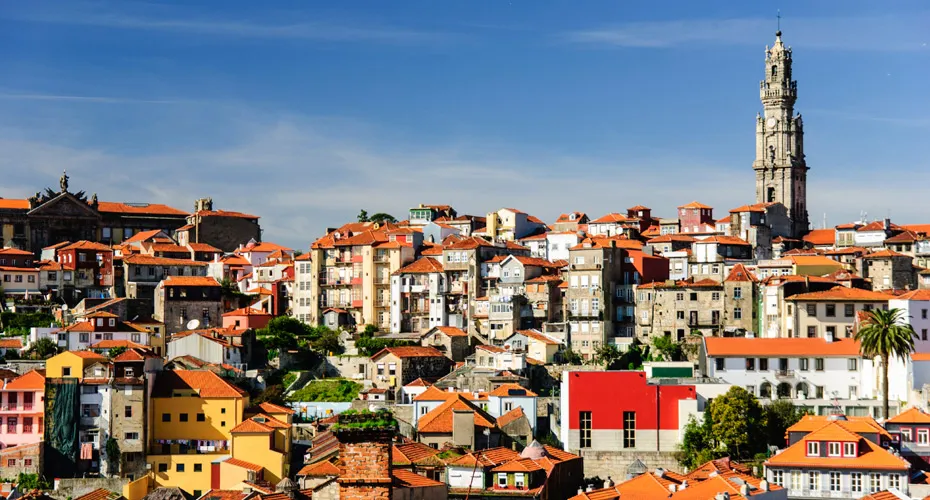

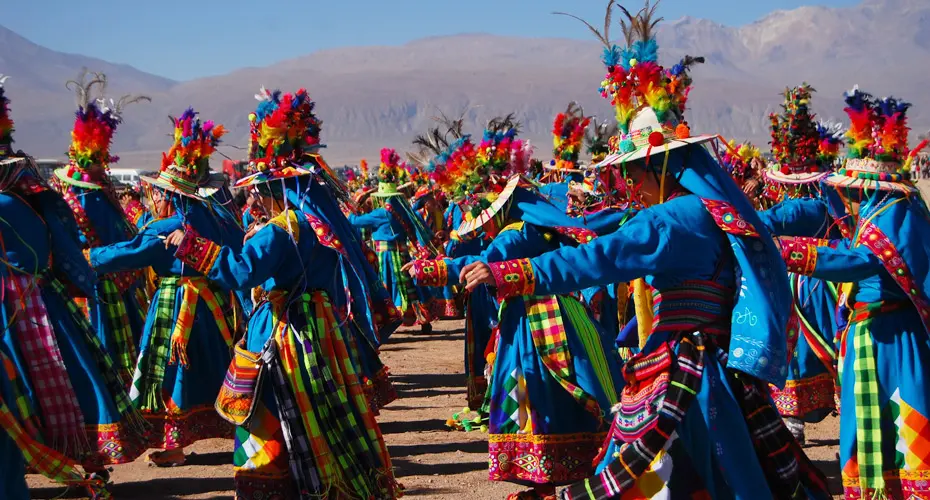
Language combinations
Students taking only one language in Year 1 can add a Beginners level language in Year 2. Students taking two languages in Year 1 can add a third (Beginners level) language in Year 2, subject to performance in the first two languages.
| Number of languages selected | Advanced level languages available | Beginners level languages available |
|---|---|---|
|
One language: at Beginners or Advanced* level |
French; German; Italian; Russian; Spanish; |
Chinese (Mandarin); French; German; Italian; Portuguese; Russian; Spanish |
|
Two languages: One new language at Beginners level and one at Advanced* level OR both at Advanced* level |
French; German; Italian; Russian; Spanish |
Chinese (Mandarin); French; German; Italian; Portuguese; Russian; Spanish |
|
Three languages: Two languages at Advanced* level and one new language at Beginners level OR three languages at Advanced* level |
French; German; Italian; Russian; Spanish |
Chinese (Mandarin); French; German; Italian; Portuguese; Russian; Spanish |
*Post-A level or equivalent
Pathways
Students have the option of studying languages at Beginners and Advanced level, depending on the number of languages they choose to study. The programme has been designed to give our students maximum flexibility, with the option to add or remove languages after your first year of study with us.
The sample pathways below show the possible routes you could take for your BA Modern Languages.
Please note that:
- It is only possible to study one language from beginner’s level.
- Mandarin Chinese and Portuguese are only available as beginner’s languages.
Pathway A - One language
Study one language and graduate with BA (Hons) in one language, e.g. BA (Hons) French.
Students can choose to study one Beginners or one Advanced language in Year 1. Please see the Overview above for details of languages available.
Year 1
You will study 1st year core language modules, plus you can select from a variety of modules covering areas such as cultural, literary and linguistics topics. You can also study modules from other disciplines outside of Modern Languages such as Politics and History.
Year 2
You will study 2nd year core language modules, plus you can select from a variety of modules covering areas such as cultural, literary and linguistics topics. You can also study modules from other disciplines outside of Modern Languages such as Politics and History.
Year 3 - International Placement
Your International Placement (work or study) will be spent in a country of the language either:
- on a work placement
- studying at a university
- a combination of the above
- in a school working as a British Council Language assistant (for French, German, Italian and Spanish only)
If you are studying a Beginners language from Year 1, you must spend your third year in the country of that language.
Year 4
You will study final year core language modules, plus you can select from a variety of modules covering cultural, literary and linguistic aspects of the language. You can also study modules from other disciplines outside of Modern Languages such as Politics and History.
Pathway B - Two equal languages
Study two languages and graduate with BA (Hons) in two languages, e.g. BA (Hons) Italian and Spanish.
Year 1
Your study will be divided 50/50 between two languages and will include 1st year core language modules for both. You can also select from a variety of modules covering cultural, literary and linguistic aspects of the languages.
Year 2
Your study will be divided 50/50 between two languages and will include core language modules for both. You can also select from a variety of modules covering cultural, literary and linguistic aspects of the languages.
Year 3 - International Placement
Your International Placement (work or study) will be spent in a country of the language either:
- on a work placement
- studying at a university
- a combination of the above
- in a school working as a British Council Language assistant (for French, German, Italian and Spanish only)
If you are studying a Beginners language from Year 1, you must spend your third year in the country of that language.
Year 4
Your study will be divided 50/50 between two languages and will include core language modules for both. You can also select from a variety of modules covering cultural, literary and linguistic aspects of the languages.
Pathway C - Three equal languages
Study three languages and graduate with a BA (Hons) in three languages, e.g. BA (Hons) Italian, Russian and Spanish.
Year 1
Your study will include 1st year core language modules for the three languages. Plus you can select two option modules, covering cultural, literary and linguistic aspects, from any of the three languages.
Year 2
Your study will include 2nd year core language modules for the three languages. Plus you can select two option modules, covering cultural, literary and linguistic aspects, from any of the three languages.
Year 3 - International Placement
Your International Placement (work or study) will be spent in a country of the language either:
- on a work placement
- studying at a university
- a combination of the above
- in a school working as a British Council Language assistant (for French, German, Italian and Spanish only)
If you are studying a Beginners language from Year 1, you must spend your third year in the country of that language.
Year 4
Your study will include final year core language modules for the three languages. Plus you can select two option modules, covering cultural, literary and linguistic aspects, from any of the three languages.
Pathway D - A main language and a secondary language
The study of two languages, with the option from Year 1 or Year 2 take up modules in another discipline, e.g. Business Studies. Graduate with BA (Hons) in language 1 with language 2, e.g. BA (Hons) German with Russian.
Year 1
Either: your study will be divided 50/50 between two languages and will include 1st year core language modules for both languages. You can also select from a variety of modules covering cultural, literary and linguistic aspects of the languages.
OR
You decide to expand the focus of your study by including modules from another discipline, such as the Business School, to enhance your employability.
For language 1 you study core language modules, plus you can select from a variety of option modules. For language 2 you study core language modules. You also study 1st year modules from your other discipline, e.g. Business Studies.
Year 2
You start or continue to expand the focus of your study by including modules from another discipline, such as the Business School, to enhance your employability.
For language 1 you study core language modules, plus you can select from a variety of option modules. For language 2 you study core language modules. You also study modules from your other discipline, e.g. Business Studies.
Year 3 - International Placement
Your International Placement (work or study) will be spent in a country of language 1 or 2 either:
- on a work placement
- studying at a university
- a combination of the above
- in a school working as a British Council Language assistant (for French, German, Italian and Spanish only)
If you are studying a Beginners language from Year 1, you must spend your third year in the country of that language.
Year 4
You will study final year core language modules for both languages, plus you can select from a variety of option modules covering cultural, literary and linguistic aspects of the languages. Additionally, you can study 2nd year core modules from your other discipline.
Fees
Tuition fees for 2027 entry
UK students: £10,050 per year
International students: £25,700 per year
Scholarships
The University of Exeter offers a wide range of scholarships to support your education, with £7 million available for international students applying to study with us in the 2026/27 academic year, including our prestigious Exeter Excellence Scholarships*. We also provide scholarships for sport, music and other achievements, alongside regional and partner awards such as Chevening, The Beacon Trust and the British Council. Financial support is available for students from disadvantaged backgrounds, lower income households and other under-represented groups to help them access, succeed and progress through higher education.
* Terms and conditions, including deadlines, apply. See our website for details.
Learning and teaching
How will I learn?
Written language is taught through weekly classes, with teams of tutors, including native speakers who contribute to a programme aimed at grammar improvement and the development of advanced writing and translating skills. You’ll also have weekly oral practice in classes of eight to 10 students with native speakers of the language(s) that you are studying.
Modules
Teaching on our culture modules is varied: a class about linguistics takes a rather different form than a class about theatre or film, for instance. Most cultural modules involve a combination of lectures and seminars, backed up by smaller group work and web-based learning, via the University’s online learning environment. Between classes you prepare material, evidence and arguments, individually or in groups. Seminars are your chance to try out ideas, present material to other members of the group, and respond to new material based on the critical skills you’ve been taught.
Assessment
You will be assessed in a variety of ways but primarily through coursework and exams (essays, source commentaries, research exercises, oral presentations), and online assessment (for language and culture modules).
Your first year doesn’t count towards your final degree classification, but you do have to pass it in order to progress.
Where else can I study?
All language students have access to the language-learning facilities provided by the Language Centre.
Optional modules outside of this course
Each year, if you have optional modules available, you can take up to 30 credits in a subject outside of your course. This can increase your employability and widen your intellectual horizons.
Minors: Future Skills Pathways
You can study a Future Skills Pathway alongside your main degree by choosing up to 30 credits of modules from a different subject area in your second and final years.
Your future
Employer-valued skills this course develops
Employability skills are firmly embedded in our teaching. This allows you to not only impress with your linguistic and cultural skills, but how best to present yourself. An International Placement is an excellent way to boost your employability skills. Our preparation for the third year abroad begins in year two when we talk about intercultural skills and differences between languages and cultures, while also covering practical necessities such as writing a CV or a cover letter or how to address an employee at the bank where you seek to open an account.
Modern Languages graduates from the University of Exeter have an excellent reputation with graduate recruiters and compete very successfully in the employment market. You will develop skills that are attractive to employers and relevant for a wide range of careers. Alongside written and verbal fluency in your chosen language(s), you’ll develop skills in:
- Managing and analysing information
- Articulating ideas and arguments
- Problem solving
- Critical thinking
- Cultural awareness and adaptability
In an increasingly globalised world, language skills are highly sought after by employers, and can help you stand out from the crowd.
Employer visits
We have a dedicated, award-winning Careers Service, with offices at our Streatham Campus, ensuring you have access to careers advisors, mentors and the tools you need to succeed in finding employment in your chosen field on graduation.
We offer the Exeter Award and the Exeter Leaders Award which include employability-related workshops, skills events, volunteering and employment which will contribute to your career decision-making skills and success in the employment market. Our graduates compete very successfully in the employment market, with many employers targeting the University when recruiting new graduates. For further information please visit our Careers Service.
Career paths
Example destinations for our students include:
- Education
- Finance
- Government/Civil Service
- Media
- Law
- Translation
- Charities
- Hospitality
- Arts
- Retail
- Consultancy
Further study
A Modern Languages degree is also excellent preparation for postgraduate study, and recent graduates have progressed to a range of courses, including:
- MA Translation Studies
- MA Global Literatures and Cultures
- MA European Politics
- Graduate Diploma in Law
- PGCE Secondary French
- MA International Relations
- MSc Globalisation and Latin American Development
- Professional Language Skills