BSc Environmental Science
Please note: This page is for 2026 entry. Click here for 2027 entry.
| UCAS code | F750 |
|---|---|
| Duration | 3 years |
| Entry year | 2026 |
| Campus | Penryn Campus |
| Typical offer | A-Level: AAB-ABB |
|---|---|
|
A-Level: BBB-BBC |
| UCAS code | F753 |
|---|---|
| Duration | 4 years |
| Entry year | 2026 |
| Campus | Penryn Campus |
| Typical offer | A-Level: AAB-ABB |
|---|---|
|
A-Level: BBB-BBC |
| UCAS code | F752 |
|---|---|
| Duration | 4 years |
| Entry year | 2026 |
| Campus | Penryn Campus |
| Typical offer | A-Level: AAB-ABB |
|---|---|
|
A-Level: BBB-BBC |
Why study BSc Environmental Science at Exeter?
- Learn the science behind Earth’s amazing complexity and its environmental processes
- Take a hands-on approach to the collection and analysis of environmental data in the field and laboratory
- You will develop a wide range of practical skills to increase your employability, from working with satellite data and using Geographical Information Systems (GIS) to guide real-world environmental decision-making
- You will have the opportunity to participate in a wide range of field courses, in the south west and further afield
- Learn practical and theoretical insights from inspirational, world-leading research experts in a range of environmental disciplines and benefit from exposure to research through the programme’s close relationship with our Environment and Sustainability Institute (ESI) on the Penryn Campus
- Option to graduate with proficiency in Law

Top 50 in the world for Environmental Sciences
QS World University Subject Rankings 2025

Top 15 in the UK for Geography and Environmental Science
14th in the Complete University Guide 2026

Top 50 in the world in the QS World University Sustainability Rankings 2026

Study climate change, biodiversity, sustainability and environmental decision-making

This programme is accredited by the Community for Environmental Disciplines in Higher Education (CEDHE), the education committee of the Institution of Environmental Sciences (IES). CEDHE is the collective voice of the environmental sciences academic community and serves to enhance the quality of environmental education worldwide.
A programme accredited by CEDHE is assured to meet high standards, contain a strong component of practical, field and theoretical activities, and has excellent opportunities for training, work experience and links to the professional environmental sector. Students enrolled on CEDHE-accredited programmes can apply for free Student Membership of the IES and for a fast-track route to membership once they graduate.
This programme is aligned with the academic requirements for Registered Environmental Practitioner (REnvP) and starts graduates on a route towards becoming a Chartered Environmentalist (CEnv) or Chartered Scientist (CSci).
This is a strong programme offering a wide range of engaging and effective provision that prepares students for a career in the environmental sciences. Students have the opportunity to develop a broad range of relevant practical skills.
The tutorial structure embedded throughout the programme [...] provides scaffolded academic and pastoral support. Opportunities to gain insight into professional practice are embedded throughout the curriculum, including innovative real-world assessment.
The Institution of Environmental Sciences (IES)
From their accreditation report on BSc/MSci Environmental Sciences
Entry requirements (typical offer)
| Qualification | Typical offer | Required subjects |
|---|---|---|
| A-Level | AAB - ABB | B in an accepted science subject* |
| IB | 34/665 - 32/655 | HL5 in one of the following Science subjects: Biology/Human Biology, Chemistry, Computing, Design and Technology, Electronics, Environmental Science, Environmental Studies, Geography, Geology, Life and Health Sciences (Double Award only), Marine Science, Maths/Pure Maths (Analysis and Approaches OR Applications and Interpretations)/Further Maths, Physical Education, Physics, Psychology, Science (applied), Sport Science, Statistics |
| BTEC | DDD-DDM |
Applicants studying one of the following subject areas in either the BTEC Extended Diploma, Diploma or Extended Certificate will be considered without GCE A-Level Science: Applied Human Biology, Applied Psychology, Applied Human Biology. Applicants studying one of the following BTEC Extended Diplomas will be considered without GCE A-Level requirements: Applied Science, Countryside Management, Environmental Sustainability. |
| GCSE | C or 4 | English Language |
| Access to HE | 24 L3 credits at Distinction Grade and 21 L3 credits at Merit Grade | To include 12 L3 credits at Merit in a Science subject area |
| T-Level | Distinction | T-level in Design and Development for Engineering & Manufacturing. Applicants also require a GCE A-Level grade B in an accepted science subject* |
| Contextual Offer | A-Level: BBB-BBC |
Specific subject requirements must still be achieved where stated above. Find out more about contextual offers. |
| Other accepted qualifications | ||
| English language requirements |
International students need to show they have the required level of English language to study this course. The required test scores for this course fall under Profile B1. Please visit our English language requirements page to view the required test scores and equivalencies from your country. |
|
NB General Studies is not included in any offer.
Grades advertised on each programme webpage are the typical level at which our offers are made and provide information on any specific subjects an applicant will need to have studied in order to be considered for a place on the programme. However, if we receive a large number of applications for the programme we may not be able to make an offer to all those who are predicted to achieve/have achieved grades which are in line with our typical offer. For more information on how applications are assessed and when decisions are released, please see: After you apply
*Accepted science subjects: Biology/Human Biology, Chemistry, Computing, Design and Technology, Electronics, Environmental Studies, Geography, Geology, Life and Health Sciences (Double Award only), Marine Science, Maths/Pure Maths/Further Maths, Physical Education, Physics, Psychology, Science (applied), Sport Science, Statistics.
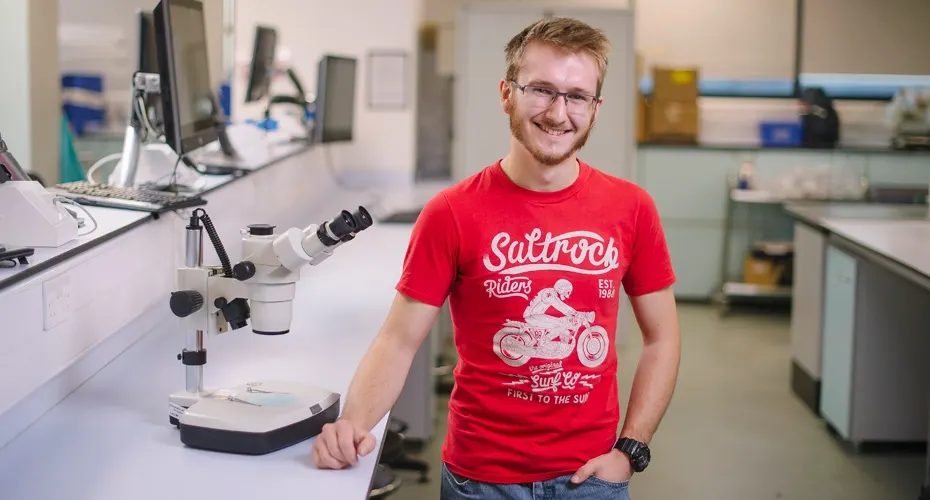
You won’t find another university which has a stronger sense of community, good quality teaching and the chance to travel the world during the course with awesome field trips! The field trips are fantastic for getting to know your peers and staff in a more relaxed and fun environment.
My advice for anyone considering applying for the University of Exeter would be to go for it! The teaching is absolutely world class. The lecturers in Cornwall are fantastic, incredibly helpful and will go out of their way to make sure that you get the most out of the degree. Dr Karen Anderson and Dr Jon Bennie are two lecturers who particularly stand out for me, but they're all fantastic.
Living on campus and in Falmouth in Cornwall has been amazing. The university has such a tight-knit atmosphere and you feel part of a community. There's always something going on and it’s never dull with both university and public events on campus and in the towns of Penryn and Falmouth. The laboratories on campus are fantastic. There’s plenty of computers in the computer labs and the other labs are amazingly well kitted-out.
I am vice-president of the Geography Society at the Penryn Campus, and involved in lacrosse, hockey, kayaking, running and climbing.
I would like to pursue a career in the wildlife filming and documentary production sector, educating the public about wildlife and our impacts on the world and wildlife.
Michael
BSc Environmental Science, Penryn Campus
Course content
Environmental science is a quantitative and interdisciplinary approach to understanding and managing the world in which we live. Environmental scientists are concerned with understanding spatial patterns in physical, biological and chemical phenomena in the Earth’s system at local, regional and global scales. They find appropriate solutions to environmental problems by assessing, reporting and quantifying environmental risks. They work in areas as diverse as contaminated land assessment and remediation, natural resource management, practical conservation, pollution mitigation, ecosystem service assessment, environmental monitoring, mapping and consultancy.
Our degree in Environmental Science will give you the skills and expertise you need to address the world’s greatest challenges in climate change, such as biodiversity, sustainability and environmental decision-making.
Your first year will provide you with a solid scientific grounding in themes and topics of the integrated environmental sciences. Core modules will give you a broad range of knowledge, allowing you to pursue your interests further on in your degree.
In your second year, you have more flexibility to explore your interests, tailoring your degree through module choice. You will also gain a more detailed understanding of key issues and practical training in implementing environmental science strategies.
In your final year, you will gain specialist training in the skills necessary to acquire jobs in the environmental sector. You will have an opportunity to specialise in your preferred subjects through an independent research dissertation and a choice of optional modules. Another highlight is the residential field course, where you will be immersed in a new environment and taught how to understand its environmental and cultural challenges from multiple geographical perspectives.
You may notice changes to some of our modules over the coming months. This is because we are making space for the following:
- Minors: Future Skills Pathways - Alongside your main degree you may be eligible (depending on your course) to choose modules from another subject to broaden your skills and interests.
- Skills to Thrive built into every degree - Essential skills for your future, including communication, problem-solving, teamwork and digital confidence.
- Increased innovation and wellbeing - More room for creative learning, real-world projects and a healthier study rhythm.
The modules below provide examples of what you can expect to learn on this degree course based on recent academic teaching. The precise modules available to you in future years may vary depending on staff availability and research interests, new topics of study, timetabling and student demand.
Please note that the module information displayed here is subject to change.
90 credits of compulsory modules, 30 credits of optional modules
Compulsory modules
| Code | Module | Credits |
|---|---|---|
| Compulsory 1 | ||
| Earth System Science | 15 | |
| Global Issues in Environmental Science | 15 | |
| Introduction to Data Science | 15 | |
| Marine and Environmental Science Field Course | 15 | |
| Field Course: Environment and Sustainability on the Isles of Scilly | 15 | |
| A Legal Foundation for Environmental Protection | 15 | |
CGE1405B: Earth System Science
The Earth consists of a series of interacting natural systems (lithosphere, hydrosphere, cryosphere, biosphere, atmosphere). The interactions between these systems, called feedbacks, are central to analysing the functioning of major aspects of the Earth, such as climate, sea level and biotic evolution. This way of looking at our world is also critical in analysing the human impact on the Earth system and identifying management strategies to mitigate, remediate or predict geological and environmental hazards and impacts, and in identifying resources. This module is therefore about connectedness and the development of an approach to understanding the Earth that emphasises the connections between the components rather than the components themselves. This module requires no prior skills or experience and is particularly suitable for interdisciplinary pathways.
This module aims to:
- Explore our understanding of Earth origins, the evolution of the solar system, of the ocean, the biosphere and the atmosphere.
- Introduce natural systems theory.
- Identify the Earth’s component natural systems and the Earth’s climate system, its forcings and feedbacks.
- Describe plate tectonics and the role of the internal system in determining or controlling rock formation, the sedimentary cycle, the carbon cycle, Earth surface landforms (geomorphology), oceanic gateways and barriers, biotic evolution.
- Analyse orbital and gravitational controls on the Earth: tides, days, seasons, years.
- Explore the influence of tides on the timing and rate of Earth-moon separation.
- Describe solar variability and its impact on Earth climate.
- Describe the Earth’s radiation balance, atmospheric and oceanic circulation and their role in redistributing heat around the Earth.
- Analyse interactions between the hydrosphere and the cryosphere.
- Identify and describe major biogeochemical cycles, in particular the carbon cycle.
- Explore the causes of major climatic changes through geological time.
- Discuss the evolution of hominids and the interactions of humanity with the Earth system.t
The module will involve a fieldwork component involving an investigation of evidence for sea-level change on the Cornish coastline.
This module will help you to develop and extend your awareness of the importance of taught and learnt skills in strengthening employability potential, especially through the application of critical analytical skills (review of scientific literature, simple calculations) to a range of contemporary global challenges, notably climate change and geoengineering. More generally, through attending the fieldwork and weekly lectures, alongside your own independent learning, you will develop the following academic and professional skills:
- fundamental problem solving (linking theory to practice with academic guidance), collaboration (learning about the views and values of others), and audience awareness (presenting ideas effectively, persuading others of the importance and relevance of your views, responding positively and effectively to questions).
The teaching contributions on this module involve elements of research undertaken by staff, such as work on sea-level change (Scourse). Moreover, you are encouraged to undertake enquiry-led learning, specifically through the field component.
CGE1408B: Global Issues in Environmental Science
This module is designed to give you a clear, two-part journey through critical environmental issues we face today. We spend the first half of the term focused strictly on the science of "Planetary Boundaries"—specifically looking at the current state of our air, oceans, land use, and biodiversity. We zoom in on these areas because they have already crossed into risky, unhealthy territory.
In the second half, we widen the lens to include the human side of the equation further. We explore how those ecological lines we crossed earlier connect to real-world social issues like global health, mining, and natural hazards. The big takeaway is that these aren't separate problems; crashing through an environmental boundary often hurts human health, while trying to fix social problems can put more stress on the planet. Rather than just looking at "trade-offs," we aim to teach you how to navigate toward a "safe and just space" where humanity can thrive without breaking the Earth's life-support systems.
CGE1419: Introduction to Data Science
This module provides practical insights into how scientists use data to answer research questions in environmental, marine, and geographical sciences. The module is designed to build skills progressively: starting with foundational maths, moving on to programming in R, and culminating in the analysis of real environmental datasets using a range of statistical techniques.
Through a combination of lectures, practical workshops, and online resources, you will learn to:
- Handle, clean, and manipulate datasets
- Explore and visualise data effectively
- Apply descriptive and inferential statistics
- Conduct linear and non-linear analyses
- Integrate these skills to investigate applied environmental science questions
Weekly lectures introduce the theory behind the techniques covered in the practical classes. Practical sessions are supported by academic and teaching staff and focus on applying methods to real-world environmental data, including datasets from field studies, time series, and ecological measurements.
Assessment is through four online quizzes and associated practical exercises that give you hands-on experience of the full data analysis workflow, from messy data to interpreted results.
CGE1421: Marine and Environmental Science Field Course
This module provides early career training in fieldwork techniques that are fundamental to your degree in marine and environmental science. Cornwall is a natural laboratory with an incredible diversity of ecological and physical landscapes that you will have an opportunity to explore with academic staff. Specifically, you will receive instruction on marine science and environmental science techniques including, but not limited to, participant observation, recording field data, field sketching, sampling strategies and basic data handling, which is essential for your future career as a marine or environmental scientist.
The location of the fieldtrip will be in Cornwall, which has many areas designated as Areas of Outstanding Natural Beauty (AONB) with a high density of conservation, Sites of Special Scientific Interest (SSSI) and Marine Conservation Zones (MCZs). Cornwall contains some of Britain's finest coastal scenery, including Land's End, the Lizard peninsula and twenty-two MCZs, and provides a perfect setting for marine and environmental exploration.
CGE1450: Field Course: Environment and Sustainability on the Isles of Scilly
This module explores questions of environmental change and sustainability by looking at the practicalities of research design and methodology in relation to the Isles of Scilly, UK. The module supports you to develop the conceptual, analytical and practical research skills necessary for you to carry out independent research work. The Isles of Scilly is an ideal location in which you will get to think about a range of methodologies used in environmental science and in physical and human geography. This module has two aims: (1) to highlight processes of climate and environmental change and the ways in which communities (human and natural) respond; (2) to prepare you to complete research projects within your degree programme, introducing you to a range of skills relevant to your chosen discipline by means of enquiry in a particular field environment. Independent research constitutes a central element in your degree programme and is a critical skill in employability. The module will allow you to choose from projects focused on introducing and practicing a range of key research skills, including stratigraphy, social science surveying, landscape observation, policy analysis, marine science sampling, and mapping and monitoring environmental change. The module aims will be achieved via staff-delivered content, supported activities and group and individual projects. The module builds on the introductory fieldwork experiences of Stage 1 and prepares you for your field work and independent dissertation research in Stage 3. This module is compulsory for students on the BA/BSc Geography, BSc Environmental Sciences, BSc Geography and Geology, and BSc Marine Science programmes.
LAW1016C: A Legal Foundation for Environmental Protection
In this module you will be introduced to law in the context of the environment and how important the legal process is in its protection. The module seeks to provide you with an overview of all the different ways in which law can be used to protect the environment and give you the tools to choose which types of law are most suitable in different environmental contexts.
You will develop empathy for the different stakeholders in environmental issues. We will consider pathways to reconcile competing interests in an attempt to strike a balance between developmental or industrial progress and the need to protect our environment.
You are not expected to have any legal knowledge or experience and the module is therefore ideal for students on an interdisciplinary pathway, as well as being a compulsory element of the Environmental Science degree.
The module is designed as an essential foundation for those seeking employment following graduation in an environmental field where a working knowledge of law and policy will be assumed. It also provides an excellent foundation for further legal study.
Optional modules
| Code | Module | Credits |
|---|---|---|
| Optional 1 | ||
| Environment, Society and Business | 30 | |
| Society, Environment and Energy | 15 | |
| The Geography of Cornwall | 15 | |
| Atmospheric and Oceanic Systems, Their Interactions and Importance | 15 | |
| Biodiversity and its Conservation | 15 | |
| Earth and Environmental Chemistry | 15 | |
| Quantitative Methods for Geoscientists | 15 | |
| Key Concepts in Politics and International Relations | 15 | |
BEP1150: Environment, Society and Business
Business-as-usual is threatening the stability of the ecosystems that support our lives. We are exceeding planetary boundaries: most of the land surface and the ocean are impacted by human activities, forests continue to be cut down to make space for agriculture and animal husbandry, the poles are losing their ice, the depletion of natural resources such as drinking water is affecting local communities worldwide, overfishing and loss of biodiversity are increasing at a dramatic rate. Addressing challenges of this scale require an interdisciplinary response. It requires cooperation, long-sightedness and critical, creative and system thinking. This module brings different disciplines together to draw attention to the role our economy plays in exacerbating the ecological crisis, and what a sustainable economy might look like. The module offers an introductory insight into ecology, environmental science and different traditions of economic thought linking the economy and the environment. In so doing, it provides the theoretical basis for understanding, designing and implementing new purpose-driven business models, enabling business to make a positive contribution to the environment and society. No prior knowledge skills or experience is needed in order to able to take this module. This module is recommended for interdisciplinary pathways.
CGE1412: Society, Environment and Energy
Understanding the way in which people interact with the environment is one of the most important issues facing contemporary society. Many of these interactions are shaped by our pursuit for energy, i.e. to help warm our homes, power our economy, help us to move around, and provide us with light, comfort and entertainment. As well as impacting upon society, the pursuit of energy also has profound implications for the environment.
This module explores the relationship between society, the environment and energy, and considers the way in which these dimensions, and the interactions therein, have coevolved over time. To do so, it will introduce you to broad themes in environmental understanding, and apply them to the specific case study of climate change and energy.
This module explores the range, nature and implications of society-environment interactions, with a particular focus on past, contemporary, and future energy systems. The module explores the contested nature of interactions in global, national, regional, and local contexts, and the role of different stakeholder groups (e.g. policy makers, interest groups, the media, the public etc.) in shaping them. The module will introduce students to key concepts and theoretical frameworks, as well as real world case studies, for critically examining these interactions.
CGE1413: The Geography of Cornwall
This team-taught module encourages you to develop an integrated geographical imagination by studying the geography of Cornwall. The module takes a broad sweep of Cornwall's history, looking at the importance of physical geography, geomorphological processes, patterns of human settlement, culture and economic development. The content is designed to ensure that you have a holistic understanding of geography that includes the physical and human environment, incorporating geomorphology along with attention to the economy, politics, society and culture. The module introduces core concepts that resonate across the university curriculum including ideas about place, landscape, territory, scale and region. Attention is paid to highlighting the importance of ideas in shaping what we see and how we think about geography and places. The module includes a fieldtrip, student-led presentations, and a written assessment
CGE1420: Atmospheric and Oceanic Systems, Their Interactions and Importance
How are atmospheric and oceanic circulation patterns formed, how are these systems interlinked and how do they interact, what drives the weather systems, why is carbon important, and how do we know what our climate and weather was like in the past and what it may look like in the future? This module takes the first steps in answering all of these questions by giving you a solid understanding of the Earth's two major dynamic systems; the oceans and atmosphere. Weekly lectures are supported by seminar sessions where we discuss relevant case studies and group tasks to support the weekly lecture content. Two practical classes involve using interactive iPython/Jupyter notebooks to study the water carbonate system and atmosphere-ocean gas exchange in the North Atlantic and the Fal river. The module teaching includes the use of videos by invited speakers, Technology, Education and Design (TED) talks, journal papers, music, additional online resources, and examples of recent research advances made by staff at the all Exeter campuses.
CGE1423: Biodiversity and its Conservation
Most people will be aware that the world is considered to be experiencing a biodiversity crisis. You’ll hear or read about it in the media all the time. But what do we actually mean by biodiversity? Where does it come from and how is it maintained in nature? Why is it important to humanity? How do human activities lead to its decline? What can be done to slow or even halt the decline? In this module, we will address all these questions to give students a solid foundation in the science of biodiversity and an understanding of the interdisciplinary nature of biodiversity conservation.
This module will introduce you to the theory and concepts of biodiversity and conservation science. It aims to provide you with a basis on which to build expertise in this area and grow your understanding of how conservation requires input from many disciplines beyond biology.
In addition, you will gain practical experience in some aspects of this field, such as conducting biodiversity surveys, carrying out an IUCN Red List assessment, and planning conservation action.
CSM1031: Earth and Environmental Chemistry
A sound appreciation of chemistry is relevant for understanding the environment we live in and the challenges we face. This module starts with an exploration of atomic structure, highlighting how atoms are classified in the Periodic Table of Elements and linking this to fundamental concepts in chemistry, including thermodynamics, kinetics, pH and redox. The distribution of chemicals in natural systems is addressed, emphasising the role and types of chemical reactions in different environments and methods for their detection and analytical characterisation. Aims of the module:
- To gain an understanding of atomic structure;
- To gain an understanding of atoms in materials;
- To gain an understanding of chemical reactions;
- To gain an understanding of chemical analysis;
- To gain an understanding of fundamental principles of thermodynamics;
- To gain an understanding of chemical transformations in aqueous environments;
- To gain an understanding of chemical laboratory and analytical practice;
- To gain an understanding of the major mechanisms which govern the mobility, fate and remediation of environmental chemical pollutants
CSM1041: Quantitative Methods for Geoscientists
Mathematics and data are at the heart of all science and engineering subjects: we create mathematical models to understand and predict the behaviour of physical systems and we use mathematics to understand data and make precise, quantitative statements about the world. Provided at least a good grade at GCSE level mathematics, this module takes students of all levels of experience or confidence and brings them up to a level required to use mathematics as a tool in their other chosen pathways and modules.
This module aims to:
- provide a solid foundation in key areas of mathematics;
- develop your quantitative reasoning skills in the context of the geosciences;
- develop your appreciation for the role of mathematical modelling and the complexity of mathematical issues in the geosciences.
POC1021: Key Concepts in Politics and International Relations
How and when did China, Russia, North Korea or Cuba become the 'bad guys' in mainstream popular culture and the news? Why does mainstream news prioritize the US' foreign policies over Brazil's, for instance? What do we mean by realist, constructivist or idealist approaches in IR? Are such 'old school' concepts still relevant in an increasingly globalized world where borders appear to be blurred? What other approaches has IR, as a discipline, shied away from and why is it important that we centre our analysis around them? Our global world, some would argue, is at an important historical juncture: the environment, sexual rights and space exploration have become major debates alongside increasingly populist states. How do we make sense of this variety? Who has the power to implement such analyses? Our module attempts to make sense of our world by drawing together classic and contemporary analysis in IR. We will draw on scholarly works whilst examining them in tandem with historical and current events.
No prior knowledge skills or experience are required to take this module and it is suitable for specialist and non-specialist students. The module is suitable for students studying Politics, History or International Relations.
Please note that the module information displayed here is subject to change.
75 credits of compulsory modules, 45 credits of optional modules
Compulsory modules
| Code | Module | Credits |
|---|---|---|
| Compulsory 1 | ||
| Geographical Information Science and Systems | 15 | |
| Remote Sensing for Environmental Management | 15 | |
| Research Design and Methods | 30 | |
| Environmental Regulation and Redress | 15 | |
CGE2440: Geographical Information Science and Systems
How can spatial information be used to effectively manage the natural environment? In this module you will learn how to use geographical information software to analyse environmental data. In a major piece of coursework you will use Cornwall as a natural laboratory to investigate where to situate a nature reserve for conservation of the nationally rare silver studded blue butterfly.
This module aims to develop your understanding of the theoretical and practical skills required to create and manage complex spatial datasets for environmental purposes. The ability to use and understand GIS is a highly employable skillset. In addition, through weekly computer practicals, you will further enhance your professional skills in problem solving (linking theory to practice, being able to respond to novel and unfamiliar problems), time management and decision making.
CGE2441: Remote Sensing for Environmental Management
Spatial data acquired by satellites, and other flying platforms are increasingly used in decision-making processes about the natural environment. These ‘remotely sensed’ data are fundamentally measurements describing the way that electromagnetic radiation interacts with materials and substances on the Earth’s surface and scientists can use these to create dynamic maps and build models describing Earth system processes through space and time. In this module you will learn about the different ways that we can use remote sensing to monitor the Earth, starting from the ground and working upwards into space where Earth observation satellites are in orbit. In this module we cover the theory and applications of remote sensing drawing on examples from terrestrial and marine applications.
CGE2469: Research Design and Methods
How do you design and conduct high-quality rigorous research? This module will introduce you to the key conceptual, analytical, research, and communication skills necessary for undertaking a robust, independent research project within and beyond the University. Through this module you will gain a grounding in the knowledge and skills required to understand and apply a range of methods and techniques of data collection and analysis and an in-depth understanding of how to design, and do, high-quality research.
Beyond your degree, this module also equips you with key employability attributes for professional careers through skill development embedded within the module. These include:
LAW2016C: Environmental Regulation and Redress
If you are concerned about environmental destruction and ensuring accountability on a global basis, then learning to articulate your argument and back it up with a sound grasp of the law might help you to make a real difference! The module will help you establish a working knowledge of how the law can be used as a mechanism to reconcile competing values in the protection of the environment and seeks to develop an understanding of the legal avenues available to mitigate environmental harm. As an environmentally aware individual, how can you use the law to prevent harm and what can you do if you feel that another individual or business has committed an environmental wrong? How can legal tools be used to redress and repair environmental harm? As you progress through the module, you will discover answers to these and other questions.
You will look at the role of national and international law in setting environmental standards. You will critically reflect on the extent to which the law across the world, including indigenous laws and cultural norms, might be used to embed pro-environmental and sustainable behaviour.
Optional modules
| Code | Module | Credits |
|---|---|---|
| Optional 3 | ||
| Ecological Economics | 15 | |
| Introduction to Ecological Consultancy | 15 | |
| Conservation Science | 30 | |
| Landscape Evolution | 15 | |
| Green Consultants | 15 | |
| Biogeography | 15 | |
| Ice Sheets: Glaciology, Climate and the Oceans | 15 | |
| Waste and Society | 15 | |
| Social and Cultural Geographies | 15 | |
| Physical Ocean Processes | 15 | |
| People and Nature | 15 | |
| Hazards and Human Society | 15 | |
| Climate Change: The Physical Basis of the IPCC | 15 | |
| Resilience, Justice and Environmental Change | 15 | |
| Field Course: Geography, Environment and Society | 15 | |
| Grand Geoenvironmental Challenges | 15 | |
| Oceans and Human Health | 15 | |
| Critical Elements of Environmental Humanities: Cultures of Earth and Water | 15 | |
Please note that the module information displayed here is subject to change.
Find out more about placement and study abroad options under Course variants.
with Study Abroad
120 credits of compulsory modules
Compulsory modules
| Code | Module | Credits |
|---|---|---|
| Compulsory 1 | ||
| One Year Study Abroad | 120 | |
CGE3508: One Year Study Abroad
The Geography, Environmental Science, and Marine Science degrees in Cornwall offer you the possibility to apply for a place to study abroad at a partner university. You must attain average grades of 60% or above in your first year of study, and maintain an average of 55% in your second year, to continue on or enter the “with Study Abroad” programmes. The full application process is described on the Global Opportunities website at https://www.exeter.ac.uk/study/studyabroad/outbound/.
If you meet the requirements and accept your university placement, you will spend one academic year abroad, usually the third year of a four-year programme. At the end of your Study Abroad year, your marks are translated into the Exeter grade system and contribute to your degree.
with Professional Placement
120 credits of compulsory modules. Students must take, and pass, the module CGE3324.
Compulsory modules
| Code | Module | Credits |
|---|---|---|
| Compulsory 1 | ||
| Professional Placement | 120 | |
CGE3324: Professional Placement
Increasingly, graduate positions request that applicants have work experience applicable to the role. This year-long module will enable you to immerse yourself in a professional environment; you will learn to apply the skills learnt during the first and second years, improve personal and transferable skills, make new contacts and enhance employability. Feedback and support will be provided by the module convenor and the placement host.
This module will enable you to develop subject-specific and general professional skills. You will research suitable organisations, consider the opportunities that positions offer you and practice writing covering letters and CVs. This module offers an excellent opportunity for you to immerse yourself in an environment where you can develop subject-specific and general professional skills, gain a greater understanding of the use of your degree and ultimately improve your CV. You will gain feedback throughout the placement from the placement host and the module convenor and you will be encouraged to reflect on your experiences during the placement to help you to make career decisions for the future. The module allows you to apply your learning during your degree to a real-world setting.
Please note that the module information displayed here is subject to change.
45 credits of compulsory modules, 75 credits of optional modules
Compulsory modules
| Code | Module | Credits |
|---|---|---|
| Compulsory 1 | ||
| Dissertation in Environmental Science | 45 | |
CGE3476: Dissertation in Environmental Science
Doing a genuinely original piece of research is a crucial part of your academic training. In this module you will get hands on experience of participating in world-class research, guided by professional researchers. You will learn how to design, plan and implement a self-contained research project and will have the opportunity to draw on the knowledge and skills you have acquired throughout your degree programme.
The dissertation provides you with the opportunity to undertake an independent and original piece of research, drawing on the substantive intellectual themes developed in the Environmental Science programme. MSci Environmental Science students are encouraged to treat this dissertation as a pilot project leading to a more in-depth study of the chosen topic in year 4.
The aims of the dissertation are for you to develop:
Optional modules
| Code | Module | Credits |
|---|---|---|
| Optional 1 | ||
| Ecological Responses to Climate Change | 15 | |
| Green Consultants | 15 | |
| Climate Change and Society | 15 | |
| Marine Climate and Environmental Change | 15 | |
| Biological Oceanography | 15 | |
| Human-Animal Interactions | 15 | |
| Catastropolis | 15 | |
| Marine and Coastal Social-Ecological systems | 15 | |
| Sustainable Cities | 15 | |
| The Southern Ocean and Oceanic Eddies | 15 | |
| Transforming Energy Systems | 15 | |
| Themes in Climate Change | 15 | |
| Contaminated Land Management and Remediation | 15 | |
| Politics, Mining and Sustainable Development | 15 | |
| Surveying and Digital Mapping | 15 | |
| Living with Environmental Change | 15 | |
| Applied AI and Control | 15 | |
| Business and Human Rights | 15 | |
| Corporate Law, Theory and Governance | 15 | |
| Law and Policy for Sustainable Organisations | 15 | |
A great thing about Penryn is the amazing Gylly Beach located just 30 minutes away from campus! And as an Environmental Scientist, I simply must mention that the air we breathe here is 100% fresher! When I graduate I intend to work with the Environmental Agency in Singapore to better understand the recycling predicament we are facing and how we can resolve that.
Cheryl, from Singapore
BSc Environmental Science

Course variants
BSc Environmental Science with Professional Placement
UCAS code: F753
Why choose a professional placement year?
In your professional placement year you will learn to apply the knowledge learnt during your first and second years, improve personal and transferable skills, make new contacts and enhance your employability. Work placements allow you to gain experience of a professional workplace prior to graduating and develop your career focus, and are extremely valued by employers.
Where can I do my placement?
On the professional placement between the second and final years, you will gain valuable experience by spending a year working within an organisation appropriate to your degree. We have established collaborations with local, national and international organisations that you can consider when applying for placement positions.
Previous students have undertaken work placements at:
- Echo Foundation
- Field Studies Council
- JBA Consulting
- Office for National Statistics
- Schaeffler Group
- University of Exeter: Environment and Sustainability Institute
- Wild Planet Trust
What support is available during my placement?
The module convenor provides support while you are researching and applying for positions and you are encouraged to consider a range of organisations, including consultancies, charities, NGOs, research institutes and universities.
Does it count towards my degree?
The professional placement year counts towards your degree through the completion of your placement and associated coursework. It contributes to your final degree classification, and the words ‘with Professional Placement’ will appear in your degree title.
How does it affect my tuition fee?
If you spend a full year on a work placement (in the UK or abroad) you will pay a reduced fee. Find out more in the Fees section.
How do I apply?
You can apply to BSc Environmental Science with Professional Placement directly through UCAS using the code above.
How are the placements organised?
You are responsible for organising your own placement; however, we have established collaborations with local, national and international organisations that you can consider when applying for placement positions.
BSc Environmental Science with Study Abroad
UCAS code: F752
Why study abroad?
Students who have studied abroad demonstrate initiative, independence, motivation and, depending on where they stay, may also have gained a working knowledge of another language – all qualities employers are looking for.
Where can I study abroad?
Our Study Abroad programme enables you to spend a year abroad at one of our partner universities across the globe. You can find a complete list of partner universities on the Study Abroad website.
What will I study whilst I am abroad?
Whilst abroad you will study approved modules at the host university to the value of 120 credits; these will be credited towards your degree, which you would then complete after four years of study rather than three.
Does it count towards my degree?
All assessments during the year abroad are undertaken at the host university and count towards your final degree. Upon return, you would then complete your degree in a fourth year (equivalent to the current Year 3 of the standard BSc Environmental Science course).
How does it affect my tuition fee?
If you spend a full academic year studying abroad you will pay a reduced fee for that year. Find out more in the Fees section.
How do I apply?
You can apply to BSc Environmental Science with Study Abroad directly through UCAS using the code above. To qualify for your Study Abroad year, we would expect you to have successfully completed your Year 1 studies with an average mark of at least 60%. More information about applying.
Further information
For further information on where you can go and all the issues surrounding study abroad, see the Study Abroad website.
Fees
Tuition fees for 2026 entry
UK students: £9,790 per year
International students: £31,200 per year
Year abroad
If you choose the four-year version of this degree programme and spend a full academic year studying abroad, you will pay a reduced fee of 15 per cent of the maximum fee for that year.
Professional placement year
If you choose the four-year version of this degree programme and spend a full year on a work placement (in the UK or abroad) you will pay a reduced fee of 20 per cent of the maximum fee for that year.
Fieldwork
Please note, some optional/alternative field courses may incur additional costs. When participating in field courses, you will be required to cover any visa costs and, if necessary, purchase anti-malarial medication and relevant immunisations. You may also need to provide your own specialist personal equipment appropriate to the field course destination. You may incur additional costs dependent upon the specific demands of the research project chosen.
Scholarships
The University of Exeter offers a wide range of scholarships to support your education, with £7 million available for international students applying to study with us in the 2026/27 academic year, including our prestigious Exeter Excellence Scholarships*. We also provide scholarships for sport, music and other achievements, alongside regional and partner awards such as Chevening, The Beacon Trust and the British Council. Financial support is available for students from disadvantaged backgrounds, lower income households and other under-represented groups to help them access, succeed and progress through higher education.
* Terms and conditions, including deadlines, apply. See our website for details.
Fieldwork
Fieldwork is an integral part of all of our programmes, taking learning into the field to explore the incredible landscapes in the region and beyond. Several modules, including day and residential field courses in the UK and further afield will allow you to develop key field skills, enable you to put them into practice and gain new research skills.
Led by expert staff, field trips are embedded into modules throughout your degree to give you a first-hand understanding of the subject.
We begin in Year 1 with a range of local field excursions, exploring ecological and environmental principles in West Cornwall.
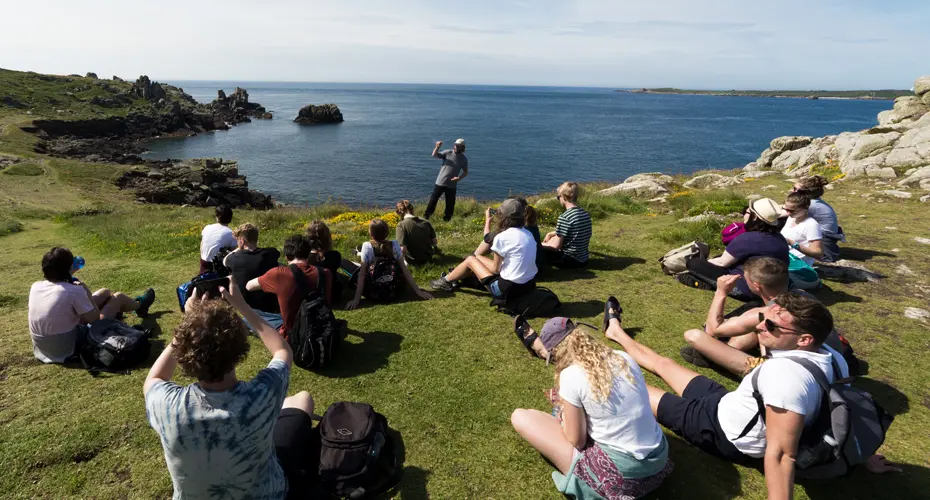
In Year 2 you will undertake a week-long residential field course on the Isles of Scilly*. It will enable you to develop the conceptual, analytical and practical research skills necessary for you to carry out independent research work.
In your final year we take you further afield to think about bigger issues in environmental science and give you an opportunity to apply your research and practical skills.
We also make the most of our location in the South West of England, organising a range of day trips each year as part of modules. These provide fantastic opportunities to study distinctive human and physical processes.
By the end of the programme you will have gathered a suite of unique field working skills that will place you in a strong position to move into environmental employment.
» Find out more about our field courses
*Please note that field course destinations are subject to change. Some optional/alternative field courses may incur additional costs.
Learning and teaching
How will I learn?
- Lectures
- Seminars
- Tutorials
- Hands-on interactive learning
- Field work
- Laboratory sessions
- Independent study
- Embedded GIS, remote sensing and data analysis
From Year 1 you will engage with hands-on enquiries using databases, maps and satellite data, developing GIS tools to help you understand the local, regional, national and global picture of the natural world and all of its processes. Lecture material will be global in scope but practical work will build from a local focus in Year 1 to a global perspective by Year 3. By the end of your degree you will be able to use spatial datasets to answer environmental questions important to the future of our planet.
Where will I learn?
At the Penryn Campus in Cornwall you will be welcomed into an intimate and supportive learning environment that encourages enthusiasm and passion for Environmental Science, and promotes interest in the global challenges geographers seek to address.
Research undertaken at the Environment and Sustainability Institute (ESI) – which leads research into various aspects of the relationship between people and the environment – inspires much of the teaching.
We believe every student benefits from being part of a research-inspired culture. You will discuss the very latest ideas in seminars and tutorials and be taught by expert staff who are actively engaged in research on a wide range of specialisms, including climate change, remote sensing, landscape evolution, energy policy, environment and sustainability, social innovation and cultural landscapes.
We have strong links with research projects across every continent of the globe from Antarctica to Asia.
Academic support
As a student in Environmental Science you will benefit from excellent student-to-staff ratios, small group tutorials and accessible staff. From week 1 onwards you will join a group of around 6 students led by an academic personal tutor, who will support you throughout your studies. You will meet with your tutor group frequently during term and remain with the same tutor throughout your 3 years of study.
In addition to participating in taught modules you are expected to undertake extensive independent and self-motivated study as part of your degree. You will learn to work independently and become a scientific thinker during this programme – learning these skills is not easy but we will be on-hand to guide you throughout. Your independent study will culminate in an individual project (dissertation) in Year 3 where you will research an environmental subject of your choice.
Assessment
Assessment methods vary depending on your choice of modules, but are likely to include exams and coursework-based assessment. You must pass your first year assessment in order to progress to the second year. The assessments in the second and final years all contribute to your final degree classification.
Facilities
We have a large variety of equipment that can be used on student research projects. These include a wide range of devices to assess soil, water and air conditions and a cutting-edge handheld XRF analyser to directly measure heavy metal concentrations in soil and river sediment. Digital media such as iPads, cameras and voice recorders are also available.
Optional modules outside of this course
Each year, if you have optional modules available, you can take up to 30 credits in a subject outside of your course. This can increase your employability and widen your intellectual horizons.
Minors: Future Skills Pathways
You can study a Future Skills Pathway alongside your main degree by choosing up to 30 credits of modules from a different subject area in your second and final years.
Your future

Employer-valued skills this course develops
Your degree in Environmental Science will give you the skills and expertise needed to address the world’s greatest challenges in climate change, and make you highly employable across a diverse range of careers.
These skills include:
- Data gathering
- Information retrieval
- Problem solving
- Project planning and management
- Organising and communicating information
- Report production and presentation (written and oral)
- Plus the ability to work effectively on your own and as part of a team.
Membership of the Institution of Environmental Sciences (IES)
Upon graduation you will receive a certificate stating that you have completed a course accredited by the Institution of Environmental Science (IES). The IES is a charitable organisation which promotes and raises public awareness of environmental science by supporting professional scientists and academics working in this crucial arena.
The Institution is an international organisation attracting professionals of high standing with significant specialist and interdisciplinary experience, from countries including Australia, Bahrain, Belgium, Canada, Hong Kong, Ireland, Kenya, Malta, New Zealand, Nigeria, Norway, Oman, Portugal, Rwanda, Singapore, South Africa, Switzerland, Thailand, United Arab Emirates, USA and Zimbabwe.
Before graduating you are eligible to join the IES (at no cost) as a student member. You are eligible to apply for Associate Membership upon graduation using a free fast-track application process. For more information, please visit the IES website.
How will membership help my career?
- Gain the experience of being a member of a long-established, highly reputable professional body.
- Take the first steps on an environmental career path which could take you to Chartered Status.
- Membership is recognised by employers as evidence of your professional status.
- Gain access to job opportunities, career development events and reports on the environmental science sector.
- Join a global network of scientists.
Supporting your career in Environmental Science
A range of employability sessions are put on for students such as: career talks with visiting alumni and employers from a range of backgrounds, career conversations and employability seminar series events with employers, a Careers in Sustainable Development and Environmental Protection Careers and Networking event and visits to the Met Office and UKHO, plus an annual Careers Fair and opportunities to access high-quality work placements through an employability optional module.
Careers services
We have a dedicated, award-winning Careers Service ensuring you have access to careers advisors, mentors and the tools you need to succeed in finding employment in your chosen field on graduation. We offer the Exeter Award and the Exeter Leaders Award which include employability-related workshops, skills events, volunteering and employment which will contribute to your career decision-making skills and success in the employment market.
The University of Exeter has an excellent reputation with graduate recruiters and our students and graduates compete very successfully in the employment market. Whatever path you wish to follow, we’re here to help and support you with all your career and employability needs.
Royal Geographical Society (RGS) Ambassador Scheme
You will have the opportunity to apply for the RGS Ambassador Scheme. The scheme recruits, trains and supports geographers currently at university and graduate geographers from the workplace to act as ambassadors for geography in the classroom. Ambassadors act as positive role models for pupils and can illustrate, with enthusiasm, both the specific and transferable skills they have developed as a geographer. For more information you can visit the RGS Ambassador Scheme website.
Career paths
The breadth of career opportunities open to graduates is vast, such as environment, health, conservation, education, third sector work, culture and heritage and community work. With training in both biological and social sciences, your options are likely to be broader than from a more narrowly focused subject.
Whatever you choose to do after graduation, your Environmental Science degree will stand you in good stead, with excellent employment prospects and transferable skills.
Below are a few examples of initial jobs undertaken by graduates from our Environmental Science and Geography undergraduate programmes*
Recent graduates are now working as:
- Chartered and certified accountants
- Business and related research professionals
- Data analysts
- Brokers
- Property, housing and estate managers
- Marketing associate professionals
- Estimators, valuers and assessors
- Project support officers
- Primary and secondary education teaching professionals
- Information technology professionals
Recent graduates are now working for:
- Babcock International
- BNP Paribas
- Centrica
- Environment Agency
- Ernst & Young
- European Space Agency
- NHS
- Ordnance Survey
- Oxborough Surveyors LLP
- Skanska
- UK Hydrographic Office
Further study
Further study is a popular choice for a number of students following graduation from a Geography or Environmental Sciences undergraduate degree. Below are a few examples of further study undertaken by recent graduates of undergraduate programmes*.
- Graduate Diploma in Law
- MA Quantity Surveying
- MRes Sustainable Development
- MSc Environmental Consultancy
- MSc Flood and Coastal Engineering
- MSc Geospatial Sciences
- MSc International Development and Humanitarian Emergencies
- MSc Management
- MSc Public Health
- MSc Rural Land and Business Management
- MSc Transport and Planning
*This information has been taken from aggregating the responses from full-time, first degree, UK domiciled students who completed 2017/18 and 2018/19 Graduate Outcomes surveys. Please note that, due to data protection, the job titles and organisations are listed independently and do not necessarily correspond.