Advancing Decentralized AI: Scalable, Adaptive, and Client-Centric Learning Systems
The next CS seminar will be held on 4th Feb starting from 14:30 in Harison 203. Dr. Ahmed M. A. Sayed from Queen Mary University of London will talk about his research on Learning Systems. There might be PhD flash talks in the beginning.
| A Computer Science seminar | |
|---|---|
| Date | 4 February 2026 |
| Time | 14:30 to 16:30 |
| Place | Harrison Building 203 |
Event details
Abstract
Decentralised AI systems, particularly those employing federated learning (FL), offer a promising approach to training machine learning models across distributed data sources while preserving privacy. However, they face significant challenges, including system heterogeneity, dynamic client availability, and resource constraints. Addressing these issues is crucial for the effective deployment of FL in real-world scenarios. In this talk, I will discuss our recent efforts to enhance the robustness and adaptability of FL systems. I will introduce REFL, a resource-efficient FL framework that decouples the collection of participant updates from model aggregation, intelligently selecting participants based on their likelihood of future availability to maximise resource utilisation. Then I will cover the development of FLOAT, an automated tuning framework that dynamically optimises resource utilisation to meet training deadlines, mitigating stragglers and dropouts through various optimisation techniques. Additionally, QKT is presented as a framework that enables tailored knowledge acquisition to fulfil specific client needs without direct data exchange, employing a data-free masking strategy to facilitate communication-efficient query-focused knowledge transfer while refining task-specific parameters to mitigate knowledge interference and forgetting. Finally, our UKRI-EPSRC-funded project, KUber, addresses these challenges by developing a distributed knowledge delivery system to enhance FL scalability and efficiency. KUber’s architecture facilitates seamless knowledge exchange among learning entities, optimising resource utilisation and model convergence.
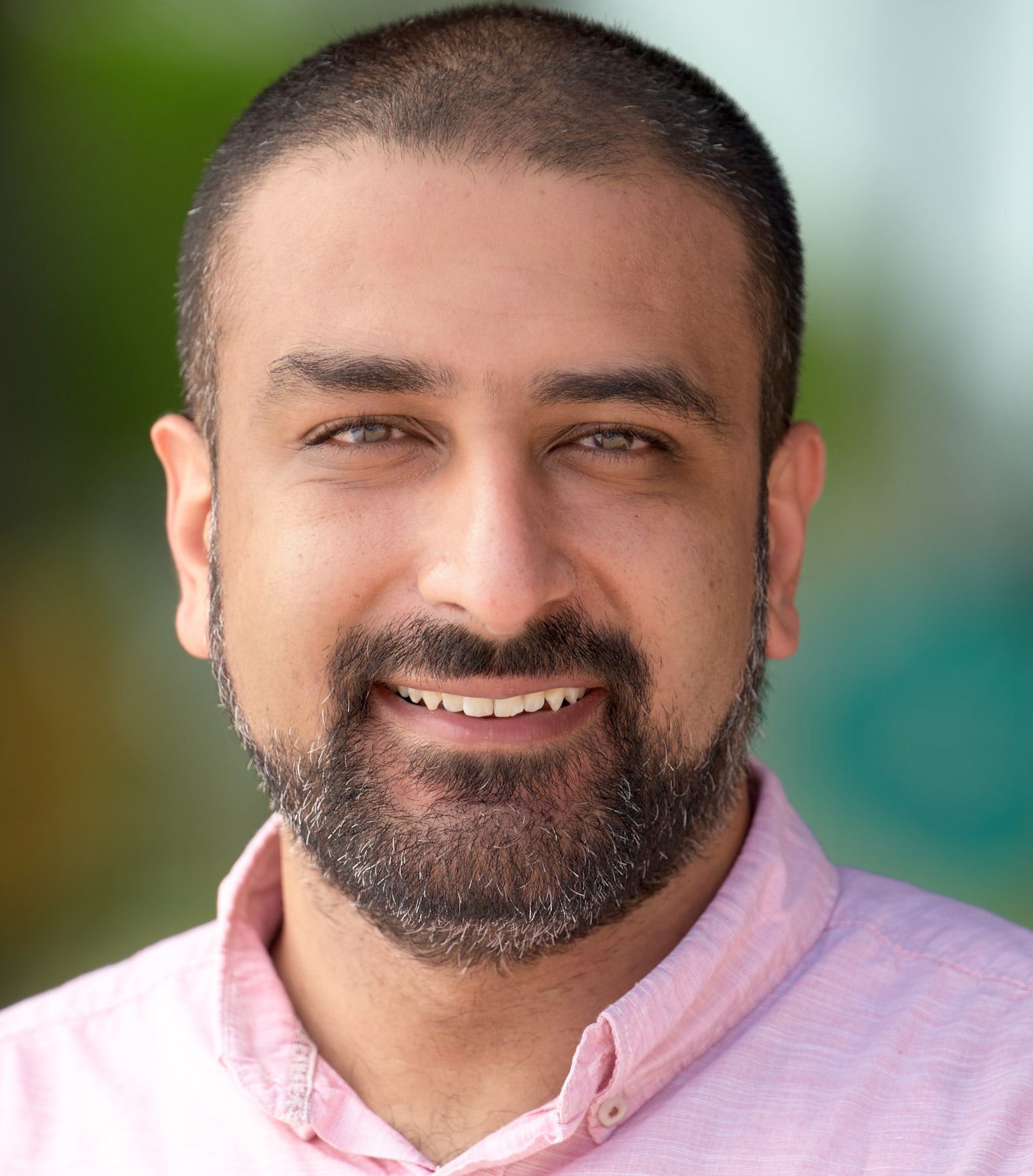
Ahmed M. A. Sayed is an Associate Professor at Queen Mary University of London, UK. He leads the Scalable Adaptive Yet Efficient Distributed (SAYED) Systems Group at QMUL. He received his Ph.D. in Computer Science and Engineering from Hong Kong University of Science and Technology, Hong Kong, in 2017. Formerly, he was a Research Scientist at KAUST, Saudi Arabia, and a Senior Researcher with Huawei's Future Networks Lab in Hong Kong. He is an investigator on several UK and international grants totalling nearly USD 1.8 million in funding. His research interests lie in the intersection of distributed systems, computer networks, and machine learning. He published more than 125 papers on these topics. His work appears in top-tier conferences and journals, including NeurIPS, AAAI, ICLR, MLSys, ACM EuroSys, IEEE INFOCOM, IEEE ICDCS, IEEE ICC/Globecom, IEEE/ACM ToN, IEEE IoTJ, IEEE TCC, IEEE TBD, IEEE TCSS, IEEE TIFS, Elsevier FGCS, IoT, and Computer Networks.
Location:
Harrison Building 203