Top 20 in the UK for world-leading research in Biological Sciences
REF 2021, based on 4-star research
Triple accredited Business School
AMBA, AACSB, EQUIS
Advance laboratory skills with specialist techniques training
Substantial research project within one of our world-leading research groups
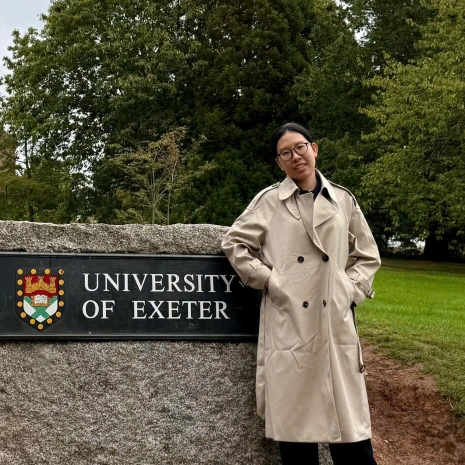
"The University of Exeter (UoE) caught my attention due to its reputation and teaching program. UoE is not only a university in the Russell Group, focusing on science programmes, it also has made a huge investment in facilities at the Bioscience Department, which was most impressive to me."
"I had 2 years of working experience in Technical Sales in the Hygiene Management industry. But then I wanted to switch into frontline roles in the biotech industry, relating to my BSc Biotechnology. The MSc Advanced Biological Sciences and Business course helps me bridge that gap between science and business acumen. That is why I chose the University of Exeter as my destination for my masters degree.
The UoE also provides a wide range of support. The library provides a lot of academic sessions to help me with academic writing and study tips. My academic tutor holds meetings at least once a term to catch up on my studying situation and to discuss my plan after graduation. There are many seminars that give helpful tips in applying for jobs. I also got involved in the Career Mentor Scheme. This program provided me with an alumni who works as my career mentor and currently works in my target industry.
Apart from support in academics, I do love life in Exeter. It is a relaxing and calm city, not as crowded as London. Hearing the sounds of birds and seeing flowers blooming literally helps me unwind from stressful assessments and exams. After a year living in Exeter, I feel reconnected to nature after years living in a big city in Vietnam."
MSc Advanced Biological Science and Business draws upon the combined research expertise and teaching strengths of Biosciences and our world-leading Business School. This carefully designed programme equips you with the sought-after skills demanded by the industry, setting you up for success in the job market. You'll develop practical and theoretical biosciences skills while also gaining insights into international business and entrepreneurship. Our faculty comprises academics at the forefront of their field, with strong industry connections.
The programme offers a dynamic blend of Biology and Business modules. The Advanced Laboratory Skills and Professional Skills modules will provide you with the knowledge required to undertake a biosciences research project. Within the Business School, you will delve into the Principles of International Business module to prepare for the capstone project. Customise the programme to suit your needs with a selection of optional modules from both the Business School and Biosciences.
The modules below provide examples of what you can expect to learn on this degree course based on recent academic teaching. The precise modules available to you in future years may vary depending on staff availability and research interests, new topics of study, timetabling and student demand.
Please note that the module information displayed here is subject to change.
120 credits of compulsory modules, 60 credits of optional modules.
You must choose 30 credits from the modules listed in the table below (starting with BIOM, GEOM, HPDM or NSCM).
You may instead choose to take 45 credits from the list of BIOM, GEOM, HPDM or NSCM options and 15 credits from the Business School options (BEMM options). If you take this pathway, you will be awarded a degree title of ‘MSc Advanced Biological Sciences with Business’.
Code
Module
Credits
Compulsory 1
Principles of International Business
15
International Business Plan
30
Professional Skills
15
Advanced Laboratory Skills
15
Research Project 1
45
BEMM116: Principles of International Business
Business is international in scope as managers take advantage of the comparative advantages countries around the world offer through complex and geographic dispersed value chains, not only to sell products but also to access inputs, knowledge and skills. This module provides the theoretical foundations of international business and its practical applications in explaining the dynamics and constraints of firms' international strategies. It analyses changes in the international economic environment as a result of globalization as well as the increased interdependence between countries and firms in terms of flows of goods, services, finances and people. The module considers also political, economic and institutional differences around the world and the strategies companies adopt when conducting business across national boundaries. While many practical examples are provided, focus is given to developing an analytical approach to addressing these questions, drawing on several theoretical perspectives.
The International Business Plan Experience is designed as a cap-stone course that will help you to integrate the knowledge that you have gained over the course of terms one and two and apply that knowledge towards a Business Plan model. Building from the foundational and applied knowledge that you have developed over terms one and two from the disciplines of Marketing, Accounting , Management, Leadership , , Entrepreneurship, and International Business, you will be offered the opportunity to write an individual business plan. This project will use an applied, simulated, data-driven approach to understanding an international business issue. This practice-based approach will help to equip you with the skills research consultants and brand managers use in developing international business strategy.
In this module you will be trained in relevant skills for postgraduate study. Oral communication skills will be enhanced by video recording of student oral presentations and written communication skills will be enriched through specialised science communication lectures. You will also get experience in writing conference abstracts and reports for non-scientists as well as scientific literature. You will receive training in experimental design and statistical methods for data analysis, as well as health and safety training. Bespoke career guidance and feedback will be provided by the University Careers Zone staff.
This module aims to ensure that you are trained in the appropriate methodological skills to undertake work at Masters level, and to ensure that early in the programme you are equipped with the range of transferable and personal skills necessary for the programme generally and more widely for careers in industry, government agencies and academia. Accordingly, you are introduced to skills involving: statistics and experimental design, communication skills (both oral and written, for specialist and wider audiences), discussion of and recognition of plagiarism, time and project management, health and safety, use of information networks and databases for e-science purposes, career and employment skills. Critically, the module also aims to provide a basis for the advanced research skills which are developed in research project modules.
You will be trained in Advanced Laboratory skills made possible in conjunction with the department's key research facilities and delivered through lectures, laboratory tours and, most importantly, wet and dry practicals focusing on your data acquisition and analysis, respectively.
This module aims to ensure you are trained in the appropriate laboratory skills to prepare you for your research project and will provide you with important skills of analysis of experimental data and report writing to both a scientific audience and potential employers.
This module enables you to undertake an independent, but supervised, research project at Masters-level in the field of Biological Sciences. A variety of types of project will be offered including research laboratory-based, field-based, informatics, and meta-analysis. Increasing independence in the work/research environment and in time management is encouraged and supported. Both group-based and individual projects may be offered.
This research project module is for students on the MRes Advanced Biological Sciences programme (Term 2 data collection) and MSc Advanced Biological Sciences and Business programme (Term 3 data collection).
This module seeks to develop your ability to conduct and report scientific research within the broad discipline of Biosciences, and develop your employability skills for future careers. You will choose a topic from a list provided by academic staff.
It will develop your ability to think critically, analyse, challenge, and problem solve. You will develop your skills in reviewing the literature relevant to your chosen topic, in scientific critique, project planning, scientific methods, working collaboratively, problem solving, analysis and synthesis of material including data, and in writing a scientific report and giving an oral presentation. This module will also develop and enhance your employability skills for future careers through both generic and biosciences-related skills training.
Bioinformatics, Interpretation and Data Quality Assurance in Genome Analysis
15
Mathematical Modelling in Biology and Medicine
15
Optional 1 Business
Sustainability and Behaviour Change
15
Sustainable Tourism Management
15
Entrepreneurship: New Venture Creation
15
BEMM265: Sustainability and Behaviour Change
This module provides a comprehensive understanding of sustainability, social change, and behaviour change theories and their real-world application in promoting social and environmentally responsible behaviour and sustainable choices at personal, organizational, community and institutional levels. It covers cutting-edge research in fields such as marketing, economics and psychology that examine the most effective strategies for promoting sustainable behaviour, including promoting ethical consumption and healthy lifestyles. The module utilises the United Nations Sustainable Development Goals, specifically responsible consumption, gender equality, and quality education, as a framework for introducing course content.
Module aims - intentions of the module
Provide students with a comprehensive understanding of sustainability, social change, and behavioural change theories, and how to apply these theories to real-world situations to promote sustainability and behaviour change at different levels: personal, organizational, community and institutional.
Introduce students to cutting-edge empirical research in fields such as marketing, psychology and economics that examine the most effective strategies for promoting sustainable behaviour.
Encourage students to take a critical approach and designing effective interventions to promote sustainability and behaviour change in real-world situations.
Help students understand the role that behaviour changes play in achieving the United Nations Sustainable Development Goals.
Tourism relies on the quality of the environment so the careful management of businesses, people and places is a critical issue for the sector. This module offers critical insights into the impact of tourism on a variety of environments, the emergence of more sustainable forms of tourism and the management responses to developing more sustainable practices. Although the module starts from first principles, it offers you an opportunity to develop a critical awareness of the theoretical and practical issues that influence how the principles of sustainable development are applied in tourism. You will study the challenges of tourism activity in a one-day field visit, enabling you to appreciate the issues for businesses, communities, organisations and tourists at first hand. The aims of the module are:
to investigate the multiple connections between tourism, tourists and place, including the impacts of tourism on different environments and the role of tourism as an economic force within the climate emergency era;
to critically evaluate traditional approaches to tourism planning, development and management and more innovative forms that promote sustainable development and stewardship of environmental resources;
to develop an understanding of a range of strategies used to develop and monitor sustainable tourism in global, national and local contexts, and different business settings.
Additional Information:
Internationalisation
Tourism, in itself, is a globally significant subject and it is taught using a number of international case studies, covering examples from every continent in the world.
Sustainability
The entire module is dedicated to embedding sustainable principles into tourism management. Thus, sustainability is a fundamental aspect of the curriculum where the aim of the module is to encourage future tourism practitioners and managers to develop a sustainable perspective.
All of the resources for this module are available on the ELE (Exeter Learning Environment).
External Engagement
Guest speakers have previously included Dartmoor National Park Authority, Historic Royal Palaces, VisitExeter, Eden Project, and tourism and environmental consultants.
Employability
Students develop their understanding of how to apply sustainability principles in practice through a strategy plan assignment. Through guest lectures and a field visit, engagement with external organisations allows students to gain insights and connect with sustainable tourism practitioners.
This module offers critical insights into the evolution of sustainable tourism; the impact of tourism on a variety of environments; and the emergence of more sustainable forms of tourism. Although the module starts from first principles, it offers students an opportunity to develop a detailed and critical awareness of the theoretical and practical issues that influence how the principles of sustainable development are applied in tourism. The aims of the module are to:
This module introduces both the theoretical and practical aspects of entrepreneurship and new venture creation. It adopts various perspectives to provide a holistic picture of the entrepreneurial process, including, but not limited to, the practical aspects of the intellectual, behavioral, and emotional demands of starting a new venture. The module is intended to provide rigorous insight into the realities of entrepreneurial activity and an understanding of the role that small and medium-sized businesses play in the modern economy. This may be achieved by creating a new independent firm or organizing a new enterprise within an existing firm.
If you already have an idea for a new business or are working on one, this module offers an opportunity to develop, refine, and test it.
Additional Information:
Internationalisation
You will have the opportunity to develop the ability to think globally and understand international cultures through working on global sustainability problems with classmates from diverse cultures. Diverse teams enable understanding of global problems from multiple perspectives and the development of viable solutions.
External Engagement
This module draws on academic and entrepreneurial experts to enrich your learning journey.
Sustainability
You are encouraged to tackle sustainability-related issues in your group activities and individual assignments.
The University of Exeter offers a wide range of scholarships to support your education, with £8 million available for international students applying to study with us in the 2027/28 academic year, including our prestigious Exeter Excellence Scholarships. We also provide awards for sport, music and other achievements, as well as regional and partner scholarships with organisations such as Chevening, the Commonwealth Scholarship Commission and the British Council. For more information on scholarships and other financial support, please visit our scholarships and bursaries page.
University of Exeter Alumni Scholarship
We are pleased to offer the University of Exeter Alumni Scholarship, a scholarship for University of Exeter alumni beginning a standalone postgraduate programme in 2027/28 with us a scholarship worth 20% of the cost of your first year tuition fees.
The programme consists of core modules that provide you with a theoretical and applied learning framework for directed student-centred learning where you’ll develop in-demand skills of synthesis, critical analysis, and interpretation. You’ll also receive professional skills training tailored to the areas most relevant to your academic and professional development.
Research project
You will carry out your independent supervised research project in one of ourworld-leading research laboratories. Research projects are individual and can be based on laboratory work, field work or in silico (e.g. bioinformatics).
The research project will give you first-hand experience in many aspects of research work including data generation, analysis, and interpretation as well as science communication in written, poster and oral presentations.
During your research project, you will be supported by your research supervisor and other members of the research group to ensure you produce your best work.
Facilities
Depending on your chosen modules and research project topic, you may have access to the following facilities:
You will be allocated a personal tutor who is available for advice and support throughout your studies. There is also a postgraduate tutor available to help with further guidance and advice, and our programme director will offer every student a meeting each term to review academic progress.
Assessment
Taught modules are assessed through essay examinations, individual and group-based coursework assignments, oral presentations, in-module tests and reports or essays. A significant proportion of the marks are based on the Biosciences Research Project and the International Business Plan.
Programme Director and Associate Professor (Chemistry and Biochemistry)
Dr Mike Allen
Associate Professor of Single Cell Genomics
Dr Alex Thompson
Senior Lecturer in Marketing
Professor Andrew Shaw
Associate Professor of Physical Chemistry
Dr Alison Hill
Programme Director and Associate Professor (Chemistry and Biochemistry)
Dr Hill specialises in secondary metabolism and teaches chemistry and biochemistry. She carries out pedagogical research into incorporating mathematics into the curriculum. Alison is an Exeter Incubator Fellow and Senior Fellow of the HEA. She is the Senior Tutor for Masters students and is module lead for the Professional Skills and Research Projectmodules. Alison was awarded the RSC Excellence in Higher Education Prize in 2022.
Mike is a marine biotechnologist with two decades of research experience working with and valorising algae. The author of >100 research articles, Mike has published cutting edge research on topics including bioremediation, water sanitation, high throughput liquid processing, novel technology development and biorefineries. Mike is Co-Founder and Chief Science Officer of Seaweed Generation - pioneers in marine robotics working with, rather than against, nature to protect ecosystems and harness ocean potential. Mike is also a scientific founder of Neptunus Biotech which creates sustainable and revolutionary solutions based on microalgae in the agriculture, animal nutrition and cosmetic domains.
Dr Alex Thompson is a Senior Lecturer in Marketing within the University of Exeter Business School. His research explores how businesses have adapted ethnographic market research methods in their quest to better understand customer needs.
In addition to his academic experience, Alex has worked on a number of commercial research projects where he applies ethnographic approaches to understanding marketplace dynamics. His clients include GlaxoSmithKline, Roche, the LaBelle Entrepreneurial Centre, the Imperial College Business School, Novartis, Water Regulatory Advisory Scheme (WRAS), and the Public Broadcast System (PBS).
Prof Shaw is an Associate Professor of physical chemistry at the University of Exeter and founder of two spin-out companies. Following Cambridge and Stanford in particular, academic entrepreneurship is important to Prof Shaw so that science can deliver the impact it promises. His first spin-out company was in the field of counter terrorism and was sold for $8m. His second company Attomarker has raised £3m in seed and a COVID19 Triple Antibody Test was ready for sales in November 2020. A COVID19-Flu20 Triple Antibody test can detect antibodies to the flu strain present in the current flu vaccination. A further saliva test is in development to measure viral antigen proteins and antibodies.
Employability is a central focus of the MSc Advanced Biological Sciences and Business programme. The course has been meticulously designed to not only cultivate your practical and theoretical biosciences skills but also impart a comprehensive understanding of international business and entrepreneurship. This unique blend equips you with the skills and attributes that employers value most in today’s competitive job market such as problem solving, data analysis and an entrepreneurial mindset. Furthermore, you have the flexibility to customise the programme to align with your career aspirations through our projects and optional modules.
Industry connections
You will benefit from the collective expertise of our Biosciences department and award-winning Business School. Our academics have deep industry connections, ensuring that your learning is not only academically rigorous but also practical and relevant to today’s challenges. Your teaching will also be enriched by guest speakers, providing you with exposure to industry leaders and enhancing your understanding of real-world challenges and opportunities.
Career support
The Career Zone can help guide you through a wealth of information to match your skills and interests to a career that will suit you. Our staff work with regional, national and international employers to develop new work placement, project and graduate opportunities.
Sign-up for more information about studying with us
If you're thinking about studying MSc Advanced Biological Sciences and Business with us, signing up to our emails is the best way to discover if we’re the right university for you.
Specialisms module details
Streatham Campus in Exeter
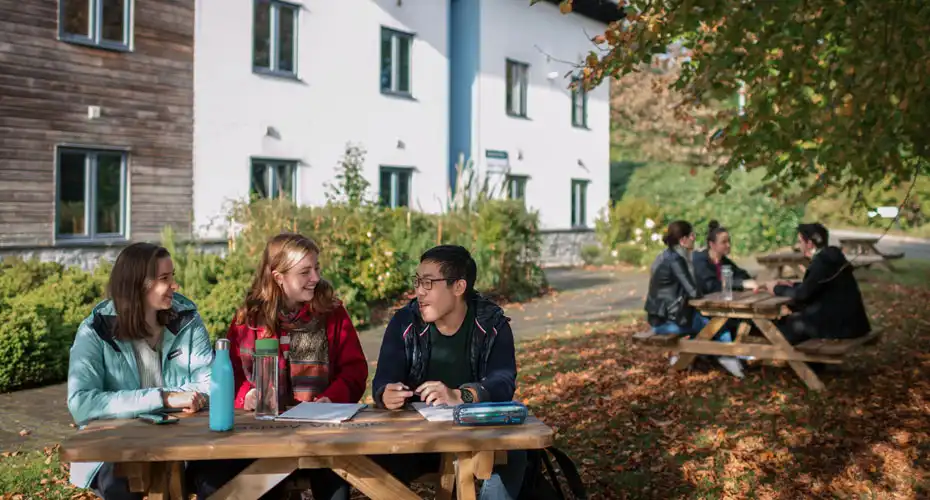
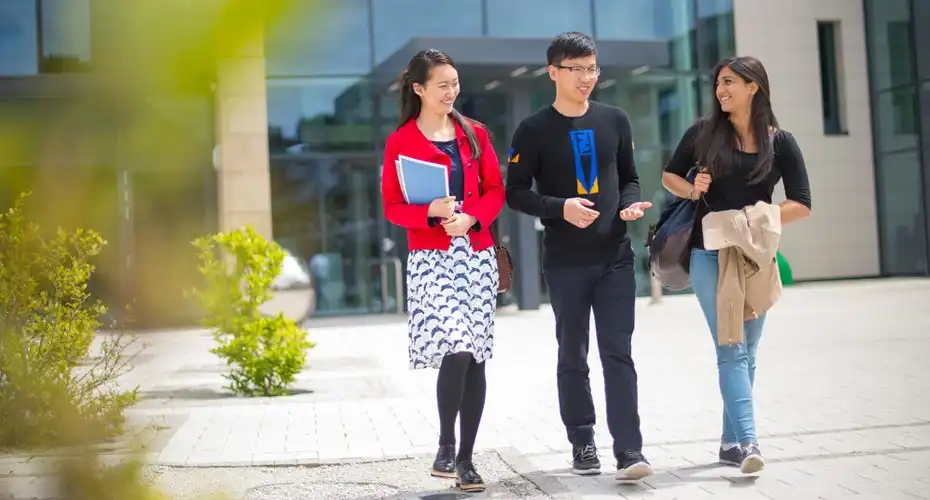
The majority of students are based at our Streatham Campus in Exeter. The campus is one of the most beautiful in the country and offers a unique environment in which to study, with lakes, parkland, woodland and gardens as well as modern and historical buildings.
Located on the eastern edge of the city centre, St Luke's is home to Sport and Health Sciences, the Medical School, the Academy of Nursing, the Department of Allied Health Professions, and PGCE students.
Our Penryn Campus is located near Falmouth in Cornwall. It is consistently ranked highly for satisfaction: students report having a highly personal experience that is intellectually stretching but great fun, providing plenty of opportunities to quickly get to know everyone.