Could ultrasonic cleaning be an alternative to traditional high-pressure water cleaning for concrete water tanks?
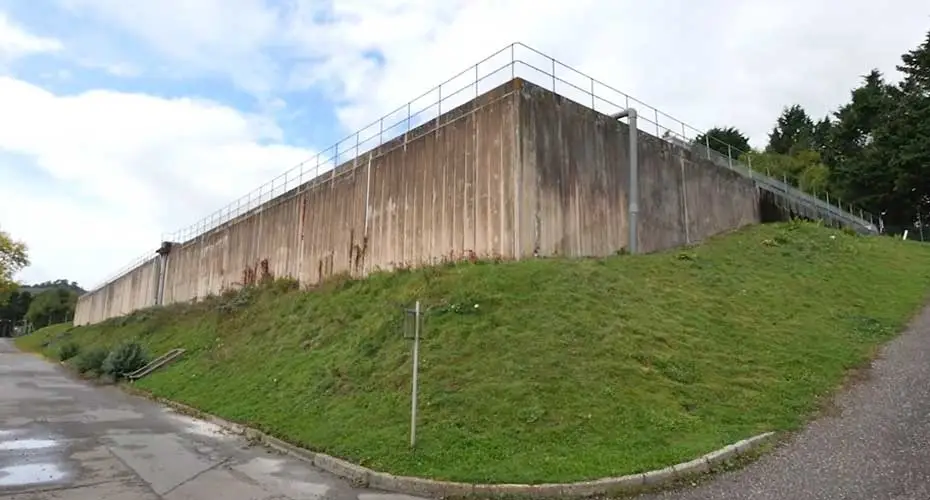
Ultrasonic cleaning offers a promising alternative to high-pressure water cleaning for concrete water tanks, using cavitation to remove mineral deposits and biofilms while minimising damage. We will equip an ROV with ultrasonic cleaning to test cleaning performance, potentially extending asset life and enabling large-scale commercial deployment across water companies.
This project aims to develop and validate a non-invasive ultrasonic cleaning system for potable water tanks, mounted on a remotely operated underwater vehicle (ROV). The goal is to provide an effective alternative to conventional high-pressure water cleaning, which gradually erodes concrete surfaces, shortens asset life, and increases long-term maintenance costs.
South West Water (SWW) operates around 1,000 concrete tank units, most of which require periodic internal cleaning. Current methods involve draining tanks and manual high-pressure jetting, a process that is time-consuming, labour-intensive, and damaging to infrastructure. Ultrasonic cleaning uses high-frequency sound waves to generate cavitation, dislodging mineral deposits and biofilms with minimal surface erosion. This approach is widely used in other sectors but has not yet been applied to water tanks.
The project will adapt and integrate ultrasonic transducers onto an existing submarine ROV platform. It will test whether the system can clean tank walls, floors, pillars and pipework to an acceptable regulatory standard, more quickly and with less damage than current methods. Key research questions address cleaning effectiveness, reduction in concrete erosion, cost and energy efficiency, waste reduction, operator time, and the potential for partial automation.
The work is structured into four phases over 18 months: concept design and simulation, prototyping, laboratory
testing, and live field trials in operational water tanks. If successful, the technology could extend tank lifespan, reduce cleaning frequency and costs, improve environmental performance, and enhance safety by reducing confined-space working. Beyond SWW, the solution has strong potential for commercialisation and scale-up across the wider UK and international water sector, with opportunities for patents, spin-out activity, and further robotic and AI integration.
Project Team
Funded by
The project is funded by South West Water through its research collaboration with the University of Exeter. The total project budget is approximately £350k, covering staffing, equipment, prototyping and testing.