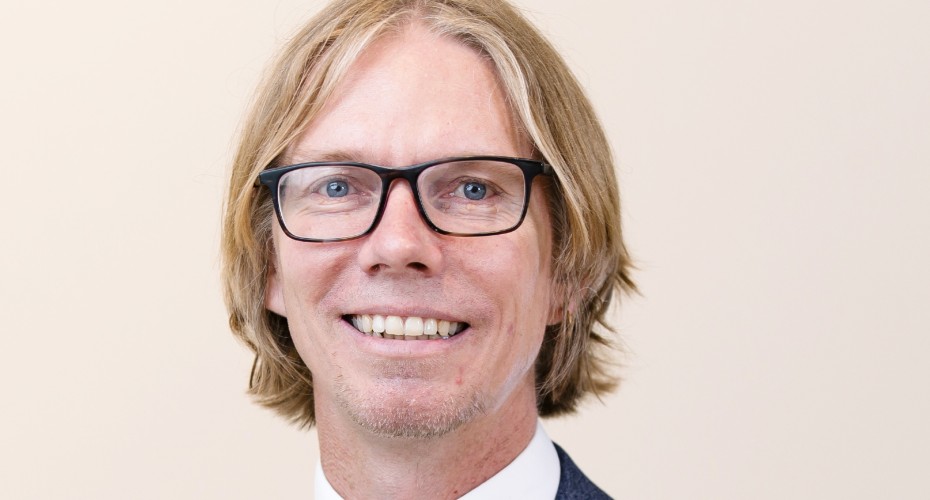
Group leader: 2016 - 2025
We are greatly saddened to announce the passing of our friend and colleague David Richards, who died in December 2025. David was one of the earliest members of LSI, and we will miss his incisive scientific mind, sharp wit, and kind comments and reflections on daily life as an academic.
David obtained his PhD in String Theory from the University of Cambridge in 2008. After spending a year teaching at the African Institute for Mathematical Sciences in Cape Town, David switched fields to mathematical biology and returned to the UK, joining the John Innes Centre. Here, he developed a keen interest in understanding the interplay between biomechanics and biochemistry, leveraging this to develop mathematical models of hyphal growth in bacteria and of telomere bouquet formation in wheat. David then moved to Imperial, where he focussed on modelling the formation and sensing of morphogenetic gradients. He joined the Centre for Biomedical Modelling and Analysis in Exeter in 2015.
Relishing the opportunity to lead interdisciplinary projects, David quickly formed long-standing collaborations with Michael Schraeder and Mike Deeks, developing models and analysis pipelines for studying peroxisome dynamics and actin networks, respectively. During this time, David developed his own, independent research interests in modelling the biomechanics of engulfment during phagocytosis. This led to him securing a prestigious MRC Career Development Award, in which he built an experimental lab to complement his computational modelling. This body of work led to several high-profile papers, including a PNAS paper that highlighted that the shape, rather than the size, of the object being engulfed is the key determinant of overall engulfment speed. This seminal work has shed light on how certain bacterial species avoid being phagocytosed and provides a platform for optimising drug delivery by modifying their geometry.
Since joining LSI on its opening, David has continued to foster new collaborations, including in modelling human embryo formation with Austin and Ge, in the mechanical components of morphogenesis with Stefan, and in calcium signalling in yeast with Alex Brand in the Centre for Medical Mycology. More widely, David has been instrumental in establishing communities in data science and modelling both locally, as one of the leads of the Exeter Health Analytics Network, and nationally as a Turing Fellow.
David was a passionate supervisor and mentor, having supervised numerous postdoctoral researchers, PhD students, and Masters students, including by remote supervision in Africa. David’s patient nature and clarity of thought was highly valued by his group members, with one former student Peyman remarking that, “During my time as David’s student, I learned a new way of thinking about life. He was the best teacher I ever had and the smartest person I have ever met.” Despite having spent most of his time in Exeter on a research fellowship, David was committed to furthering interdisciplinary teaching in Exeter, serving as module leader for several years on the Mathematical Modelling in Biology and Medicine module in Natural Sciences, with the module improving year-on-year under his leadership.
Outside of work, David was an avid musician, playing the piano and guitar and even composing his own pieces. He was a lover of cryptic crosswords, and the odd game of chess, often used as a break from writing lecture notes. He is survived by his wife Ania, a PI in the Medical School, and his daughter Sophie.
Those of us that knew and worked with David will cherish our memories of his humble nature, tongue-in-cheek humour, and kind heart. May he rest in peace.