BSc Geography with Applied GIS
| UCAS code | F809 |
|---|---|
| Duration | 3 years |
| Entry year | 2027 |
| Campus | Streatham Campus |
| Typical offer | A-Level: AAA-AAB |
|---|---|
|
A-Level: ABB - BBB |
| UCAS code | F814 |
|---|---|
| Duration | 4 years |
| Entry year | 2027 |
| Campus | Streatham Campus |
| Typical offer | A-Level: AAA-AAB |
|---|---|
|
A-Level: ABB - BBB |
| UCAS code | F811 |
|---|---|
| Duration | 4 years |
| Entry year | 2027 |
| Campus | Streatham Campus |
| Typical offer | A-Level: AAA-AAB |
|---|---|
|
A-Level: ABB - BBB |
Why study Geography with Applied GIS at Exeter?
- Learn from world-leading experts about critical global issues and challenges affecting environments and societies around the world.
- Develop a comprehensive grounding in physical geography with the same breadth of options and experience as BSc Geography, plus a specialism in GIS from your second year onwards.
- Discover how mapping and analytics are accelerating our understanding of big data, empowering digital transformation and being applied in a growing industry crossing the business, government, science and leisure sectors.
- Develop the theoretical and practical skills required to capture, manage, manipulate, analyse and present a range of geographically-referenced data in GIS using industry-standard software.
- Join a friendly and active student community: the Geography Society is one of the university’s largest and provides members with regular socials, sports teams, weekend trips and formal GeogSoc balls.
What is GIS?
GIS is a technology at the heart of spatial analysis, used to map things and locations to answer questions, detect patterns, tell stories and make insights that cannot be inferred from spreadsheets and charts.
It is a science and discipline in its own right, which is recognised by the new Geography with Applied GIS programme at Exeter and the success of its graduates. Find out how the University of Exeter is leading in GIS teaching.

Top 20 in the UK for world-leading research in Biological Sciences, Geography & Environmental Science
REF 2021, based on 4-star research

Top 40 in the world for Geography
QS World University Subject Rankings 2026

Learn from experts on field courses

Top 10 in the Russell Group for student satisfaction in five out of seven themes
National Student Survey 2026: Geography
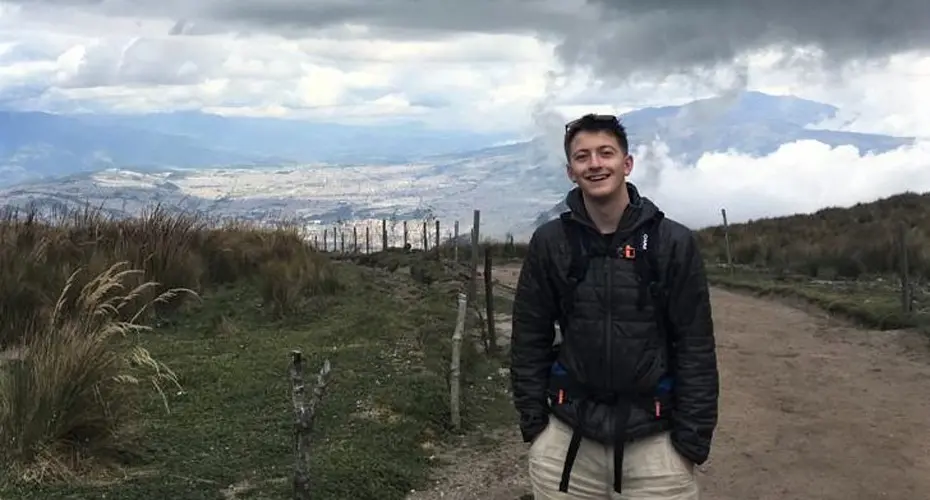
I used GIS in my dissertation to investigate the impact of hurricanes on sea surface temperature, something I couldn’t have imagined studying before university! The Geography with Applied GIS programme introduced me to web GIS and ways to visualise and present spatial information. The skills and knowledge I developed on the degree secured me a place on the Esri UK graduate program.
I’m now a year in and still excited be applying the GIS skills I learnt during my degree in my job.
Max
BSc Geography with Applied GIS
Entry requirements for 2027 entry (typical offer)
| Qualification | Typical offer | Required subjects |
|---|---|---|
| A-Level | AAA - AAB | B in a science subject* |
| IB | 36/666 - 34/665 | HL5 in a science subject* |
| BTEC | DDD | Applicants studying one of the following subjects in the BTEC Extended Diploma, BTEC Diploma or BTEC Extended Certificate will be considered without the specific GCE A-Level subject requirements: Applied Human Biology, Applied Psychology, Applied Science, Computing. |
| GCSE | C or 4 | English Language |
| Access to HE | 30 L3 credits at Distinction Grade and 15 L3 credits at Merit Grade | To include at least 12 L3 credits at Merit Grade in an acceptable science subject area* |
| T-Level | T-Levels not accepted | N/A |
| Contextual Offer | A-Level: ABB - BBB |
Specific subject requirements must still be achieved where stated above. Find out more about contextual offers. |
| Other accepted qualifications | ||
| English language requirements |
International students need to show they have the required level of English language to study this course. The required test scores for this course fall under Profile B1. Please visit our English language requirements page to view the required test scores and equivalencies from your country. |
|
NB General Studies is not included in any offer.
Grades advertised on each programme webpage are the typical level at which our offers are made and provide information on any specific subjects an applicant will need to have studied in order to be considered for a place on the programme. However, if we receive a large number of applications for the programme we may not be able to make an offer to all those who are predicted to achieve/have achieved grades which are in line with our typical offer. For more information on how applications are assessed and when decisions are released, please see: After you apply
*Accepted science subjects: Biology/Human Biology; Chemistry; Computer Science; Design and Technology; Economics; Electronics; Environmental Science; Environmental Studies; Geography; Geology; Life and Health Sciences (Double Award only), Marine Science; Maths/Pure Maths/Further Maths; Physical Education; Physics; Psychology; Science (applied); Sport Science; Statistics.
Course content and modules
Geographical Information Systems (GIS) are revolutionising geography through spatial analysis with mapping and geo-technologies to provide the technical means for data exploration, visualisation and dissemination of developed understanding.
In our BSc Geography with Applied GIS you will enjoy studying the breadth of geography while gaining knowledge and hands-on experience of how mapping and analytics are accelerating our understanding of big data, empowering digital transformation and being applied in a growing industry crossing all sectors - including business, government, science and leisure.
You will develop skills such as statistical analysis, learning to code for data analysis, geospatial investigation and mapping using GIS, image analysis of earth observation data, and data collection in the field. Training is provided on industry-standard software packages for spatial data analysis which are important skills across all employment sectors.
Year 1
The first year of study on this programme is the same as for the BSc Geography programme. It provides an introduction to wide-ranging research areas in physical geography and core academic skills.
Year 2
Building on content from the first year, in the second year you will undertake core modules in applied GIS, remote sensing and research modules. Training and support enable you to start developing a proposal for a final year research project with applied GIS. In addition, you will have flexibility to select optional physical and/or human geography modules to suit your developing interests.
Final year
A significant focus in your final year is the research-led dissertation which will utilise GIS for the data analysis. You will receive supervision from an expert in your chosen area of physical geography.
This year, you will continue to develop skills and understanding of real-world applications of GIS. We offer a wide range of modules for you to select, covering both human and physical geography specialisms aligned to our research expertise.
Module details
You may notice changes to some of our modules over the coming months. This is because we are making space for the following:
- Minors: Future Skills Pathways - Alongside your main degree you may be eligible (depending on your course) to choose modules from another subject to broaden your skills and interests.
- Skills to Thrive built into every degree - Essential skills for your future, including communication, problem-solving, teamwork and digital confidence.
- Increased innovation and wellbeing - More room for creative learning, real-world projects and a healthier study rhythm.
Please note that the module information displayed here is subject to change.
90 credits of compulsory modules, 30 credits of optional modules
| Code | Module | Credits |
|---|---|---|
| Compulsory 1 | ||
| Earth System Science: The History of Our Planet | 15 | |
| Earth System Science: Our Changing Planet | 15 | |
| Geographies of Environment and Sustainability | 15 | |
| Concepts in Geography | 15 | |
| Skills for Geography | 15 | |
| Fieldwork in Geography | 15 | |
GEO1211: Earth System Science: The History of Our Planet
This module will provide you with an introductory understanding of the development of the Earth System over the past 4.5 billion years. The module examines the role of the Sun, the inner Earth, and the evolution of life, in shaping the Earth system and creating a world in which humans could evolve. It explores the causes of past climate changes on all timescales, with a special focus on the recent Quaternary ice age cycles (the last 2.5 million years).
This module aims to provide you with an introductory understanding of how the Earth has developed as a system, what the key parts and processes in that system are, and what the key drivers of change in the system have been in the past. It provides an introduction to 'systems thinking' including the role of feedback processes in stabilising or destabilising our planet. Earth System Science: The History of our Planet aims to provide you with much of the background understanding required for a degree in Physical Geography.
Through active participation in the module, the aim is that you will further develop the following academic and professional skills:
GEO1213: Earth System Science: Our Changing Planet
This module will provide you with an introductory understanding of the processes operating within the contemporary Earth System, and how these change in time. The module examines the geosphere, ocean and atmosphere, cryosphere and biosphere, and how these systems have been, and may continue to be, influenced by human and naturally-induced environmental changes. The major components of the Earth System will be brought together in the context of contemporary climate change.
This module aims to provide you with an introductory understanding of processes operating within the geosphere, oceans, atmosphere, cryosphere and biosphere, and how these processes have been, and continue to be, influenced by human and naturally-induced environmental changes. Earth System Science: Our Changing Planet aims to provide you with much of the background understanding required for a degree in Physical Geography.
This module will contribute to the development of your understanding of how core skills contribute and relate to employability potential, specifically through the application of critical analytical skills to a range of contemporary global challenges.
GEO1310: Geographies of Environment and Sustainability
Through this module you will explore the geographical themes that are examined in relation to contemporary environmental issues. Taking an inter-disciplinary approach, the module introduces and investigates the ways in which geographers have come to understand the dynamics of environmental issues in terms of their physical, economic, social, cultural and political complexities. You will gain an understanding of geographical approaches to the study of socio-environmental issues, sustainability and justice applied across specific environmental challenges or dilemmas, such as climate change, consumption, waste, energy, population and migration.
The module aims to:
- Introduce a range of key geographical concepts and debates related to environmental sustainability and social justice.
- Chart the development and practice of environmental sustainability as defined by geographical research
- Use geographical concepts to analyse a range of contemporary environmental issues that are embedded in current research.
The module seeks to develop the following graduate attributes:
GEO1316: Concepts in Geography
This module introduces you to the major contexts in which modern geography operates, such as its historical roots, the development of the discipline and the relationships between the social and natural sciences within geography. The module positions geography as a way of thinking about the world, rather than as a fixed body of knowledge.
You will also explore some of the key ways in which geographers have come to understand natural and social worlds, notably through the concepts including space, place, power, and time, and how these concepts shape the questions geographers ask, the evidence they use, and the explanations they develop. Through engagement with geographical histories, contemporary debates, and applied case studies, the module highlights the role of contested knowledges in research and the contributions geographers make to wider societal debates.
This module has four aims:
- To gain an initial understanding of the ways in which geography operates within Higher Education contexts.
- To appreciate the historical development of the discipline and how this has shaped the ways in which knowledge is constructed and consumed.
- To examine the place of geographical enquiry within the broader philosophies of science and social science.
- To introduce you to core concepts in geography through the lens of contemporary geographical debates.
Through active participation in the module, the aim is that you will further develop the following academic and professional skills:
GEO1318: Skills for Geography
Through a combination of seminars, workshops, group work and independent study, Skills for Geography provides a foundation for all Single Honours Geographers (as well as those taking Geography as part of their FCH or Liberal Arts programme) in transitioning effectively to university-level study.
This foundation module is an essential toolkit for your undergraduate degree. It will raise your awareness of your role within the learning process, ease your transition to University-level study and independent learning, and provide a range of specialist and generic skills. Weekly independent learning activities provide the foundation for a series of seminars and workshops that will allow you to learn key skills in geography. The skills you learn will complement the approaches and ideas used in parallel first year modules as well as lay the foundations for successful study throughout your entire degree, as well as underpinning your development as an independent researcher.
This is a compulsory and non-condonable module for the BA and BSc Geography programmes and for Geography FCH and Liberal Arts students.
This module aims to:
- Enable a smooth transition into Higher Education by enabling you to work effectively as a group and individual researcher
- Encourage you to engage critically with contemporary debates within Geography
- Facilitate an understanding of effective approaches to oral and written communication at University
- Raise your awareness of the role you must play in the learning process
- Direct your acquisition of a range of skills in geography which will be beneficial throughout your time at University and later in employment
This is to be achieved primarily through an integrated series of seminars and workshops as a means of developing academic skills to support learning in other Level 4 (Stage 1) Geography modules. The module will therefore provide a foundation for all Geographers and a good preparation for modules in geography in Levels 5 and 6 (Stages 2 and 3). This module will contribute to the development of an understanding of how core skills contribute and relate to employability potential.
Through active participation in the module, the aim is that you will further develop academic and professional skills, including the ability to:
GEO1319: Fieldwork in Geography
This module provides you with an introduction to fieldwork as a key component of geographical enquiry. Through lectures, you will gain a broad understanding of the history of fieldwork in geography, the different ways in which 'the field' is conceptualised across the discipline, and contemporary debates surrounding the future of field-based practices in research and education. In addition, this module provides you with multiple opportunities to undertake accessible learning activities in the local environment to gain practical experience and an appreciation of how different field-based methods can be used to investigate contemporary research questions. Learning spans the discipline of geography, introducing you to a wide range of quantitative and qualitative research methods. As such, the module is compulsory for students taking BA Geography and BSc Geography degrees, as well as being available (a co-requisite) to Liberal Arts students who are taking GEO1318 (Skills for Geography).
The module introduces you to the breadth of ways in which geographers engage with 'the field' (through fieldwork) as an important aspect of enquiry.
In this module, you will have the opportunity to:
| Code | Module | Credits |
|---|---|---|
| Optional 1 | ||
| Geographies of Place, Identity and Culture | 15 | |
| Geographies of Global Change | 15 | |
GEO1105: Geographies of Place, Identity and Culture
This module provides a critical review of contemporary geographical debates related to concepts of place, identity and culture. The focus throughout the module is to reflect on key debates about how place and culture interconnect in various ways, and the ways in which these interconnections impact on everyday aspects of social identity, belonging and exclusion, taken-for-granted representations of cultural meaning, and the performances of everyday life. The module guides you through this by exploring significant themes in contemporary human geography.
This module will provide you with an overview of debates concerning how to think geographically about contemporary issues through the lens of the more personal and experiential world that might be considered as everyday life. It provides you with a sound knowledge of the key processes shaping how we understand place, identity and culture, and a range of intellectual perspectives used to explain and evaluate those processes. It provides you with critical introductions to how human geographers have developed these ideas in the context of three core themes.
The module seeks to develop the following graduate attributes:
GEO1106: Geographies of Global Change
Through a focus on key spatial concepts and a critical treatment of key topics (such as governing places, geographies of development and childhood, democracy, or global health), this module provides an introduction to how to think geographically about contemporary global issues. It does so by demonstrating the ways in which the description, explanation, and evaluation of global issues are debated in academic fields and contested in the world. The module is suitable for the non-specialist, and can, for example, be a complement to Economics- and Politics-related pathways.
This module will provide you with an overview of debates concerning how to think geographically about contemporary global issues. It provides you with a sound knowledge of the key processes shaping global change, and a range of intellectual perspectives used to explain and evaluate those processes. This is achieved through a focus on key spatial concepts in human geography and related disciplines, alongside detailed discussions of key topics.
The module seeks to develop the following graduate attributes:
Please note that the module information displayed here is subject to change.
75 credits of compulsory modules, 45 credits of optional modules
You must pass both modules in Compulsory 1 in order to progress to the next stage of BSc Geography with Applied GIS. If you fail either of these modules you will be transferred to the standard BSc Geography
You must choose 15-45 credits from the Physical Geography and Interdisciplinary Optional module group (Group A)
You may then choose 0-30 credit from the Human Geography Optional module group, subject to choosing 45 credits of optional modules in total (Group B)
| Code | Module | Credits |
|---|---|---|
| Compulsory 1 | ||
| Introduction to Remote Sensing | 15 | |
| Applied GIS: Mapping with Technology | 15 | |
| Compulsory 2 | ||
| Numerical Methods for Physical Geographers | 15 | |
| Research Design in Physical Geography | 30 | |
GEO2321: Introduction to Remote Sensing
In this module you will learn how satellite remote sensing has contributed to the geospatial revolution. You will develop skills gained during GEO2333: Applied GIS (a pre-requisite) to discover the potential of remote sensing and image analysis for investigating a range of recent environmental changes. Through lectures and guided GIS-based computer practical sessions, you will gain an understanding of the theoretical principles behind a broad range of remote sensing techniques, including electromagnetic radiation theory and the differing spatiotemporal characteristics of remotely sensed data. You will gain practical experience of searching for and downloading a range of freely available data and will develop your quantitative data skills by performing analyses on vegetation, land cover and elevation change datasets.
GEO2333: Applied GIS: Mapping with Technology
Mapping has undergone a geospatial revolution in recent years through the development of sophisticated Geographical Information Systems (GIS) and online web mapping tools. In this module you will develop understanding of theoretical and practical skills required to capture, store, manage, manipulate, analyse and present a range of geographically referenced data in a GIS environment. These skills are important across all sectors in business, government, and science. This module provides training in industry-standard software packages for spatial data analysis, thereby enhancing future employability of the student. Underpinning theory and core concepts in cartography and spatial thinking is explained through delivered content and then applied to real physical geography data in practical assignments. Learning is facilitated through use of bespoke materials written by the module convenors and continuous feedback on progress is provided.
You must pass this module in order to take GEO2321 Introduction to Remote Sensing.
The overall aims of this module are:
GEO2332: Numerical Methods for Physical Geographers
This module provides you with a training in numerical methods used by physical geographers, incorporating:
- Scientific computing,
- Environmental modelling,
Accordingly, it is designed to prepare you for undertaking research within and beyond a university context and seeks to equip you with key employability attributes for professional careers. In so doing, the module will explore a range of numerical methods that physical geographers use in research and their applications for wider society.
The module will be taught using lectures and computer practical teaching and is one of the compulsory modules you study as part of the BSc Geography degree programme.
This module aims to provide an introduction to, and critically engaged understanding of, how physical geographers adopt and use numerical methods in a range of contexts. The module has the following objectives:
GEO2334: Research Design in Physical Geography
This module provides you with an advanced understanding of the requirements for undertaking a robust, independent research project. In doing so, we will explore the ways in which physical geographers design and undertake research projects, and examine the key attributes of high quality and rigorous research. It is designed to prepare you for undertaking independent research within the university, specifically your undergraduate dissertation research. Beyond your degree, this module seeks to equip you with key employability attributes for professional careers after university. The module teaching includes directed, as well as independent study, and is one of the compulsory modules within a BSc Geography degree. It is compulsory for FCH students wishing to undertake a physical geography dissertation and/or participate in a geography field course module.
This module aims to provide you with an advanced and critically engaged understanding of how physical geographers design and undertake research projects. The module has the following objectives:
| Code | Module | Credits |
|---|---|---|
| Human Geography Optional modules | ||
| Nature, Development and Justice | 15 | |
| Global Urban Futures | 15 | |
| Geographies of Migration | 15 | |
| Health Geographies | 15 | |
| Geographies of Change and Resistance | 15 | |
| Physical Geography and Interdisciplinary Optional modules | ||
| Reconstructing Past Environments | 15 | |
| The Anthropocene | 15 | |
| Ecosystems of the Future: Climate Change, Terrestrial Feedbacks and Nature-Based Solutions | 15 | |
| Climate Change: Science and Society | 15 | |
| Sustainable Seas | 15 | |
| Catchment to Coast Field Course (Northern Spain) | 15 | |
| Environmental Futures Field Course | 15 | |
GEO2131: Nature, Development and Justice
Socio-economic development and the state of the natural environment are two major concerns in contemporary policy, politics, and public activism. The pursuit of 'development' is a well-established, enduring goal across the world. Equally, environmental action, especially that which is directed at 'sustainability', has become a vital part of local, national and international agendas. This module examines the contours of development and environmentalism as commonly defined and practiced, focusing on implications for social and ecological justice. It charts the historical and spatial trajectories of development and sustainability discourse and practice, and explores the increasingly interconnected character of social and ecological justice. The module also investigates approaches and practices that counter and offer alternatives to established but problematic framings of development, sustainability, and justice. A range of themes addressed within research of the teaching staff- such as poverty, wellbeing, inequality, conservation, sustainability, food, energy, de-growth, and climate change - are examined to facilitate an empirically grounded and theoretically informed engagement with ethical, political, and practical issues concerning development, environmentalism, and justice in the contemporary world. This module is suitable for students of Geography and cognate social sciences.
GEO2132: Global Urban Futures
This module introduces interdisciplinary social science approaches to understanding urbanisation processes. It considers the significance of urbanisation for a range of contemporary geographical issues, from socio-economic inequality to environmental change; and the responses to those issues, from activism to policy-making. It provides a framework for understanding and critically analysing claims about and consequences of 'planetary urbanisation'. The module introduces you to key traditions of urban social thought such as explanatory theories of urban development, interpretative theories of urban social and cultural life, and action-oriented theories of urban politics, planning, and policy. It addresses key methodological issues concerning contextual understanding, comparative analysis, and case-study analysis. It also addresses traditional and new urban issues such as Global South urbanism; investment and development futures; cities and infrastructures; eco-cities and enclaves; informal cities; and urban social movements.
The module assessment is designed to enable you to select and develop a focussed engagement with specific approaches and issues of interest to you.
The aim of this module is to give you a thorough understanding of contemporary social science approaches to urban issues.
The module will:
- introduce various theoretical traditions for understanding cities and urban processes
- introduce issues of geographical reasoning associated with urban social science
- introduce issues that are traditionally or newly understood as having urban causes, conditions, or resolutions
- provide a framework for engaging critically with contemporary urban issues by selecting and applying specific analytical approaches
- provide a framework for critically analysing why urban processes are often seen as both the cause and solution to so many issues
The module involves in-depth workshops and class debates that seek to develop the following graduate attributes:
- confidence in assessing the robustness of social scientific evidence and in presenting textual and audio-visual material in a new media format
- problem solving through interdisciplinary reasoning and analysis of issues-based urban case studies and urban policies at different scales
- articulating social scientific concepts and evidence with confidence through enquiry-led research on assessed written assignment topics, including providing peer feedback on topics through discussion
The teaching contributions on this module involve elements of research undertaken by module staff, such as work on urban social theory, cities in the Global South, urban infrastructures, and informality.
GEO2136: Geographies of Migration
Migration is one of the key challenges of our times and it impacts on political and social life in a range of fundamental ways. This module provides a lively and engaging overview of this vibrant field, informed by the impressive range of geographical scholarship on the issue. The course will equip you with the conceptual skills and factual knowledge to understand migration trends and debates, and to form and express your own views on migration and related topics.
This module will provide an introduction and overview to the varied and vibrant topic of migration. The module aims to contextualise the study of migration within the discipline of geography and to enable you to understand migration from a variety of conceptual and applied perspectives.
It does so by considering the following topics: 'Concepts and Perspectives', providing the theoretical building blocks you need to think clearly and critically about migration; 'Challenges', looking at a range of real-world issues that arise from migration and its governance.
This module will improve your employability, especially through the development of skills in the application of critical analytical perspectives to a range of contemporary global challenges. More specifically, the module will be a useful way to acquire skills that could be helpful in migration-related jobs in government, the charitable sector and the private sector.
GEO2138: Health Geographies
This module develops a critical approach for understanding the nature of different health geographies today. The course focuses on:
i) the relationships between people and other organisms that are important to health;
ii) the importance of place, space, and environments in shaping healthy relations; and
iii) the role of political, economic, and other practices in creating health inequalities and in the search for new ways of reimagining and remaking healthy geographies
We explore these through different sites important to health geographies, looking at how data, knowledges, and experiences around health are remade across bodies, clinics, laboratories, policies, and environments.
This module aims to introduce students to key debates, ideas and methods in health geographies and consider what a geographical approach to health can contribute to research and practice. Students will explore case studies of health in varying geographical contexts to understand how geographical ideas and approaches can inform our understanding of health. This module will equip students with the skills and knowledge to enhance their employability for careers in a variety of sectors, including in environmental and public health.
GEO2139: Geographies of Change and Resistance
How does the future come to be? How do our actions, as individuals and collectives, shape the world of tomorrow? These are the questions at the heart of this module. Through a focus on acts of change and resistance - from protest to policy, promise to practice - you will explore how we might negotiate the unfolding of different futures. Far from opposing forces, this module views change and resistance inherently intertwined process enacted through political, cultural, environment, social, economic, and infrastructural transformations and transitions.
Although grounded in geography, the issues addressed in this module are interdisciplinary making the module suitable for students with a background in other disciplines. There are no pre-requisite modules.
This module invites students to think about how acts in the present shape the coming future and how anticipation of the future shapes acts in the present. Throughout the module, students will be introduced to a series of different moments and movements defined by change and resistance. These will cover a broad set of contemporary issues that include themes such as climate change, technological development, and social justice.
GEO2230: Reconstructing Past Environments
This module offers a skills-based practical introduction to palaeoenvironmental science: studying natural archives of environmental change. With a focus on the last 21,000 years, a period marked by dramatic climate shifts and the rise of human societies, you will explore how climate and human activities have shaped landscapes since the end of the Last Glacial Cycle. You will learn about various techniques used to reconstruct histories of past environments from natural archives, covering the entire process from sample collection to data analysis and interpretation. This module will provide you with essential transferable skills and knowledge that will be invaluable for a dissertation in palaeoenvironmental science. This module has a hands-on and problem solving approach to learning that will enable you to critically use multiple lines of evidence to infer histories of climate and environmental change, driven by the research expertise of the teaching staff, which lie in the field of long-term ecology and palaeoenvironmental change.
This module aims to introduce the principles and techniques used to reconstruct past climates and environments. Enquiry-led, independent and peer learning is embedded in the module through:
- Lectures - to provide you with important background knowledge of past climate and landscape changes and how environmental proxies including pollen and charcoal can be used to infer climate and landscape histories;
- Fieldwork and practical sessions - you will be taught skills in collecting sediment archives, analysing microfossils and applied data analysis techniques; and
- Assessment workshops - integrated into the learning programme to support you as you develop these skills and apply them in your assessment.
The skills acquired during the module although relevant for a dissertation project in this field, are also highly transferable. This module will help you develop skills to enhance your employability potential and career development through:
GEO2234: The Anthropocene
We are living through an era in the Earth's history in which humankind has become the dominant driver of change - the 'Anthropocene'. It is hoped that by understanding the causes and effects of anthropogenic climate and environmental change a more sustainable future can be forged for human society and non-human nature alike. In this module we will: i) place the Anthropocene within the context of past environmental and climate changes; ii) examine the extent, magnitude and severity of human influence across the Earth system, from the atmosphere to the biosphere; and, iii) explore possibilities to mitigate and/or live with the current and ongoing climate crisis and environmental breakdown. We will challenge ourselves to think about our past, present and future roles in the Anthropocene, as individuals and as a collective, and our potential as agents of change as we seek to address the biggest challenge humankind has ever faced.
In the first half of this module we aim to provide you with insight into the origins and causes of the Anthropocene, as a process, era and concept. You will learn about the fundamental changes taking place across the Earth system as a result of anthropogenic climate and environmental change and explore the techniques available to monitor and quantify these. We will consider the evolution of the environmental and ecological influence of humans, from localised ecosystem engineers through to modifiers of the Earth system.
GEO2235: Ecosystems of the Future: Climate Change, Terrestrial Feedbacks and Nature-Based Solutions
To reach net zero, society must reduce greenhouse gas (GHG) emissions to the level that the land surface and oceans can absorb, resulting in no increase in GHGs in the atmosphere. Terrestrial ecosystems currently absorb ~25% of the CO2 we release each year. However, there is uncertainty whether this will continue as climate change impacts become more severe. On the other hand, there is increasing interest in trying to manage land to promote greater carbon uptake while also delivering ecological benefits (Nature-based Solutions). This module will critically evaluate the role terrestrial ecosystems could play in the fight against climate change.
The model is suitable for non-geographers but some ecological knowledge is useful.
GEO2317: Climate Change: Science and Society
In this module, you will develop your skills in the analysis of global climate change, using perspectives from physical and human geography. You will get a strong grounding in the science of climate change, climate and society relations, the governance, policy, and politics of climate change, climate mitigation and adaptation, and decarbonisation. You will be challenged to think about the interlinked human and physical geographic dimensions of climate change. By the end of the module, you will be able to articulate key information about climate change impacts and proposed solutions.
The assessment is designed to stimulate interest in the module content beyond the taught material. It is designed to support your development in the understanding, analysis and evaluation of interlinked physical and human geographical dimensions of climate change science and action.
The module will equip you to:
- understand the fundamental science of climate change; causes and consequences of local and global scale changes in environment and environmental futures;
- analyse the interaction of human behaviour and policies on greenhouse gas emissions and proposed social and technical solutions;
- explore perspectives, theories and methods for investigating climate change as a social phenomenon and environmental reality, as embedded in current research on climate change risks, on emissions reduction, and climate action at different geographical and policy scales.
Through the module you will develop the following graduate attributes:
GEO2339: Sustainable Seas
Oceans and coastal environments sustain biodiversity, regulate climate, and support livelihoods but face increasing threats from climate change, pollution, and over-exploitation. This interdisciplinary module explores resilience and sustainability in marine/coastal ecosystems, covering blue carbon, nutrient cycles, ocean circulation, and climate change impacts. It examines conservation and restoration strategies alongside governance frameworks for sustainable resource management at local, national, and global scales. By engaging with these themes, students will develop critical skills to address marine and costal sustainability challenges and contribute to the long-term protection and resilience of our seas and coasts as they face increasing environmental change and anthropogenic pressures.
GEO3247: Catchment to Coast Field Course (Northern Spain)
From the snow-capped Cantabrian Mountains to the dynamic Cantabrian Sea, this field course explores the fascinating geographical diversity of this part of Northern Spain. With its varied geology, hydrology, ecology and management, the region serves as an exceptional natural classroom. Much of the study area is within the Parque Nacional de Picos de Europa, Spain's oldest national park. This field course will provide you with an opportunity to develop and apply your research skills in this awe-inspiring landscape.
The module will consist of two parts:
- Term 2 preparation in Exeter: this involves a mix of lectures, group working and self-directed study that will provide you with the necessary background information to successfully undertake the field class.
- Term 3 international fieldtrip: the residential part of the module comprises staff-led activities, student-led group activities and individual reflection.
The trip will involve walking up to several kilometres each day over uneven ground, so a minimum level of fitness is required. The weather can be highly variable so suitable clothing and footwear is required.
Please note that in the event of the field course not running (due to circumstances that compromise the feasibility of the trip), you will still be able to complete the module through the provision of an alternative learning experience.
This module is designed to allow you to develop conceptual and practical understanding of key research themes and practices in physical geography. The learning content of this module aims to:
GEO3325: Environmental Futures Field Course
The Environmental Futures Field Course to Freiburg and the surrounding area is an interdisciplinary module centred on enabling you to engage critically and experientially with a range of contemporary debates on sustainable futures and landscape transformations within the context of The Climate Emergency . This learning focus is extended through a commitment to using low carbon travel (whole module group rail travel) to visit this European city and its surrounding areas. Through experiencing a diverse range of field sites, you will learn how physical and social scientists are helping to reimagine the ways we engage with urban and rural spaces to engender positive environmental and social transformations.
Throughout Term 2, you will attend lectures and undertake guided reading to gain an understanding of the contemporary environmental debates that will form the focus of the field course teaching and learning. This will include information that will enable you to become familiar with the field course rail travel and destination city. During the field course, you will participate in group-led discussions to critically debate the research learning activities for each day. You will work individually during and after the field course to develop a fieldwork extended essay based on an environment and sustainability theme related to your learning experience on the field course.
Please note that the module information displayed here is subject to change.
Find out more about placement and study abroad options under Course variants.
with Professional Placement
120 credits of compulsory modules
| Code | Module | Credits |
|---|---|---|
| Compulsory 1 | ||
| Professional Placement for Geographers | 120 | |
GEO3603: Professional Placement for Geographers
Increasingly, graduate positions request that applicants have work experience applicable to the role. This module will enable you to immerse yourself in a professional environment; you will learn to apply the skills learnt during the first and second years, improve personal and transferable skills, make new contacts and enhance employability. This module allows you to arrange your own placement year and to incorporate this into your degree programme, and for this to be reflected in your degree title. It is your responsibility to find, apply and secure a placement position with a relevant organisation. A minimum of nine months full-time should be spent in the workplace. The module has a range of assessments based on personal reflections on your workplace role and skills development.
This module will enable you to develop professional skills in a workplace environment. This module offers an excellent opportunity for you to immerse yourself in an environment where you can develop professional skills, gain a greater understanding of the use of your degree and ultimately improve your CV. You will be encouraged to reflect on your experiences during the placement to help you to make career decisions for the future.
with Study Abroad
120 credits of compulsory modules
| Code | Module | Credits |
|---|---|---|
| Compulsory 1 | ||
| Study Abroad | 120 | |
GEO3601: Study Abroad
Exeter Geography offers you the possibility to study at an agreed partner university in a foreign country. You must attain average grades of 60% or above in the first year and maintain an average of 55% or higher in the second year to be considered for the With Study Abroad programme.
If you are accepted onto the programme, you will spend one academic year abroad, usually the third year of a four-year programme. Credit for academic studies during your year abroad is arranged by agreement between Exeter Geography and the host institution. These marks are then translated back into your degree.
The module aims to provide you with a different and supplementary learning experience, predominantly in Geography but with the possibility of additional related subjects (subject to approval), ensuring the quality of education as offered at the University of Exeter, but providing the chance to experience learning in a different institution and interact with a different culture. The module aims to expand your geographical knowledge, to expose you to, and learn from, different methods of study and learning and to experience academic and university culture from a different, international perspective.
Please note that the module information displayed here is subject to change.
60 credits of compulsory modules, 60 credits of optional modules
To qualify for the award of BSc Geography with GIS you must choose at least 15 credits form the Compulsory Choice group. If you fail one of GEO3223 or GEO3239; or do not include GIS analysis in your dissertation to the approval of the programme director; you will be transferred to the standard BSc Geography. Your Dissertation must include GIS analysis and must be approved as such at the project proposal stage by the programme director.
| Code | Module | Credits |
|---|---|---|
| Compulsory 1 | ||
| BSc Dissertation | 45 | |
| Compulsory Choice | ||
| Landscape Systems Management | 15 | |
| GIS for Professionals | 15 | |
GEO3321: BSc Dissertation
This module offers you the opportunity to undertake your own independent and original piece of research and enables you to display your skills in tackling specific geographical issues in some depth. The essence of the work is that you are able to demonstrate your ability to undertake your own independent and original piece of research. The dissertation must be independent and original in all phases including design, data collection, data processing and analysis and data interpretation and project write-up.
GEO3321 is a core module which covers the execution and completion of a 45-credit dissertation in the BSc programme.
The aims of the module are for you to develop:
- a knowledge of a specific geographical topic,
- an understanding of the challenges of empirical geographical research, and the ability to deal with
- practical research problems (e.g. collecting, manipulating and analysing data),
- skills in designing a project and linking its subject-matter to other bodies of geographical knowledge,
- skills in dealing with the complex inter-relationships of real-world processes,
- transferable skills in inter-personal communication, data collection and analysis, report writing, and effective time management.
By attending the timetabled sessions and completing the formatively and summatively assessed coursework in this module, you will develop your academic and professional skills. These include developing an ability to
GEO3223: Landscape Systems Management
In Landscape Systems Management you will learn skills to solve real-world challenges by running your own analyses of the impacts of real events on environmental systems, with a focus on nature-led understanding, solutions, and management. Lectures cover fundamentals for how hillslope-fluvial landscape systems function that are relevant to the applied exercises covered in the practicals (focused in areas of Exeter research). Your mark will come from two professional style reports similar to those expected beyond university, with the second report (60%) due in Term 3 (to minimise interference with your dissertation). Writing professional reports for environmental analysis builds invaluable skills and produces portfolio examples that can be shared to demonstrate your capabilities. Student and alumni surveys rate this module as highly beneficial for employability and professional development. If you enjoy working with GIS and environmental data, solving problems actively, and have enthusiasm for hands-on skills development, then you will enjoy Landscape Systems Management.
GEO3239: GIS for Professionals
Geographical Information Systems (GIS) provides the ability to analyse data spatially leading to better understanding of what is happening in different places informing decisions across all sectors of research, business, government, education, entertainment and leisure. This module develops your understanding of GIS by using spatial data to discover solutions to real world applications. You will not just be developing GIS skills but also discovering the numerous opportunities for a career in GIS. Discovery and learning will develop from click and point operations, to developing workflows, models, scripting GIS and an understanding of automation.
This is a core module for all incoming students on the GIS MSc.
Learning in this module is largely through directed and supported enquiry-led computer exercises. Exercises will be developed from research expertise in Geography as well as those developed in collaboration with external partners including Esri from real-world applications. Esri is the world leading GIS provider in industry and business. You will have access to the latest software and run computer exercises in ArcPro, ArcGIS online, Q-GIS and python environments. Delivered content will introduce key concepts and techniques and will develop GIS skills and management such as:
- Cartography.
- Web GIS: Responsible mapping
- Introduction to GIS automation
- Decision making with GIS: Applications
You will also develop skills appropriate for careers in GIS:
- Data management.
- Data sharing, publishing and collaboration.
- Data visualisation.
- Management of a web GIS including access, permissions and data sensitivity.
This module aims not just to develop your GIS skills and opportunities for employment, but also attributes required in the professional workplace including:
| Code | Module | Credits |
|---|---|---|
| Optional 1 | ||
| Future 17: Sustainable Development Goals Challenge | 15 | |
| Gender and Geography | 15 | |
| Images of the Earth | 15 | |
| Geopolitical Cultures | 15 | |
| Digital Geographies | 15 | |
| Literature, Environment, Activism | 15 | |
| Southern Urbanism | 15 | |
| Energy Transitions | 15 | |
| Just Futures | 15 | |
| Weather | 15 | |
| Tropical Forests in a Changing World | 15 | |
| Fire Ecology and Fire Management | 15 | |
| Coastal Systems in a Changing World | 15 | |
| Catchment to Coast Field Course (Northern Spain) | 15 | |
| Monitoring Environmental Change (South-West France) | 15 | |
| Environmental Futures Field Course | 15 | |
| Managing the Climate Emergency | 15 | |
| Science Communication in a Changing World | 15 | |
| Water Resilience: Challenges and Solutions | 15 | |
Course variants
BSc Geography with Applied GIS with Professional Placement
UCAS code: F814
Why choose a professional placement year?
In your professional placement year you will learn to apply the knowledge learnt during your first and second years, improve personal and transferable skills, make new contacts and enhance your employability. Work placements allow you to gain experience of a professional workplace prior to graduating and develop your career focus, and are extremely valued by employers.
Where can I do my placement?
On this four-year variant of the BSc Geography with Applied GIS degree you will spend your third year on a self-organised work placement with an organisation relevant to your degree, which we support you to secure. Students have worked with a variety of employers such as the UK Hydrographic Office, Ernst & Young and a wildlife conversation charity in Kenya, undertaking placements both in the UK and internationally.
What support is available during my placement?
You will be supported through your professional placement by a programme director who will provide high-quality advice to ensure you get the most from your placement.
Does it count towards my degree?
The professional placement year counts towards your degree through the completion of your placement and associated coursework. It contributes to your final degree classification, and the words ‘with Professional Placement’ will appear in your degree title.
During your first, second and final years of study, you will follow the same programme of study as the BSc Geography with Applied GIS (see Course content).
How does it affect my tuition fee?
If you spend a full year on a work placement (in the UK or abroad) you will pay a reduced fee. Find out more in the fees section.
How do I apply?
You can apply to BSc Geography with Applied GIS with Professional Placement directly through UCAS using the code above. Occasionally it is possible to transfer onto this programme from the standard BSc Geography with Applied GIS, if there are spaces and you have met any necessary prerequisites.
How are the placements organised?
You are responsible for organising your own placement; however, we have established collaborations with local, national and international organisations that you can consider when applying for placement positions.
BSc Geography with Applied GIS with Study Abroad
UCAS code: F811
Why study abroad?
Students who have studied abroad demonstrate initiative, independence, motivation and, depending on where they stay, may also have gained a working knowledge of another language – all qualities employers are looking for.
Where can I study abroad?
On this four-year variant of the BSc Geography with Applied GIS degree you will spend your third year at one of our international exchange partner universities in Australia, New Zealand, the United States, China or Japan.
You can find a complete list of International Exchange partner universities on the Study Abroad website.
What will I study whilst I am abroad?
Whilst abroad you will study approved modules at the host university equivalent to 120 Exeter credits; these will be credited towards your degree, which you would then complete after four years of study rather than three.
Does it count towards my degree?
Yes: your work during the year abroad is assessed and contributes to your final degree classification. The words ‘with Study Abroad’ will appear in your degree title and be recorded on your degree certificate.
During your first, second and final years of study, you will follow the same programme of study as the BSc Geography with Applied GIS (see Course content).
How does it affect my tuition fee?
If you spend a full academic year studying abroad you will pay a reduced fee for that year. Find out more in the fees section.
How do I apply?
You can apply directly to this programme through UCAS using the code above. To be eligible for a Study Abroad place, we would expect you to successfully complete your Year 1 studies with an average mark of at least 60%.
Occasionally it is possible to transfer onto this programme from the standard BSc Geography with Applied GIS course in your second year, if you have appropriate language skills and have achieved a mark of 60% or more in year 1.
Further information
For further information on where you can go and all the issues surrounding study abroad, see the Study Abroad website.
I undertook a 10-month placement in Bristol at a company called TCarta in the role of GIS/Remote Sensing Analyst Support Technician. I help on a variety of projects across the company, with any GIS and remote sensing analysis required. The experience has been extremely beneficial for my career: it has given me an insight into working life and what to expect from a job in this industry.
I have been involved in several different projects, including a project on Air Quality monitoring, using machine learning and satellite imagery to detect moving vehicles in London in order to analyse emission estimates.
Amy
BSc Geography with Applied GIS with Professional Placement

Fees
Tuition fees for 2027 entry
UK students: £10,050 per year
International students: £31,500 per year
Year abroad
If you choose the four-year version of this degree programme and spend a full academic year studying abroad, you will pay a reduced fee of 15 per cent of the maximum fee for that year.
Professional placement year
If you choose the four-year version of this degree programme and spend a full year on a work placement (in the UK or abroad) you will pay a reduced fee of 20 per cent of the maximum fee for that year.
Fieldwork
Please note: Field trip costs such as travel, accommodation, and breakfast/evening meals are included. Students may be asked to cover costs such as lunch, and any materials they may need (e.g. notebooks).
Scholarships
The University of Exeter offers a wide range of scholarships to support your education, with £8 million available for international students applying to study with us in the 2027/28 academic year, including our prestigious Exeter Excellence Scholarships*. We also provide scholarships for sport, music and other achievements, alongside regional and partner awards such as The Beacon Trust. Financial support is available for students from disadvantaged backgrounds, lower income households and other under-represented groups to help them access, succeed and progress through higher education.
For more information on scholarships and other financial support, please visit our scholarships and bursaries page.
* Terms and conditions, including deadlines, apply. See our website for details.
Fieldwork
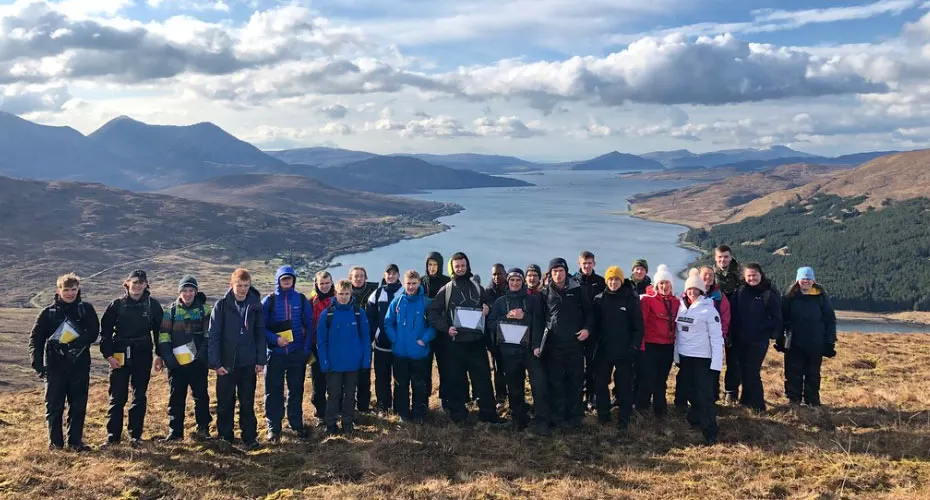
Field courses are an essential part of a Geography degree. They provide immersive opportunities to deepen your knowledge, develop your skills, and demonstrate your ability to apply your geographical learning through the study of particular places and spaces.
You will:
- engage ethically, sustainably and respectfully with familiar and unfamiliar places,
- gain critical insights on the dynamics that shape differences and commonalities,
- make connections between local and global practices,
- learn field-based skills, including a range of data collection methodologies
- and understand individual and collective responsibilities towards our planet.
Local, day field courses unique to South West England provide you with fantastic opportunities to get to know fellow students and academics, and the geographical processes that shape our world.
Our field courses develop your skills including teamwork; problem-based learning; research design, data collection, management and analysis. By the end of your degree, you will be able to apply and further develop these skills on optional residential field courses further afield.
From your doorstep...
In the first term, you will gain practical experience, working together with people on your course, through the Fieldwork in Geography module. You’ll gain real-world insight into the ways in which geographers make knowledge, and how geography is making a difference on your doorstep.
...to wider horizons
Modules in other years include day field courses, making the most of our location, allowing you to put your growing research skills into practice.
You’ll also have the opportunity to take an exciting optional residential field course module. These field courses widen your horizons, bringing together learning from across your degree. They support you to work together with fellow students and draw out the relevance of the knowledge and skills you’ve built for future employment.
In 26/27, optional residential field courses include:
- A combined BA Geography and BSc Geography Environmental Futures Field Course to Freiburg/Black Forest, Germany.
- A Catchment to Coast Field Course to Picos de Europa, Spain.
- A Monitoring Environmental Change Course to the South-West of France
For more information, see the relevant final year modules in the Course Content section.
The field courses we outline here provide examples of what you can expect to learn on this degree course based on recent academic teaching. The precise field courses available to you in future years may vary depending on new topics and locations of study.
The Exeter Geography approach to fieldwork
We design our field learning to be as accessible and sustainable as possible, following the Royal Geographical Society field course principles.
Accessibility
We review the financial accessibility of our trips, including core costs such as accommodation, travel, and breakfast/evening meals. Find out more in the Fees section. We also review the broader accessibility of our trips, looking to make them inclusive by design.
- We ensure a member of staff on residential field courses has mental health first aid training as well as physical first aid training
- We take an inclusive rooming approach for residential field courses
We can also work with you to support approaches that can make the field trip physically, emotionally and socially accessible for you - for example in terms of health, wellbeing and dietary needs, religious observances, caring responsibilities, managing energy levels etc.
Previously this has included:
- supporting students on trip familiarisation
- including virtual field experiences
- working with students on adjustments relating to mobility needs.
Sustainability
The University of Exeter has committed to act on climate change, and in line with our research, Geography is committed to playing our part. We have reduced the carbon emissions from international field course travel by 94.5% between 2019 and 2025.
This is mainly by travelling to destinations by train and ferry instead of flying - an average carbon saving of 75%. Embedding low-carbon travel has opened up new and exciting experiential learning opportunities.
Learning and teaching
How will I learn?
Our programmes incorporate a wide variety of teaching and learning styles, recognising the many different ways in which people learn. You can expect a mixture of lectures, tutorials and independent reading on a weekly basis. A Geography degree at Exeter may include:
- Lectures
- Seminars
- Workshops
- Tutorials – small group discussion classes of 8-25 students
- Computer practicals
- Laboratory classes
- Field work
- Independent study
Learn from the experts
You will join a diverse community of Geography students and staff presenting a thriving environment in which to study. Our academic staff are world leaders across many critical contemporary research areas, from the protection of the Great Barrier Reef and the tropical ecology of the Amazonian forest to the reduction of antimicrobial use in farming, the geopolitics of migration and refugee displacement, and the transition to renewable energy.
We have strong links with international, national, and local research projects, and staff draw upon the insights and examples these provide in their teaching.
Learning technology and facilities
All students have access to well-equipped laboratories and the latest geographical information systems (GIS), mapping statistics and coding software. In lectures we encourage you to contribute via interactive technology to ask questions or submit feedback.
We have a virtual learning environment, where the details of all modules are stored in an easily navigable website. Here you can access detailed information about learning outcomes, and interact through discussion forums, blogging and virtual field trips. The virtual field trips integrate video and audio data, maps, datasets, documents and published research to help you develop field work and analytical skills that are firmly grounded in the real world.
Assessment
Your progress is monitored through tutorial work and practical assessments. In a BSC Geography degree, you may typically expect assessments based on coursework including essays and story maps. There are some modules with exams. You can pick modules by topic but also based on what you think will best allow you to demonstrate your learning. In your final year you will undertake a dissertation, which is an independent research project on the topic that excites you most.
You must pass your modules in the first year in order to progress, but your marks in this year do not influence your final degree classification.
Academic support
We are committed to providing you with a supportive learning environment in which you can build confidence, as well as knowledge and skills relevant to Geography, and important for your future workplace.
You will have a personal and academic tutor who is available for advice and support throughout your studies and to support the transition to university-level learning. You will also be represented through Student-Staff Liaison Committees and have regular opportunities to feedback on your course and modules.
Optional modules outside of this course
Each year, if you have optional modules available, you can take up to 30 credits in a subject outside of your course. This can increase your employability and widen your intellectual horizons.
Minors: Future Skills Pathways
You can study a Future Skills Pathway alongside your main degree by choosing up to 30 credits of modules from a different subject area in your second and final years.
Your future with a Geography degree
Employer-valued skills
Students studying Geography develop both a depth and breadth of knowledge, skills and experiences that make them highly employable across a diverse range of careers.
These skills include:
- Data gathering and quality control
- Critical thinking and professional analysis
- Problem solving and assessment of uncertainty
- Project planning and management
- Organising and communicating information
- Report production and presentation (written and oral)
- Working effectively on your own and as part of a team.
Supporting your career in Geography
We put on a range of employability sessions for students which include:
- Career talks with visiting alumni and employers from a range of backgrounds,
- Career conversations and employability seminar series events with employers,
- A Careers in Sustainable Development and Environmental Protection Careers and Networking event
- Visits to the Met Office and UKHO
- Annual Careers Fair
- Opportunities to access high-quality work placements through an employability optional module.
Careers services
We have a dedicated, award-winning ensuring you have access to careers advisors, mentors and the tools you need to succeed in finding employment in your chosen field on graduation. We offer the Exeter Award and the Exeter Leaders Award which include employability-related workshops, skills events, volunteering and employment which will contribute to your career decision-making skills and success in the employment market.
The University of Exeter has an excellent reputation with graduate recruiters and our students and graduates compete very successfully in the employment market. Whatever path you wish to follow, we’re here to help and support you with all your career and employability needs.
Career paths
The breadth of career opportunities open to Geography graduates is vast, with recent graduates starting careers in planning, environmental and sustainability projects, water analysis, insurance, teaching and more – both in the UK and overseas.
Whatever you choose to do after graduation, your Geography degree will stand you in good stead, with excellent employment prospects and transferable skills.
Below are a few examples of initial jobs undertaken by graduates from our Geography undergraduate programmes*.
Recent graduates are now working as:
- Chartered and certified accountants
- Business and related research professionals
- Data analysts
- Brokers
- Property, housing and estate managers
- Marketing associate professionals
- Estimators, valuers and assessors
- Project support officers
- Primary and secondary education teaching professionals
- Information technology professionals
Recent graduates are now working for:
- Babcock International
- BNP Paribas
- Centrica
- Environment Agency
- Ernst & Young
- European Space Agency
- NHS
- Ordnance Survey
- Oxborough Surveyors LLP
- Skanska
- UK Hydrographic Office
Further study
Further study is a popular choice for a number of students following graduation from a Geography undergraduate degree. We offer two fantastic taught Masters programmes:
*This information has been taken from aggregating the responses from full-time, first degree, UK domiciled students who completed 2017/18 and 2018/19 Graduate Outcomes surveys. Please note that, due to data protection, the job titles and organisations are listed independently and do not necessarily correspond.
Find out more about studying at Exeter







Sign-up for more information about studying with us
If you're thinking about studying BSc Geography with Applied GIS (Exeter) with us, signing up to our emails is the best way to discover if we’re the right university for you.