MSc Conservation and Biodiversity
| UCAS code | 1234 |
|---|---|
| Duration | 1 year full time 2 years part time |
| Entry year | 2027 |
| Campus | Penryn Campus |
| Typical offer | Normally a 2:1 Honours degree or equivalent in a relevant science subject |
|---|---|
| UCAS code | 1234 |
|---|---|
| Duration | 1 year full time 2 years part time |
| Entry year | 2027 |
| Campus | Penryn Campus |
| Typical offer | Normally a 2:1 Honours degree or equivalent in a relevant science subject |
|---|---|
Why study MSc Conservation and Biodiversity at Exeter?
- Designed in consultation with multiple external agencies to ensure relevant training that maximises graduate employability and targets both research and practical conservation skills
- Offers substantial fieldwork opportunities in the UK and overseas, including a fieldcourse on African Biodiversity and Conservation or a low-carbon fieldcourse on Rewilding the United Kingdom. Travel and accommodation are included, see the fees section below for further details.
- Provides opportunities to connect with external agencies and organisations to further enhance your training
- Delivered by leading international researchers in Ecology and Conservation
- Offers access to excellent facilities including state-of-the-art research laboratories, greenhouses and controlled environment rooms, and long-term fieldsites
Due to the high demand for this programme we highly recommend that you apply early. Applications can be made from September for entry the following year. If we experience high demand it may be necessary for us to operate waiting lists or close the programme.
Fast Track (current Exeter students)
Contact
Programme Director: Professor Kimberley Hockings
Web: Enquire online
Phone: +44 (0)1392 72 72 72

Top 20 in the UK for world-leading research in Biological Sciences
REF 2021, based on 4-star research

2nd in the world for Ecology
Shanghai Rankings Global Ranking of Academic Subjects 2025

90% of our Biological Sciences research is internationally excellent
Based on research rated 4* and 3* in the Research Excellence Framework 2021

High-quality research supervision, with access to excellent facilities
Entry requirements for 2027 entry
A 2:1 degree or above in a relevant science subject* is normally required. We will be happy to consider applicants with a non-scientific background who have a strong academic profile and/or significant relevant work experience of 2+ years, on individual merit.
*Relevant subjects include: Biology, Biosciences, Ecology, Environmental Science, Evolutionary Biology, Geography, Marine Biology, Marine Sciences, Natural Resource Management, Natural Sciences, Wildlife Management, Zoology.
Please also see our guidance on essential documentation required for an initial decision on taught programme applications.
Entry requirements for international students
English language requirements
International students need to show they have the required level of English language to study this course.
The required IELTS test scores for this course fall under Profile B1.
Please visit our English language requirements page to view the required test scores and equivalencies from your country.
"I grew up in a Canadian city that has experienced environmental degradation because of the mining industry. This inspired me to pursue a career which focuses on the protection of natural habitats and species at risk. Applying to Exeter was a no-brainer because of its global reputation in ecology, and the quality of research published."
"Conservation is essential all over the world which is why I love the international approach taken by my course, whether it be learning about the work of the academic staff or going on field courses. I have had the chance to spend two weeks travelling across Kenya to learn about the challenges of human-wildlife interactions and conservation initiatives in unique tropical ecosystems. Additionally, in the spring, I will be conducting a research project in the French Pyrenees to examine the effects of climate change on birds in a mountainous environment.
I have no doubt that this course is the best step I could take towards my professional development. The extracurricular events such as weekly guest seminars and frequent career services such as fairs create an environment which encourages networking and shows that countless job, placement, and PhD opportunities exist.
In the short time that I have been at the University of Exeter, I’ve met tons of interested and interesting people, forged great relationships with my classmates, but I was pleasantly surprised with how I got along with my professors, who are down to earth and really do take the time to listen and make students their priority. I tend to be independent, but I feel reassured to know that the academic department has my back."
Hugo
MSc Conservation and Biodiversity

Course content and modules
This Masters programme is taught at our Penryn Campus in Cornwall by staff at the renowned Centre for Ecology and Conservation.
The course boasts a significant research component, with substantial field work opportunities in the UK and internationally, with a residential fieldcourse. A distinctive and integral feature of our MSc is the high degree of input from conservationists in collaborating governmental and non-governmental organisations. This participation takes a variety of forms, including guest lectures and field visits, but may also include providing research projects in their organisations. Collaborating organisations include: Cornwall Wildlife Trust, Marine Conservation Society, Natural England, Plymouth Marine Lab, Royal Botanic Gardens Kew, Royal Society for the Protection of Birds (RSPB), Thousand Year Trust, UK Centre for Ecology and Hydrology (CEH) and the Zoological Society of London.
This applied degree provides excellent employability, with our recent alumni moving onto ecological consultancy work, government conservation programmes, NGO conservation projects and fully funded PhD positions in ecology and conservation.
If you would like to study this programme part-time please contact the Programme Director.
The modules below provide examples of what you can expect to learn on this degree course based on recent academic teaching. The precise modules available to you in future years may vary depending on staff availability and research interests, new topics of study, timetabling and student demand.
Please note that the module information displayed here is subject to change.
150 credits of compulsory modules, 30 credits of optional modules
If you have mobility or health disabilities that prevent you from undertaking intensive fieldwork, reasonable adjustments and/or alternative assessment can be considered. This could include replacing a fieldwork module with an alternative in agreement with the Director of Education.
| Code | Module | Credits |
|---|---|---|
| Compulsory 1 | ||
| Research Project | 90 | |
| African Biodiversity and Conservation Field Course | 30 | |
| Statistical Modelling | 15 | |
| Conservation and Biodiversity | 15 | |
BIOM4009: Research Project
Learning to conduct original scientific research is essential for your scientific training, employability potential and future career. In this module, you will gain hands-on experience of conducting cutting-edge scientific research under the guidance of professional researchers. This involves conducting an independent research project on a subject of your choice related to conservation biology, ecology, evolution or behavioural ecology. Our academic staff offer a wide range of projects to pursue, which provide opportunities for building your skill set and experience in the process. With the support of your supervisor, you will be responsible for designing, planning and implementing the study, as well as analysing the data and writing it up for a world class peer-reviewed academic journal. As such, this project provides valuable experience of managing an original scientific research project, from its inception through to completion.
The aims of this module are:
BIOM4023: African Biodiversity and Conservation Field Course
Many students look back on the Africa Field Course as the best learning experience of their lives. The module usually runs in Kenya and is long established, having run for over a decade with the same Kenyan company. Over 14 days you will see an amazing wealth of biodiversity from mountains and forests to lakes and savannahs, meet a range of conservationists and develop a deep understanding of the complicated nature of conservation in the developing world. All the while you will be developing your transferrable skills, spending a great deal of time with your lecturing staff and your peers, all under African skies.
This module aims to present the philosophy, sociology, ecology and practice of large-scale conservation. A practical understanding of these issues will be developed through visits to some of Africa's most important protected areas, as well as by an introduction to some of the day-to-day problems faced by conservation biologists in developing nations. You will be able to study the behaviour of animals in a natural ecological setting with a focus on large mammals, birds and insects, while guided by inputs from local practitioners. The practical work will be conducted in part during a safari through contrasting African ecosystems and participants will be able to acquire techniques for monitoring populations and communities.
Through attending the field course, you will further develop the following academic and professional skills:
BIOM4025: Statistical Modelling
Biological data are famously complicated. However, modern statistical methods can accommodate many of these complications, and others can be avoided through careful study design and data collection. This module uses a series of lectures, interactive exercises and practicals to guide you through modern statistical philosophies and methods. It provides you with one of the most important transferable skills, both in and outside of academia, and it optimally prepares you for your dissertation project. The main software platform for the module is 'R', which is powerful, flexible and free. To accommodate students from a range of backgrounds and with different levels of prior experience, we start with the basics and gradually add complexity . By the end of the module , you will understand how to design a study , handle the data, analyse them , interpret the results , and provide graphical and written summaries. Many examples used will be drawn from recent research in ecology, evolution and environmental sciences .
Statistical modelling is an integral part of all quantitative research. Thereby this module provides key transferable skills in experimental design, data collection and handling, statistical modelling , and programming. More generally, it promotes quantitative and logical thinking.
BIOM4049: Conservation and Biodiversity
The module takes you from the ecological theory behind biodiversity and conservation, through real examples of the challenges faced by those putting conservation into practice, with opportunities to put yourselves in conservationists' shoes during class discussion and presentations to the class. We also have visiting speakers covering issues such as adapting conservation to climate change, marine over-exploitation, and rewilding. In addition, you can choose two areas of interest, for a literature review, and for your own presentation to the class, giving you the opportunity to really get to grips with key topics in conservation and biodiversity, and helping you develop the skills that you will use later on, during employment or future research. Whatever your background, by the end of the module you should be thinking like a scientifically-informed conservation practitioner.
This module deals with the key Biodiversity and Conservation issues and will contribute to an understanding of the scientific processes that underpin much of conservation and ecology. The module particularly focuses on global biodiversity, measuring biodiversity, threats to biodiversity and how biodiversity can be conserved.
| Code | Module | Credits |
|---|---|---|
| Optional 1 | ||
| Preparing for Ecological Consultancy | 15 | |
| GIS in Ecology and Conservation | 15 | |
| Conservation Practice and Evidence | 15 | |
| Animal Behaviour and Global Challenges | 15 | |
BIOM4014: Preparing for Ecological Consultancy
This module acts as an introduction for any students that are interested in pursuing a career in terrestrial ecological consultancy in the UK. Throughout the module you will be given an overview of ecological consultancy and gain a more detailed understanding of key legislation, habitat surveys, protected species surveys and ecological impact assessments. During this module you will have the valuable opportunity to gain practical experience of completing habitat surveys and species survey techniques. This module will provide you with an excellent platform for a future career in ecological consultancy.
This module deals with the key issues and techniques involved in terrestrial ecological consultancy, an intended sector for graduates from the programme. Although focused on the skills needed for an ecological consultancy career, the module would be beneficial for anyone considering a career in UK conservation. The module will include a sectoral overview, and theory, process and practice of key techniques. As parts of this programme will be conducted in the field, you may wish to consider the physical demands of these aspects of the module before embarking on it.
BIOM4051: GIS in Ecology and Conservation
This module aims to provide you with a good working knowledge of the theory and practice underpinning the application of GIS and geospatial analysis in the fields of conservation and ecology. Throughout the module you will be introduced to, and gain practical experience of using open-source GIS software (QGIS and R) to acquire, create, manipulate, analyse and visualise a range of spatial datasets. These practicals will underpin a range of complementary assessments that focus on enhancing your data visualisation, analytical and problem-solving skills using GIS software; thereby providing you with a breadth of experience for a career in applied scientific research, industry or as a conservation practitioner.
The ability to use and understand Geographical Information System (GIS) software to create, manage and analyse spatial data is a highly sought-after skillset that will enhance your employability in the fields of biodiversity conservation and management, and more broadly in the environmental sciences.
BIOM421: Conservation Practice and Evidence
This module will give students hands on experience in designing and assessing practical measures in conservation. They will hear about practical examples of conservation and then must both design and write a conservation grant based on their acquired knowledge. This will give the students unique guidance in both how to implement conservation measures and how to gather the associated evidence that they are actually working.
This module aims to provide you with the key skills required to design, implement, and monitor conservation projects that consider the biodiversity, environment, and human communities that live alongside it. You will first be introduced to how to plan in conservation, including how to effect meaningful change to achieve a desired outcome. You will then gain experience in different techniques to monitor biodiversity and environmental change, and approaches to examine human and policy dimensions of conservation. Following this you will explore how to use conservation evidence to inform and scale actions and how to integrate predictive science into conservation decision-making. Finally, you will explore key conservation leadership and management skills to support you in your career as a conservation scientist and practitioner.
BIOM422: Animal Behaviour and Global Challenges
The natural environment is changing at an unprecedented rate, leading to mass extinctions and biodiversity loss. Although humans are the drivers of the current biodiversity crisis, we also hold the solutions. Conservation biologists have traditionally aimed to maintain or restore populations by focussing on population size and genetic diversity. However, animals' first line of defence in response to environmental change is their behaviour. How can we apply insights from animal behaviour research to boost the success of conservation strategies and tackle global challenges? In this module, leading scientists in key behavioural domains such as animal migration, cognition and perception will take you on a whistle-stop tour of the ways in which anthropogenic changes impact animal behaviours. We will then critically assess how we might apply these insights to inform behaviour-based management and conservation planning. We will engage with front-line conservationists to learn how they are applying animal behaviour to address global challenges. Finally, we will consider how human behaviour and cooperation can be leveraged to make change happen.
Please note that the module information displayed here is subject to change.
150 credits of compulsory modules, 30 credits of optional modules
If you have mobility or health disabilities that prevent you from undertaking intensive fieldwork, reasonable adjustments and/or alternative assessment can be considered. This could include replacing a fieldwork module with an alternative in agreement with the Director of Education.
| Code | Module | Credits |
|---|---|---|
| Compulsory 1 | ||
| Research Project | 90 | |
| Statistical Modelling | 15 | |
| Rewilding the United Kingdom | 30 | |
| Conservation and Biodiversity | 15 | |
BIOM4043: Rewilding the United Kingdom
The United Kingdom is economically highly developed, densely populated and intensively farmed and industrialised. This human-dominated system makes life very challenging for the wildlife that shares our country with us, and for the biota that provides us with ecosystem services like pollination, clean air, freshwater and recreation. Some of our precious biodiversity is considered 'pest' or 'weed' by people. Many of our natural systems suffer invasion by non-native species. Many of our natural habitats are degraded, fragmented, and very fragile in the face of anthropogenic climatic and environmental change. Yet, the UK is at the forefront of global efforts to conserve, rescue, replenish or replace native biodiversity.
| Code | Module | Credits |
|---|---|---|
| Optional 1 | ||
| Preparing for Ecological Consultancy | 15 | |
| GIS in Ecology and Conservation | 15 | |
| Conservation Practice and Evidence | 15 | |
| Animal Behaviour and Global Challenges | 15 | |
Fees
MSc Conservation and Biodiversity with International field course
UK fees per year:
£15,700 full-time; £7,850 part-time
International fees per year:
£31,300 full-time; £15,650 part-time
Travel and accommodation costs for the residential field course are included.
MSc Conservation and Biodiversity with UK field course
UK fees per year:
£14,500 full-time; £7,250 part-time
International fees per year:
£30,100 full-time; £15,050 part-time
Travel and accommodation costs for the residential field course are included.
Scholarships
The University of Exeter offers a wide range of scholarships to support your education, with £8 million available for international students applying to study with us in the 2027/28 academic year, including our prestigious Exeter Excellence Scholarships. We also provide awards for sport, music and other achievements, as well as regional and partner scholarships with organisations such as Chevening, the Commonwealth Scholarship Commission and the British Council. For more information on scholarships and other financial support, please visit our scholarships and bursaries page.
University of Exeter Alumni Scholarship
We are pleased to offer the University of Exeter Alumni Scholarship, a scholarship for University of Exeter alumni beginning a standalone postgraduate programme in 2027/28 with us a scholarship worth 20% of the cost of your first year tuition fees.
Terms and conditions, including deadlines, apply.
Fieldwork
The fees include costs of field trips including a 2-week residential course on ‘African Biodiversity and Conservation’ or ‘Rewilding the United Kingdom’.
In line with our commitment to tackling the global climate emergency, we offer this programme with a low-carbon UK field course destination (the Highlands and Islands of Scotland) and with lower tuition fees.
Travel: Any required flights, accommodation and meals during the field courses are covered by tuition fees.
You may be required to provide your own specialist personal equipment appropriate to the field course destination, e.g. walking boots, rucksack, mosquito net, sleeping bag, binoculars. For Kenya, you will be required to cover any visa costs and purchase anti-malarial medication and relevant immunisations.
I was ecstatic to receive the Global Excellence Scholarship because my financial situation at the time and the expense of international tuition fees meant I would never be able to do a Masters degree without this scholarship, which greatly improved the likelihood of me being in a career I dreamt of.
Terita
MSc Conservation and Biodiversity

Teaching and research
The taught component of this programme is delivered in the first six months. During this time, you will also compile and read scientific literature on the topic of your research project, which you will pursue during the remainder of the academic year.
How will I learn?
- Seminars
- Workshops
- Fieldwork
- Group discussion
- Independent study
There is considerable scope for you to direct your learning towards fields of particular interest, especially through your choice of optional modules and research project. Research seminars will see you interacting with a diversity of top academics and getting to know about their ongoing research.
Research project
A large number of University of Exeter academics will be involved with this programme and they will offer a great diversity of research topics within their projects in the UK and overseas. There is also the option to work with an external collaborating organisation as a placement student during your research project, which could be located anywhere in the world.
Tutorial support
Each student is allocated a personal tutor who is available for advice and support throughout your studies. There is also a postgraduate tutor available to help with further guidance and advice.
Assessment
Taught modules will be assessed in a variety of ways, including formal oral presentations, written reports, essays and discussions, during or upon the immediate completion of these modules. The research project makes up a significant proportion of the assessment and is mainly based on the dissertation write-up.
Graduate School of Environment and Sustainability
You will become part of Exeter's Graduate School of Environment & Sustainability - a vibrant and supportive postgraduate community based here on our Penryn Campus in Cornwall. The Graduate School brings together experts from across the spectrum of earth and life sciences, engineering, humanities, social sciences and business. You will interact with students from other MScs and have the opportunity to explore issues from a range of perspectives, benefiting from a truly interdisciplinary experience. All our programmes are designed with a focus on developing solutions to global challenges and creating a better future for our planet and its people.
The MSc in Conservation and Biodiversity with International field course invites you to develop your understanding of the challenges and opportunities of conserving biodiversity in complex landscapes shared by people and wildlife. You will visit some of Africa’s most important protected areas and observe the behaviour of diverse animal taxa in natural ecological settings and how different species are responding to humans and their activities.
As we move through different African ecosystems, you will learn about the techniques for monitoring biodiversity and the threats they face. With local experts, you will also explore how wildlife impacts local communities and how conservation strategies must increasingly incorporate the needs and wellbeing of people. Throughout your fieldtrip, you will see an amazing wealth of biodiversity from mountains and forests to lakes and savannahs, meet a range of conservationists, and develop a deep understanding of the complexities of conservation. All the while you will be developing your transferrable skills and spending a great deal of time with your lecturing staff and peers under African skies.
In line with our commitment to tackling the global climate emergency, we offer this programme with a low-carbon UK field course destination (the Highlands and Islands of Scotland) and with lower tuition fees.
The MSc in Conservation and Biodiversity with UK field course invites you to consider the meaning of the word “wild” in the UK. Topics will include exploitation of the UK’s ecosystems, rewilding theory and action, conservation management and the behaviour and ecology of the UK’s fauna and flora.
This residential field course will perform a transect through Scotland’s hotspots of marine and terrestrial biodiversity, human-wildlife conflict and ecological restoration. You will see the endangered wildlife of the UK, and meet the people who are stakeholders in their management or their conservation: National Park authorities; farmers; NatureScot employees; conservation charity managers; people delivering species translocations; researchers; ecological consultants; tourism operators and the general public.
Read more about the Rewilding the UK field course module
When participating in field courses, you may be required to provide your own specialist personal equipment appropriate to the field course destination, e.g. walking boots, rucksack.
Careers
Employer-valued skills this course develops
This programme will provide you with a diversity of skills that will equip you for a range of sectors of work and further study. Skills include:
- Scientific writing and poster preparation
- Grant writing
- Public speaking and discussion
- Press release and the professional use of social media
- Data analysis
- Writing scientific information for a lay audience
- Use of “R” and GIS.
Career destinations
The programme prepares students for careers in environmental NGOs, government conservation agencies and ecological consultancy companies in the UK and overseas. The degree also offers thorough training in research skills and methods so provides an excellent basis for an academic career, with many students progressing directly to PhD positions.
Careers services
Our careers teams at the Career Zone can help guide you through a wealth of information to match your skills and interests to a career that will suit you. Our staff work with regional, national and international employers to develop new work placement, project and graduate opportunities.
Supporting your career
Being part of a large research-intensive department such as the Centre for Ecology and Conservation means there are multiple extracurricular research seminars per week and frequent on-campus symposia and employability-focused seminars involving invited external stakeholders, offering extensive networking opportunities.
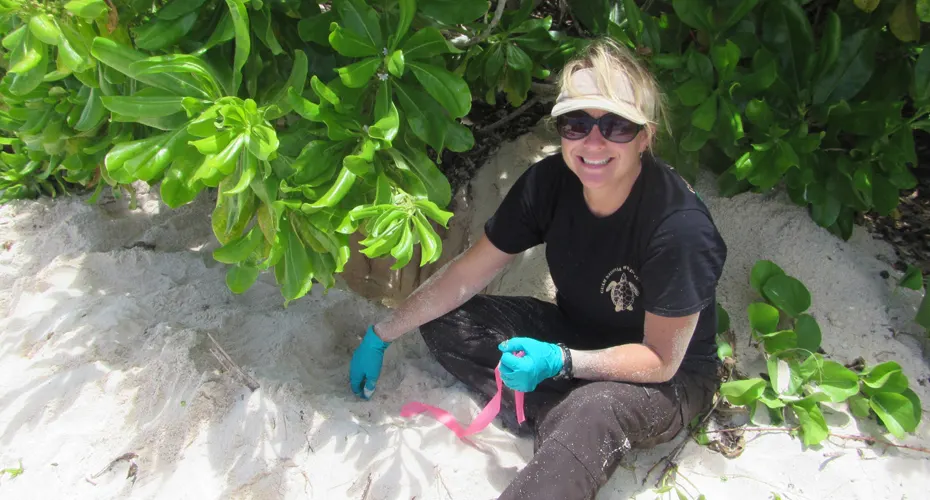
After working for several different organisations, I now work for the Joint Region Marianas Office (at the Guam National Wildlife Refuge) as the Conservation Resource Program Manager. Through my 10-plus-year career since graduating, I would say that all of the coursework we studied in the MSc in Conservation and Biodiversity has surfaced at one time or another.
During the MSc, I gained some really invaluable basic skills that are rarely covered in most Masters programmes such as: how to design and present oral and poster presentation, preparing a quality CV, writing a grant proposal, etc. I still have the instruction and templates from when I was a student and have referenced them several times during my professional career.
Jennifer
MSc Conservation and Biodiversity graduate
Find out more about studying at Exeter








Sign-up for more information about studying with us
If you're thinking about studying MSc Conservation and Biodiversity with us, signing up to our emails is the best way to discover if we’re the right university for you.