Development Fund 2021/22: Strandlines
Dr Timothy Cooper (History): Strandlines: creating cultural archives of the marine environment
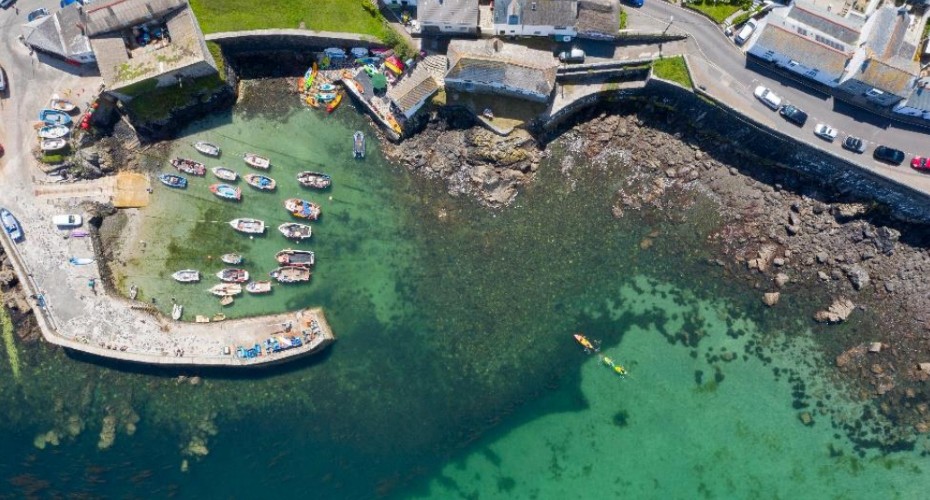
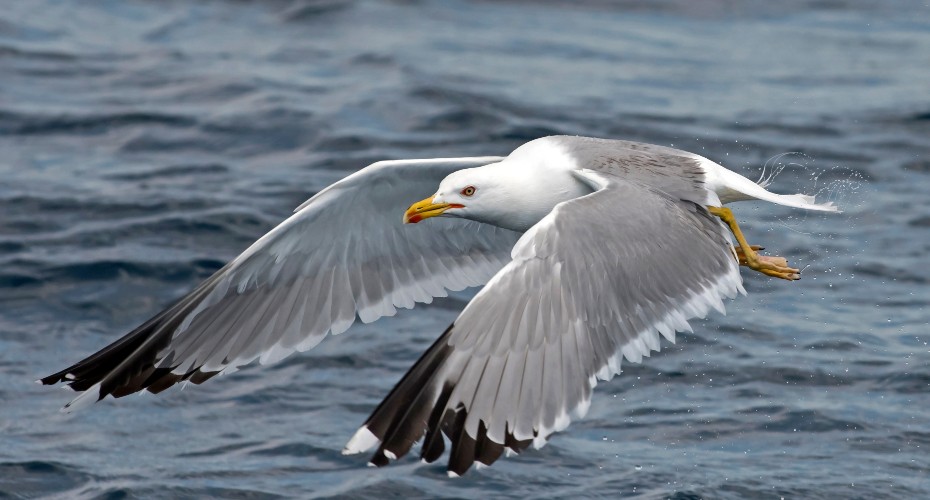
'So our garden down here is... it used to be The Withy where the fishermen used to come down to pick willow to make the crab pots when they were still done old-school style in willow. And people in the village used to keep pigs down here as well. And every time we dig in that garden, I mean, the amount of stuff we find, obviously all the nice, interesting stuff like the old bottles and the poison bottles and stuff like that, but also just a load of old crap from not too long ago. Something interesting about waste we were talking about yesterday, which is quite noticeable this year, when you were mentioning the seagulls. So normally in our street and around the whole village, we have seagulls nesting on every house almost. In our street this year there's one house with gulls on. And yeah, it's pretty much the same through the whole village. And I think we've got problems with avian flu at the moment. I don't know if that's to do with it. But we tend to think of waste and the damaging impact that that has on wildlife, but also how many creatures have come to completely depend on our waste. So we don't have any landfill sites in Cornwall anymore, everything goes to the incinerator, and we have banned discards of fish from fishing boats as well, two huge sources of food for herring gulls. And we perceive gulls as being everywhere and just being kind of nuisance and vermin, but actually they are on the red list now, and in such decline.'
I love this short extract taken from one of the people interviewed for the Strandlines Project, supported by SCI's development fund. For me, the Strandlines idea is founded on the value of encountering everyday experiences of environmental change in marine areas; on the value of the volunteers who do conservation work, and the life experience of those working and living in these environments. Strandlines is all about ecological story-telling. Rumours of change that rumble beyond the world of ecological expertise and unaccountable policy-making elites. I believe that oral testimonies literally speak to us the value of individual experience as a window onto environmental history and demonstrate how such histories are a part of people’s everyday lives, the living products of communities and the worlds they embody usually unheard by those for whom only ‘scientific’ knowledge is valid knowledge.
Yet it isn’t the only valid knowledge. In real life nature is known historically. It is as a product of memory and practice. Take this piece, for instance and read it again with care. I admit it would be better to listen, but even the dulled novelty of the electronic medium draws us back to certain established legitimate modes of encounter. What strikes me most readily here is the historical richness of this moment, expounded by a dedicated campaigner mid-way through a discussion of marine plastics. I think that their story points us precisely to the ways in which contemporary concerns with marine plastics and the coastal environment are also always temporal concerns. It reveals how today’s environmental issues are understood in the context of everyday histories that connect the speaker (and then ourselves as listeners and readers) back in time to the remnants of earlier ecological formations which live on among us.
Observe how we are invited into the historic site of the fishers’ ‘withy’, where the willow was once harvested, supporting an immemorial use of the seas that maintained and reproduced the village community through who knows how many generations. The speaker connects us here to an apparently vanished ecology; one in which the resources of land and ocean were once closely interconnected in the everyday labours of the fisher community. I am struck here how today’s life of environmental activism is being lived in the presence of a past not quite vanished. Observe how the status of the disappearance of the withy remains unclear, as the speaker moves from the present tense ‘is’, self-correcting to the past tense, ‘used to be’, as if time past and time present remain disputed, entangled. Perhaps it is only my presence in this moment of conversation as ‘the historian’ that prompts such a correction. Perhaps the truth is that the withy is not gone at all, for all appearances, and that its shadow still casts itself powerfully over the present.
As I listen to these words again, I remember the place, the comfortable living room and long sofa, complete with sprawling hound. I recall looking out to an envy-inducing but charming back garden. Our narrator, conscious of my line of sight, perhaps enjoys a little exploiting the dissonance of present and past, remarking that the garden was also once at some point the village dump, a fact now forgotten, although it still evidences its previous life by occasionally regurgitating old bottles as well as more recent discards. The comment compels me to reflect on how this narrator presents a life engaging with very contemporary environmental issues, like plastics pollution, in the context of the deeper life-course of the place where they live: a place they know in remarkable depth. Though how this past is known I unaccountably fail to ask. Perhaps I prefer not to know. In this small plot, disposing of something is revealed to be inevitably subverted by an insistent, irresolvable return.
Are we not then forced back into the concerns of the present moment? A world in the course of being unpeopled in the here and now of its most familiar rooftop residents. Avian flu is removing this village’s most recognisable inhabitants. Yet, the much-detested seagull is also ironically a product of our world. Perhaps, symbolically, it stands for us? Once so universal, so apparently timeless, the seagull was an ever-present menace feasting on the very detritus that humanity so avidly produces. I am compelled to recognise how the narrator also places this story in a context in which the world is presented as ever-changing. I think of the once essential but now forgotten withy. Like it, the ecology that first engendered the universality of the seagull is fading. The landfills are covered over, much needed piscine discards are now frowned upon by the eyes of an all-seeing maritime sustainability apparatus. We are obliged to wonder whether anyone ever considered the unexpected biological collisions that such policy changes intended to ‘sustain’ Cornwall’s environment might have on the wider equilibrium of life?
There is, in truth, and as history always reveals, no such balance. There is only ever the tragedy of loss and the hope of something new. What yesterday was a universal nuisance may soon, like the withy in the past and the seagull today, be long forgotten. Yet even the losses of the deep past cannot be slewed off in their entirety. As I sit here in my office and reflect on this narrator’s careful, close attention to history in telling of their environment and its location in time and place, I am drawn to consider the perhaps unexpected futures it also implies. Indeed, elsewhere in the interview these futures emerge in more explicit form. The narrator recalls, for instance, one trip to Italy, an ‘adventure’ where they encountered the abundance of avian life in Rome. Here, the ruins of the ancient world still sustain the living in a future-present that could never have been predicted by the ancients themselves. ‘It was’, they recall, ‘just amazing seeing all the swifts around the Colosseum. Because all those ancient monuments have got so many little holes and nooks and things, there were just hundreds and hundreds of swifts going around the Colosseum. It was magical.’ The shadow of life lived in time past lingers on, giving unexpected refuge to life in time present.
Blog by Dr Timothy Cooper (History).