We will consider applicants with a 2:2 Honours degree or above in their first degree in Drama, Theatre Practice, Screen Writing, Performance Studies, English Literature or Creative Writing.
Designed for aspiring theatre practitioners and cultural leaders, this distinctive two-year MFA offers advanced training in performance, cultural leadership, and socially engaged practice - equipping students to innovate and lead across diverse creative and community contexts.
A distinct two-year programme from a top Russell Group university that extends the foundations of the MA Theatre Practice into a second year that enables you to prepare and design a meaningful career trajectory.
In your second year, you will have opportunities to shadow, assist and observe change-making practice in professional arts, cultural, education, and community settings.
Dedicated time, space and support to gain new and refreshed insight into your professional practice in a location of outstanding natural beauty, with access to world-leading research facilities and professional performance spaces.
This programme will connect you to a rich community of international peers, artists, researchers and teaching staff who are leaders in their field.
Work closely with regional arts organisations and sector-leading national organisations, such as the world-renowned Globe Theatre in London.
Options to develop project-based learning with professional theatre makers and cultural leaders that connects to your area of interest.
You will have the opportunity to extend your portfolio of practice into teaching environments and cultural contexts, with developmental exercises and mentorship.
Exciting postgraduate exchange and collaboration, shared learning across leading practitioner talks, activities and workshops. You will have access to the Exeter Digital Archives, one of the largest collections of recorded training and performance sessions in the world. Teaching staff run professional companies and regularly collaborate with world-leading theatre organisations and culture centres.
We will consider applicants with a 2:2 Honours degree or above in their first degree in Drama, Theatre Practice, Screen Writing, Performance Studies, English Literature or Creative Writing. While we normally only consider applicants who meet this criterion, if you are coming from a different academic background which is equivalent to degree level, or have relevant work experience, we would welcome your application. Practical and/or professional experience may be taken as constituting the equivalent of a degree qualification.
Applicants are invited to submit a portfolio, including videos excerpts from previous performances or links to others types of material.
The modules below provide examples of what you can expect to learn on this degree course based on recent academic teaching. The precise modules available to you in future years may vary depending on staff availability and research interests, new topics of study, timetabling and student demand.
Please note that the module information displayed here is subject to change.
You must take 180 credits of compulsory modules.
Compulsory Choice 1 - Choose either CDFM001 or CDFM002.
Code
Module
Credits
Compulsory 1
Cultural Adaptation
30
Contemporary Performance Practices: Training
45
Performance Practice Project
45
Compulsory Choice
Dissertation - Written
60
Dissertation - Practice
60
DRAM103: Cultural Adaptation
Human beings are characterised by their ability to adapt, and cultures themselves also adapt to a variety of influences, while humans adapt to cultures. In this module you'll look at the processes affecting performance in the contemporary world, taking into account factors such as globalisation, interculturalism, diaspora and migration. As well as being able to locate yourself within your own cultural histories and values, you'll also understand the role of performance and arts in different cultural contexts, and the complexities of communicating and adapting texts, events, and performances between cultures.
This module aims to:
Introduce you to the concept of cultural adaptation, with reference to a wide range of potential cultures, and to such related concepts as globalisation, diaspora, postcolonialism, interculturalism and identity
You will discuss examples of cultural adaptation within their own cultures, and study how these may be best analysed using the theories to which they have been introduced
Introduce research skills including critical writing and performance analysis.
DRAM167: Contemporary Performance Practices: Training
The module introduces you to contemporary performance practices and skills. Its primary focus is on performer training, but principles and techniques taught are foundational to a range of theatre practices (devising, composition, dramaturgy, applied theatre). It is divided into several blocks, each one exploring an aspect of technique (body, voice, space, ensemble). You will develop and apply skills mainly through practical workshops. Through seminars, screenings, individual tasks and projects, you will also develop these practices further and understand them in their historical and social contexts. You will also be introduced to the foundations of practice-research, self-reflexive writing and training documentation.
This module provides you with the opportunity to develop your research-based practice over the term, building on the performance practice foundations introduced to you in Term 1. Through staff-led workshops, seminars and tutorials you will develop your performance and devising skills. You will encounter a range of ensemble and individual exercises from global and intercultural contexts. You will be expected to work individually and collaboratively throughout the term which will culminate in the creation and sharing of your own performance project. Additionally, you will be supported in developing your own abilities to critically reflect on your individual and collaborative processes.
This module aims to:
Provide a focused, structured atmosphere for the first phase in the development of quality performance practice in the designated area of theatrical/performance practice
Provide the opportunity to apply principles and processes of psychophysical performance practice to one's own creative work
Facilitate the development of individual and collaborative creative work and reflection upon that work
The dissertation project is the culmination of your postgraduate course and represents an opportunity to explore a research question in detail over an extended period of time. Across the module you will conceive, plan, research and write a study of 15,000 words. Initially you will be supported by a supervisor, but during the writing period you will be expected to work independently.
The dissertation will enable you to consolidate and develop your subject knowledge and methodological skills in your discipline by exploring in detail a topic of your own devising.
You will be supported through the early stages of planning your dissertation in the second term of your studies through a series of workshops. This will enable you to develop and submit a dissertation proposal by the end of term 2 (for part time students the proposal will be submitted by the second term of the second year of study).
You will then be assigned a supervisor who will support you during term 3 as you conduct initial research, prepare draft work and establish your project sufficiently to enable you to work independently after the end of term 3. Your supervisor will support you as your research, planning and writing progress through one-to-one supervision sessions. These combined activities will offer you the necessary guidance and support to refine your initial plans and bring your research project to completion.
The dissertation project is the culmination of your postgraduate course and represents an opportunity to explore an idea, theme or issue in detail over an extended period through your chosen form of practice. In negotiation with a dissertation supervisor, you will devise a research-led practical output relevant to your field and then conceive, plan and deliver this work. It will be equivalent to 7,500 words of written work (your supervisor will advise you on equivalency in your chosen form of practice) and you will also submit a 7,500-word piece of writing to provide critical context to your practice. Your supervisor will support you during the preparation of your practical output, which will normally be delivered towards the end of term 3, and through the initial phase of planning your written work, though beyond the end of term 3 you will be expected to work independently.
The module aims to:
provide an opportunity for you to pursue a single research topic in depth, partly through a form of practice appropriate to your discipline
demonstrate evidence of research achievement at master's level
Please note that the module information displayed here is subject to change.
180 credits of compulsory modules
Code
Module
Credits
Compulsory 1
Extending Your Practice: Teaching and Facilitation
60
Changing Cultural Leadership
60
Independent Project
60
DRAM152: Extending Your Practice: Teaching and Facilitation
Through an experiential learning model, you will consider how to extend your practice into spaces of facilitation and teaching. You will devise a series of facilitated creative and pedagogic projects, underpinned by exploratory research and practice. This module offers professional experience and mentoring that may include developing and delivering teaching within higher education or other settings where you can develop and hone the craft of facilitation and pedagogy. You will work with mentors and/or colleagues to identify an area of your own teaching or facilitation practice which you would like to develop; this will become part of the focus of your Digital Portfolio (summative assessment). As a student on this module, you may be eligible to opt and take part in the Learning and Teaching in Higher Education (LTHE) programme, subject to approval.
The module aims to:
Provide an opportunity for you to apply theatre practice skills in educational or facilitation contexts
Provide an opportunity to interweave documentation of your teaching practice with evidence of your evolving capabilities and competencies as a cultural leader and educational practitioner
Enable you to explore the role of the teacher, facilitator, creative practitioner or pedagogue, supporting future pathways into employment
Support critical reflection on your practice, identifying areas of growth and development
Familiarize you with key methodologies in the field, including approaches to pedagogy, practice-based research, action research and reflective practitioner methods.
The world of work is changing rapidly. How we engage, empower, listen and communicate with people is more important than ever. In this module you will consider how drama and performer training skills readily transfer into spaces of embodied, emotionally literate, people centred leadership and effective communication. You will encounter a range of performance principles and creative tools alongside somatic and dialogic techniques to enhance your understanding of healthy leadership culture. You will consider diversifying models of leading and courage building as a map to inclusivity and innovation. You will use these tools to meet your 'audience' as they are; and to explore authenticity, context and curiosity in how you hold spaces responsively and inspire people.
The second half of the module centres on extending your toolkit into professional experience; to observe, shadow and assist in a range of change-making facilitation and industry leadership contexts. You will be supported in creating a practical and reflexive output of your design.
The module aims to enliven your future practice through shared understanding and experiential learning models.
This module asks you to consider what comes next, through your own practice, developed interests and research into the contemporary arts and industry landscape. You will craft a culminating independent project with, for, or in relation to real-world audiences and collaborators. You will begin to story your career ambitions convincingly and with confidence to a range of audiences. With support from your supervisor and, optionally, with input from an industry mentor, you will plan and deliver an original output. This output may be a further refining and development of your craft as a director, performer, writer, culture or community leader, facilitator, producer. Or you may wish to consider new roles and practice models that respond to the times, using your developing leadership and complex space holding skills. Outputs of the project may be structured as an event, a series of workshops/ demonstrations/ micro-projects and arts-based experiments that you share with select audiences. You may work with partner arts organisations, or in cultural delivery for community, schools or other audiences.
The University of Exeter offers a wide range of scholarships to support your education, with £8 million available for international students applying to study with us in the 2027/28 academic year, including our prestigious Exeter Excellence Scholarships. We also provide awards for sport, music and other achievements, as well as regional and partner scholarships with organisations such as Chevening, the Commonwealth Scholarship Commission and the British Council. For more information on scholarships and other financial support, please visit our scholarships and bursaries page.
University of Exeter Alumni Scholarship
We are pleased to offer the University of Exeter Alumni Scholarship, a scholarship for University of Exeter alumni beginning a standalone postgraduate programme in 2027/28 with us a scholarship worth 20% of the cost of your first year tuition fees.
The MFA in Theatre Practice is a distinct two-year programme that equips and inspires the cultural practitioners, artists and creative leaders of the future, for the future.
In today’s fast-changing world, there is a growing need for thoughtful, technically skilled, and adaptable creatives who can contribute across a range of contexts. This MFA is designed to nurture intellectually bold and imaginative practitioners and facilitators, equipping you with a refined portfolio grounded in the arts sector, strong professional networks, and the ability to confidently position and advocate for yourself in the field.
The course is deliberately flexible and responsive to your individual interests, while also engaging with local, national, and global cultural dynamics. With dedicated time, space, and expert support, you’ll gain fresh perspectives on your practice and clarity on the next steps in your professional journey within the cultural and arts industries.
It offers you the opportunity to extend, strengthen and demystify the immense possibility of your professional practice, and where it can take you in changing, complex times.
We believe in developing technically skilled, versatile creatives prepared to deliver in a variety of contexts, working as intellectually brave and imaginative practitioners and facilitators.
We aim to empower our MFA graduates with rigor and care; the end of your degree should feel like the beginning of what’s next for your creative and working life. You will graduate with an enhanced portfolio rooted in the arts sector, strong professional networks and an understanding of how to situate and advocate for yourself in the field.
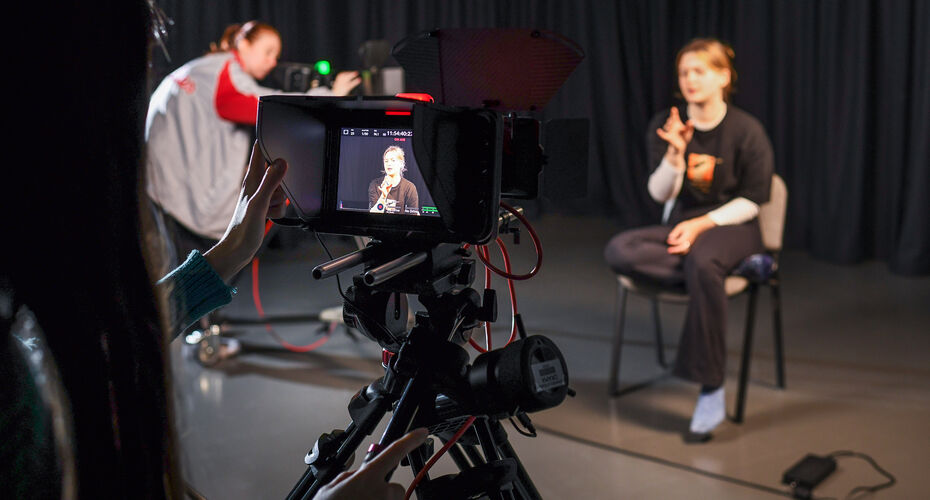
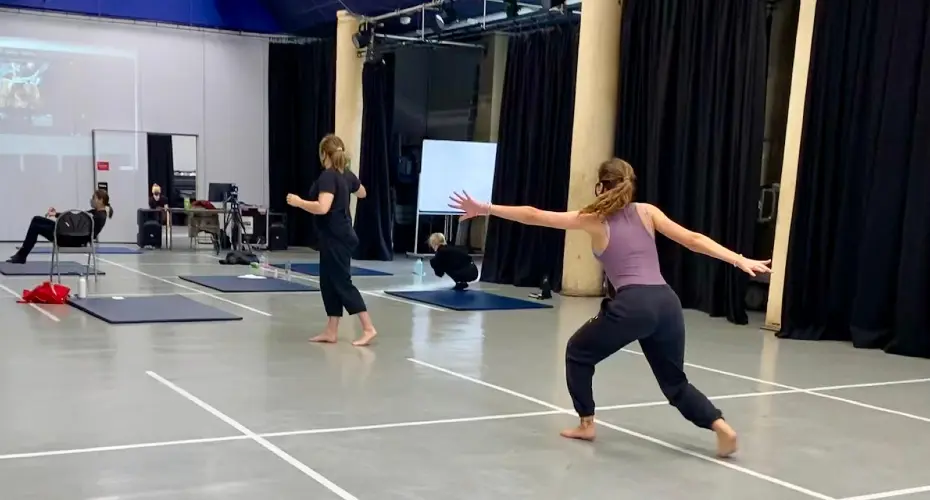
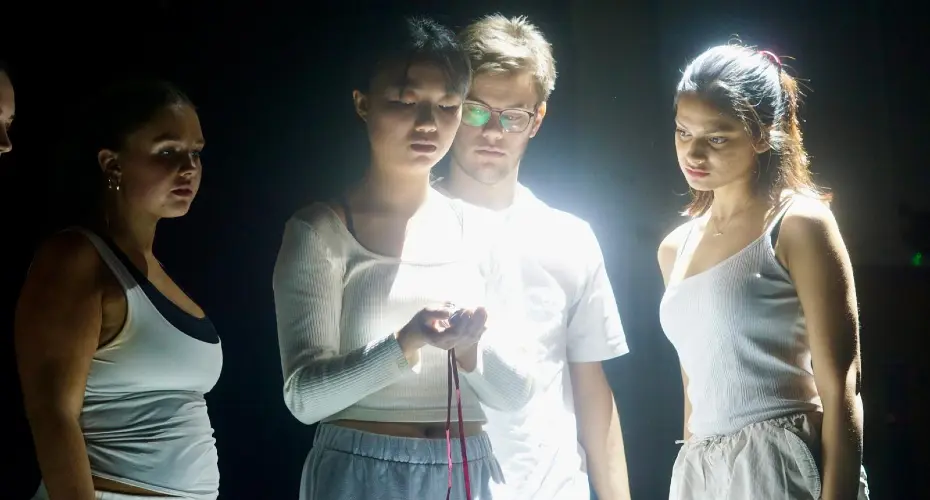
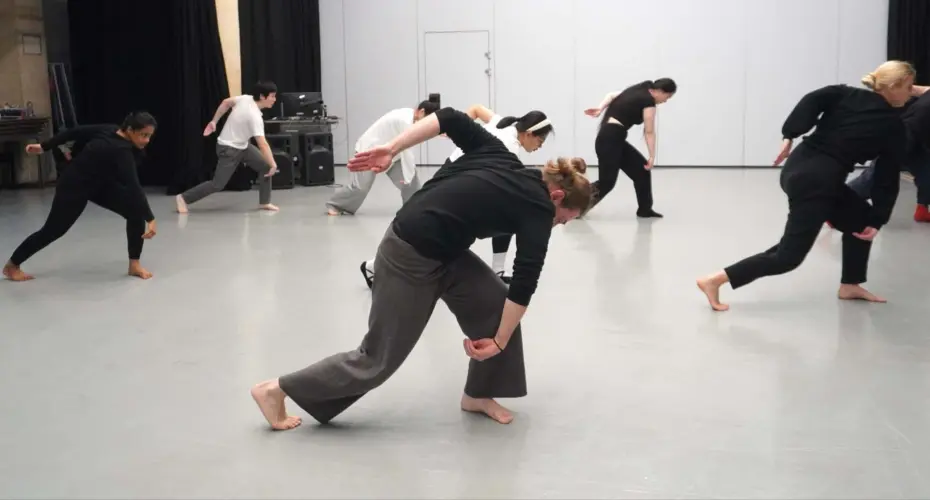
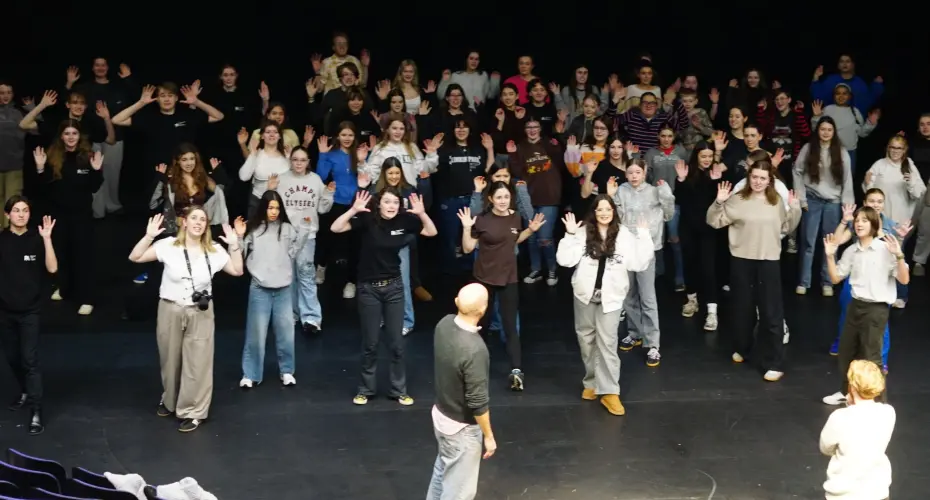
Performer training, Thornlea Studios
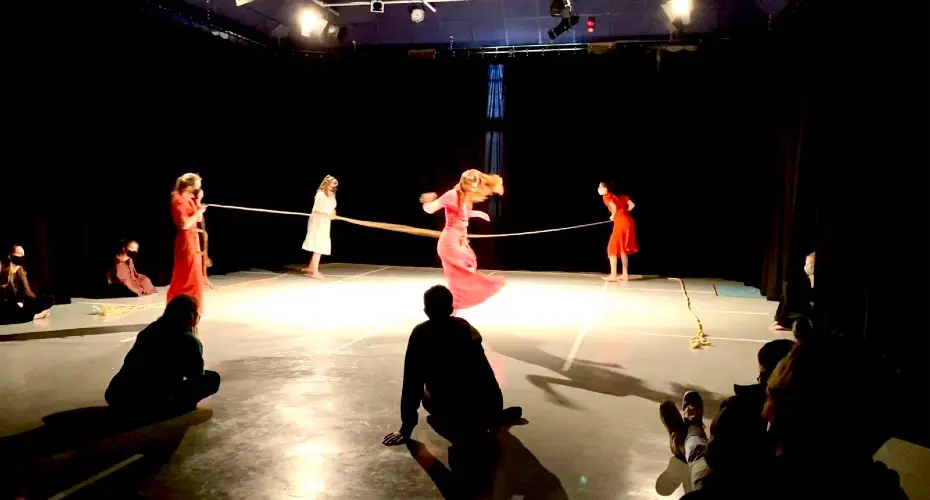
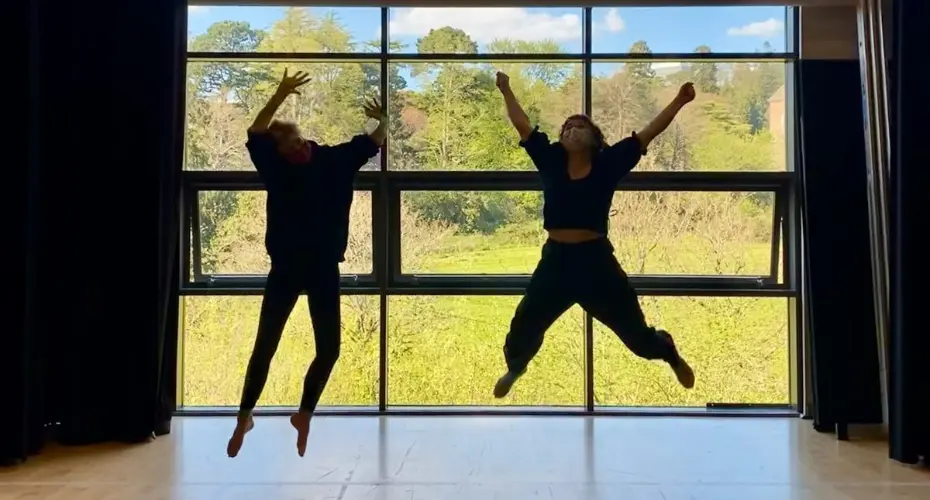
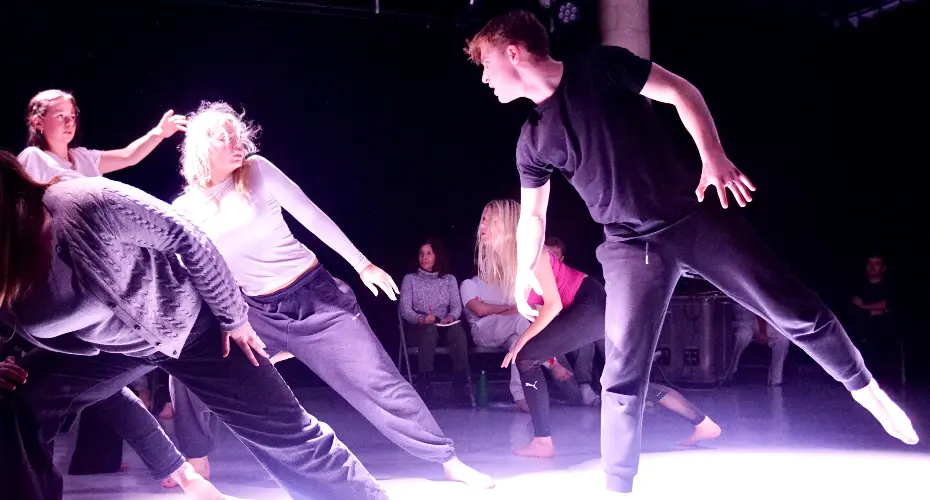
Performance, Roborough Studios, University of Exeter
Performance, Roborough Studios, University of Exeter
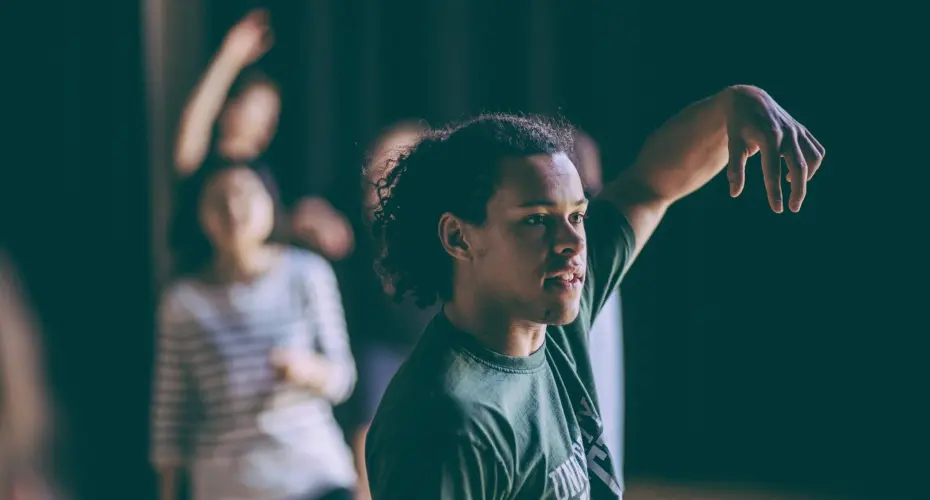
Performer training, Roborough Studios, University of Exeter
Rehearsals, Thornlea Studios
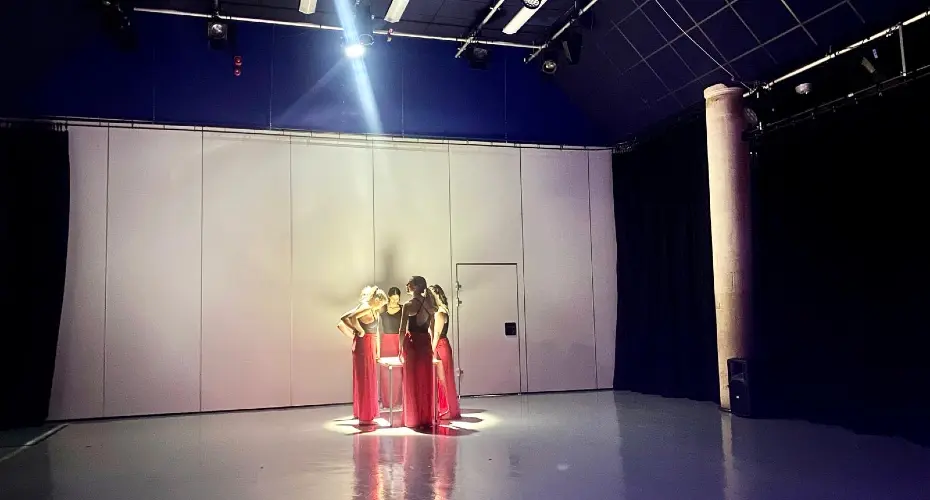
Technical Rehearsals, Roborough Studios
Performer training, Roborough Studios, University of Exeter
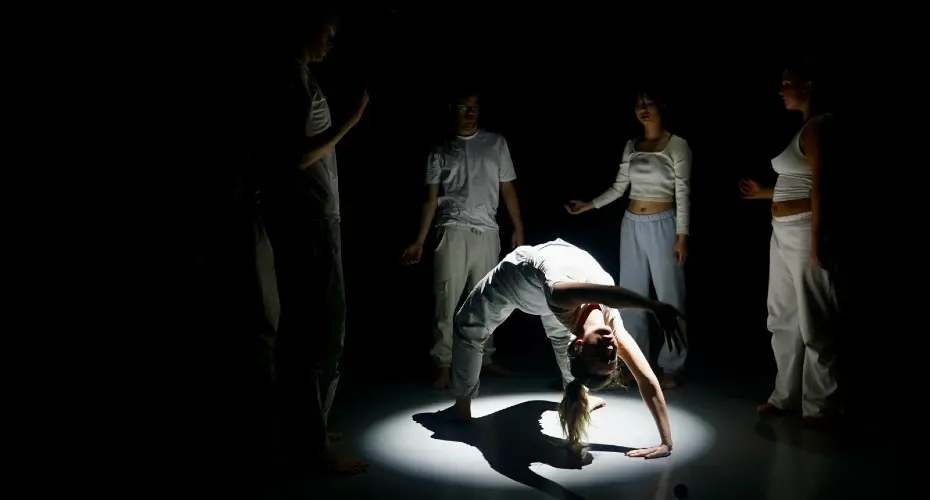
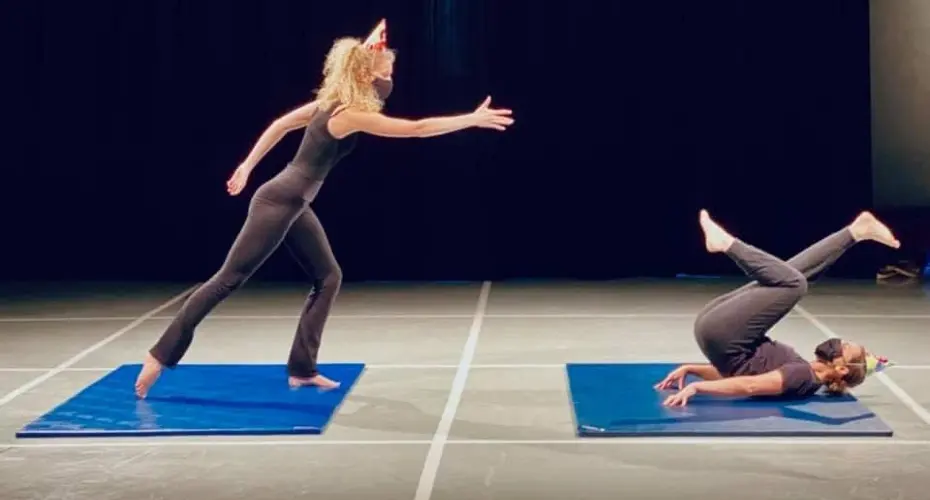
Performance, Roborough Studios, University of Exeter
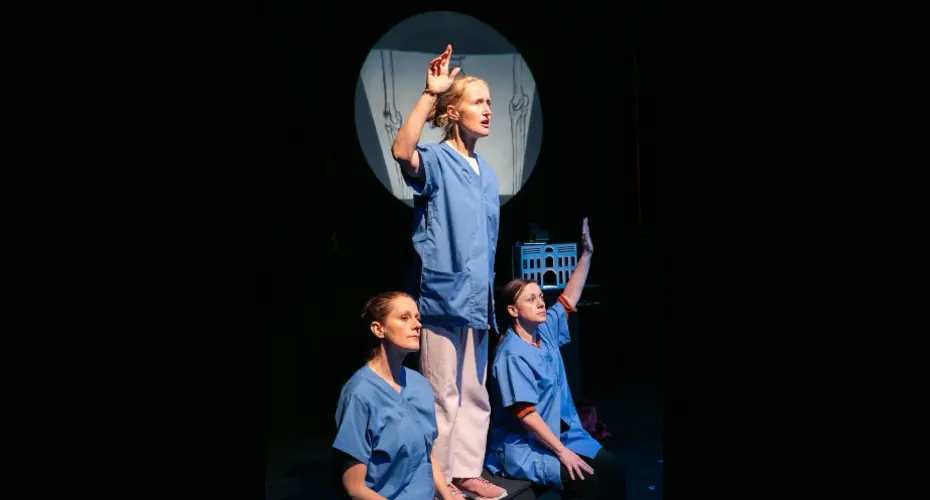
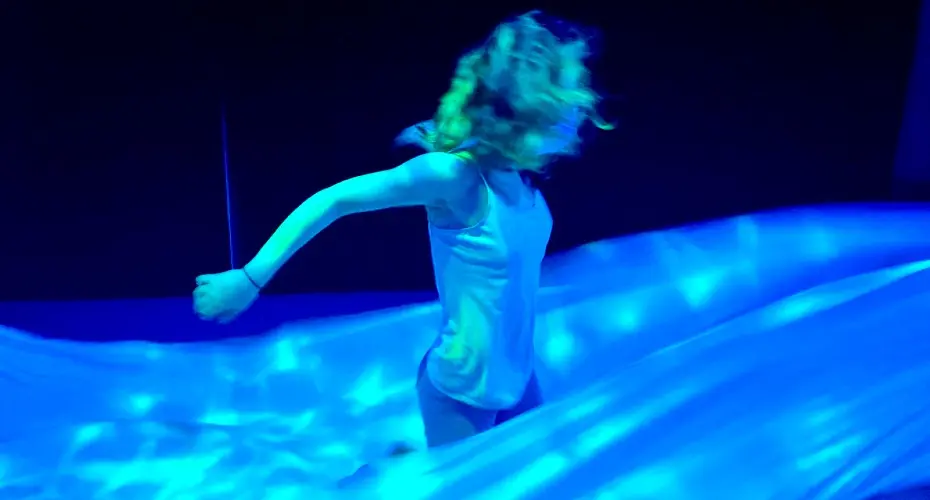
Rebecca Loukes in Red Cape Theatre Performance 'Luminous'
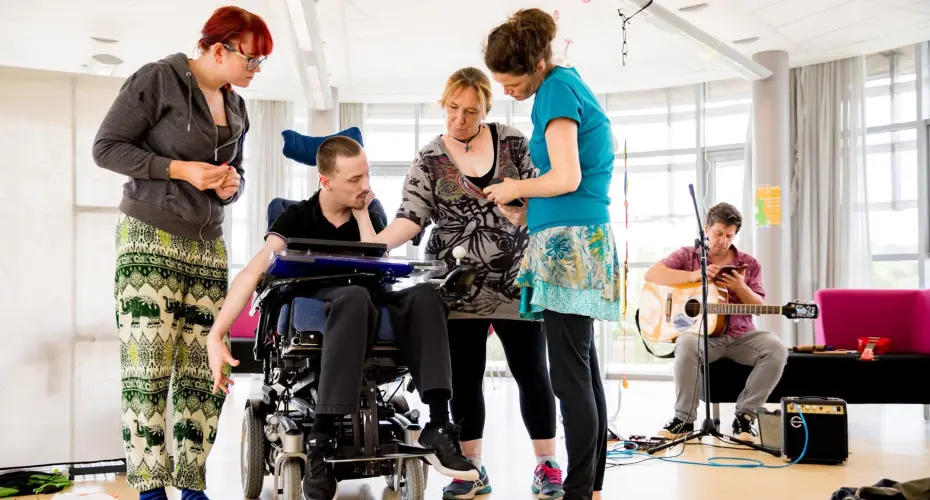
PGT students working with Teacher and Theatremaker Peta Lily
Beyond Face Theatre Company, post show talk 'Alright Petal'
Erin Walcon, Huge Malyon, Collaboration with Professional Company (Undivided Attention)
Performer Training, Roborough Studios
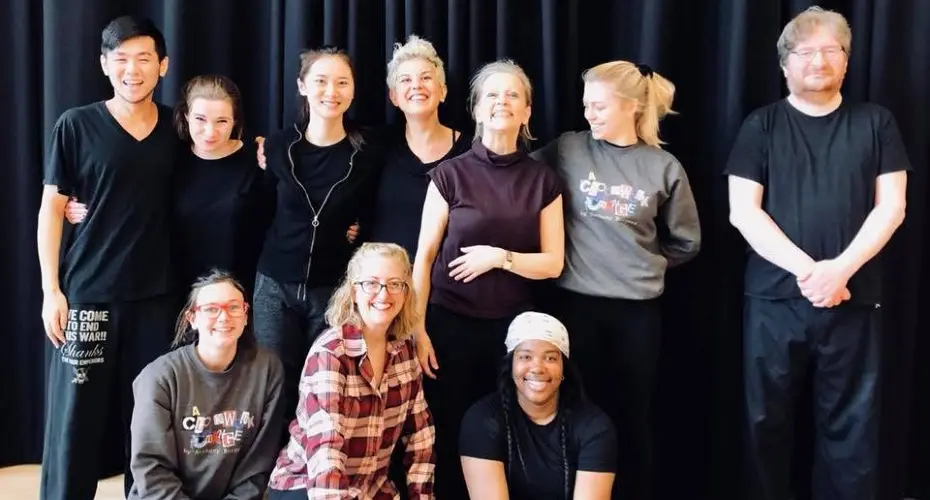
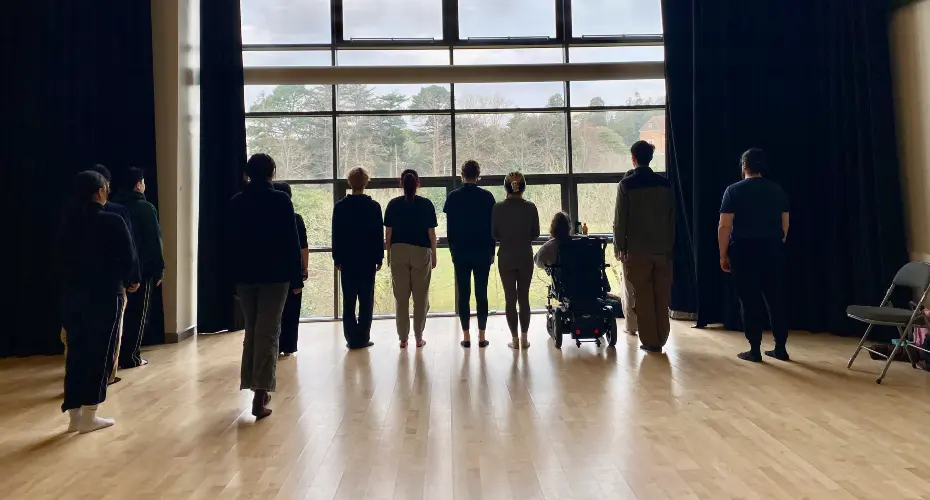
2025 Theatre Practice cohort
Performance, Roborough Studios
Tech Rehearsals, Thornlea Studios
Lee Hart, Lead teaching Artist, Doorstep Arts, Devising Discovery
Autumn, Roborough Studios
Teaching and research
Course structure
Year 1
Year 1 will introduce you to significant international practices and the core aspects of the theatre-maker’s craft: physical and vocal training, ensemble-making and collaboration, creativity, dramaturgy, directing and devising, space, design and technology.
In Year 1 you will explore the variety, richness and range of such practices, with opportunities for you to focus on the elements of practice that most interest you. You will be able to specialise, deepen and hone your understanding of one or more key areas of practice. You will regularly take part in ‘Toolkit’ sessions with visiting specialists, masterclasses and training. You will develop full-length projects (solo or ensemble), with support by our expert staff and tech team.
If you choose, you can perform your pieces to festivals of theatre work hosted by the University of Exeter and beyond. You will have opportunity to self-reflect throughout and embed this into your process. This is valuable for students who come into the course with a substantive body of practice as it is for students with more limited experience. We value that each learning journey is unique.
Year 2
Year 2 extends your practice via three distinct modules that enhance your professional portfolio and networks, setting you up for post-degree working life. You will have opportunities to shadow, assist and observe change-making practice in arts, cultural, education, and socially engaged settings. With a culminating project of your design.
Teaching
Our teaching draws from the department's world-leading research and professional sector expertise. Our staff run professional companies and frequently collaborate with renowned theatre organisations and cultural centres. Throughout the year, esteemed visiting speakers and practitioners will help enrich your learning.
Research
Our research is wide ranging, international and interdisciplinary. We engage with the ethical, political and social challenges of our time, through the lens of practice, performance and facilitation. We have a well-established reputation for excellence in contemporary performance practice, cultural leadership and applied/community theatre.
Facilities
As one of the country's largest and best-equipped Drama departments, we offer excellent teaching and performance spaces. The Alexander Building houses studios, seminar rooms, sound studios, meeting rooms, computer suites, workshops, and a costume store.
Roborough Studios provides three fully equipped adaptable studio spaces, a seminar room, and technical facilities for performances, rehearsals, and practical sessions. Additionally, the White House offers three large rehearsal spaces.
Associate Professor in Drama, Theatre & Performance
Professor Rebecca Loukes
Associate Professor of Performance Practice
Emily Kreider
MFA Theatre Practice Programme Director
Dr Erin Walcon
Lecturer in Applied & Educational Theatre
Erin is Co-Director ofDoorstep Arts, a non-profit arts education organisation based in Torbay, providing sustainable long-term participatory arts engagement opportunities for children and young people in an area of statistically low socio-economic status. For Doorstep Arts, Erin administers and produces 14 ongoing drama groups across youth clubs and schools. Erin is a regional producer for Battersea Arts Centre's Collaborative Touring Network and was former Artistic Director of Devon Youth Theatre. Erin serves as the Chair of the Torbay Arts in Schools Network (the regional Cultural Education Partnership) and also serves on the board of Theatre Alibi.
Erin researches participatory arts, social justice, community engagement and theatre in education, and is a regular contributor to blogs and other open-access, public-friendly platforms.
Associate Professor in Drama, Theatre & Performance
Konstantinos performs internationally. Credits include: Hamlet inOphelia, Interrupted(The Grotowski Institute, Poland / UK tour), Raskolnikov inWhat Happened to the Tyrant?(Camden People’s Theatre, UK), Perlimplin in Lorca’sDon PerlimplinandBelisa(Ora Theatre, Greece),Chi Chi Bunichi(National Theatre of Iasi, Romania, UK and Poland tour). Directing credits include:Semeleby Handel (London and Berlin),A Voice Has. A Voices Does. A Voice Is.andPortable Soundscapes(New Theatre Royal, Portsmouth). Recently, he was Voice Consultant to Sophocles’Trackers(Epidaurus) and Music Director for David Greig’sThe Events(National Opera of Greece).
He has taught actor training, movement and voice at the Estonian Academy of Theatre and Music, the GEOKS Center in Bali, the Norwegian Theatre Academy and the Drama School of the National Theatre of Greece. He co-edits theJournal of Interdisciplinary Voice Studiesand Routledge Voice Studies.
Rebecca is a professional director, leading industry- and public-facing work. She is joint Artistic Director of award-winning companyRedCape Theatre. She co-created and performed inThe Idiot Colony Project, which was performed 96 times across 30 UK venues (including the Institute for Contemporary Arts, London, Warwick Arts Centre, Birmingham Rep and Plymouth Theatre Royal). The piece won a Scotsman Fringe First and Total Theatre Award for Visual Theatre in 2008. Other projects include1 Beach RoadandBe BraveandLeave for the Unknown; both received funding by the Arts Council England, toured extensively and were favourably reviewed.
She is a regular collaborator of ArtsCross, a long-term initiative bringing together academics, artists and producers across cultural, national and artistic borders (partners include: Beijing Dance Academy, Taipei National University of the Arts, Shanghai Theatre Academy and Hong Kong Academy of the Performing Arts). She researches histories of performer training, with a particular focus on women’s legacies, and co-edits Routledge’s Perspectives in Performer Training.
Emily is a US/UK-based award-winning teacher, creative practitioner, and leader in practice and experiential learning, who joined the University of Exeter's Drama department in 2014. She currently serves as the Director of the MFA Theatre Practice programme, where her teaching approach is characterised as responsive, experiential, inclusive, and student-led. Her research interests include practice-as-research, applied theatre, and the development of innovative pedagogical methods within drama education.
Our MFA programme opens doors to diverse career opportunities. Across the two years you will be equipped with advanced critical and creative skills, cross-sector knowledge, rigorous training and professional experience.
Key areas of work and career may include:
Substantive creatives and artists in a range of contexts: actors, directors, performer trainers, choreographers, designers, production managers
Cultural and community leaders, artistic directors, facilitators, entrepreneurs, creative sector directors and innovators
Teachers, researchers, facilitators, coaches and space holders in international college and higher education contexts
Facilitators and leaders in community and socially engaged contexts
Graduate destinations
Upon graduation, you'll be well-prepared for roles as advanced educators, cultural leaders, academics, or you could use your professional transferable skills in other leadership positions. The programme also nurtures research expertise, enabling graduates to pursue future roles as global researchers with profound knowledge in practice-research and creative analysis, positioning them for high-level roles.
Alumni from our department have achieved remarkable careers, from running theatre companies to becoming academics in international universities, arts curators, and cultural leaders.
Sign-up for more information about studying with us
If you're thinking about studying MFA Theatre Practice with us, signing up to our emails is the best way to discover if we’re the right university for you.
Streatham Campus in Exeter
The majority of students are based at our Streatham Campus in Exeter. The campus is one of the most beautiful in the country and offers a unique environment in which to study, with lakes, parkland, woodland and gardens as well as modern and historical buildings.
Located on the eastern edge of the city centre, St Luke's is home to Sport and Health Sciences, the Medical School, the Academy of Nursing, the Department of Allied Health Professions, and PGCE students.
Our Penryn Campus is located near Falmouth in Cornwall. It is consistently ranked highly for satisfaction: students report having a highly personal experience that is intellectually stretching but great fun, providing plenty of opportunities to quickly get to know everyone.