MA Translation Studies
| UCAS code | 1234 |
|---|---|
| Duration | 1 year full time 2 years part time |
| Entry year | September 2026 |
| Campus | Streatham Campus |
| Typical offer | 2:2 Honours degree |
|---|---|
Why study MA Translation Studies at Exeter?
Designed for aspiring translators, language practitioners and scholars from all linguistic and cultural backgrounds, our MA Translation Studies trains you to facilitate the types of cross-cultural communication used within a variety of domestic and international settings. It also trains you to leverage the major opportunities of our time, including Gen AI, multimodality and accessibility, whilst strengthening our unique human ability to use languages creatively.
- Combine key concepts of translation and hands-on training to build multilingual, multicultural and multimodal expertise for global careers.
- Learn to use and assess translation technologies and generative AI responsibly for today’s language services sector.
- Train in the creative aspects of literary, advertising, and marketing translation.
- Master how to deliver quality vis-à-vis confidential and sustainable. requirements in legal, medical, scientific translation.
- Develop professional and critical skills in audiovisual and intermedial practices, including subtitling.
- Strengthen intercultural communication in a multilingual environment for complex international contexts.
- Explore ethics, climate change, sustainability, cultural heritage and equitable access to information through translation.
- Gain real-world experience through internships, credit-bearing placements and field trips with industry links.
- Study with leading researchers and exceptional professional translators, and connect with professional bodies such as the Institute of Translation and Interpreting and the Chartered Institute of Linguists.
Fast Track (current Exeter students)
Contact
Programme Director: Professor Michelle Bolduc
Web: Enquire online
Phone: +44 (0)1392 72 72 72
Discover MA Translation Studies at the University of Exeter.
![]()
Top 20 in UK subject rankings for Modern Languages
The Complete University Guide 2026
![]()
100% of our Modern Languages and Linguistics research has internationally excellent impact
Based on research impact rated 4* and 3* in REF 2021
![]()
Taught by published translators and experienced practitioners, plus specialists in the use of machine translation and computer-assisted translation tools
![]()
Top 150 in world subject rankings for Modern Languages and Cultures
QS World University Subject Rankings 2025
Entry requirements
We will consider applicants with a UK 2:2 Honours degree or above in English, Linguistics, Translation or a similar subject. Exceptions may be made if you are already working within the translation industry.
Chinese (Mandarin)
Must be your mother tongue, or you must be able to demonstrate a native-equivalent knowledge of Chinese, in addition to clear interesting translation theory and practice. The programme is also available to prospective students with advanced English-language competency from such fields as Accounting, Business and Engineering.
European/ Arabic/Kurdish
You should have native or near-native knowledge of the language you wish to translate into, otherwise known as your target language. In addition, you will need to demonstrate a clear interest in translation theory and practice. Please see our English language requirements web pages for details of the level of English we require.
Please also see our guidance on essential documentation required for an initial decision on taught programme applications.
Entry requirements for international students
Please visit our entry requirements section for equivalencies from your country and further information on English language requirements.
Please also see our guidance on essential documentation required for an initial decision on taught programme applications.
Entry requirements for international students
English language requirements
International students need to show they have the required level of English language to study this course.
The required IELTS test scores for this course fall under Profile B1.
Please visit our English language requirements page to view the required test scores and equivalencies from your country.
My tutors on the MA Translation Studies programme are knowledgeable and experienced and not only give me support all the time, but also give me new perspectives to help with translation. I found it so interesting to do translation tasks using Computer Assisted Tools such as Trados.
I have enjoyed every moment of my time with translation students both in and outside classes. Communicating with my classmates, who come from different cultures (e.g. British, Italian, Irish, Polish, Spanish), has been such a joy and has made me more open-minded. In addition, my Greek career mentor was super nice, professional and shared with me his real-world experiences so that I was able to have a better understanding of the language services industry.
I am now working for the University as a part-time intern to undertake some translation and marketing tasks and it is very exciting to gain hands-on experience.
Read more from Wang (surname) Dan, from China
Wang (surname) Dan, from China
MA Translation Studies
Course content
The MA Translation Studies equips you with critical insights and practical skills to navigate the evolving language services landscape successfully and understand how this is branching out into fields beyond a simple conception of linguistic transfer. It allows you to gain invaluable experience within a variety of specialisms, making the most of your multilingual, multicultural and multimodal expertise in a global world. Alongside the development of these key skills, our MA emphasizes our unique human ability not only to cross linguistic and cultural boundaries, but also to respond creatively and responsibly to the social and ethical issues arising from an increasingly globalized and technological world.
You can design your own academic path, choosing from an unparalleled range of optional modules in such areas as literary translation, audiovisual translation and subtitling. Technology is woven into the modules through the use and evaluation of generative AI; a dedicated module allows you to learn to work with the Computer-Assisted Translation and Translation Memory tools most used in the Language Services Industry today. If you are intrigued by the pervasiveness of translation in society, you can opt for modules which look at how various cultural artefacts (films, music, street art and installations) are underpinned by creative acts of translation.
The MA programme offers unique opportunities for field trips, internships and work placements. It also benefits from professional networking through partnerships with leading translation and interpreting bodies. Together, these experiences help you to develop the skills and insight needed to succeed in the evolving global language services sector.
The modules offered by the MA programme are assigned 'credits'. Students on the MA Translation Studies take a selection of modules amounting to 180 credits in total. This includes three compulsory core modules (120 credits) and a choice of optional modules (60 credits).
The modules we outline here provide examples of what you can expect to learn on this degree course based on recent academic teaching. The precise modules available to you in future years may vary depending on staff availability and research interests, new topics of study, timetabling and student demand.
120 credits of compulsory modules, 60 credits of optional modules
Compulsory modules
| Code | Module | Credits |
|---|---|---|
| SMLM145 | Translation Dissertation | 60 |
| SMLM150 | Translation Theory | 30 |
| SMLM151 | The Practice of Translation | 30 |
Optional modules
a - You have the option to study a 15 credit module, SMLM154 - Translation Work Placement/Project, to provide the experience of learning about translation as a profession through work and gain hands-on knowledge of the field of translation and the language services industry by means of a work placement of project.
You could find work placements as an in-house translator, project manager, translation checker, among others; or may also choose to be engaged in translation projects for the local, regional, or global language services field. Students take full responsibility for finding and organising their work placement or project (either in the UK or abroad), with preparation, support and approval provided by the University.
| Code | Module | Credits |
|---|---|---|
| MA Translation Studies option modules 2025-6 [See note a above] | ||
| SMLM152 | Specialist Translation 1 | 15 |
| SMLM153 | The Translation Profession | 15 |
| SMLM154 | Translation Work Placement / Project | 15 |
| SMLM155 | Translation as Multimedia and Audiovisual Practice | 15 |
| SMLM156 | Translation as Literary and Creative Practice | 15 |
| SMLM158 | Translation as Cultural and Intermedia Practice | 15 |
Fees
2026/27 entry
UK fees per year:
£12,650 full-time; £6,325 part-time
International fees per year:
£25,550 full-time; £12,775 part-time
Scholarships
The University of Exeter offers a wide range of scholarships to support your education, with £7 million available for international students applying to study with us in the 2026/27 academic year, including our prestigious Exeter Excellence Scholarships *. We also provide awards for sport, music and other achievements, as well as regional and partner scholarships with organisations such as Chevening, The Beacon Trust and the British Council. For more information on scholarships and other financial support, please visit our scholarships and bursaries page.
University of Exeter Alumni Scholarship
We are pleased to offer University of Exeter alumni beginning a standalone postgraduate programme in 2026/27 with us a scholarship towards the cost of your tuition fees. Full details can be found here.
*Terms and conditions, including deadlines, apply. See our website for details..
Teaching and research
Learning
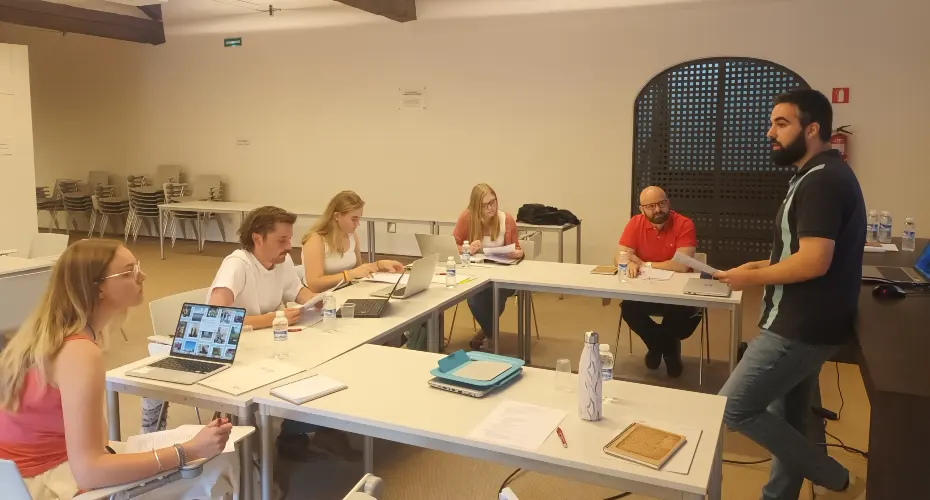
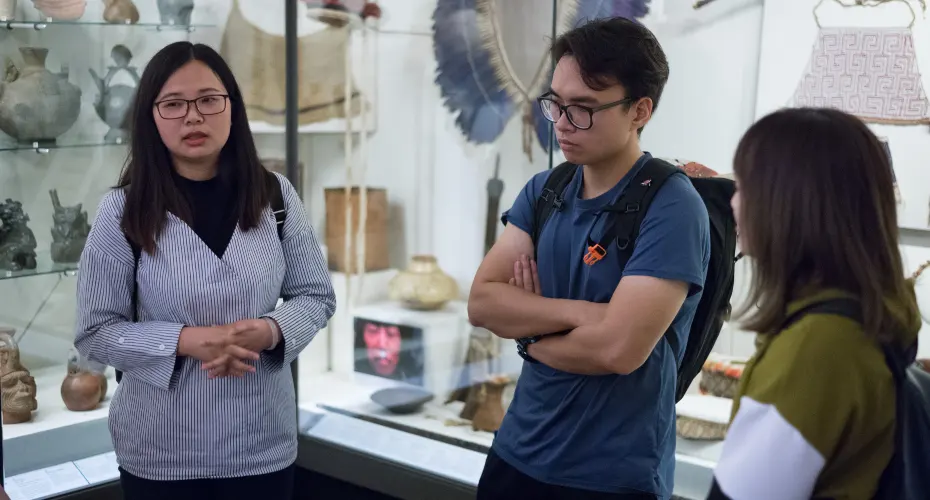
The MA Translation Studies at the University of Exeter combines translation theory with practical training, enabling you to develop professional translation skills across multiple languages. You will take part in seminars and lectures focused on a variety of translation tasks and topics, including climate change, sustainability and responsible communication. Hands-on multilingual workshops maximize the ‘must-have’ ability to operate within complex intercultural settings and shape global language experts. Small group activities and collaborative projects strengthen the critical assessment of generative AI, project management, post-editing and proofreading expertise, supported throughout by a personal tutor.
Career-focused tasks such as pitching literary translations, preparing client quotes, completing simulated briefs and compiling reports on accessibility provision help you build industry-ready skills in translation, localisation and language services.
Research-led teaching and funded projects
Our modules in Translation Studies are taught by award-winning teacher translators and internationally recognised scholars producing cutting-edge research, as well as by practising professionals including specialist translators, project managers and copyeditors. Teaching is shaped by active, world-class research in Translation Studies. Modules reflect current debates and emerging trends, ensuring you engage with the latest developments in areas such as eco-translation and the environment, migration and translation, gender and translation, translation activism, intercultural mediation, transmediality and adaptation, visual translation, the history of translation, translation as an interdiscipline, working with rhetoric and museum studies and material culture.
The MA is directly connected to a major Canadian government funded humanities award, the SSHRC Partnership Grant worth CA$2.1 million for 2025 to 2032. This supports the project ‘Confluence of Religious Cultures in Medieval Historiography: A Digital Edition of the General e Grand Estoria’, led by the University of British Columbia. As part of this partnership, two MA students are recruited as paid interns, gaining specialist research and invaluable translation experience alongside their studies.
Library
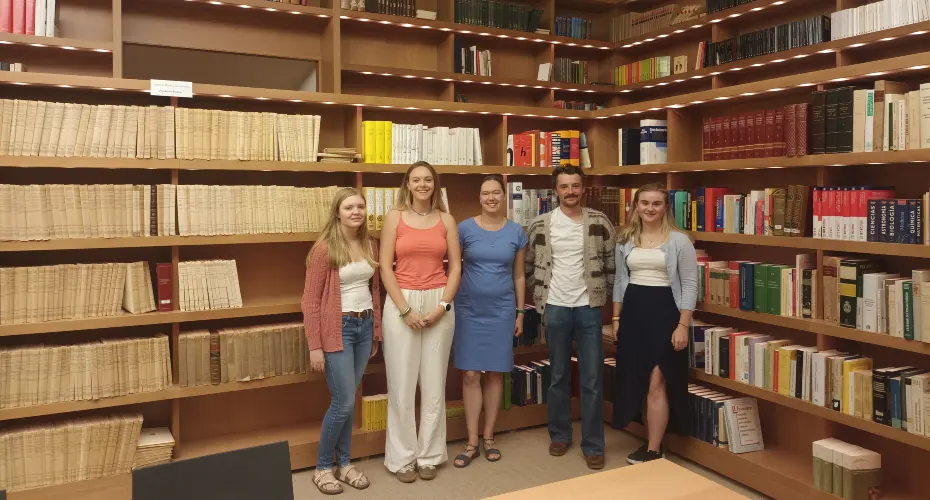
You will have access to extensive library resources, including specialist collections in translation and intercultural studies. Digital databases, journals and e-books support coursework and dissertation research. Library staff provide workshops and one-to-one guidance to help you locate and use sources effectively.
Facilities
Modern facilities include computer labs equipped with professional translation memory software and Computer-assisted Translation (CAT) tools, including Trados Studio, MemoQ, Star Group Transit and Omega-T. Exclusive access to the Bill Douglas Cinema Museum and the Digital Humanities Lab offers a highly distinctive experience, enabling you to apply creative skills in a professional setting and curate projects with 3D printers for accessible models.
Partnerships
We have long-standing relationships with professional bodies such as the Institute of Translation and Interpreting, the Chartered Institute of Linguists and memberships with various associations, including the Association of Programmes in Translation and Interpreting. We also have relationships with international, national, regional and local translation agencies, in particular Exeter translation agency Cadenza Academic Translations. Cadenza Academic Translations works closely with national governmental research agencies, including France’s National Centre for Scientific Research (CNRS). It has regularly served as a site for translation and project manager work placements and has hired several of our graduates.
Research Centres
The programme is supported by departmental research centres, including the Centre for Translating Cultures, and is closely connected to world leading research in Translation Studies. Visiting speakers and seminar series introduce you to leading experts and current debates in translation, cross-cultural and language studies, helping you develop evidence-based knowledge and an informed understanding of industry practice.
Dissertations
A highlight of the course is the 60-credit Dissertation module, where you will choose an in-depth independent research or translation project that you’re passionate about. Students in the past have produced experimental translations of contemporary writing, finely attuned critical analyses of existing translations or multilingual artefacts and linguistic landscapes, creative evaluations of subtitles of their favourite series, and incisive explorations of the role played by translators in moments of political and cultural transformation.
Extra-curricular opportunities
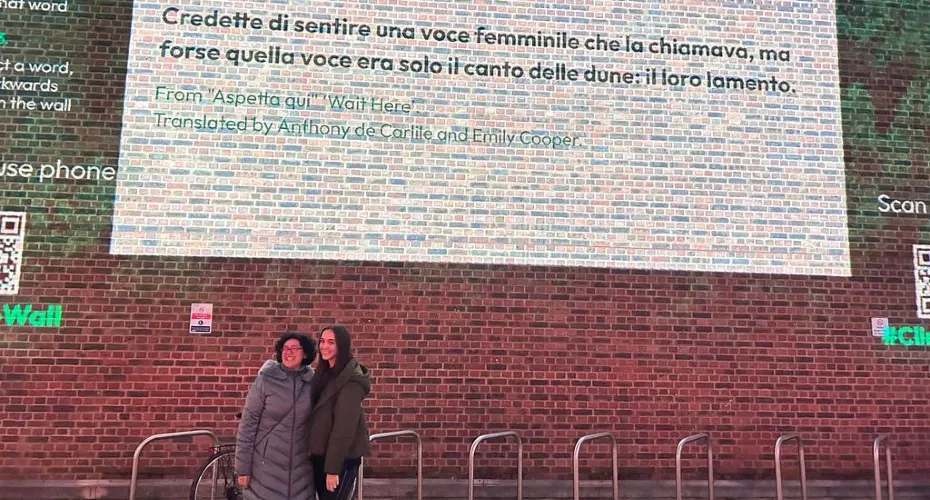
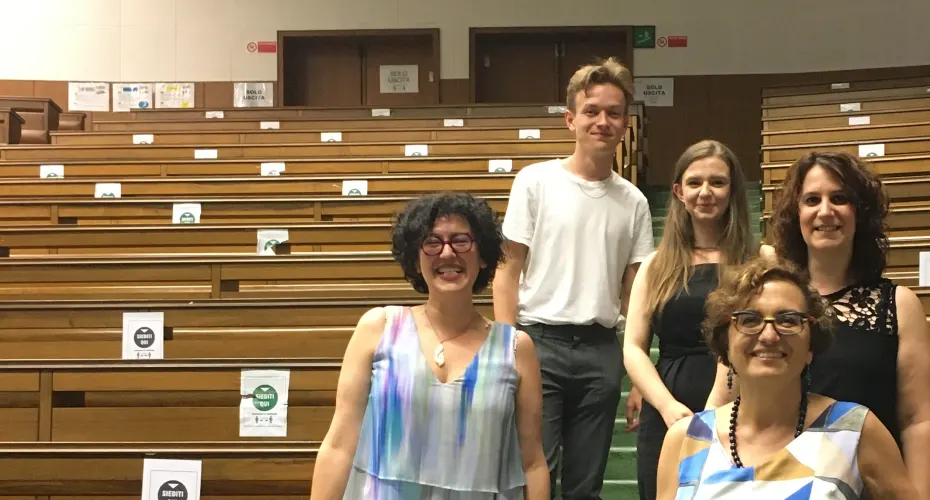
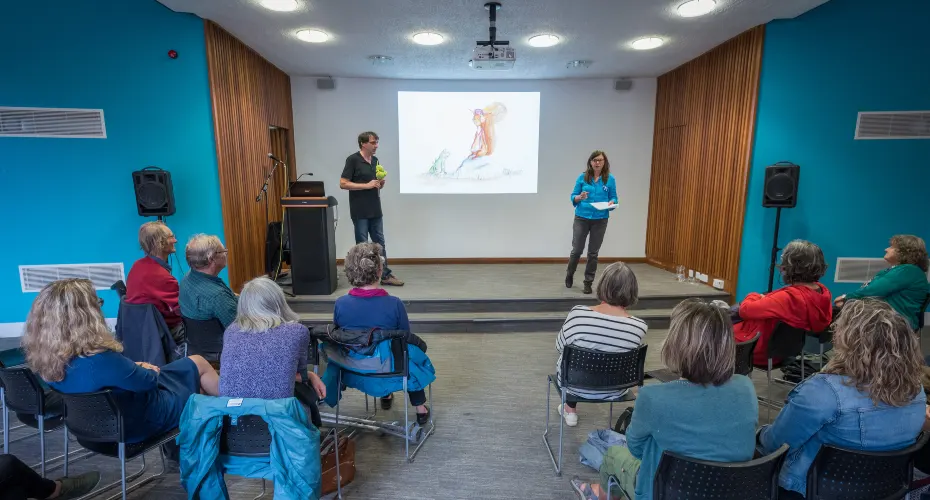
You can take part in professional and public engagement events that enhance academic development and career preparation. A highlight is the biennial Translation! Festival in Exeter city centre and on campus, the only festival of its kind in the UK, featuring authors and translators, translation slams, games, and interactive workshops.
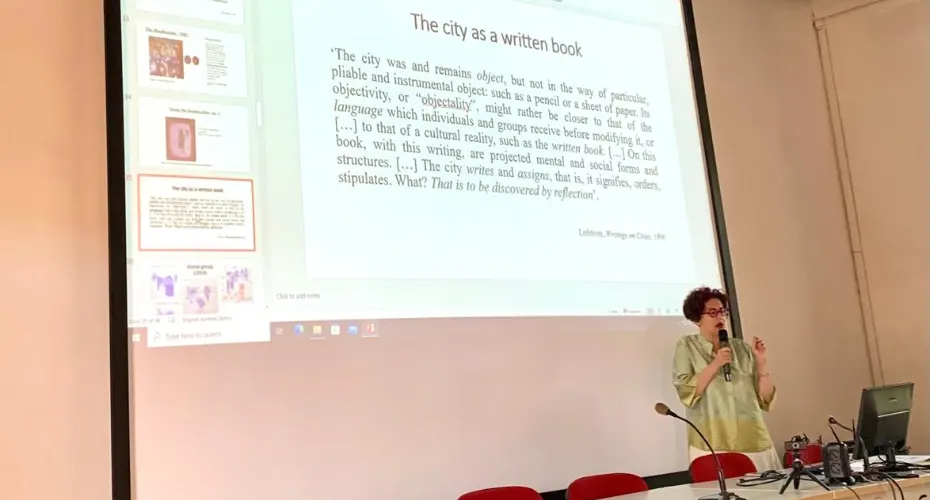
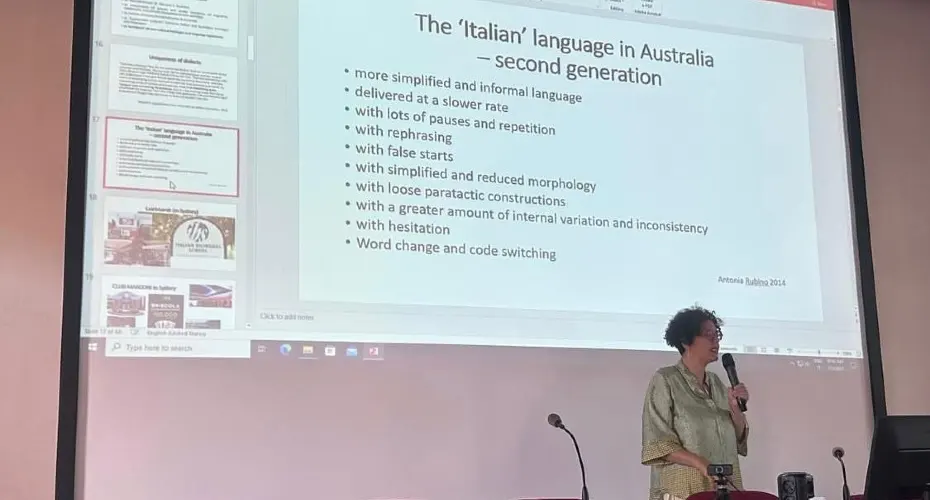
Students may also apply for the Venice International University Summer School on Linguistic Landscapes: Using Signs and Symbols to Translate Cities, held each June and July in the beautiful Venice Lagoon, with discounted places available. In addition, you can contribute to eco-translation projects linked to the internationally impactful University of Exeter Green Futures initiatives, with translation work showcased at United Nations Climate Change Conferences.
You can use our successful Career Zone which can help you gain the expertise and experience employers are looking for. Along with the guidance offered by your tutors, our Career Zone gives you the support you need to choose your career path (both in translation and the language services) and various opportunities to enhance your employability, including sourcing volunteers from successful alumni to as part of mentorship schemes.

It was a big decision to quit my job and move to another country for further study. I chose Exeter because it is one of the best universities in the UK for Modern Languages. The Translation Studies course is a combination of theory and practice.
All the lecturers are professional and supportive and as well as lectures there are language-specific workshops where tutors give advice on translation in specific topics. One of our modules The Translation Profession has given me experience of using CAT (computer-assisted translation) tools, which is very useful whether you want to be a freelancer or work for a translation company.

Xueyu
MA Translation Studies
Careers
This MA in Translation Studies prepares you for a professional career in translation, localisation and the wider language services industry. The programme develops advanced translation skills, cultural awareness and practical experience so you can work confidently as a translator, language specialist or multilingual communication expert in a variety of professional settings.
Employment
Thanks to our close partnership with professional translation organisations and industry networks, our MA offers you a qualification that is recognised across the language services sector, training you for a variety of career paths in the language services industry, and especially in those in which AI performs least well.
Because you will hone your ability to move between languages in multilingual written, oral, and multimodal communication, you may find employment not only in translation but even in multilingual content creation and localisation, transcreation, language & translation project management, multilingual editing and copyediting, sensitivity reading and accessibility, and intercultural communication analysis.
Our MA in Translation Studies at Exeter equips graduates for careers in translation agencies, multinational companies, publishing, media and international organisations.
Employer-valued skills
The course equips you with practical skills for legal, medical and scientific translation, alongside creative and multimedia work. It teaches you to engage critically with translation as multimodal and intermedial practice employed by the creative industries to shape cultural artefacts (film, music, and street art).
During the programme, you will develop:
- The ability to work as a transcultural language professional and communicate confidently across languages and cultures.
- Practical training in translation technologies and computer-assisted translation tools.
- The skills to use and critically evaluate AI in translation workflows.
- Creative approaches to translating media and digital texts.
- Professional communication skills for working with clients, agencies and employers, including negotiating terms and conditions.
- Project management skills and an understanding of translation workflows.
- Strong organisational, analytical and research skills for the global language services market.
Graduate destinations and career paths
Recent graduates have progressed to roles such as freelance translators, founders and directors of translation companies, in house translators, project managers in international language service providers, multilingual editors and copyeditors in publishing, media translators and university lecturers.